
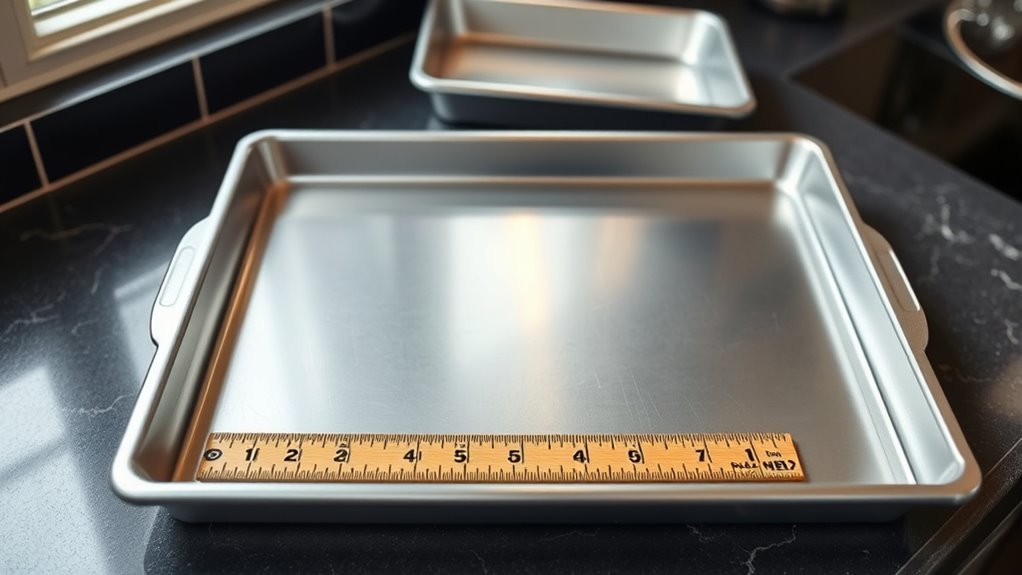
You’ll need the right pan, the right size, and the right capacity to handle big baking jobs. You’re looking at a standard full sheet that measures about 18 x 26 inches and holds roughly 10–12 dozen cookies or enough cake to serve around 75–100 people, but there’s more to take into account—from how recipes scale to oven fit and material choice—so keep going to pick the best option for your event.
Quick Decision: Which Full-Sheet Size Should I Get?
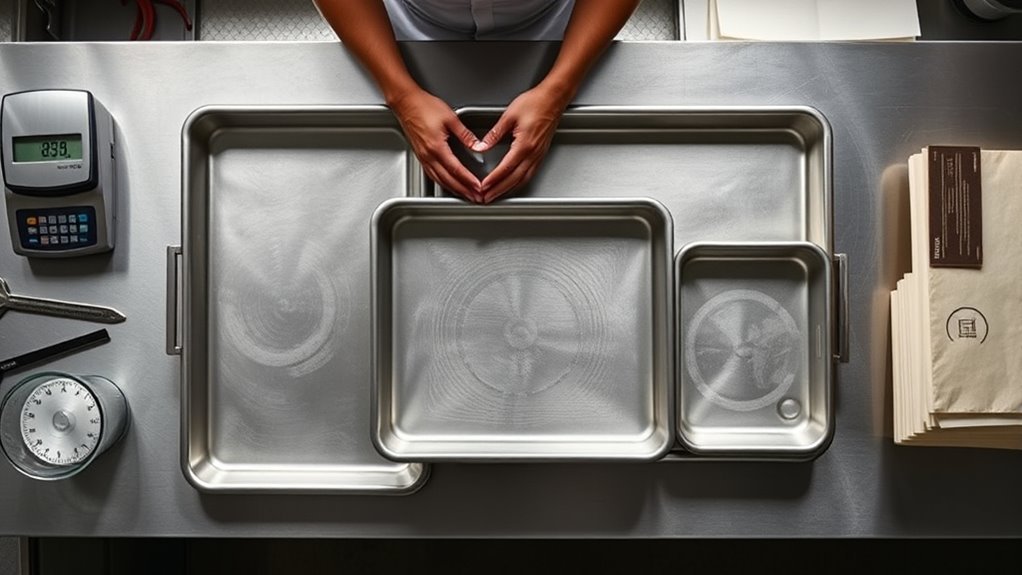
Need a full-sheet pan for an event? You’ll choose by matching dimensions and capacity to your goals. If you need about 75 servings, a 15 x 22-inch full sheet cake fits; for roughly 100 servings, target the 18 x 24-inch size.
Remember that baking an 18 x 24-inch sheet often requires two 12 x 18-inch pans to achieve the footprint you want. Favor aluminum full sheet pans for durability and even heat, which keeps cakes consistent across the surface.
Baking an 18 x 24-inch sheet often means using two 12 x 18 pans—choose aluminum for even, durable results.
Let event size guide you first, then refine by design and dietary needs—portion control, plan for decorations, and accommodate gluten-free or vegan layers if required.
Size matters, but so does workflow: larger pans demand more oven space and steadier heat management. You’re making a practical choice that frees you to serve a crowd confidently; pick the dimensions that match capacity and the culinary vision you’re committed to delivering.
Full-Sheet Dimensions vs Half/Quarter: What’s the Difference
While full-, half-, and quarter-sheet pans may look similar at a glance, their dimensions and capacities change how you plan batches and schedule oven time. You’ll find a full sheet pan measures 18 x 26 inches, a half sheet pan 18 x 13 inches, and a quarter sheet pan 9 x 13 inches. Those dimensions directly alter surface area and thus capacity: a full holds about 10–12 dozen cookies, a half 5–6 dozen, and a quarter 2–3 dozen.
Choose full sheets when you need scale—commercial kitchens rely on that size for large events and efficient workflow.
Use half or quarter pans to stay nimble at home or to control portions. When planning serving sizes, factor in how much of the oven you can use, how many pans fit at once, and how batch timing shifts with size.
Knowing these specifics frees you to design menus confidently and bake with predictable results.
Matching Full-Sheet Sizes to Cake Servings (75 Vs 100)
When you’re planning cake sizes for events, choosing between a 15×22-inch and an 18×24-inch full sheet matters because the smaller pan yields about 75 servings while the larger yields about 100. You’ll use the dimensions to match attendance: a 15×22 inches full sheet pan suits roughly 75 people; an 18×24 inches pan fits about 100 people. That clarity frees you from guesswork and supports bold event planning choices.
| Pan Type | Typical Servings | Equivalent Pans |
|---|---|---|
| 15×22 inches | 75 people | two 11×15 inch pans |
| 18×24 inches | 100 people | two 12×18 inch pans |
Use this capacity guide in baking prep and ordering. You’re accountable to guests; pick the pan that secures servings without excess waste. These full sheet dimensions give you control, efficiency, and confidence for events where every slice matters.
How Pan Size Changes Recipes and Batch Yields
Using a full sheet pan (typically 18×26 inches) changes how you scale recipes and expect yields, so you should adjust ingredients and timing rather than simply pouring a larger batter into the pan. The larger dimensions increase surface area dramatically, so you’ll spread batter thinner unless you raise ingredient quantities to preserve thickness and moisture.
Think regarding ingredient quantities per square inch rather than whole-pan multiplication.
A full sheet pan boosts batch yields—often serving around 100—so it’s your ally for liberation from small-batch limits. But larger volume alters cooking time: more exposed surface can brown faster while interior set may take longer.
Monitor cooking time and use visual and temperature cues. The pan’s size also promotes even heat distribution, improving baking consistency across trays when you adjust racks and rotation.
When you plan, convert recipes by area, test one tray, and refine ingredient quantities and timing to maintain texture, moisture, and reliable results at scale.
Pan Materials: Aluminum, Steel, and Nonstick-What to Choose
Because pan material governs heat transfer, durability, and cleanup, choosing between aluminum, steel, and nonstick will directly affect your results and workflow.
When you use a full sheet pan with aluminum construction, you benefit from superior heat conductivity that delivers even baking and reliable browning—ideal for cakes, cookies, and any baking method that needs uniform heat.
Steel pans offer unmatched durability and resistance to warping; they’re heavier, handle high-temperature roasting, and suit aggressive baking methods where rigidity matters.
Steel pans are rugged and warp‑resistant—heavier, built for high heat roasting, and ideal for tough, aggressive baking.
Nonstick pans provide the greatest cleaning ease and prevent sticking, but they trade longevity for convenience and may limit how hot you can safely go.
Always confirm whether a pan is oven-safe at the temperatures your recipes demand; nonstick coatings often have lower thresholds than bare aluminum or steel.
Pick material based on your baking method, desired longevity, and workflow: aluminum for even baking, steel for robustness, nonstick for effortless cleanup—each choice frees you to bake with intention.
Alternatives When You Don’t Have a Full Sheet Pan
If you don’t have a full sheet pan, use two half-sheet pans side by side to match the area and roasting capacity.
For smaller batches, combine quarter pans or other smaller trays and measure their total surface to confirm they equal the recipe’s required area.
When you need the exact size for a one-off job, consider renting or borrowing a full sheet to avoid scaling issues.
Use Two Half Sheets
When you don’t have a full 18 x 26-inch sheet pan, pair two half sheets (each 18 x 13 inches) to recreate the same baking surface and keep recipes flexible; this also lets you bake different items at once without sacrificing space.
You’ll match the full sheet pan dimensions and baking surface area, so your capacity for large baking tasks stays intact. Use each half sheet pan for separate batters, different temps, or staggered timing to expand versatile baking options.
Each half typically yields 12–15 servings, so together you’ll serve about 24–30 people. This alternative gives you freedom to scale up without losing even cooking and browning.
Embrace the swap and liberate your kitchen workflow.
Combine Multiple Pans
You can recreate a full sheet’s capacity by combining smaller pans—pair two half sheets, four quarter sheets, or choose two 12×18-inch or two 11×15-inch pans depending on the cake or tray size you need—so you’ll maintain surface area and portion counts without buying a new pan.
When you lack a true full sheet pan (standard dimensions 18×26 inches), calculate surface area to match capacity for baking large quantities. Two 18×13-inch half-sheet pans equal a full sheet’s footprint; four 9×13-inch quarter-sheet pans do likewise.
For full sheet cake needs, two 12×18-inch pans approximate an 18×24-inch cake size, while two 11×15-inch pans can substitute for a 15×22-inch cake.
Combine pans to retain portions, timing, and consistent results.
Rent Or Borrow Pans
Several local options make renting or borrowing a full sheet pan an easy, cost-effective choice for one-off baking needs.
If you don’t own an 18×26 or 15×22 pan, you can rent from baking supply stores or specialty kitchen equipment vendors that list rental options for large baking needs.
Borrowing from friends, family, bakeries, or community centers cuts costs and avoids long-term storage concerns.
Many catering services and churches maintain kitchen equipment you can borrow for events, freeing you from purchase and storage burdens.
Choose rental options when you need reliability and cleanliness guarantees; borrow when you want community support and minimal expense.
Both paths let you tackle big batches without sacrificing freedom or workspace.
Care & Accessories for Full-Sheet Pans (Liners, Racks, Oven Fit)
Although full sheet pans measure a roomy 18 x 26 inches, you’ll want to plan for liners, racks, and oven clearance to keep them performing well and to simplify cleanup.
When you choose a full sheet pan for large baking tasks, factor the dimensions into how liners fit: parchment or silicone mats cut to size protect the surface, speed cleanup, and prevent sticking without compromising airflow.
Prefer aluminum pans for reliable heat distribution and durability; they react quickly and keep results even across the large surface.
Use wire racks when cooling or storing pans to promote airflow and prevent moisture buildup that dulls metal and invites warping.
Before you buy or borrow, confirm oven fit—these pans need generous clearance for proper circulation and even baking.
Equip yourself with quality liners, a sturdy aluminum pan, and wire racks; together they free you from constant maintenance and guarantee consistent, liberated baking performance with minimal cleanup.
Quick Checklist: Pick the Right Full-Sheet Pan for Your Event
Start by matching pan size to guest count and oven capacity: an 18 x 26-inch full sheet serves roughly 100 people (portion-dependent), but only buy or borrow one that actually fits your oven and transport method.
Next, confirm dimensions vs. oven size—measure interior clearance, racks, and door swing.
Consider capacity and serving size: estimate portions beforehand so you choose full sheet volume or two smaller pans (two 12 x 18-inch pans give about an 18 x 24-inch equivalent).
Check material: aluminum offers even heat for large baking tasks and lasting durability.
Plan logistics: will you need sheet trays for staging, insulated carriers for transport, or sheet pan racks at the event?
Ask whether you can legally bake and serve in the chosen pan at the venue.
Use this checklist to avoid surprises: size, dimensions, oven size fit, material (aluminum), capacity, transport method, and portioning.
Choose confidently so your event runs free and efficient.
Frequently Asked Questions
Will a Full Size Sheet Pan Fit in a Regular Oven?
Usually no — full-size sheet pans often won’t fit a regular oven without tilting.
Check your oven dimensions and rack placement before buying; limited oven capacity and space management matter.
Use half-size pans for better baking surface, even heat distribution and temperature control.
If you insist, pick thinner pan material and adjust baking techniques and recipes for altered heat distribution.
Measure, adapt recipes, and liberate your kitchen workflow by choosing compatible pans.
How Many 9×13 Pans Fit in a Full Sheet Pan?
Like a wide-open field, you can fit about six 9×13 pans on a full sheet pan.
You’ll use that sheet pan to streamline meal prep, convert recipes, and optimize oven space.
Choose pan materials for even heat distribution, track cooking times, and use proper food storage.
These baking tips turn kitchen tools into freedom tools, so you’ll confidently scale recipes without clutter or compromise, claiming your time and culinary power.
What Is the Difference Between a Half Sheet Pan and a Full Sheet Pan?
A half sheet pan is smaller (about 18×13) and fits home ovens; a full sheet pan (about 26×18) suits commercial ranges and larger batches.
You’ll choose based on sheet pan materials, baking surface types and sheet pan brands that match your cooking techniques.
Use half pans for baking cookies, roasting vegetables, grilling meats in small batches, freezing meals or serving dishes; maintain both with proper sheet pan maintenance to extend freedom and efficiency.
What Size Pan to Use for a Full Sheet Cake?
Use an 18 x 26 inch full sheet pan; it bakes large cakes reliably.
Imagine a community bake where you used one to feed 100 guests—your cake baking, layer cakes assembly, frosting techniques and cake decorating shone.
Apply bold flavor combinations, smart ingredient substitutions, and baking tips for even rise.
Plan serving ideas, storage solutions and striking cake presentation to liberate your creativity and deliver memorable desserts.
Conclusion
You’ve got the full-sheet basics—18 x 26 inches of dependable real estate—so pick the size that fits your oven, crowd, and rhythm. Like a seasoned captain choosing the right ship for weather and crew, you’ll steer recipes, servings, and materials to smooth sailing: scale recipes, mind bake times, and select durable aluminum or nonstick for your needs. With liners, racks, and care, your pan becomes the unsung hero at every gathering.

