
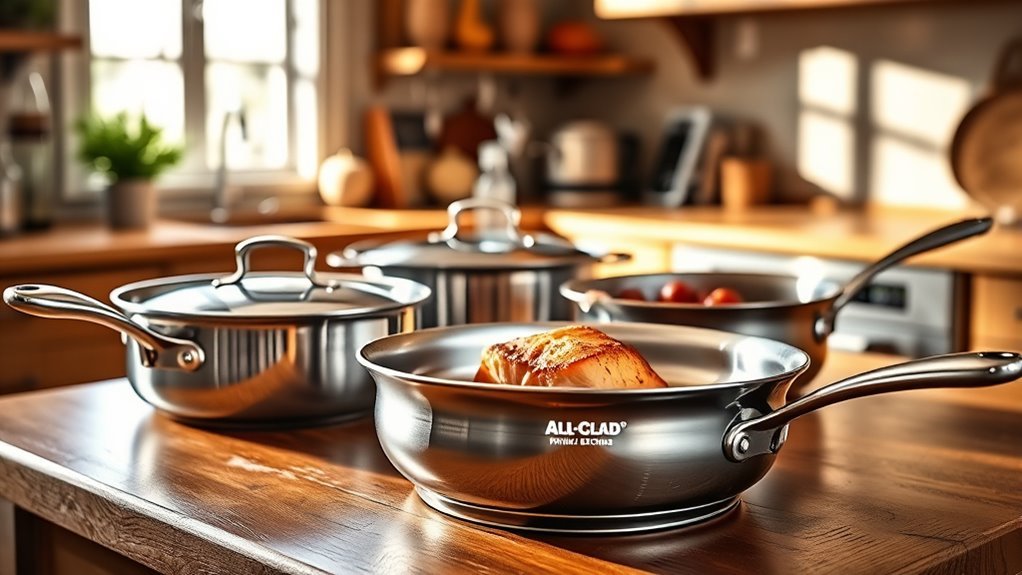
All-Clad is an American cookware brand best known for its bonded (clad) stainless steel pots and pans, which layer stainless steel with a heat-spreading metal such as aluminum or copper. The company says its stainless steel cookware is bonded, engineered and assembled in Canonsburg, Pennsylvania. It is a premium-priced brand, so it helps to understand the lines before you buy.
If you are comparing construction types first, read what ply stainless steel cookware is best.
All-Clad Cookware at a Glance
| Topic | Summary |
|---|---|
| What it is | Clad stainless steel cookware, plus nonstick, hard-anodized and enameled cast iron lines |
| Founded | All-Clad Metalcrafters started in 1971, founded by metallurgist John Ulam |
| Headquarters | Canonsburg, Pennsylvania, USA |
| Owner | Groupe SEB, which acquired the company in 2004 |
| Signature build | Fully clad, rim to rim, with an aluminum core in D3 and D5 |
| Warranty | Limited lifetime warranty for manufacturing defects. Wear, scratches and discoloration are excluded |
How All-Clad Cookware Is Made
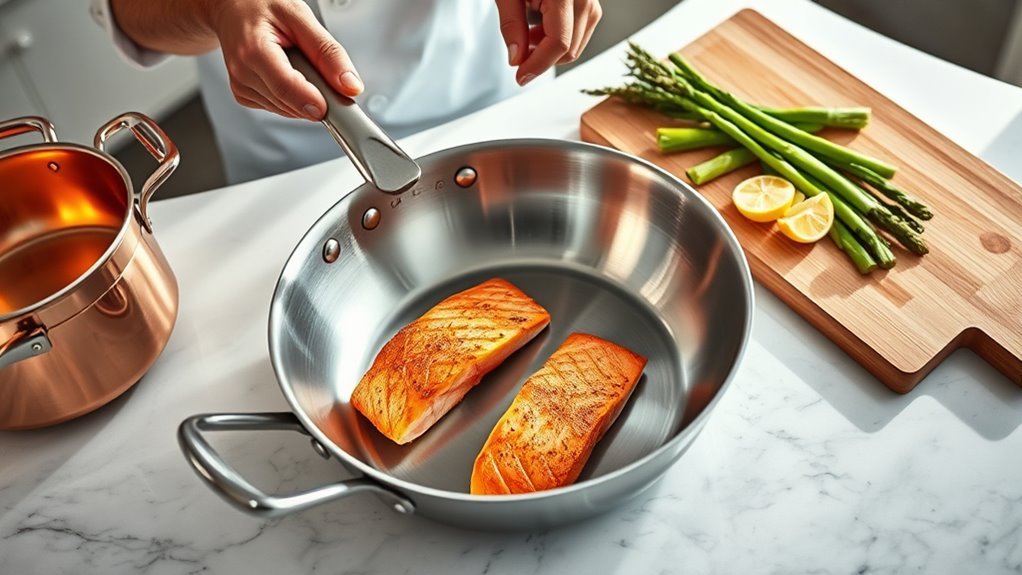
“Clad” means metals are bonded together, not just welded or attached on the bottom. All-Clad bonds layers of stainless steel and aluminum (and in one line, copper) into a single sheet, then forms the sheet into pans. The layers run all the way up the sides, so the pan heats evenly across the floor and walls, not just the base.
The cooking surface is stainless steel, which does not react with acidic foods, so you can cook tomato sauce or deglaze with wine. For why the layers matter, see what 5-ply stainless steel is.
All-Clad Cookware Lines Explained
| Line | What it is | Good to know |
|---|---|---|
| D3 Stainless | Tri-ply: stainless steel with an aluminum core | Classic All-Clad. The product page lists oven and broiler use up to 600°F, induction compatibility and hand wash |
| D3 Everyday | Tri-ply, sold on All-Clad.com | Designed with drip-free rims and interchangeable lids |
| D5 Brushed and D5 Polished | Five layers of stainless steel and aluminum | Brushed has a vintage-style finish. Polished is shinier. Both are listed as induction compatible |
| Copper Core | Five-ply with a copper center | Listed as handwash only, induction compatible, oven safe to 600°F |
| G5 Graphite Core | Layered build with a graphite blend | Marketed as a lighter option. Check the product page for specs |
| Nonstick lines (HA1, Essentials, others) | Hard-anodized or stainless with nonstick coating | Care and heat limits differ from stainless. Check each line |
| Enameled cast iron | Cast iron with enamel | Not the same as clad stainless |
Lines change over time, so confirm current names and specs on All-Clad’s own site. D3 and D5 are the two most common stainless choices, and our other guides cover how 3-ply and 5-ply compare.
Pros and Cons of All-Clad Cookware
- Pro: even heating and excellent searing.
- Pro: oven and broiler friendly, up to the manufacturer’s rating for your line.
- Pro: long-lasting stainless surface that works with metal utensils.
- Pro: limited lifetime warranty for manufacturing defects.
- Con: premium pricing. Prices change, so check the current listing.
- Con: heavier than thin pans.
- Con: food can stick if you do not preheat. See is stainless steel hard to cook with.
Who Should Buy All-Clad?
All-Clad suits people who cook often, want a few pieces that last for years and are comfortable with a learning curve on stainless. Occasional cooks or those who mainly want easy eggs may be happier with a cheaper clad set plus one nonstick pan. Comparable fully clad lines exist from other makers, so compare weight, handles and warranty before you pay a premium. Our guide to what cookware chefs use shows how pros think about it.
How to Care for All-Clad Cookware
- Preheat gradually on low to moderate heat. All-Clad advises not leaving an empty pan on a hot burner.
- Add oil and food once the pan is hot.
- Let the pan cool before washing and never put a hot pan under cold water.
- Wash with warm soapy water. For discoloration, wipe with white vinegar, and for stuck food use baking soda and boiling water or a non-abrasive cleanser such as Bar Keepers Friend.
- Avoid steel wool, oven cleaners and bleach.
- Dry immediately to prevent water spots.
Dishwasher guidance varies by line. Read can All-Clad go in the dishwasher before you load it.
Frequently Asked Questions
What is the difference between stainless steel and clad cookware?
Stainless steel is an alloy. Clad cookware layers stainless steel with other metals, such as aluminum or copper, that spread heat well. The stainless forms the cooking and outer surfaces, so you get durability plus more even heating.
What is so special about All-Clad?
It is known for fully clad construction, where bonded layers run from the base up the sides for even heating. The company makes its stainless lines in Pennsylvania and backs them with a limited lifetime warranty for manufacturing defects.
Do professional chefs use All-Clad cookware?
Some do, and it is common in many home and professional kitchens. Many chefs also use other brands and materials, such as carbon steel and cast iron. There is no single brand that all chefs use.
Why does everything stick to my All-Clad pans?
Usually the pan was not hot enough, the food was wet or cold, or it was moved too soon. Preheat gradually, check with a water bead test, add oil to the hot pan and wait for a crust to release.
Conclusion
All-Clad makes fully clad stainless cookware that heats evenly and lasts for years, with D3 and D5 as the main stainless lines. Before you buy, check the specific line’s care and oven limits on All-Clad’s site.
Related guides: when a stainless steel pan is ready and can stainless steel go in the dishwasher.
