
Can All-Clad go in the dishwasher? The safest answer is to hand wash it. All-Clad’s own care guidance says stainless steel pieces can be washed in a dishwasher, but the company recommends hand washing, and the product pages for lines such as D3 and Copper Core currently say “Handwash Only.” Instructions can differ by line and change over time, so check the page for your exact pan.
Below is what All-Clad says, why hand washing is advised, and what to do if a pan has already been through the dishwasher. For the wider question about all stainless items, see can stainless steel go in the dishwasher.
What All-Clad Says About Dishwashers
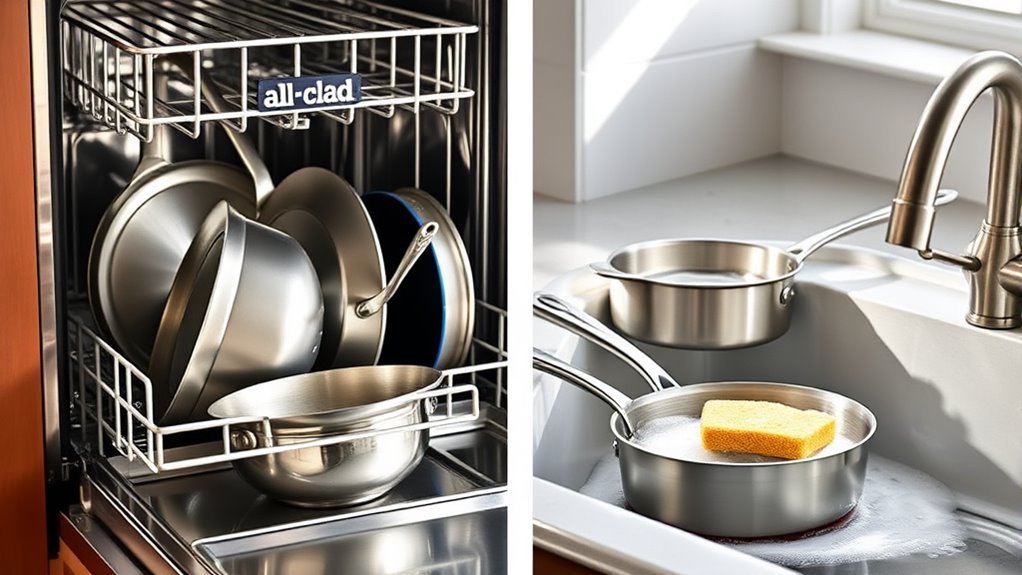
Here is a summary of the official guidance at the time of writing, based on All-Clad’s own pages.
| Line or type | What All-Clad’s pages say |
|---|---|
| D3 Stainless | Product page lists “Handwash Only” |
| D5 Polished | Recommends hand washing with warm water and mild soap to protect the finish |
| Copper Core | Product page says not dishwasher safe, “Handwash Only” |
| Stainless with nonstick, hard-anodized nonstick | Care guide says dishwasher safe, but hand washing is recommended |
| Ceramic nonstick | Do not use the dishwasher |
| Cast iron | Do not use the dishwasher |
| Wooden tools and boards | Do not use the dishwasher |
All-Clad’s customer service page also states that you may wash the stainless exterior in the dishwasher, but recommends handwashing with mild detergent and a sponge. It warns that high heat and harsh detergents can corrode and dry out surfaces. Because the guidance is not identical across pages, hand washing is the one approach that matches every version.
Why Hand Washing Is Recommended
- Harsh detergents: strong dishwasher detergent can dull the finish and cause spotting.
- Aluminum layers: All-Clad’s stainless lines are bonded with aluminum. Rim edges can be exposed to detergent over many cycles.
- Heat and drying: long hot cycles may cause discoloration and water spots.
- Warranty exclusions: All-Clad’s limited lifetime warranty covers manufacturing defects, but wear, scratches and discoloration are excluded. Dishwasher-related cosmetic damage is likely to fall into those exclusions, so contact All-Clad if you are unsure.
The All-Clad Dishwasher Lawsuit
All-Clad faced consumer class-action lawsuits claiming that certain bonded cookware was marketed as dishwasher safe even though repeated dishwasher use could expose or corrode the aluminum core and leave sharp edges. A settlement was proposed in 2022, and the company did not admit wrongdoing. Reported settlement amounts vary between sources, so check the court documents if you need the details.
What matters for you is practical: today’s product pages say handwash only for several stainless lines, and the safest approach is to follow them.
How to Hand Wash All-Clad Cookware
- Let the pan cool completely. Never put a hot pan under cold water.
- Soak in warm soapy water if there is stuck-on food.
- Wash with a soft sponge or cloth. Use a nylon pad for stubborn residue.
- For tough spots, use a non-abrasive, non-chlorine cleanser such as Bar Keepers Friend or Bon Ami.
- For rainbow discoloration, wipe with white vinegar. For hard water spots, boil equal parts vinegar and water in the pan.
- For burnt-on food, boil water with baking soda, then loosen with a wooden spoon.
- Dry right away.
Avoid steel wool, oven cleaners, harsh detergents and anything with bleach or peroxide.
What If You Already Put All-Clad in the Dishwasher?
- One cycle will not necessarily ruin a pan. Check for dull spots, discoloration and white film.
- Restore shine with white vinegar or a non-abrasive stainless cleanser.
- Run a finger carefully along the rim and outside edge. If you feel roughness or sharp edges, or see corrosion, stop using the piece and contact All-Clad customer service.
- From now on, hand wash and dry immediately.
Dishwasher or Hand Washing: Which Is Better for All-Clad?
Hand washing takes a few minutes, protects the finish and follows every version of All-Clad’s guidance. The dishwasher saves time but may dull the surface and could leave you outside warranty support if you notice damage. If you wash many pans, a short routine of cooling, washing, drying and an occasional polish works well. For cooking tips that make cleanup easier, read is stainless steel hard to cook with, and for brand background, see what All-Clad cookware is.
Frequently Asked Questions
Can I put my All-Clad stainless steel pans in the dishwasher?
All-Clad’s care guidance says stainless can be washed in a dishwasher, but it recommends hand washing, and product pages for D3 and Copper Core say handwash only. Follow the page for your line, and hand wash if you want the longest life.
Is All-Clad D5 dishwasher safe?
All-Clad’s D5 Polished page recommends hand washing with warm water and mild soap to protect the finish and does not list it as dishwasher safe. Hand wash D5 and check the current product page for your version.
Did All-Clad have a lawsuit about dishwasher-safe cookware?
Yes. Consumer class actions alleged that some bonded cookware was marketed as dishwasher safe even though dishwasher use could corrode the aluminum and leave sharp edges. A settlement was proposed in 2022, and the company did not admit wrongdoing.
Is nonstick All-Clad dishwasher safe?
All-Clad’s care guide says stainless with nonstick and hard-anodized nonstick are dishwasher safe, though it recommends hand washing. Ceramic nonstick should never go in the dishwasher. Check the specific product page for your line.
Conclusion
Hand wash All-Clad for the best results. Even where the dishwasher is allowed, All-Clad recommends hand washing, and several current product pages list handwash only.
Related guides: can you put pots and pans in the dishwasher and are Made In pans dishwasher safe.
