
The 8 best compost tumblers under $100 in 2027 include the Nazhura 43-gallon, Marcytop 45-gallon, VIVOSUN 43-gallon, F2C 43-gallon, Miracle-Gro dual chamber, Goplus 34.5-gallon, a 22.5-gallon easy-assemble bin, and East Oak dual chamber model. These tumblers offer dual-chamber convenience, steady aeration, and compact designs for small spaces. Most are beginner-friendly and help speed decomposition with little effort. Each one has its own strengths worth exploring further.
Compost Tumbler Bin Composter Dual Chamber 43 Gallon
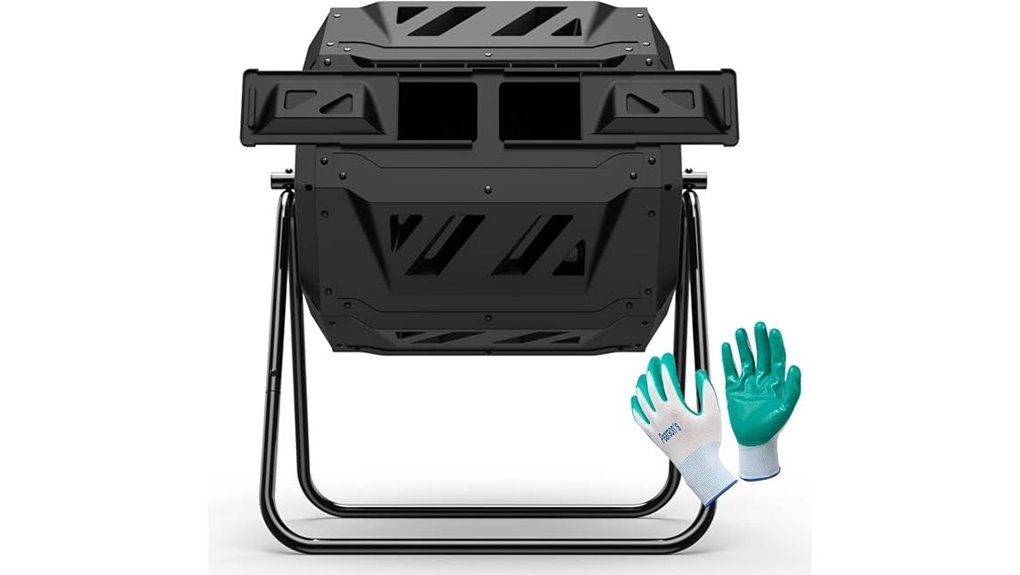
The Compost Tumbler Bin Composter Dual Chamber 43 Gallon is a practical choice for gardeners who want a compact, budget-friendly way to keep compost moving without constant hand-turning. Made by Nazhura, it measures 26.25 x 23.6 x 36.5 inches and weighs 21 pounds. Its dual-bin layout supports continuous composting, while internal paddles and rotation improve aeration and speed decomposition. Thick insulation helps retain heat, and finished compost can be removed through a sliding door. Plastic and galvanized steel construction adds durability, and Pearson’s Gardening Gloves are included. A one-year warranty and 30-day Amazon return policy provide extra reassurance.
Best For: Home gardeners, beginners, and small-space composters who want a compact dual-chamber tumbler that speeds up decomposition with minimal effort.
Pros:
- Dual-bin design allows one side to finish while the other keeps accepting scraps for continuous composting.
- Rotating tumbler with internal paddles improves aeration and helps compost break down faster.
- Includes gardening gloves, plus a 1-year warranty and 30-day Amazon return policy for added value.
Cons:
- 43-gallon capacity may be too small for larger households or heavy compost producers.
- Plastic construction may not feel as sturdy or long-lasting as all-metal composters.
- Requires regular turning and monitoring to get the best composting results.
Marcytop 45 Gallon Dual Chamber Compost Tumbler
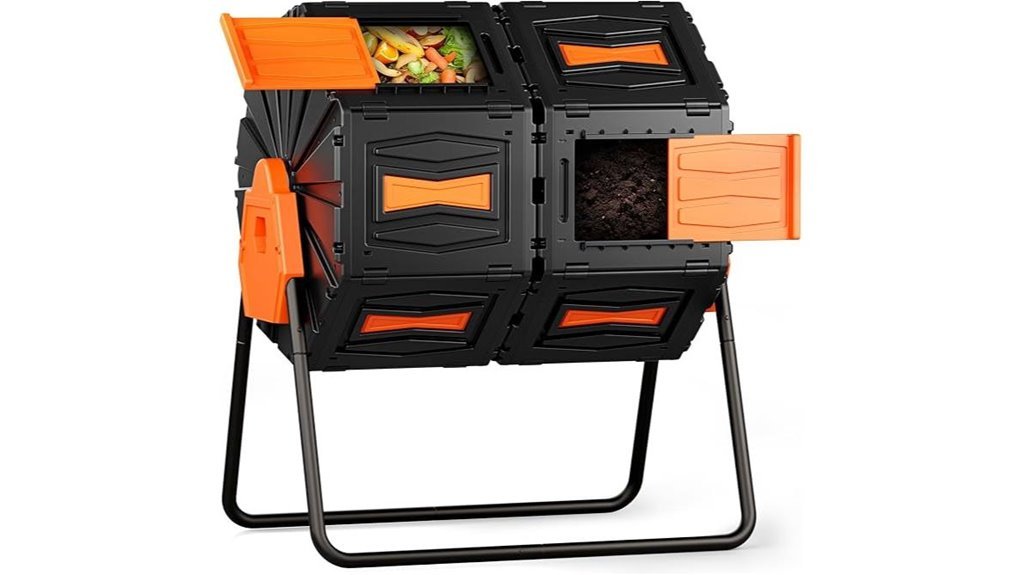
With two chambers and easy rotation, Marcytop suits beginners seeking efficient, low-effort composting. This 45-gallon dual-chamber tumbler uses two 22.5-gallon compartments, letting one side finish while the other is filled. Aeration holes and deep fins improve oxygen flow, helping waste break down faster into usable compost. The hexagonal body, orange access door, and large openings make loading and unloading simple. Built from thick polypropylene and powder-coated steel, it resists sun damage and corrosion. Assembly is straightforward, taking about 30 minutes. Stable during rotation, it needs only a few turns every few days for dependable results.
Best For: Beginner and experienced composters who want an easy-to-use, low-effort dual-chamber tumbler for faster composting.
Pros:
- Dual 22.5-gallon chambers let you compost in one side while the other side finishes.
- Aeration holes and deep fins help speed up decomposition and improve compost quality.
- Durable polypropylene and powder-coated steel construction resists sun damage and corrosion.
Cons:
- 45-gallon capacity may be limited for larger households or heavy yard waste.
- Requires turning every few days, so it is not completely maintenance-free.
- Assembly is straightforward, but still takes about 30 minutes and some setup effort.
VIVOSUN Outdoor Tumbling Composter, 43 Gallon Black Door
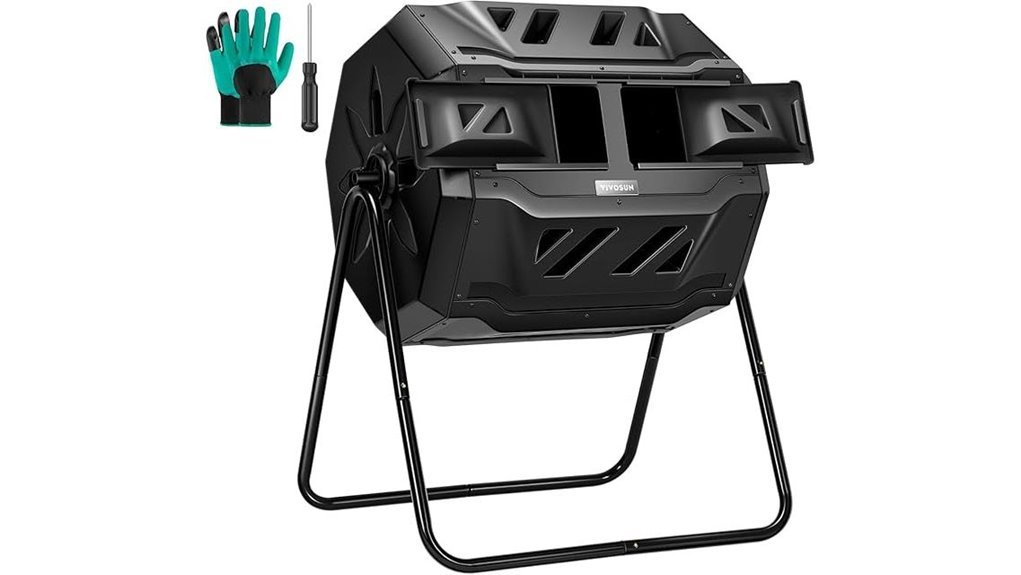
VIVOSUN’s 43-gallon twin-chamber tumbler suits gardeners wanting continuous composting without hand mixing. One chamber can mature while the other receives fresh scraps, keeping compost moving steadily. Its 360-degree tumbling action and deep fins on eight panels reduce clumping and make turning simple. Air vents support circulation, helping fermentation and limiting pressure buildup. A metal frame and polypropylene shell resist corrosion and weathering for durable outdoor use. The package also includes waterproof garden gloves with ABS claws for digging and planting.
Best For: Gardeners who want a durable, easy-to-use 43-gallon tumbler for continuous composting with minimal manual mixing.
Pros:
- Twin chambers let one side compost while the other receives fresh material for uninterrupted use
- 360-degree tumbling design with deep fins makes mixing and turning easy
- Includes waterproof gloves with ABS claws for added gardening convenience
Cons:
- 43-gallon capacity may be too small for larger composting needs
- Requires outdoor space for setup and rotation clearance
- Plastic components may not feel as sturdy as all-metal composters
F2C 43 Gallon Dual Chamber Compost Bin
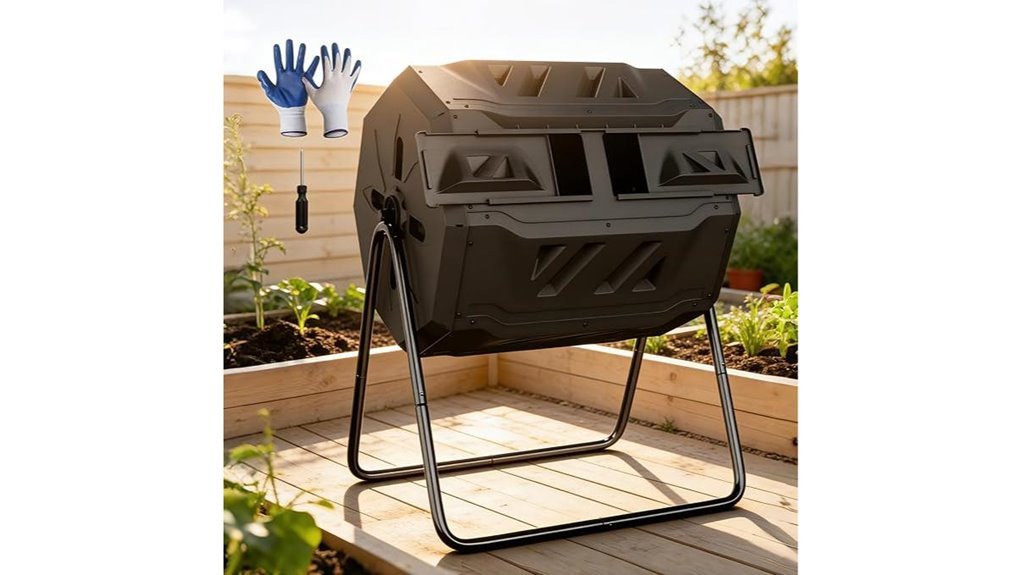
F2C’s 43-gallon dual-chamber bin suits gardeners who want fast, organized composting in tight spaces. Built from BPA-free PP and powder-coated steel, it uses interlocking panels for durability and remains stable in winds up to 40 mph when loaded. Two chambers let one side decompose while the other accepts fresh scraps, and dry browns can be added to manage moisture. Aeration holes and deep fins improve oxygen flow, helping produce compost in weeks. Assembly takes under 30 minutes, and sliding doors make loading easy. Its compact black frame measures 28.5 x 25 x 37 inches.
Best For: Urban gardeners and composters who want a compact, fast-working dual-chamber bin for efficient composting in limited space.
Pros:
- Dual chambers let you compost one batch while adding fresh scraps to the other.
- Aeration holes and deep fins help speed up decomposition and improve airflow.
- Compact, sturdy design is well-suited to small yards or urban setups.
Cons:
- The 43-gallon capacity may be too small for larger households or heavy compost producers.
- Assembly, while quick, still requires some setup and basic tools.
- Black exterior can absorb heat, which may be less ideal in very hot climates.
Miracle-Gro Dual Chamber Compost Tumbler (2×18.5 Gal)

The Miracle-Gro Dual Chamber Compost Tumbler suits gardeners who want continuous compost without much effort. Its two 18.5-gallon chambers let one side fill while the other cures, supporting a steady compost supply. The hexagonal unit uses alloy steel, food-grade BPA-free plastic, and UV protection for year-round use. A galvanized steel base and side locks add stability, while tight seals help keep pests out. Compost can finish in 4 to 6 weeks, and only a few rotations every few days are needed. At 25 x 23.5 x 29.5 inches, it remains compact and manageable for many yards.
Best For: Gardeners who want a compact, easy-to-use compost tumbler that produces a steady supply of compost with minimal effort.
Pros:
- Dual-chamber design lets one side cure while the other side fills, keeping compost production continuous.
- Fast composting time of about 4 to 6 weeks with only a few rotations every few days.
- Durable, pest-resistant build with UV-protected materials and a galvanized steel base for year-round use.
Cons:
- Total capacity may be limited for larger households or heavy composters.
- Requires periodic turning and maintenance rather than completely hands-off composting.
- Assembly and setup may be less convenient than simpler stationary compost bins.
Goplus Dual Chamber Compost Tumbler (34.5 Gal)
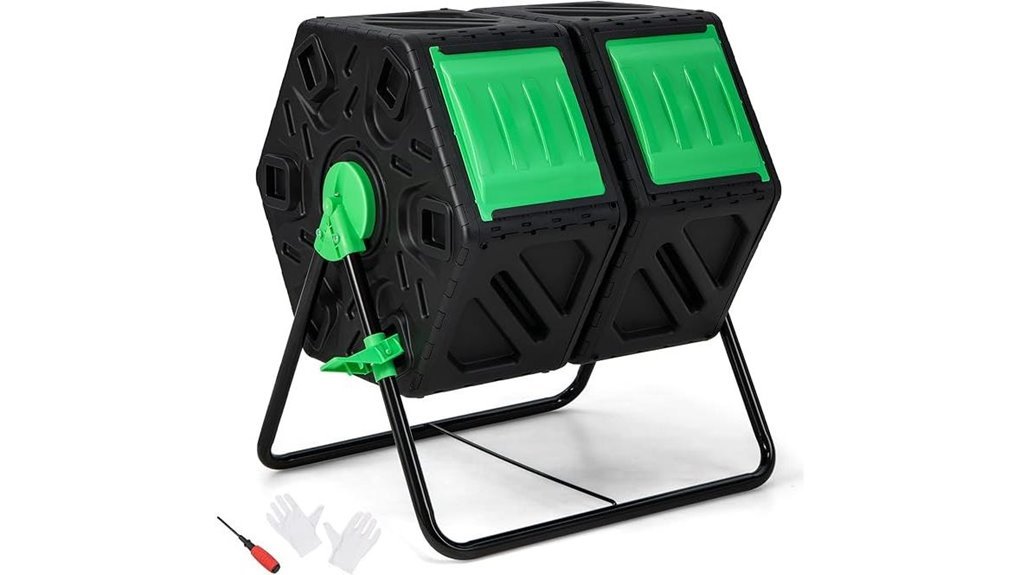
Goplus’ 34.5-gallon dual-chamber tumbler suits gardeners who want continuous composting in a compact, budget-friendly design. Its two chambers let one batch finish while fresh scraps are added to the other, and the 360-degree rotation simplifies mixing without digging. Ventilation and drainage holes improve airflow and moisture control, helping kitchen waste, clippings, and leftovers break down in about four to six weeks. BPA-free PP and a rustproof metal frame add durability, while the triangular base supports stability. Sliding doors, included gloves, and a screwdriver make use and assembly straightforward for everyday outdoor composting.
Best For: Gardeners and households looking for a compact, affordable dual-chamber compost tumbler that supports continuous composting with easy mixing and simple outdoor use.
Pros:
- Two chambers allow one batch to compost while the other receives fresh scraps for uninterrupted use.
- 360-degree rotation, ventilation, and drainage holes make mixing and moisture control easier.
- BPA-free PP construction with a rustproof metal frame offers solid durability for outdoor conditions.
Cons:
- 34.5-gallon capacity may be too small for larger households or heavy composting needs.
- Assembly is required, even though a screwdriver is included.
- Best suited for approved compostable materials only, so it cannot handle plastics, paper, or chemical waste.
Compost Tumbler 22.5 Gallon/85L, Easy Assemble Compost Bin Outdoor
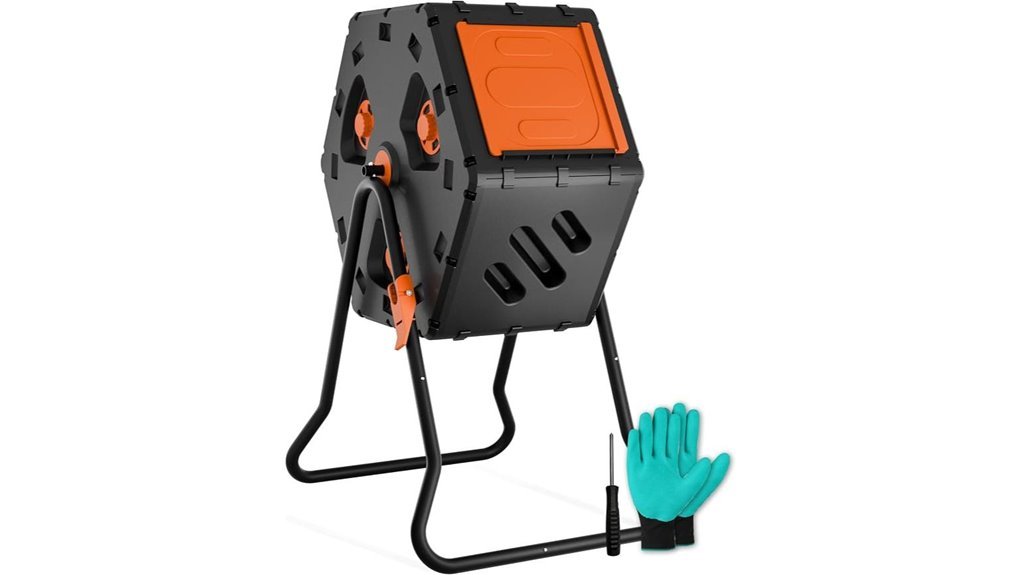
For small yards and patio gardeners, this 22.5-gallon tumbler offers quick, no-tools assembly. It snaps together in minutes, and setup guidance is available through step-by-step videos and customer support. The compact 85L design suits kitchen and garden scraps without taking much space, while the large opening simplifies loading. A 360-degree tumbling action, aided by deep-grip grooves and mixing ribs, promotes aeration without manual turning. The side lock secures the drum, and the elevated base reduces bending. Reinforced plastic walls and a stainless steel frame add durability through changing seasons.
Best For: Small-yard, patio, or beginner gardeners who want a compact, easy-to-assemble compost tumbler with low-effort turning.
Pros:
- Fast snap-together assembly with no tools required, plus setup support available.
- 360° tumbling with mixing ribs and deep-grip grooves helps aerate compost without manual turning.
- Elevated base, large loading opening, and sturdy all-season construction make it comfortable and durable to use.
Cons:
- 22.5-gallon capacity may be too small for larger households or heavy composting needs.
- Plastic construction, while reinforced, may not feel as robust as metal compost systems to some users.
- Tumblers typically require periodic rotation and proper balance of materials to work well.
East Oak Dual Chamber Outdoor Compost Tumbler
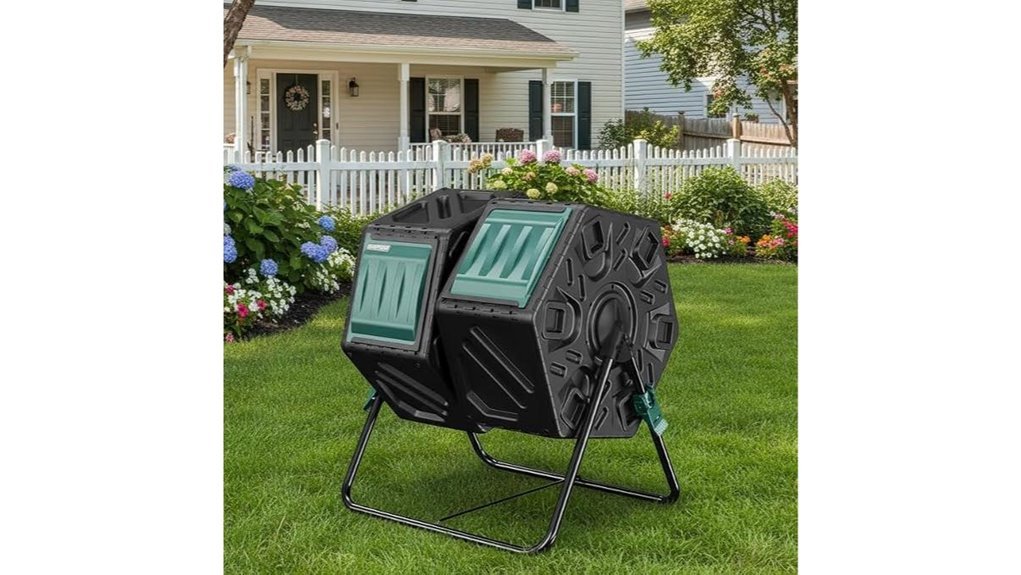
With dual 18.5-gallon chambers, the East Oak suits gardeners wanting continuous composting without constant swapping. Its 37-gallon capacity, BPA-free PP plastic body, and powder-coated steel frame keep the rectangular unit light yet sturdy at 22.4 pounds. One side cures finished compost while the other accepts fresh scraps, and independent 360° tumbling helps separate batches. Heat retention, aeration holes, and mixing fins support faster decomposition in about 4 to 6 weeks. The locking system helps deter animals, and assembly is simplified by instructions and a step-by-step video for stable rotation.
Best For: Gardeners who want a durable, space-conscious compost tumbler with dual chambers for continuous composting and faster batch turnover.
Pros:
- Dual 18.5-gallon chambers allow one side to cure while the other handles fresh waste for continuous composting.
- 360° independent tumbling makes it easy to mix each batch without disturbing the other chamber.
- Heat retention, aeration holes, and mixing fins help speed up decomposition.
Cons:
- At 37 gallons total, it may be too small for households with a lot of yard waste.
- Requires regular turning and moisture management to compost efficiently.
- Assembly may still take some effort despite the included instructions and video.
Factors to Consider When Choosing Compost Tumblers Under $100 in 2026
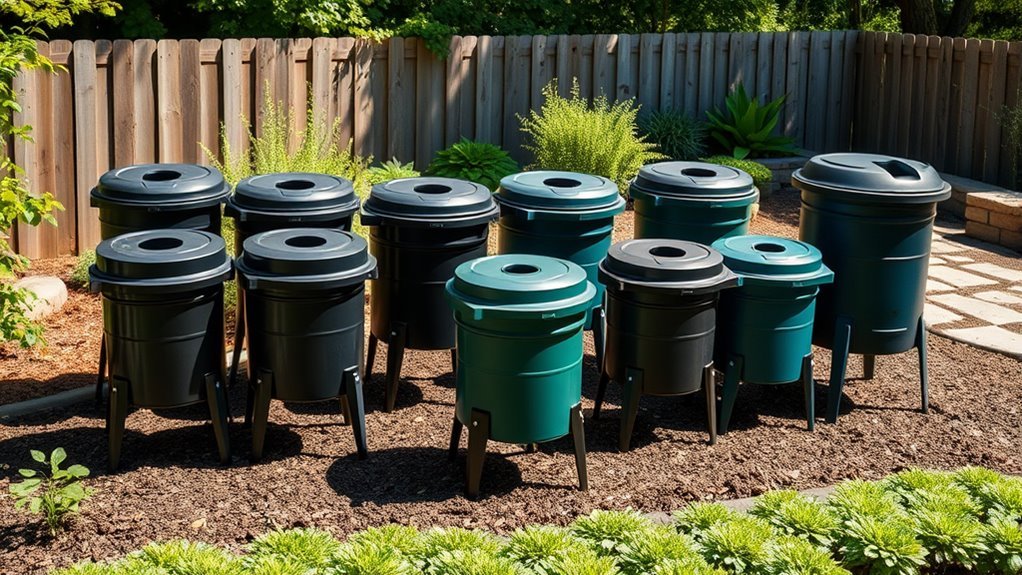
When choosing compost tumblers under $100 in 2026, capacity and size should match both available space and composting needs. Dual chamber design, aeration and turning ease, and material durability can strongly affect daily performance and long-term value. Assembly and access also matter, since a simple setup and easy loading or emptying can make the tumbler far more practical.
Capacity And Size
Capacity and size are among the most important considerations when choosing a compost tumbler under $100, since most models in this range typically hold between 22.5 and 45 gallons. A larger unit can manage more kitchen scraps and yard trimmings, making it a practical choice for households with steady compost output. Smaller models, around 22.5 gallons, suit balconies, patios, and compact gardens where space is limited. Overall dimensions matter as much as capacity, because the tumbler must fit the available area without blocking movement or access. Size can also influence maintenance, as larger tumblers often need less frequent turning because of their greater material volume. Selecting the right balance of capacity and footprint helps guarantee efficient, convenient composting.
Dual Chamber Design
Dual chamber compost tumblers add efficiency by separating fresh scraps from material already breaking down, allowing one side to stay active while the other finishes curing. This setup supports continuous composting, so one chamber can receive new kitchen and yard waste while the other completes decomposition. With each side usually holding 18 to 25 gallons, the compartments are manageable and help keep stages distinct. The paired design also supports layered loading of varied organic materials, which can improve compost balance and final quality. Many models include ventilation holes and internal fins in both chambers, helping maintain oxygen circulation. Rotating the tumbler blends contents without hand-digging, reducing upkeep and often shortening composting cycles to about four to six weeks.
Aeration And Turning
Aeration and turning are key to getting fast, odor-free results from a compost tumbler under $100. Oxygen supports microbial activity, which speeds decomposition and helps generate heat inside the bin. Models with internal paddles or fins often mix materials more evenly, so air reaches all parts of the load instead of leaving compacted pockets. Regular rotation every few days keeps the contents loose and prevents clumping that can trigger anaerobic conditions and bad smells. Some tumblers also add aeration holes for extra airflow and better moisture control. Dual-chamber designs can improve the process further by letting one side cure while the other is filled, maintaining steady airflow and a more efficient composting cycle throughout use.
Material Durability
Material durability plays a major role in how well a compost tumbler under $100 holds up through daily use and changing weather. High-quality BPA-free plastic and rust-resistant metal help the unit withstand rain, heat, and repeated exposure outdoors. UV-protected materials are especially important because they reduce fading and weakening from sunlight. For metal components, powder-coated steel or other corrosion-resistant frames offer added protection against rust and structural decline. Thick, reinforced walls also improve impact resistance, lowering the chance of cracking if the tumbler is bumped or moved. Weatherproof construction matters as well, since materials that tolerate temperature swings and retain heat in colder months support steadier composting performance. Stronger materials usually translate to longer service life and better value.
Assembly And Access
Assembly and access can strongly influence how practical a compost tumbler under $100 feels in everyday use. Models with snap-together parts and no-tool assembly are often preferable, especially for beginners seeking quick setup. Clear instructions, whether printed or supported by step-by-step video guides, further reduce frustration and help guarantee correct installation. Access matters just as much: large openings and sliding doors make it simpler to load kitchen scraps, yard waste, and to remove finished compost. A design that rotates 360 degrees also improves usability by making mixing easier and promoting even aeration. Stability should not be overlooked, since a sturdy base helps prevent tipping during loading, turning, and emptying. Efficient assembly and access ultimately support safer, smoother composting, especially in smaller, lower-cost tumblers.
Frequently Asked Questions
How Long Does Each Tumbler Take to Produce Finished Compost?
Each tumbler typically produces finished compost in about 4 to 12 weeks, depending on heat, turning frequency, moisture, and ingredient balance. Faster models may finish sooner; neglected ones can take several months.
Can I Compost Meat or Dairy in These Tumblers?
No, most tumblers should not compost meat or dairy. These materials attract pests, smell bad, and can create unhealthy conditions. They are better avoided unless the tumbler specifically supports hot, managed composting.
How Often Should I Turn a Compost Tumbler?
How often should a compost tumbler be turned? Like a clock ticking toward rich soil, it should be turned every two to three days, or even daily, for faster decomposition, better aeration, and fewer odors.
Do Dual-Chamber Models Help Maintain Compost Heat Better?
Yes, dual-chamber models can help retain compost heat better because one chamber stays fuller and more insulated while the other is emptied. Their advantage is modest, though, and depends on ambient temperature, moisture, and load size.
What Pests Can Still Get Into a Compost Tumbler?
Despite a tumbler’s defenses, ants, fruit flies, fungus gnats, and occasionally rodents can still get in through vents, gaps, or careless lids. If scraps are exposed, trouble can sneak in, and things can go sideways.
Conclusion
Choosing the right compost tumbler under $100 in 2027 is a balance of space, speed, and simplicity. The large dual-chamber models stand like busy workshop drums, turning scraps into soil with steady efficiency, while the smaller bins feel compact and quiet, suited to tighter patios. One promises volume, another convenience; one favors frequent batches, another easy handling. In the end, the best choice is the one that matches a gardener’s rhythm, not just a budget.
