
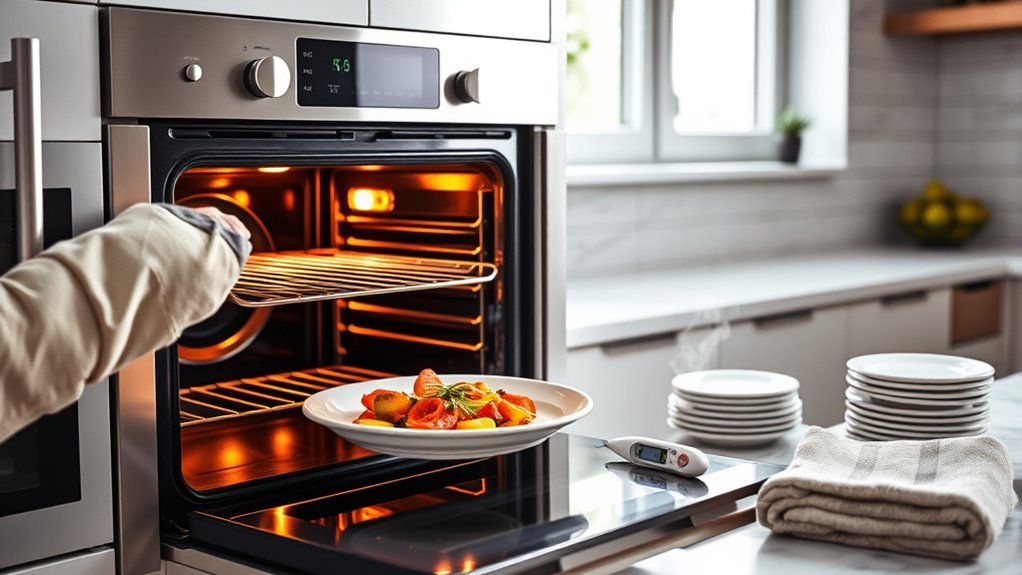
About 65% of households report using porcelain dinnerware for serving hot meals, but not all of those pieces can handle oven heat. You can often use porcelain plates in the oven if they’re labeled oven‑safe and rated to about 500°F (260°C), yet you’ll need to check for metallic trims, delicate glazes, chips, or manufacturer limits before you proceed—keep going to learn the practical checks and steps that reduce the risk of cracking or damaging your plates.
Can Porcelain Plates Go in the Oven? (Quick Answer)
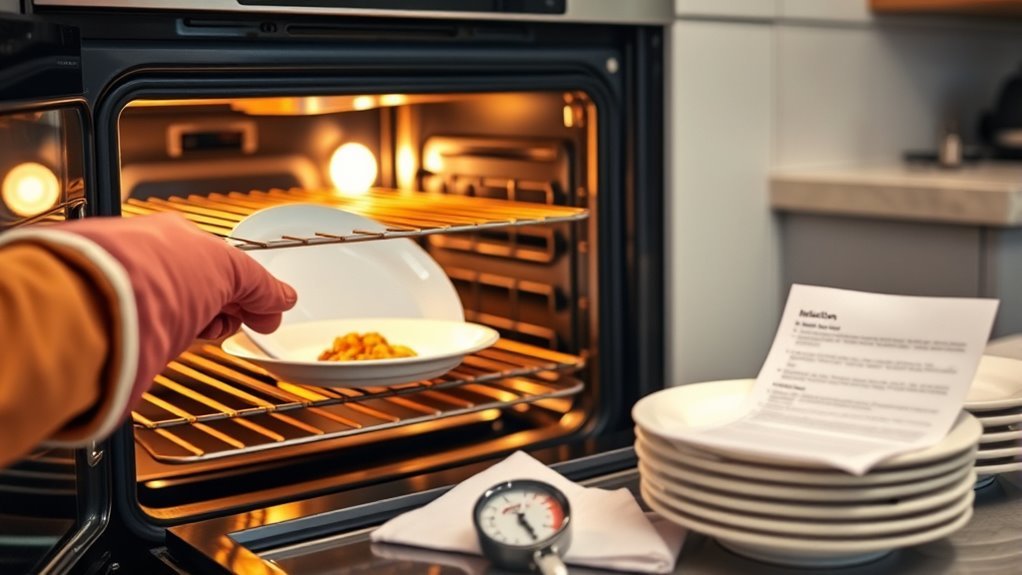
Wondering if you can pop porcelain plates into the oven? Yes — but only when they’re explicitly labeled oven-safe. High-quality porcelain marked safe for oven use can typically handle temperatures up to 500°F (260°C), so you can reheat or bake without worry if you follow limits.
Don’t assume every porcelain piece is oven-ready: avoid plates with metallic accents or delicate decorative glazes that won’t tolerate direct heat. You’ll also want to prevent thermal shock — never transfer plates from the fridge into a preheated oven or expose them to rapid temperature swings, since that sudden heat can make porcelain crack.
Inspect each plate for chips or hairline fractures before use, because damaged glazes may leach or fail under heat. Finally, defer to the manufacturer’s guidelines for temperature caps and handling advice; those instructions are your best safeguard when deciding whether a porcelain plate is truly safe for oven use.
How to Check If a Porcelain Plate Is Oven‑Safe
Start by turning the plate over and checking for an “oven-safe” label or symbol—that’s the quickest confirmation.
Inspect the glaze and surface for metallic decorations, hand-painted designs, cracks, or chips, since those can make the plate unsafe in high heat.
Finally, consult the manufacturer’s guidelines for exact temperature limits (most oven-safe porcelain tolerates roughly 500–572°F) and follow their usage instructions.
Look For Oven-Safe Markings
When you’re checking a porcelain plate for oven use, flip it over and look for clear markings like “Oven Safe” or “Ovenproof” that indicate it’s been tested for high heat; absent labels, treat the plate as unsuitable for oven cooking.
You’ll want obvious oven-safe markings because they signal the maker considered high temperatures and minimized risks like cracking or leaching harmful substances.
Check for quality indicators — thicker construction and high-gloss finishes often correlate with better heat tolerance.
Watch decorative pieces: metallic accents or hand-painted details can spark, discolor, or release contaminants.
If markings include temperature limits, follow them.
When in doubt, consult the manufacturer’s guidelines for that specific model rather than assuming all ceramic plates perform the same.
Inspect Glaze And Condition
If the glaze on a porcelain plate shows any chips, hairline cracks, or a rough, uneven surface, don’t use it in the oven—damaged glazes can let moisture and contaminants penetrate or leach into food when heated.
Inspect every plate closely: run your fingertip over the surface to detect unseen hairline cracks and hold it to light to catch fine crazing.
Avoid pieces with metallic accents or hand-painted areas, since those finishes may not be oven-safe and can release fumes.
Favor high-quality, kiln-fired porcelain for greater durability and heat resistance.
A smooth, intact glaze signals the manufacturer applied and sealed it properly; damaged or poorly applied glazes compromise safety.
If you spot any flaw, resist the urge to risk it—choose sound dinnerware.
Confirm Manufacturer Guidelines
After you’ve checked the glaze and overall condition, look for the manufacturer’s guidance to verify whether a plate can safely go in the oven.
Check the bottom for explicit Oven safe or Ovenproof markings—those symbols and words reflect safety standards and testing.
Read the manufacturer guidelines for the maximum temperature; most oven-safe porcelain plates tolerate up to 500°F (260°C), but don’t assume.
Watch for decorative elements like metallic trims or hand-painted designs; they often disqualify a piece for oven use.
Review notes on glaze quality to guarantee well-applied glazes reduce harmful substance leaching when heated.
If the maker warns against oven use or the plate shows chips or cracks, don’t risk it—choose cookware that liberates you from doubt and keeps cooking safe.
How Hot Can Oven‑Safe Porcelain Get?
You can expect oven-safe porcelain to handle roughly 250°F to 572°F (120°C to 300°C), with high-quality pieces commonly rated around 500°F (260°C).
Always check the manufacturer’s marking before using higher heat, since poorly glazed or decorative items may tolerate less and could off-gas when overheated.
To avoid cracks, heat and cool porcelain gradually to prevent thermal shock.
Typical Temperature Limits
Because oven-safe porcelain comes in a wide range of formulations and firing histories, its usable temperature varies—most manufacturers rate plates between about 250°F and 500°F (120°C–260°C), while high-quality, high-fired porcelain can tolerate up to roughly 572°F (300°C).
You’ll want to check each piece: look for oven-safe markings and follow manufacturer temperatures rather than guessing. Thicker, well-glazed porcelain tends to withstand heat better; thin or poorly glazed pieces may not and can leach if overheated.
Be mindful that thermal stress limits practical use even when a maximum is stated. Use moderate oven settings within the marked range, preheat gradually, and let plates acclimate to room temperature before loading. That way you keep your ceramics useful and free.
Avoiding Thermal Shock
Although oven-safe porcelain can tolerate high temperatures—typically 250°F to 572°F (120°C–300°C)—its real vulnerability is to sudden temperature change, so you should always heat and cool pieces gradually to prevent thermal shock.
To protect your freedom to cook confidently, preheat the oven fully before placing porcelain in the oven and avoid dropping cold plates into a hot appliance.
Gradual heating and cooling let items expand and contract evenly so they can withstand temperatures claimed by the manufacturer.
Inspect plates for cracks or chips before use, since damaged items are far more likely to fail under stress.
Follow manufacturer limits, use oven mitts, and let porcelain cool on a rack rather than a cold surface—these steps keep your dishes safe to use and your cooking liberated.
Porcelain Plates and Glazes to Avoid
When shopping for oven-safe porcelain, watch out for metallic accents, hand-painted decorations, antiques, and adhesive decals—these finishes can spark, melt, or leach harmful substances when exposed to high heat. You’ll want to avoid decorated porcelain with gold or silver trim and antique pieces with unknown glazes; both can release harmful chemicals or create sparks. Also skip hand-painted items and any with adhesive decorations or decals—they can degrade, bubble, or emit toxic gases in the oven. Instead, choose thicker options with clean, well-applied glazes explicitly labeled oven-safe for durability and safety. Be deliberate: liberated cooking means choosing tools that won’t limit your creativity or risk your health.
| Risky Finish | Why to Avoid |
|---|---|
| Metallic accents | Can spark, cause damage |
| Hand-painted glazes | May contain harmful chemicals |
| Antique porcelain | Unknown leach risks |
| Adhesive decorations | Can melt or emit toxic gases |
Safe Steps to Heat and Cool Porcelain Plates
If you plan to heat porcelain plates in the oven, first confirm they’re explicitly marked oven-safe to at least 500°F (260°C) and free of metallic trim or decals that could spark or leach. Treat oven-safe labeling as your permission slip: inspect each plate for chips or hairline cracks before use, since damaged porcelain plates are far more likely to fail under heat.
Preheat the oven with plates inside so temperatures rise slowly and you avoid thermal shock; sudden changes cause cracking. After cooking, let plates gradually cool in the oven for about 10–15 minutes before moving them.
When you remove plates, set them on a heat-resistant trivet or surface—never on cold countertops or wet cloths that can induce thermal shock. These safe steps protect your pieces and your kitchen. Follow them consistently, and you’ll keep porcelain usable and beautiful while claiming freedom from fear when you bake or reheat.
Oven‑Safe Alternatives to Porcelain Plates
Because not every porcelain plate is safe for oven use, you’ll often want reliable substitutes that handle heat better: stoneware and high-fired ceramic offer good heat retention and stability (check labels for oven ratings), tempered glass like Pyrex gives even heating without shattering under proper use, cast iron tolerates very high temperatures and moves straight from oven to table, and metal baking sheets—stainless steel or heavy-duty aluminum—provide excellent conductivity for high-temperature cooking.
Choose stoneware for steady, heat‑retentive baking dishes that handle high temperature roasting above 450°F. Use tempered glass when you want transparent, even heating and clear oven-safe labeling. Pick cast iron to sear, bake, and deliver food hot without fear of warping. Opt for metal baking sheets for quick, conductive results at high temperature. Always verify oven-safe marks on ceramic or porcelain alternatives, preheat the oven with the dish inside when recommended, and avoid sudden temperature shocks. These choices free you from risky porcelain use while keeping results reliable and heat resistant.
| Material | Strength |
|---|---|
| Stoneware | Heat retention |
| Tempered glass | Even heating |
| Cast iron | Very high temperature |
| Metal sheets | Conductivity |
Frequently Asked Questions
How Do I Know if Porcelain Is Oven-Safe?
Check the plate underside for oven-safe markings and manufacturer ratings; that’s your first step.
You’ll compare porcelain types, glazing effects, and stated heat resistance to intended oven temperatures. Avoid metallic-accent or antique glazes for food safety.
Inspect for chips, use gradual preheating to prevent thermal shock, and follow care tips and usage limitations.
When unsure, perform approved testing methods or contact the maker before heating.
Is Porcelain Oven-Safe at 350 Degrees?
Yes — many high-quality, oven-safe porcelain pieces handle 350°F, but you’ll want to check markings and manufacturer guidelines first.
Like choosing the right map on a journey, use oven temperature guidelines, porcelain types comparison, and heat resistance ratings to pick compatible dishes.
Match cooking methods compatibility with safe baking practices, note common porcelain brands, follow care instructions tips, and troubleshoot cracks promptly to keep your plates reliable and liberating.
Is Porcelain Dinnerware Oven-Safe?
Yes — high-quality, labeled oven-safe porcelain dinnerware can handle ovens, but you’ll need to check specifics.
Rely on porcelain durability and porcelain glaze standards; verify heat resistance and oven safety markings before use.
Consider dinnerware materials and avoid thin or metallic-accented pieces.
Practice porcelain maintenance and gradual temperature changes to prevent cracking.
Use safe cooking techniques, and if unsure, choose dishware alternatives like tempered glass or stoneware for reliable oven use.
How to Tell if a Plate Is Ceramic or Porcelain?
You check by weight, translucence, and sound: porcelain feels lighter, rings when tapped, and lets light pass at the edge; ceramics types like stoneware are heavier and duller.
Inspect plate markings for “porcelain,” temperature limits, or oven-safe symbols.
Consider porcelain differences in heat resistance, material durability, and follow usage guidelines and care instructions.
That evidence-based approach frees you to use plates safely and confidently.
Conclusion
You can use oven‑safe porcelain, but don’t treat all plates the same. Like a sturdy baking stone beside delicate glass, choose pieces labeled for high heat and avoid metallic trims or crazed glazes. Heat and cool plates gradually to prevent thermal shock, inspect for chips, and follow manufacturer limits—often up to 500°F (260°C). With careful selection and gentle handling, your porcelain can move from pantry stillness to oven warmth without cracking under pressure.
