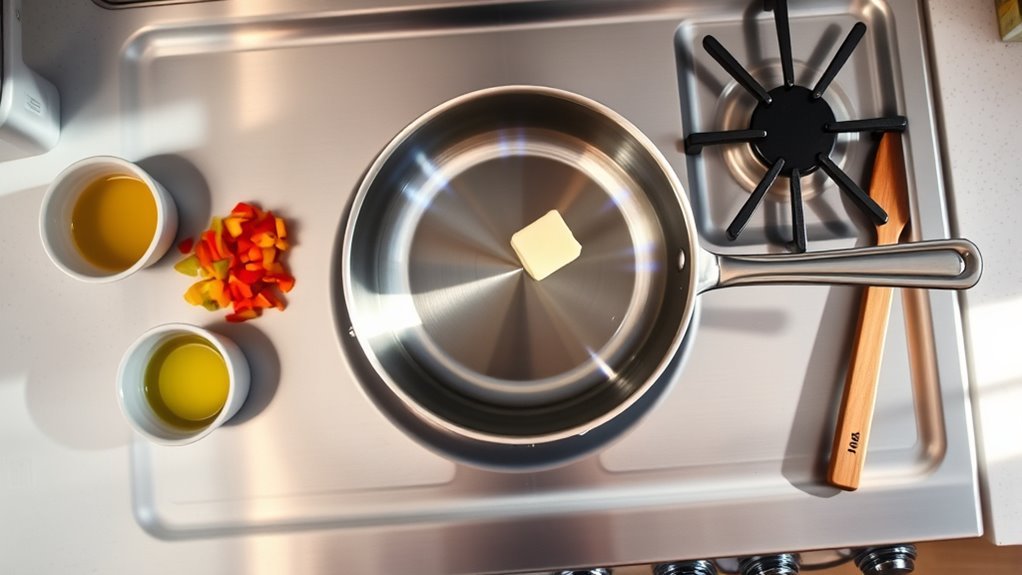
Learning how to use All-Clad pans is easier once you understand heat control. Stainless steel cookware can produce excellent browning, but food may stick if you skip preheating or move it too soon. This guide shows you how to prepare your pan, choose cooking temperatures, sear and sauté food, and clean your cookware without damaging it.
Quick Answer
To use All-Clad stainless steel pans, preheat over low to medium heat for approximately 1–3 minutes. Add enough cooking oil to coat the surface, then wait until it shimmers before adding dry food. Cook without overcrowding, let food release naturally, and adjust the heat as needed. Afterward, cool the pan and wash it gently.
At a Glance
| Time Required | Approximately 1–3 minutes for initial preheating; cooking time varies by recipe |
| Difficulty | Beginner-friendly with practice |
| Tools Needed | All-Clad stainless steel pan, stovetop, cooking oil, spatula or tongs, and cleaning sponge |
Quick Start: Preheat, Add Fat, Cook, Clean
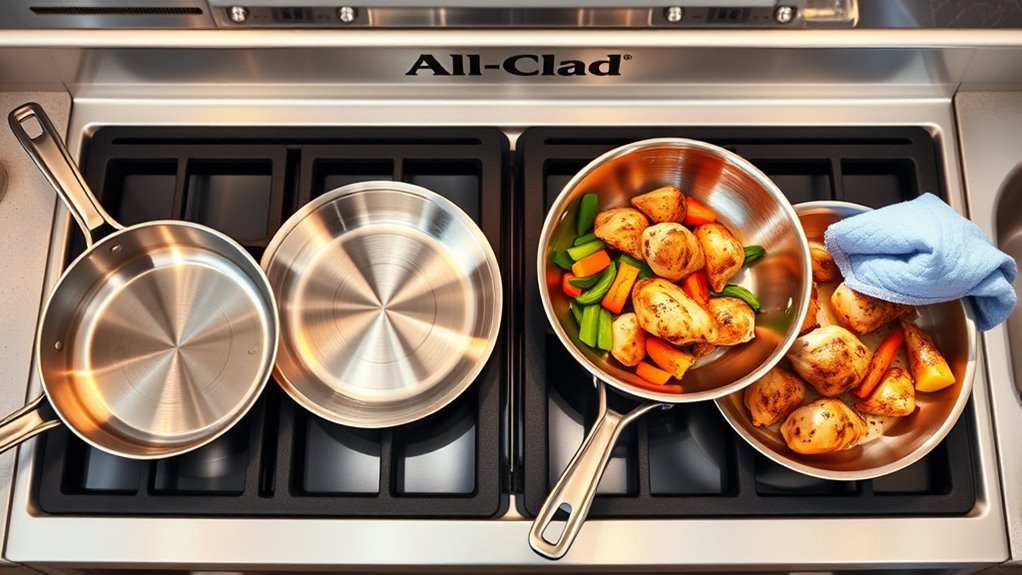
The easiest way to cook with All-Clad is to follow a consistent sequence. This helps you control browning, reduce sticking, and protect the stainless steel surface.
- Start with a clean pan. Remove any leftover grease or food residue. Choose a burner that closely matches the pan’s base.
- Preheat gradually. Use low to moderate heat rather than immediately turning the burner to high.
- Add cooking fat. Once the pan is warm, add enough oil or butter to cover the cooking surface.
- Cook in batches. Place your food in a single layer when browning. Leave enough space between pieces for moisture to escape.
- Let food release. Allow a crust to form before attempting to flip meat or other ingredients.
- Cool and clean. Remove the pan from the heat, allow it to cool naturally, and wash with warm, soapy water.
All-Clad’s bonded stainless steel construction spreads heat efficiently. You generally need less burner power than you might expect, especially after the pan reaches cooking temperature.
The manufacturer recommends low to medium heat for most stovetop cooking. You can find these recommendations in All-Clad’s official care and use instructions.
How to Preheat and Prep Your All-Clad Pan
To preheat your All-Clad stainless steel pan, place it on a properly sized burner and start with low to moderate heat. Allow approximately 1–3 minutes for the pan to warm, depending on its size and your stove.
The goal is an evenly heated surface, not the highest temperature possible. A gradual warm-up helps prevent overheating and gives you more control once the food goes into the pan.
How Do You Know When an All-Clad Pan Is Hot Enough?
The water-droplet test is a useful way to check the temperature of a dry stainless steel pan.
- Preheat the clean, dry pan over low to medium heat.
- Place a few small drops of water on the cooking surface before adding oil.
- Watch how the water behaves. If it forms rounded beads that glide across the pan, the surface is hot enough for many browning tasks.
- Discard any remaining water, reduce the heat if necessary, and add your cooking oil.
If the drops remain flat and evaporate slowly, the pan may need more time. If the pan is excessively hot or smoking, reduce the heat and allow it to cool slightly.
This behavior is called the Leidenfrost effect. A thin layer of vapor temporarily separates the water droplets from the hot metal.
All-Clad discusses this technique in its stainless steel cooking guide for beginners.
| Step | Check | Purpose |
|---|---|---|
| Burner size | Match the pan base | Promote even heat distribution |
| Preheat | About 1–3 minutes on low to moderate heat | Warm the cooking surface gradually |
| Water test | Small droplets bead and glide | Check surface readiness |
| Temperature control | Avoid excessive heat and sudden cooling | Reduce the risk of warping and overheating |
Warning: Perform the water-droplet test only before adding cooking oil. Never sprinkle water into hot oil, as it can cause dangerous splattering. Also, avoid heating an empty stainless steel pan unattended or using maximum heat for prolonged preheating.
Should You Preheat All-Clad on High Heat?
No. High burner settings are generally unnecessary for All-Clad stainless steel pans. The cookware transfers and retains heat efficiently, so moderate settings are usually enough for browning and sautéing.
All-Clad recommends reserving high heat mainly for boiling liquids. Heating a dry pan too aggressively may cause discoloration and increase the risk of warping.
When cooking delicate foods such as eggs or fish, use lower heat and enough fat to reduce sticking.
Add Fat and Test Heat (Oils, Temps, Shimmer Test)
After preheating, add a thin, even layer of cooking fat. For many everyday tasks, the oil should shimmer gently before you introduce food.
Choose your fat based on the cooking method. A higher-smoke-point oil is useful for searing, while butter or olive oil can work well at lower temperatures.
Which Oil Works Best in All-Clad Stainless Steel Pans?
Different cooking fats perform better at different heat levels. Match your choice to the food and avoid heating any fat until it burns.
- Avocado oil: Refined avocado oil is suitable for higher-temperature cooking and searing.
- Canola oil: A practical option for everyday sautéing and pan-frying.
- Grapeseed oil: Useful when you want a neutral-tasting oil for browning meat or vegetables.
- Olive oil: Suitable for many moderate-heat cooking tasks.
- Butter: Works well for gentle cooking, such as eggs or delicate vegetables, but can burn at higher temperatures.
You usually need only enough fat to coat the base. All-Clad suggests approximately 2–3 teaspoons of oil for many stainless steel cooking tasks, although larger pans and some foods may require more.
How Do You Perform the Oil Shimmer Test?
Once you add oil to your warm pan, tilt it gently to spread the fat across the surface. Watch for a slight shimmer or ripple as the oil becomes hot.
This visual change suggests the oil is ready for many sautéing and browning tasks. Add the food before the oil starts smoking heavily.
For butter, watch for bubbling rather than waiting for visible smoke. If the butter darkens rapidly, the pan is too hot.
Remember: Oil helps reduce sticking, but it does not turn uncoated stainless steel into permanent nonstick cookware. Correct heat management and cooking technique still matter.
How to Sear, Sauté, and Pan-Fry: Step-by-Step
All-Clad stainless steel pans can sear meat, sauté vegetables, and pan-fry food. Each method requires a different approach to heat, movement, and cooking fat.
For the best results, control your burner setting rather than relying only on a fixed pan temperature. The thickness of your food and the pan’s construction also affect cooking performance.
How to Sear Meat in an All-Clad Pan
Searing creates a browned crust through the Maillard reaction, the process that develops rich flavors when proteins and sugars react under heat.
- Pat the meat dry with paper towels to remove surface moisture.
- Preheat your stainless steel skillet gradually.
- Add a thin film of high-smoke-point oil.
- Place the meat in the pan without overcrowding.
- Leave it undisturbed while a browned crust develops.
- Gently lift an edge to test whether the meat releases naturally.
- Flip with tongs and finish cooking to the required internal temperature.
- Transfer the cooked meat to a clean plate or resting tray.
Do not force meat away from the surface if it still sticks. Give the crust more time to develop, then test again.
How to Sauté Vegetables in All-Clad
Sautéing uses a relatively small amount of fat and frequent movement to cook food evenly. Medium or moderate heat is generally suitable for most vegetables.
- Cut vegetables into similar-sized pieces.
- Warm the skillet and add cooking oil.
- Place the vegetables in the pan without crowding them.
- Stir or toss periodically to promote even browning.
- Adjust the heat if the vegetables begin to scorch.
- Remove them when they reach your desired texture.
Watery vegetables may release moisture during cooking. Allow that moisture to evaporate before expecting significant browning.
How to Pan-Fry Food Without Excessive Sticking
Pan-frying uses more cooking fat than sautéing, but usually less than deep-frying. The goal is a crisp exterior with food cooked properly inside.
- Add enough oil for your chosen pan-frying method.
- Heat the oil gradually to the target cooking temperature.
- Carefully lower dry, prepared food into the oil.
- Leave space between the pieces so the oil temperature does not fall sharply.
- Turn the food as needed for even browning.
- Transfer it to a rack or suitable tray when cooked.
The following temperature ranges are useful starting references. They describe cooking-surface or oil temperatures, not the settings on your stove’s control dial.
| Technique | Temp | Key Action |
|---|---|---|
| Searing | Approximately 400–450°F pan surface | Maintain contact until a crust forms, then flip |
| Sautéing | Medium burner heat | Stir or toss for even cooking |
| Pan-frying | Approximately 350–375°F cooking oil | Maintain oil temperature and cook in a single layer |
These temperatures are general references rather than fixed requirements for every All-Clad pan. Adjust the heat to avoid smoking oil or burning food.
Note: Pan temperature is not the same as food’s internal temperature. For food safety, use a thermometer. FoodSafety.gov recommends 165°F for poultry, 160°F for ground meat, and 145°F followed by a three-minute rest for whole cuts of beef, pork, lamb, and veal.
How to Deglaze an All-Clad Stainless Steel Pan
After searing, you may notice browned bits stuck to the bottom of your skillet. These are called fond, and they contain concentrated flavor.
Deglazing loosens those browned bits with liquid so you can turn them into a simple pan sauce.
- Remove the cooked food from the skillet.
- Reduce the burner heat if the pan is excessively hot.
- Add a modest amount of broth, wine, or another suitable cooking liquid.
- Gently scrape the browned bits with a wooden or silicone utensil.
- Simmer briefly to combine the flavors and reduce the liquid if desired.
Use a controlled amount of liquid rather than pouring large quantities of cold water into an extremely hot pan.
For additional techniques, see All-Clad’s guide to deglazing a pan.
How to Clean and Maintain All-Clad + Troubleshooting
Cleaning All-Clad stainless steel cookware is straightforward when you allow the pan to cool first. Warm, soapy water and a non-abrasive sponge are usually enough for daily cleaning.
For more stubborn stains, use a cleaning method suited to the residue rather than immediately reaching for harsh scrubbers.
How to Clean All-Clad Stainless Steel After Cooking
- Turn off the heat and allow the cookware to cool naturally.
- Rinse loose food residue away with warm water.
- Wash the pan with mild dish soap and a soft sponge.
- Soak stubborn residue in warm, soapy water if necessary.
- Rinse thoroughly to remove soap and loosened food particles.
- Dry immediately with a clean towel to reduce water spots.
For extra protection, use soft pan separators when stacking cookware. This helps prevent scratches during storage.
How to Remove Burnt Food and Discoloration
Stainless steel can develop burnt-on residue, rainbow-colored marks, or cloudy white spots. Most of these problems are cosmetic and can be treated without replacing the pan.
- Burnt-on food: Add water and baking soda, bring the mixture to a gentle boil, and loosen the residue with a wooden utensil.
- Rainbow discoloration: Wipe the affected area with a soft sponge and white vinegar, then rinse thoroughly.
- Cloudy white mineral spots: Use a mixture of equal parts white vinegar and water. Heating the mixture can help dissolve deposits.
- Stubborn grease or protein stains: Use a non-chlorine stainless steel cleaner, such as Bar Keepers Friend or Bon Ami, according to the product directions.
Apply stainless steel cleaners with a soft cloth or suitable sponge. Rinse away the cleaning product completely and dry the cookware afterward.
Warning: Never put a very hot All-Clad pan directly under cold running water or submerge it in cold water. Sudden temperature changes may warp the metal. Avoid steel wool, oven cleaners, chlorine bleach, and harsh detergents that may damage stainless steel finishes.
Why Does Food Keep Sticking to Your All-Clad Pan?
Food sticking usually results from incorrect preheating, insufficient fat, excessive heat, or trying to turn food before it releases naturally.
Use this troubleshooting checklist to identify the most likely cause:
- Food sticks immediately: Check whether the pan was preheated before adding the food.
- Meat tears when flipped: Allow additional time for browning before lifting it.
- Food burns before cooking through: Reduce the burner heat and consider using a smaller portion or different cooking method.
- Food steams instead of browning: Avoid overcrowding and remove excess surface moisture.
- The surface has sticky residue: Clean away old grease and food films before cooking again.
All-Clad explains these common causes in its official cookware support guidance.
What If Your All-Clad Pan Becomes Warped?
A warped pan may rock on a flat surface or heat unevenly. The problem can develop after repeated overheating or sudden temperature changes.
Stop using the affected cookware if it becomes unstable on your burner. Avoid trying to flatten it with force, as that may cause additional damage.
Contact All-Clad customer support if the pan is significantly distorted or if you suspect a manufacturing defect.
Frequently Asked Questions
How Do You Use All-Clad Pans for the First Time?
Wash your All-Clad stainless steel pan with warm, soapy water, rinse it, and dry it thoroughly. Preheat gradually over low to medium heat, add cooking oil, and wait until the oil is ready before adding food. Start with a simple recipe to become familiar with heat control and cooking times.
How to Get All-Clad Pans Not to Stick?
Preheat the stainless steel pan properly, add enough oil, and use moderate heat to reduce sticking. Pat food dry before adding it, avoid overcrowding, and let a crust form before flipping. Stainless steel is not permanently nonstick, so some delicate foods may still require extra fat and careful temperature control.
Are You Supposed to Season All-Clad Pans?
No, uncoated All-Clad stainless steel pans do not require seasoning like cast iron or carbon steel. Their cooking surfaces are designed for regular washing and immediate reuse. Use cooking oil as needed to reduce sticking, but there is no need to build or maintain a permanent seasoning layer.
Do I Need to Do Anything to My Stainless Steel Pan Before First Use?
Yes. Wash your new stainless steel pan with warm water and mild dish soap to remove manufacturing or packaging residue. Rinse and dry it completely before heating. You do not need to season the cooking surface or apply a special protective coating before preparing your first meal.
Can You Put All-Clad Stainless Steel Pans in the Dishwasher?
Some All-Clad stainless steel collections are dishwasher-safe, but handwashing is generally recommended to preserve their appearance. Dishwasher detergents can affect certain finishes, and care requirements vary by collection. Follow your cookware’s specific instructions, especially for pieces with nonstick coatings or exposed copper details.
Can You Use Metal Utensils on All-Clad Pans?
Metal utensils can be used on uncoated All-Clad stainless steel cookware, although rough handling may leave cosmetic scratches. Wooden and silicone utensils are gentler options. For All-Clad cookware with a nonstick coating, avoid metal utensils and use wood, silicone, or other recommended materials to protect the surface.
Conclusion
Using All-Clad stainless steel pans successfully comes down to four habits: preheat gradually, use suitable cooking fat, control the heat, and clean carefully.
Start with simple cooking tasks to learn how your pan responds. As you become comfortable with browning and natural food release, you can move on to searing, pan-frying, and making pan sauces.
With consistent cooking and maintenance habits, your All-Clad cookware can remain a reliable part of your kitchen for years.
Sources
- All-Clad Official Use and Care Guide: Manufacturer instructions for preheating, cooking, cleaning, stain removal, and preventing cookware damage.
- All-Clad Customer Service and Cookware FAQ: Guidance on sticking, appropriate heat settings, first use, seasoning, and troubleshooting.
- All-Clad Stainless Steel Cooking Guide: Practical recommendations for the water-droplet test, cooking oils, and food release.
- All-Clad Pan Deglazing Guide: Techniques for loosening browned food bits and preparing pan sauces.
- FoodSafety.gov Safe Minimum Internal Temperature Chart: Recommended internal cooking temperatures for poultry, ground meat, and whole cuts of meat.