
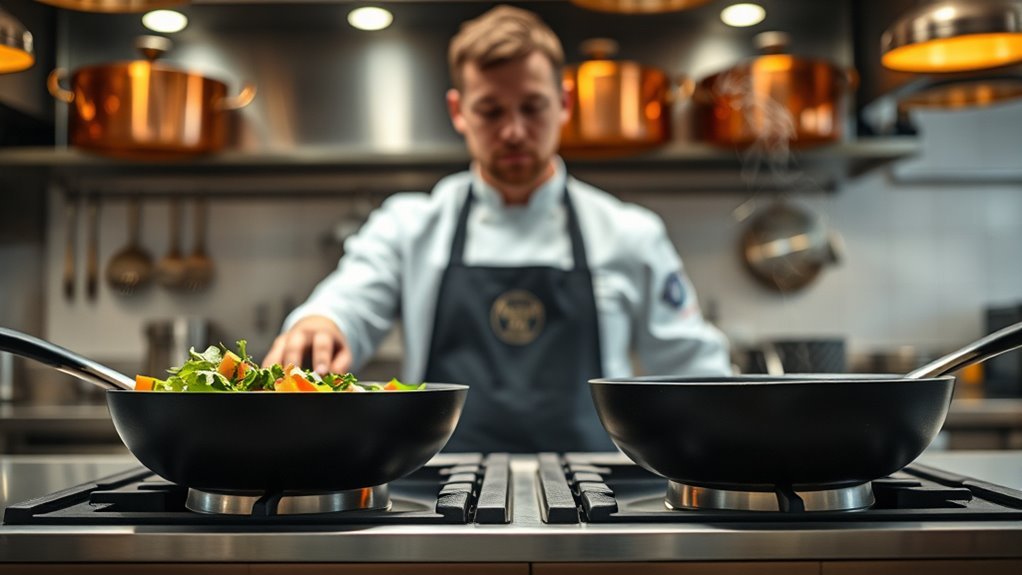
When you watch Gordon Ramsay whip up a perfect omelette, you might notice he reaches for a nonstick skillet. Chefs often favor these pans for their ease of use, especially with delicate dishes. However, many still cherish traditional materials like stainless steel and cast iron for their durability and flavor enhancement. What drives this balance in cookware choices? Let’s explore the pros and cons of nonstick options, along with some chef favorites.
Understanding Why Chefs Favor Stainless Steel and Cast Iron
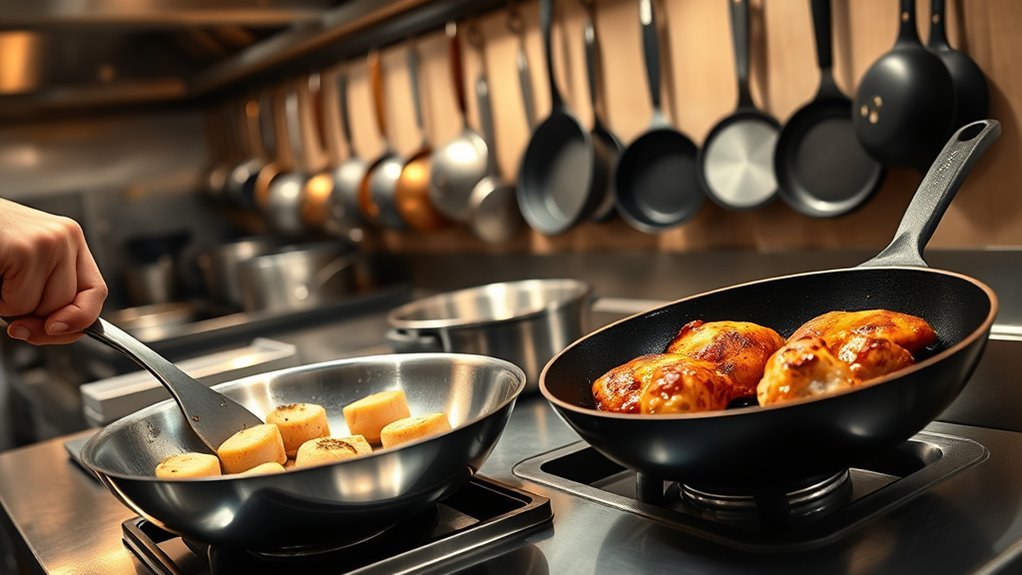
When you step into a professional kitchen, you’ll quickly notice that chefs often reach for stainless steel and cast iron pans, and it’s not just for show.
These stainless steel pots are favored for their durability, able to withstand high temperatures without warping or scratching. This means you get superior heat retention and even cooking every time.
Cast iron pans, on the other hand, excel in developing a natural nonstick surface through seasoning, making them perfect for searing and browning.
Both types promote the Maillard reaction, essential for that rich, deep flavor you crave.
Unlike nonstick options, stainless steel and cast iron offer versatility for various techniques—from sautéing to baking. Plus, they’re compatible with all utensils, enhancing flexibility and intensity in your culinary adventures.
When you embrace these tools, you’re not just cooking; you’re liberating your skills and elevating your dishes to new heights.
Pros and Cons of Nonstick Cookware
Nonstick cookware offers the convenience of easy food release and promotes low-fat cooking, making it a favorite for many home cooks.
However, you need to contemplate durability concerns, as these pans can wear out quickly with high heat or metal utensils.
Balancing these pros and cons will help you decide if nonstick is right for your culinary adventures.
Easy Food Release
While you might love the ease of cooking with nonstick pans, it’s important to weigh the benefits against the drawbacks.
Nonstick cookware shines when it comes to easy food release, making delicate items like eggs and pancakes a breeze to flip. Chefs appreciate how quickly they can clean up, saving precious time after cooking.
However, the nonstick surface often limits the Maillard reaction, which can dampen flavor complexity in your dishes. Plus, these pans have a shorter lifespan, typically requiring replacement every 1 to 3 years due to wear and tear.
That’s why many chefs reserve nonstick cookware for specific tasks, opting for stainless steel or cast iron when they need versatility and depth in their culinary creations.
Low-Fat Cooking
Cooking with nonstick pans offers a unique advantage for those aiming for low-fat meals. These versatile tools let you whip up delicious dishes with minimal oil, making them perfect for health-conscious cooks.
By reducing the need for added fats, nonstick pans help you create lower-calorie meals, supporting your weight management goals.
However, be cautious: nonstick coatings can degrade at high temperatures, potentially releasing harmful substances. This limitation makes them less ideal for high-heat cooking methods.
While they simplify cooking and cleanup, many chefs prefer stainless steel or cast iron for their durability and flavor-building capabilities.
Ultimately, while nonstick pans are great for low-fat cooking, their safety and longevity concerns might outweigh the benefits for those committed to a healthier lifestyle.
Durability Concerns
When it comes to durability, nonstick cookware often raises eyebrows among serious home cooks and professional chefs alike. While convenient, these pans typically last just 1-3 years under high-temperature use, unlike stainless steel, which can last decades. Nonstick coatings are prone to damage from metal utensils and abrasive cleaners, leading to durability concerns. Furthermore, they can’t achieve the high temperatures necessary for ideal flavor development, limiting the Maillard reaction. Regular maintenance is a must, but even then, they can’t match the resilience of materials like cast iron or stainless steel.
| Pros | Cons | Alternatives |
|---|---|---|
| Easy to clean | Limited lifespan | Stainless steel |
| Low-fat cooking | Prone to scratching | Cast iron |
| Lightweight | Cannot withstand high heat | Copper cookware |
Celebrity Chefs’ Favorite Nonstick Skillets and Their Uses
When it comes to nonstick skillets, celebrity chefs have their favorites for good reason. Julia Child and Jacques Pepin often reached for these pans to perfect delicate dishes like omelettes and fried eggs, where sticking can ruin presentation.
While they might lean towards traditional materials for most cooking, nonstick pans serve essential roles in their kitchens.
Essential Nonstick Uses
Nonstick skillets have become essential tools in the kitchens of many celebrity chefs, who appreciate their ability to handle delicate foods with ease.
Chefs like Julia Child relied on nonstick coatings for perfect omelettes and juicy steaks, enjoying effortless food release and quick cleanup. These skillets shine in low-fat cooking, allowing you to whip up eggs and pancakes without drowning them in oil.
David Chang emphasizes their convenience in fast-paced kitchens, where every second counts.
However, many chefs reserve nonstick pans for specific tasks, choosing stainless steel and cast iron for their superior heat retention and durability.
In home kitchens, though, nonstick skillets reign supreme, prioritizing convenience and ease over professional techniques.
Notable Chef Endorsements
Many renowned chefs have their go-to nonstick skillets that showcase the versatility and practicality of these kitchen tools.
Take a cue from culinary legends who appreciate the benefits of nonstick coatings:
- Julia Child loved them for perfect omelettes and easy cleanup.
- Jacques Pepin used them for delicate tasks, blending tradition with functionality.
- David Chang, once critical, now embraces a Teflon wok for its effortless maintenance.
These endorsements reveal that while many chefs reserve nonstick pans for fragile items, they recognize their unique advantages.
It’s about finding balance in your kitchen, using the right tools for specific tasks, and enjoying the liberation that comes with less hassle and more delicious outcomes.
Ayesha Curry’s Go-To: Porcelain Enamel Nonstick Skillet
If you’re on the lookout for a reliable nonstick option, Ayesha Curry’s Porcelain Enamel Nonstick Skillet is a fantastic choice at just $24.99. This skillet features a diamond-textured surface that enhances its nonstick performance, making everyday cooking a breeze.
Lightweight and convenient, it’s perfect for a range of tasks, from sautéing veggies to frying eggs.
While some users have raised concerns about its long-term durability, the skillet’s versatility is undeniable. It’s oven-safe up to 500 degrees, allowing you to explore broiling and baking with ease.
Just remember, to maintain its quality and nonstick properties, hand washing is essential since it’s not dishwasher-safe.
Ideal for home cooks seeking a budget-friendly nonstick option, Ayesha’s skillet combines style with functionality, making it a must-have in your kitchen arsenal.
Embrace the freedom of cooking without the hassle—this skillet has you covered.
Gordon Ramsay’s Top Pick: Mauviel M’Steel Carbon Steel Skillet
When it comes to the kitchen, few tools can rival the Mauviel M’Steel Carbon Steel Skillet, a top choice for culinary expert Gordon Ramsay. This skillet delivers impressive heat retention and professional cooking results, making it ideal for searing and browning.
Here’s why you’ll love it:
- Naturally Nonstick: After proper seasoning, food glides off effortlessly, enhancing your cooking experience.
- Versatile Cooking: Withstand oven temperatures up to 680 degrees, it suits various cooking methods.
- Even Heat Distribution: The heavy base is perfect for achieving that golden Maillard reaction, essential for flavor development.
While maintenance involves hand-washing and regular seasoning with oil, the skillet’s durability and performance make it a worthwhile investment for serious cooks.
Embrace the freedom of cooking with this exceptional tool, and elevate your culinary creations to new heights!
How to Choose the Right Skillet for Your Cooking Needs
Choosing the right skillet can make all the difference in your cooking experience. Start by considering the material: stainless steel skillets offer durability and versatility, while carbon steel, like the Mauviel M’Steel, excels at heat retention for professional-level results.
Next, check the size—larger skillets, such as the Ayesha Curry 11.5-inch pan, provide ample surface for big meals, while smaller options like the Zwilling Madura 8-inch pan are perfect for single servings.
Think about your cooking methods. If you’re aiming for high-heat techniques, carbon steel can handle oven temperatures up to 680 degrees, unlike non-stick pans, which generally have lower tolerances.
Finally, evaluate maintenance: nonstick options like the GreenPan Ceramic make cleanup a breeze, while carbon steel requires careful seasoning. Choose wisely, and you’ll reveal a world of flavors and culinary freedom!
Frequently Asked Questions
Why Don’t Professional Chefs Use Nonstick Pans?
Professional chefs often avoid nonstick pans due to durability concerns. These pans can wear out quickly, especially under high heat or with metal utensils.
You’ll find that they prefer stainless steel or cast iron for their reliability and ability to achieve complex flavors through the Maillard reaction. Nonstick coatings limit versatility, making them less ideal for high-temperature cooking.
While they’re great for delicate items, chefs rely on sturdier materials for everyday culinary adventures.
What Do Professional Chefs Use for Non-Stick Pans?
Professional chefs often rely on nonstick pans coated with materials like Teflon or ceramic, much like a painter chooses the right brush for delicate strokes.
These coatings make flipping eggs or pancakes effortless and cleanup a breeze.
However, you’ll find them using stainless steel and cast iron for more complex dishes, as these materials deliver better heat retention and flavor.
What Type of Pan Do Most Professional Chefs Use?
Most professional chefs use stainless steel and cast iron pans for their durability and heat retention.
You’ll find them reaching for stainless steel to sear meats and sauté vegetables, while cast iron shines when creating a perfect crust.
Copper pans are also popular for their precise temperature control.
Nonstick pans have their place for delicate dishes, but chefs prefer materials that can handle the heat and rigorous demands of a professional kitchen.
Which Cookware Do Professional Chefs Use?
Professional chefs often rely on stainless steel, cast iron, and copper cookware materials.
Imagine a seasoned chef, their hands deftly maneuvering a sizzling cast iron skillet—each sear a demonstration of their craft.
Stainless steel’s durability withstands the heat of a bustling kitchen, while copper offers precision that transforms dishes.
Nonstick pans might find their place for delicate items, but true mastery lies in the versatility and resilience of these preferred materials.
Conclusion
In the bustling heart of a kitchen, where sizzling pans dance over flames, nonstick skillets shine as unsung heroes for delicate dishes. They offer a gentle embrace for eggs and pancakes, ensuring every flip is flawless. While stainless steel and cast iron boast their own culinary charms, the versatility of nonstick cookware shouldn’t be overlooked. Embrace the balance; let each pan you choose enhance your culinary journey, making cooking a delightful adventure rather than a chore.
