

What are grill pans good for? They are good for searing steaks, chicken, burgers, fish and vegetables on the stovetop with grill marks, and for letting fat drain into the grooves. They are less good for very delicate foods, big batches and anything that needs real smoky flavor.
This page is the honest pros-and-cons look. For a how-to, read what a grill pan is used for. To pick a model, see grilling pan key facts.
What Are Grill Pans Good For? The Short Answer
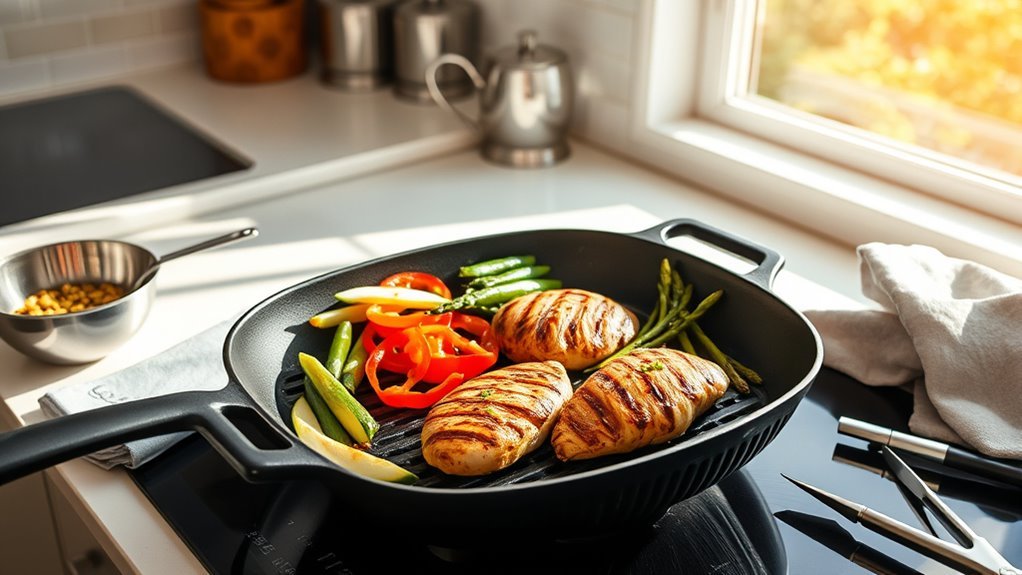
- Cooking grill-style meals indoors when weather, space or rules rule out an outdoor grill.
- Getting sear marks and some fat drainage on lean meats, sausages and burgers.
- Quick vegetable side dishes with a light char.
- Small households that do not want to fire up a full grill.
Pros and Cons of Grill Pans
| Pros | Cons |
|---|---|
| Grill-style marks without an outdoor grill | No true smoky flavor from charcoal or wood |
| Ridges lift food out of its own fat | Can smoke a lot indoors |
| Works on gas, electric and (if magnetic) induction cooktops | Grooves can be hard to clean |
| Many are oven-safe for finishing thick cuts | Less contact between food and pan, so browning is stripey rather than even |
| Quick preheat and easy to store compared with a grill | Cast iron versions are heavy and need care |
| Versatile for meat, fish, vegetables, sandwiches | Not great for small, loose, or delicate foods that fall through gaps |
Benefits in More Detail
Fat Drains Away From the Food
Because food sits on top of the ridges, rendered fat collects in the grooves. Burgers and sausages are less likely to sit in a pool of grease. Be aware that the food still cooks, and the fat in the pan can smoke, so you may need to wipe it out between batches.
Great Looking Results Quickly
The ridges give you the sear lines that make food look grilled. They also concentrate heat at the contact points, which gives a deeper brown in those lines and good flavor from browning.
Handy in Any Weather
Apartment dwellers, people without a yard, and anyone cooking in winter get a way to grill without leaving the kitchen. A pan also takes less time to heat than most outdoor grills.
Drawbacks and How to Handle Them
Smoke
High heat plus fat can create smoke. Run the range hood, keep the heat at medium to medium-high, use a thin coat of high smoke point oil on the food, and trim excess fat. Do not leave a hot pan unattended.
Cleaning
Cooked-on bits get stuck in the grooves. Clean while the pan is still warm with a soft-bristle brush, or soak briefly in warm soapy water. Avoid abrasive pads on nonstick surfaces. For cast iron, dry thoroughly and re-oil, as in our cast iron care guide.
Uneven Browning
Only the ridges touch the food, so the sides between ridges stay pale. If you want edge-to-edge browning, a flat skillet is better. A reversible grill and griddle pan offers both.
Who Should Buy a Grill Pan
- Good fit: people who cook steaks, chicken, burgers, sausages, fish or vegetables often and want grill marks indoors.
- Maybe skip: people who mostly cook eggs, pancakes, stir-fries or saucy dishes, which are better in a skillet, griddle or braiser.
- Be careful: small kitchens without good ventilation. Smoke can set off alarms.
Material Matters
| Material | Good for | Watch out for |
|---|---|---|
| Cast iron | Strong sear, holds heat, oven-safe, works on induction | Heavy, needs seasoning and drying (enameled versions need less care) |
| Nonstick aluminum | Light, easy cleanup, good for fish and vegetables | Coating wears; keep within the maker’s heat limit |
| Stainless steel (clad) | Durable, no coating | Food sticks without enough fat and heat control |
Induction cooktops need a magnetic base, so check using our guide to telling if cookware is induction-ready.
Tips to Get the Most From a Grill Pan
- Preheat the pan fully before adding food.
- Pat food dry so it sears instead of steams.
- Oil the food, not the pan.
- Cook in batches rather than crowding the pan.
- Leave food alone until it releases naturally.
- Use a meat thermometer to check doneness safely.
Frequently Asked Questions
Is it worth buying a grill pan?
It is worth it if you often cook steaks, chicken, burgers or vegetables and want grill marks indoors. If you mostly cook eggs, stir-fries or saucy dishes, a skillet will serve you better. Check your kitchen ventilation first, since grill pans can create smoke.
What are the advantages of using a grill pan?
Advantages include grill-style sear marks, ridges that lift food out of rendered fat, quick preheating, compatibility with most cooktops (if the base suits induction), and the ability to cook meat, fish and vegetables indoors. Many models can also finish food in the oven.
Do you need to put oil in a grill pan?
Most food cooks better with a thin coat of oil, but apply it to the food rather than the pan, because oil poured into the grooves tends to smoke and burn. Very fatty foods such as sausages may need little or no extra oil. Follow the maker’s advice for nonstick pans.
What do you cook with a grill pan?
Good choices include steaks, chops, chicken, burgers, sausages, fish fillets, shrimp, zucchini, peppers, asparagus, halloumi, tofu, sandwiches and fruit slices. Foods that are thick enough not to fall through and that cook quickly give the best results.
Conclusion
Grill pans are good for indoor searing, sear marks and fat drainage, and they handle meat, fish and vegetables well. They are less suited to smoky flavor, edge-to-edge browning and small loose foods, so decide based on what you cook most.
