
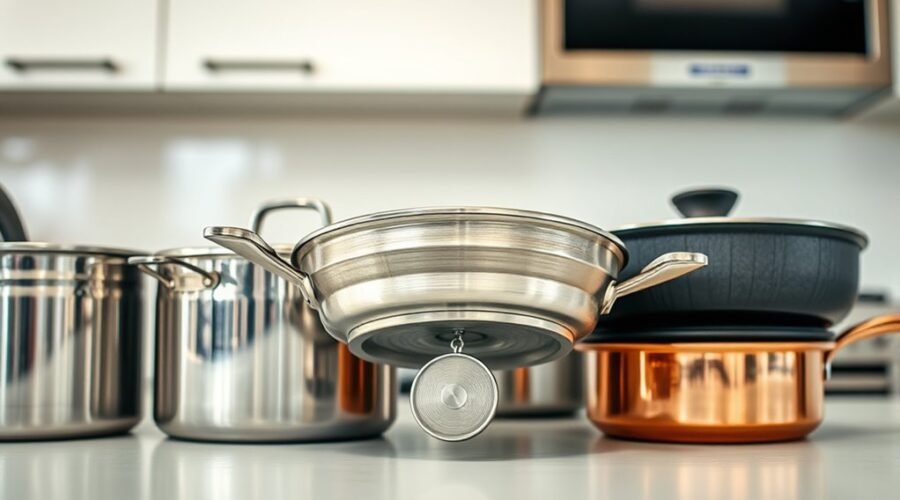
Did you know that nearly 30% of home cooks are switching to induction cooking for its efficiency and safety? To guarantee your cookware is compatible, you need to identify specific features and conduct simple tests. Understanding these aspects can save you time and money while enhancing your cooking experience. Let’s explore the critical steps to determine if your cookware is truly induction-ready.
What Is Induction Cooking and How Does It Work?
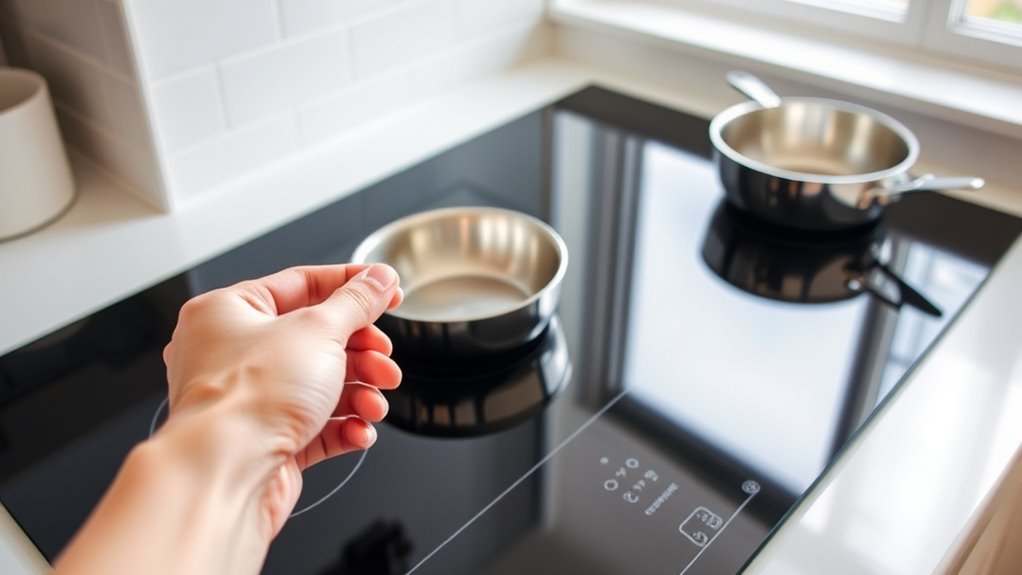
Induction cooking revolutionizes the way you prepare meals by using electromagnetic energy to directly heat compatible cookware. Below the cooktop surface, a copper coil generates a magnetic field that induces heat within ferromagnetic pots and pans.
This technology allows for precise temperature control, making cooking faster and more efficient. Unlike traditional gas or electric stoves, induction cooktops cool down quickly once the cookware is removed, enhancing both safety and energy efficiency.
To verify your cookware is induction-compatible, it must contain magnetic materials like cast iron or specially designed stainless steel. You can easily check compatibility using a simple magnet test—if the magnet sticks, you’re good to go.
With induction cooking, you can considerably reduce cooking times, often boiling water about twice as fast as conventional methods, liberating your kitchen experience and empowering you with greater control over your culinary creations.
How to Perform the Magnet Test for Cookware Compatibility?
To determine if your cookware is induction-compatible, you can easily perform the Magnet Test using a standard refrigerator magnet.
Simply place the magnet against the bottom of your pot or pan. If it sticks firmly, your cookware is made of ferromagnetic material, making it suitable for induction cooking. This includes materials like stainless steel and cast iron.
However, if there’s weak or no attraction, your cookware isn’t induction-compatible, likely due to lacking the necessary magnetic properties. Remember, aluminum cookware typically fails this test.
While checking for the induction symbol on your cookware provides additional assurance of compatibility, the magnet test remains the most reliable method.
The Water Boil Test: A Practical Compatibility Check
While testing your cookware’s compatibility with induction cooktops, the Water Boil Test serves as a practical and straightforward method.
Start by placing a small amount of water in your pots and pans, then heat it on an induction burner. For effective results, verify the burner is set to an appropriate power level.
If the water reaches rapid boiling, it confirms that your cookware is induction-ready, as induction cooktops utilize magnetic energy to heat cookware directly.
Conversely, if the water fails to heat or doesn’t register on the induction cooktop, your cookware likely isn’t compatible with induction cooking.
This test is quick and efficient, allowing you to determine the readiness of various cookware types without complicated procedures.
How to Spot Induction Cookware Symbols?
How can you easily identify induction-ready cookware? Start by checking for the induction symbol, a stamped coil or series of loops on the bottom of the cookware. This symbol indicates that the cookware is designed for induction cooking.
Look for clear labeling that states “induction” on the packaging or product description, confirming it’s induction compatible.
Many manufacturers also use symbols resembling a magnet, indicating the presence of magnetic materials necessary for efficient heating. Verify that the induction symbol is accompanied by a ferromagnetic material designation, such as magnetic stainless steel or cast iron, to confirm that the cookware works with induction.
Always consult the manufacturer’s guidelines or reliable online resources to validate the cookware’s induction capability before making a purchase.
Induction Cookware Materials: What Works?
To effectively use induction cooktops, you need cookware made from ferromagnetic materials like cast iron, carbon steel, or specific types of stainless steel.
If your cookware doesn’t attract a magnet, it’s not suitable for induction cooking.
Additionally, materials like pure aluminum, glass, and ceramic won’t work unless they’ve a magnetic base.
Ferromagnetic Materials Explained
Induction cookware relies on ferromagnetic materials, which are essential for effective performance on induction cooktops. These materials include cast iron, carbon steel, and magnetic stainless steel.
For cookware to be compatible, it must have a magnetic base, allowing it to interact with the electromagnetic field generated by the cooktop. You can conduct a magnet test to quickly check compatibility; if the magnet sticks firmly to the cookware base, it’s induction-ready.
Conversely, non-ferromagnetic materials like pure aluminum, glass, and ceramic won’t heat up on induction cooktops, rendering them unsuitable.
Look for the stamped induction symbol as a visual confirmation of your cookware’s readiness for induction cooking, ensuring you harness the full potential of this efficient cooking method.
Non-Compatible Cookware Types
When considering cookware for induction cooking, it’s important to recognize that not all materials will perform effectively.
Non-compatible cookware types include pure aluminum, glass, ceramic, and pure copper, which lack the necessary magnetic properties to function on induction cooktops. Additionally, non-magnetic stainless steel cookware won’t generate heat via the electromagnetic field, rendering it ineffective.
While some cookware made from ceramic or glass can work if they possess a magnetic base, most will remain cold on the burner.
Always perform a magnet test to confirm induction compatibility, as certain nonstick and copper pans may be clad with magnetic materials, allowing for successful heat generation on induction cooktops.
Choose wisely to guarantee the best cooking performance.
Choose the Best Induction Cookware
How can you guarantee you’re choosing the best induction cookware for your kitchen? Start by checking for a magnetic base; use a magnet to see if it sticks firmly—this confirms cookware compatibility with induction cooktops.
Look for the induction symbol, which indicates that the item’s designed for induction cooking.
Opt for flat-bottomed pots and pans, as they provide ideal heat conduction and guarantee even heating across the surface.
Materials like enameled cast iron, magnetic stainless steel, and carbon steel are excellent choices for induction cooking due to their magnetic properties.
Finally, verify the size of your cookware matches the induction burner to avoid cold spots, enhancing your cooking efficiency.
Tips for Using Induction-Compatible Cookware
To maximize your induction cooking experience, choose the right materials and sizes for your cookware.
Opt for stainless steel or cast iron, as these provide excellent heat conduction.
Also, make sure your pots and pans match the burner size to promote even heating and efficient performance.
Best Cookware Materials
Induction-compatible cookware relies on specific materials to function effectively, guaranteeing you achieve ideal cooking results.
To maximize performance, consider these key cookware materials:
- Cast Iron: Excellent heat retention and ferromagnetic properties make it a top choice.
- Carbon Steel: Similar to cast iron, it’s durable and great for high-heat cooking.
- Magnetic Stainless Steel: Offers both induction compatibility and aesthetic appeal; look for those labeled accordingly.
- Nonstick Cookware with Magnetic Base: Verify it’s designed for induction by checking for compatibility labels or performing a magnet test.
Always opt for flat-bottomed designs to guarantee efficient heat transfer, since rounded vessels may disrupt the magnetic connection, resulting in uneven heating on induction cooktops.
Proper Cookware Size
Choosing the right size cookware is vital for maximizing efficiency on induction cooktops. Confirm your induction cookware matches the burner size; mismatched sizes can cause uneven cooking and hot spots.
Small pans must meet the minimum required diameter, typically around 4 to 5 inches, to activate the induction burner. Large cookware should cover the entire burner surface to prevent heat loss and assure even cooking temperatures.
Opt for flat-bottomed cookware to guarantee full contact with the cooktop, enhancing heat transfer and cooking performance. Always refer to the manufacturer’s guidelines for ideal cookware size compatibility, as specific size limitations may apply.
Proper cookware size is essential for achieving optimal heating efficiency and avoiding the pitfalls of uneven cooking.
Frequently Asked Questions
How to Identify Induction Compatible Cookware?
To identify induction-compatible cookware, start with magnetic testing; if a magnet sticks firmly, you’re good to go.
Look for induction symbols on cookware materials like cast iron or magnetic stainless steel for ideal heat distribution and cooking efficiency.
Confirm flat bottoms for better surface compatibility.
Always check specific cookware brands for safety features and maintenance tips, as some nonstick options may also offer energy savings through induction cooking.
How to Test if a Pan Is Induction Compatible?
To test if your pan is induction compatible, use a refrigerator magnet; if it sticks, you’re good to go.
Next, check the cookware materials—only ferromagnetic options work effectively.
Perform a water boil test for heat distribution and cooking efficiency; quick boiling indicates compatibility.
Look for an induction symbol for confidence, and guarantee a flat bottom for ideal surface durability.
For eco-friendly options, consider brands known for sustainability in their cookware.
What Is the Symbol for Induction Ready Cookware?
The symbol for induction-ready cookware typically resembles a coiled spring or loops. This indicates compatibility with induction cooktops, which offer energy efficiency advantages over gas.
To guarantee your cookware is magnetic, check materials like stainless steel or cast iron. Popular induction brands often display this symbol prominently.
Can I Use Aluminum Pots and Pans on an Induction Cooktop?
You can’t use most aluminum pots and pans on an induction cooktop due to their lack of magnetic properties.
While aluminum cookware offers excellent heat distribution efficiency, it falls short compared to stainless steel in induction cooking.
If you’ve got aluminum with a magnetic base, it’s a safe option.
To maximize your induction experience, refer to a cookware material guide and remember that eco-friendly stainless steel is often the best choice.
Conclusion
In the world of cooking, finding the right induction cookware is like discovering a hidden gem. By understanding how to test for compatibility and recognizing the symbols that signify induction readiness, you’ll elevate your culinary experience. Embrace the art of precision and efficiency that induction cooking offers. With the right tools in hand, you’ll transform your kitchen into a haven of innovation, where every meal becomes a masterpiece waiting to unfold. Happy cooking!