
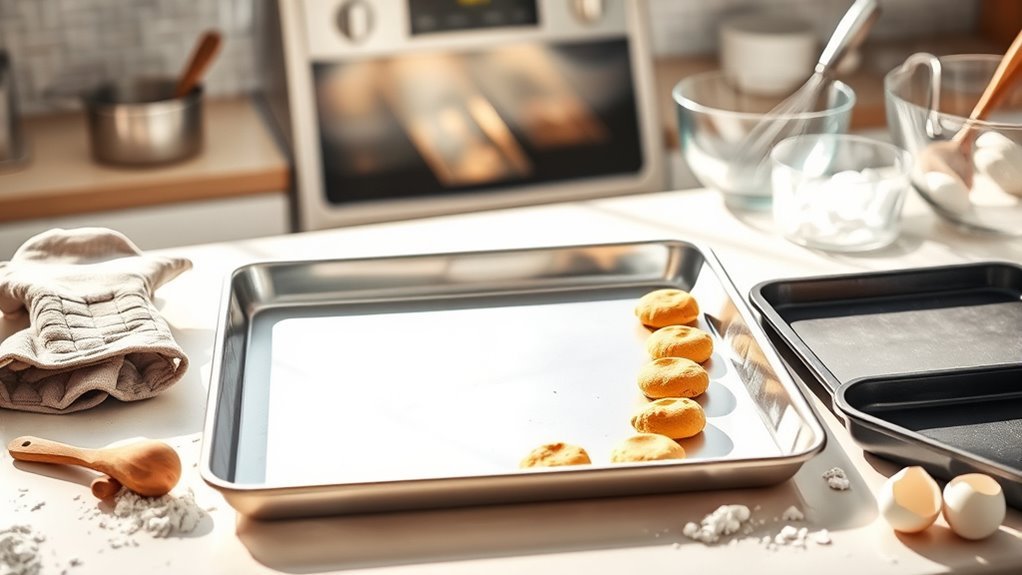
You might worry that aluminized steel will leach aluminum or fail at high heat, but its bonded aluminum coating is designed to limit exposure and boost durability. It conducts heat well, resists warping up to about 500°F (260°C), and performs differently than bare aluminum or stainless steel. Keep going to see what the science says about leaching, coatings, comparative pros and cons, and practical care tips to keep your bakeware safe and long‑lasting.
What Is Aluminized Steel and How Is It Made

Aluminized steel is steel that’s been coated with a thin layer of aluminum to improve corrosion resistance and durability. Manufacturers create it by hot-dipping steel sheets in molten aluminum, which forms a metallurgical bond that extends the material’s lifespan.
You’ll find that aluminized steel merges steel’s structural strength with aluminum’s protective qualities, producing a substrate that resists oxidation and mechanical degradation. The production method yields a consistent coating thickness and metallurgical adhesion, which reduces flaking and prolongs service life under repeated thermal cycles.
Because aluminized steel conducts heat efficiently, it distributes oven temperatures evenly, a property valued in professional bakeware and industrial cooking equipment. You can rely on its capacity to withstand high temperatures without significant warping, provided it’s specified for culinary use.
The material’s predictable performance, documented metallurgy, and practical advantages make it a rational choice when you’re seeking durable, heat-stable cookware that supports autonomy in food preparation and durable practice.
Quick Verdict: Is Aluminized Steel Safe for Baking?
Curious whether aluminized steel is safe for your oven and food? You can confidently choose aluminized steel for most home baking: it’s durable, resists warping, and handles temperatures up to about 500°F (260°C).
Its even heat distribution gives you consistent results, so your loaves and sheets bake uniformly without hot spots. Many products include non-toxic coatings free from PTFE, PFOA, and PFAS, which further reduces chemical concerns and supports safer use.
Some people worry about aluminum interaction with acidic foods; if that’s a primary concern for you, pick coated options or avoid prolonged contact with highly acidic ingredients.
With routine care—avoiding harsh abrasives and inspecting coatings—you’ll maintain performance and safety.
Health, Leaching, and Temperature Limits for Aluminized Steel
How hot can you safely push aluminized steel before it affects food or the pan itself? You can routinely use aluminized steel up to about 500°F (260°C) without structural failure or warping; that limit keeps coatings intact and performance reliable.
You can safely use aluminized steel up to about 500°F (260°C) without coating damage or warping.
Health concerns center on leaching: the steel’s aluminum core is coated to minimize direct contact, and evidence shows only minimal aluminum transfer even with acidic foods. For most people, those trace amounts aren’t considered harmful.
You’ll protect both health and cookware by avoiding prolonged exposure to very acidic ingredients, not overheating beyond recommended limits, and following proper care. Hand wash to preserve the coating, don’t use metal utensils that abrade surfaces, and inspect pans for coating damage—once the coating’s compromised, leaching risk rises.
These choices let you bake confidently and sustainably, prioritizing bodily safety and long-term use without unnecessary fear.
Aluminized Steel vs. Aluminum, Stainless, Nonstick, and Silicone
Compare your options by focusing on performance, reactivity, and safety rather than marketing claims: You’ll find aluminized steel offers robust heat distribution and warping resistance due to its steel core and aluminum layer, making it reliable for consistent baking. It limits direct aluminum contact better than plain aluminum, though some exposure concerns persist. Stainless steel stays non‑reactive and safe for any food but conducts heat less evenly, which can compromise results. Nonstick coatings (especially traditional Teflon at high heat) carry potential toxicity risks; ceramic nonstick is generally safer. Silicone is flexible and easy to clean, yet debates about long‑term heat resistance and durability continue compared with metal options.
| Material | Key trade‑off |
|---|---|
| Aluminized steel | Even heating, durable, reduced aluminum contact |
| Aluminum | Excellent conduction, potential leaching |
| Stainless steel | Non‑reactive, poorer heat distribution |
| Nonstick/Silicone/Ceramic | Convenience vs. coating durability and safety |
How to Choose, Use, and Care for Aluminized‑Steel Bakeware
When you pick aluminized‑steel bakeware, favor heavy‑gauge pieces with intact aluminized surfaces and any certified non‑toxic coatings (ceramic, PFOA/PFAS‑free) to get the best durability and food safety; these pans reliably withstand up to about 500°F (260°C) and deliver even heat from their aluminum layer while the steel core prevents warping.
Choose a baking pan labeled Oven Safe to the temperature you need and verify gauge and coating details from the manufacturer. Use the pan for consistent results—its even heat reduces hot spots common with thinner metal.
Pick pans labeled oven‑safe to your required temp and check gauge and coating for reliable, even heating and fewer hot spots
To care for it, hand wash with mild soap and a soft sponge; avoid abrasive cleaners or steel wool that strip the aluminized finish or ceramic coating. Dry thoroughly to limit corrosion. If a coating chips or the surface corrodes, retire the pan.
These practices preserve performance and protect you from degraded surfaces, supporting durable, safe bakeware for liberated home and professional bakers.
Frequently Asked Questions
Which Is Better for Baking, Aluminum or Aluminized Steel?
Aluminized steel is generally better for baking. You’ll get superior baking performance with even heat distribution, less warping at high temperatures, and a non-reactive surface that avoids metal leaching.
You’ll also benefit from durability and resistance to rust, letting you bake confidently and sustainably. If you need ultra-lightweight pans for quick heating, aluminum works, but for consistent, professional results and long-term freedom from warping, pick aluminized steel.
What Is the Least Toxic Material for Bakeware?
Like choosing a clear sky over smog, ceramic-coated bakeware is the least toxic material you can pick.
You’ll want Non Toxic Alternatives such as high-quality ceramic, glass, and stainless steel because they’re non-reactive and don’t leach PFAS, PFOA, or BPA.
Silicone can work if certified food-grade.
Choose these options to reclaim control over your kitchen and protect your health with evidence-based, conscious decisions.
What Foods Should Never Be Cooked in Aluminum Pans?
You shouldn’t cook acidic foods (tomatoes, citrus) or high-sugar items (caramel, certain candies) in aluminum pans because Food Reactions can leach metal and change flavor.
Avoid long-cooking dishes and very high-heat preparations, especially in scratched or damaged pans.
Even anodized aluminum reduces risk but doesn’t eliminate it.
Choose nonreactive cookware for liberation from contamination and predictable results, protecting flavor, health, and culinary freedom.
What Is the Least Toxic Stainless Steel for Cooking?
The least toxic stainless steel for cooking is 304 Stainless Steel (18/8). You’ll get durable, non-reactive performance with low metal leaching and broad corrosion resistance.
If you need extra corrosion protection and want minimal nickel release, choose 316 Stainless Steel for high-performance use.
Look for cookware labeled PFOA/PFOS-free and follow proper care—avoid extreme heat and abrasive cleaning—to keep your Stainless Steel safe, long-lasting, and liberatingly reliable.
Conclusion
You can relax: aluminized steel’s aluminum coating and steel core give even heating, durability, and resistance to warping up to about 500°F (260°C), so it’s safe for most baking. It’s unlikely to leach aluminum if the coating’s intact and non‑toxic, though you’ll want certified finishes and gentle hand washing. Ironically, the metal that looks least flashy becomes the workhorse in your oven—quietly outperforming flashier pans while staying reliably safe and long‑lived.

