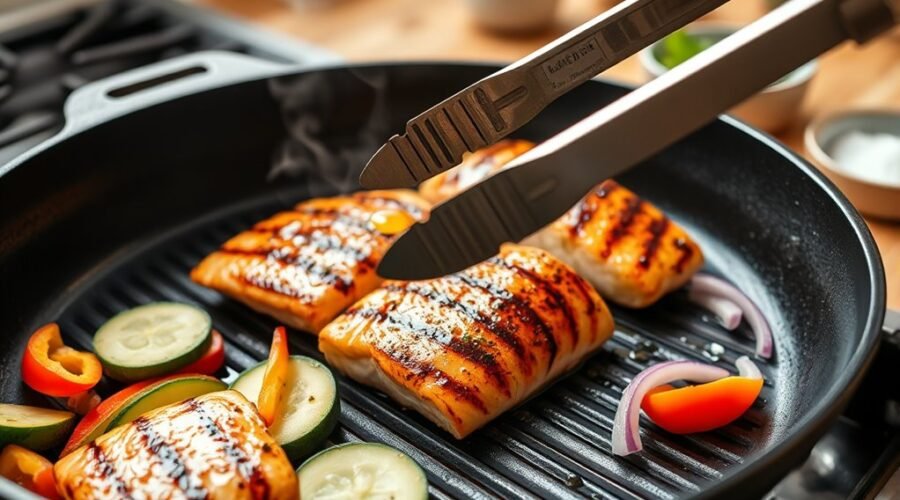
Did you know that nearly 60% of home cooks prefer indoor grilling for its convenience and flavor? A grill pan offers you the perfect solution, allowing you to enjoy the smoky taste of outdoor grilling right in your kitchen. It’s versatile enough for meats, vegetables, and even sandwiches, but using it effectively requires some know-how. Curious about how to access its full potential and avoid common pitfalls? Let’s explore the essentials together.
How to Use a Grill Pan for Perfectly Grilled Meats and Vegetables
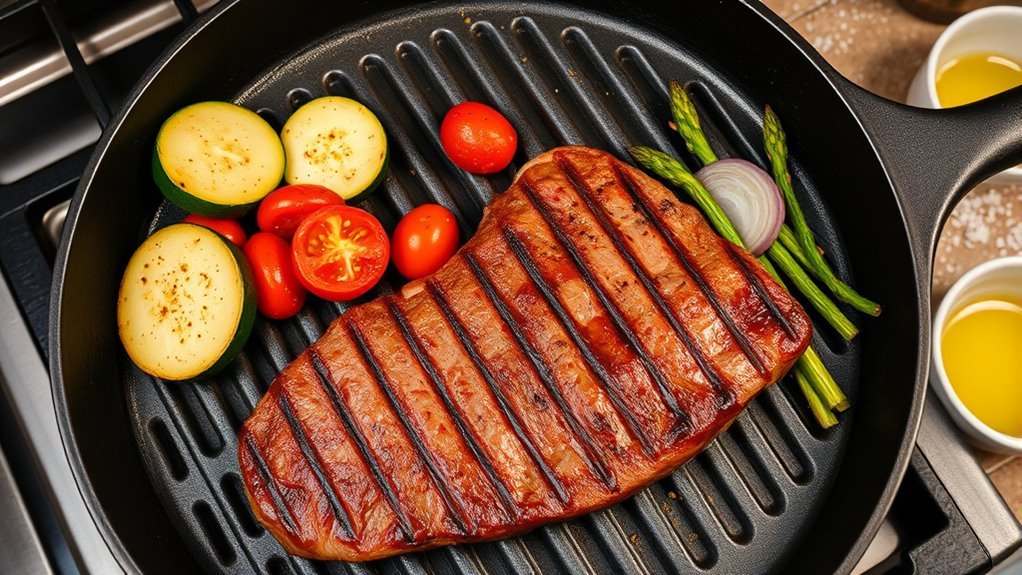
To achieve perfectly grilled meats and vegetables, start by preheating your grill pan for about 10-15 minutes. This step’s essential; it helps create those coveted grill marks while enhancing flavor.
Choose high smoke point oils, like grapeseed or avocado oil, to keep things sizzling without burning.
Opt for high smoke point oils such as grapeseed or avocado to ensure a sizzling, burn-free grilling experience.
Once your pan’s hot, arrange your food in a single layer. Avoid overcrowding; this guarantees even cooking and ideal heat distribution.
As you sear, watch for those beautiful grill marks to form, indicating that your meat or veggies are ready to flip.
Feel free to experiment with techniques like griddling and sautéing to reveal the full potential of your grill pan.
Each method opens up new flavor dimensions, allowing you to break free from mundane cooking.
Why You Need a Grill Pan for Indoor Cooking
Whether you’re longing for the smoky flavors of summer or simply want to elevate your weeknight dinners, a grill pan is your secret weapon for indoor cooking. This versatile tool mimics outdoor grilling, creating those eye-catching grill marks and enhancing flavors with its ribbed surface.
Imagine searing juicy meats and vibrant vegetables right on your stovetop, all year round!
With its non-stick coating, you can whip up healthier meals using minimal fats, preserving essential nutrients. Plus, grill pans are compatible with various cooktops, including induction, and are oven-safe for even more cooking possibilities.
Their excellent heat retention and distribution guarantee consistent results, so you’re always in control of your culinary creations.
Durable and easy to clean, a grill pan simplifies your cooking experience while freeing you from the limitations of outdoor grilling.
Embrace the art of indoor grilling, and transform your meals into flavorful masterpieces!
Top Cooking Techniques for Grill Pans
When you fire up your grill pan, you’re stepping into a world of flavorful possibilities.
Mastering essential grilling techniques can elevate your meats and veggies, creating that perfect char while enhancing their natural tastes.
Let’s explore how to make the most of your grill pan for unforgettable meals.
Essential Grilling Techniques
Release the full potential of your grill pan by mastering essential grilling techniques that elevate your cooking game.
These simple tips will help you achieve that perfect sear and maximize flavor:
- Preheat the Pan: Heat it for 10-15 minutes to guarantee ideal searing and prevent sticking.
- Use High Smoke Point Oils: Choose oils like grapeseed or avocado to withstand high heat without burning.
- Sear with Technique: Avoid overcrowding the pan to develop those iconic grill marks.
- Turn Food Sparingly: Flip only once or twice to maintain tenderness and a nice crust.
- Utilize the Ridges: Let excess fats drain while achieving appealing grill marks on meats and veggies.
Master these techniques, and watch your dishes transform!
Flavor Enhancement Strategies
To truly elevate your grilling experience, mastering flavor enhancement strategies is key.
Start by using a cast iron grill pan, which creates those beautiful char marks thanks to its ridged surface. This not only looks impressive but also intensifies flavors through the Maillard reaction, giving your meats and veggies rich, complex tastes.
Apply high smoke point oils like avocado or grapeseed for ideal searing without burning. Preheat your grill pan for 10-15 minutes to guarantee even cooking and a perfect crust.
The raised ridges keep food elevated, allowing excess fat to drain and concentrating natural flavors.
Finally, don’t skip marinating your meats; the hot grill surface caramelizes those deep flavors, enhancing your overall taste experience.
Enjoy!
Choosing the Right Oils for Grill Pan Cooking
Choosing the right oil for your grill pan can elevate your cooking experience, ensuring flavors shine and dishes come out perfectly cooked. Here’s what to take into account when picking the ideal oil:
- High Smoke Point: Opt for oils like grapeseed or avocado oil to prevent burning during high-heat grilling.
- Flavorful Options: Use olive oil for richer foods, enhancing the taste of steak and vegetables.
- Neutral Choices: Canola oil works well for delicate items like fish, allowing the natural flavors to shine through.
- Application Amount: Start with 1-2 tablespoons of oil for a 10-inch pan to coat evenly without excess.
- Avoiding Residue: Stick with pure oils instead of cooking sprays to maintain flavor integrity.
Caring for Your Grill Pan
Caring for your grill pan is essential for maintaining its performance and longevity.
You’ll want to clean it gently and season it regularly to keep that non-stick surface in top shape.
With just a few simple practices, you can guarantee your grill pan remains a kitchen favorite for years to come.
Proper Cleaning Techniques
Cleaning your grill pan properly guarantees it stays in top shape and ready for your next culinary adventure.
To maintain its non-stick coating and uphold longevity, follow these proper cleaning techniques:
- Always use warm water and mild detergent after each use, avoiding soap for cast iron.
- Wait for the grill pan to cool completely to prevent warping.
- Use a soft brush or scraper to gently remove stubborn residue, steering clear of abrasive tools.
- Wipe with a paper towel or soft sponge for cast iron varieties.
- Store in a dry place, with a paper towel inside to absorb moisture and prevent rust.
Regular Seasoning Practices
To keep your grill pan performing at its best, regular seasoning is essential, especially for cast iron varieties. This practice maintains its non-stick properties and prevents rust by creating a protective layer of oil baked into the surface.
After each use, particularly if you’ve cooked acidic foods, apply a thin layer of vegetable or flaxseed oil to your clean, dry pan. Heat it in the oven at 400°F (200°C) for about an hour to enhance heat distribution.
Avoid soap and harsh scrubbers, as they can strip the seasoning; simply wipe it with a paper towel or rinse with hot water.
Regularly inspect your pan—if food starts sticking or rust appears, it’s time to reseason.
Common Grill Pan Mistakes to Avoid?
Grilling with a pan can be a game-changer for your kitchen, but a few common mistakes can quickly turn a delicious meal into a disaster.
Grilling with a pan transforms your kitchen, but avoid common mistakes to ensure every meal is a success.
Avoid these pitfalls to guarantee your grill pan cooking is as liberating as it should be:
- Overheating the Pan: Too high a heat can lead to smoke and burnt food. Start at medium and adjust.
- Using the Wrong Oil: Low smoke point oils ruin flavors. Stick to high smoke point options like avocado or grapeseed.
- Crowding the Pan: Leave space between food items to achieve that perfect sear instead of steaming.
- Neglecting to Season Cast Iron: Regular seasoning keeps the pan bottom non-stick and functional.
- Skipping the Preheat: Always let the pan warm up adequately for even cooking and easy release.
Master these tips, and your grill pan will become a favorite tool in your culinary arsenal!
Frequently Asked Questions
Do You Really Need a Grill Pan?
Do you really need a grill pan? Absolutely.
Imagine savoring perfectly charred meats and vibrant veggies, all from the comfort of your kitchen. With its versatile cooking capabilities, a grill pan transforms ordinary meals into extraordinary experiences, regardless of the weather outside.
You’ll relish the ease of healthier cooking, thanks to its ridged surface that drains excess fat. Investing in one opens up a world of flavor and creativity, igniting your culinary passion year-round.
What Do You Cook on a Grill Pan?
You can cook a variety of delicious dishes on a grill pan, but it’s especially great for searing meats like steaks and chicken.
The ribbed surface creates perfect grill marks, while allowing excess fat to drain away, enhancing flavors. You’ll also love grilling vegetables for that smoky taste.
Just preheat the pan and use high smoke point oils to prevent sticking, ensuring your meals turn out juicy and flavorful every time.
What Can I Use as a Substitute for a Grill Pan?
You can easily substitute a grill pan with a broiler pan, cast iron skillet, or stovetop grill. Each of these pan alternatives lets you capture that delicious grilled flavor right in your kitchen.
A George Foreman grill offers a convenient, fat-draining option, while an outdoor grill brings smoky authenticity.
Embrace these alternatives, and you’ll find liberation in cooking—no need to be tied to just one method when so many delicious options await!
What’s the Difference Between a Grill Pan and a Regular Pan?
A grill pan‘s ridged surface and high edges set it apart from a regular pan. You’ll notice it’s often made from cast iron or aluminum, designed to retain heat and create those iconic grill marks.
Regular pans, however, are usually flatter and made from various lightweight materials, perfect for general cooking tasks. While grill pans excel in high-heat cooking, regular pans offer versatility for simmering and boiling, making them a kitchen staple.
Conclusion
To sum it up, a grill pan is your ticket to enjoying the flavors of outdoor cooking right in your kitchen. By following the tips and techniques outlined, you’ll turn out beautifully seared meats and vibrant vegetables with ease. Remember, practice makes perfect; don’t be afraid to experiment. So, fire up that grill pan and savor delicious meals—after all, the proof of the pudding is in the eating! Your culinary adventures await!