
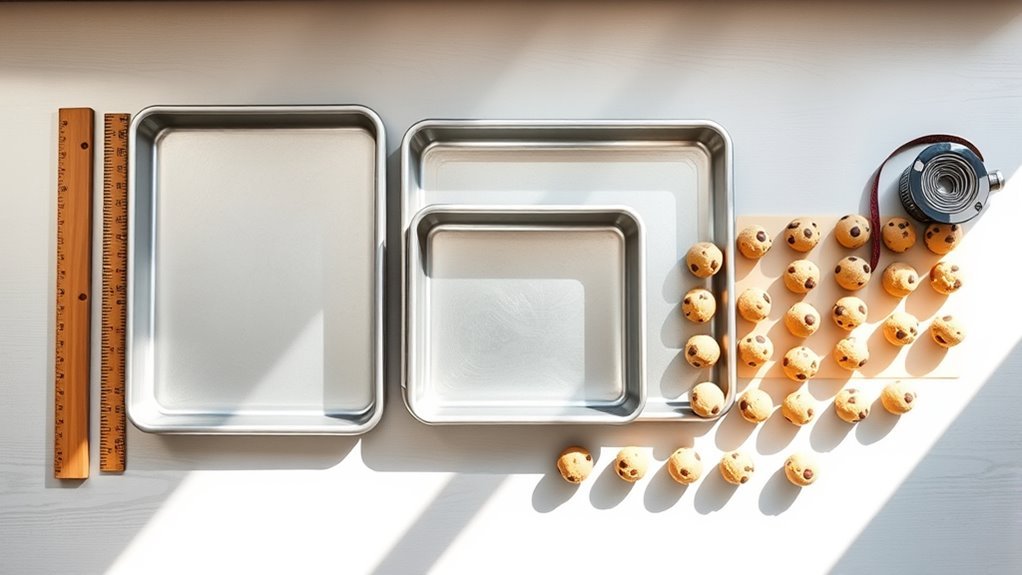
When you’re picking a cookie sheet, size matters more than you think: most are the half-sheet 18 x 13 inches, but smaller 15 x 10 or 16 x 14 options and quarter pans exist for tighter ovens. Think about how many cookies you want per batch, whether rims or a nonstick finish reduce usable space, and how the metal conducts heat. Keep this in mind and you’ll avoid crowded cookies and uneven browning—here’s how to choose.
Cookie Sheet Sizes : Quick Reference (Common Dimensions)
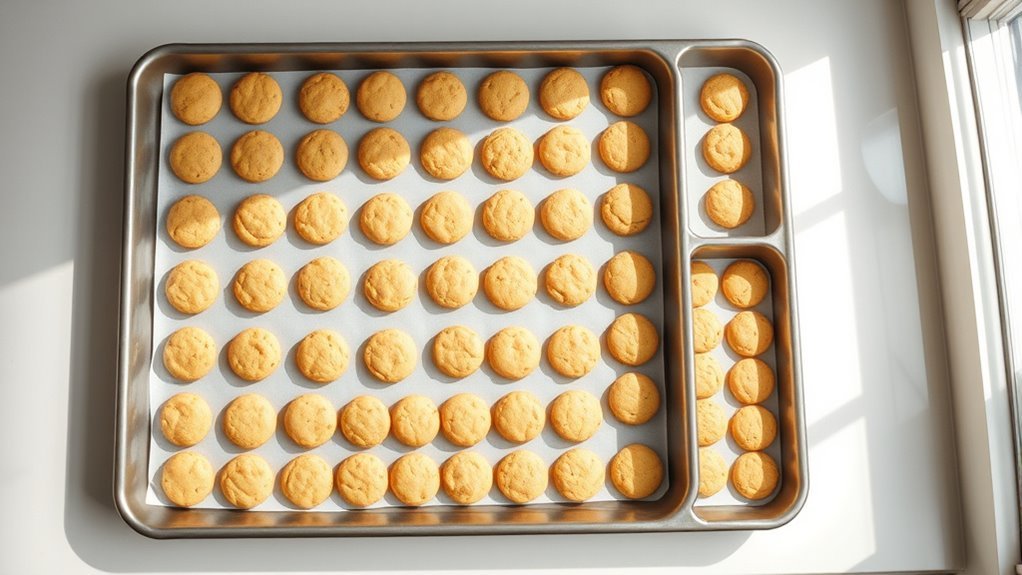
While you’ll most often find cookie sheets in a standard 18 x 13-inch size, they also come in handy variations like 16 x 14 and 15 x 10 inches, so pick the one that fits your oven and batch needs.
You’ll notice the subtle differences in dimensions affect capacity and workflow: larger sizes hold more dough, smaller ones slide into tight ovens.
Cookie sheets usually have one or two raised edges, unlike flat baking sheets, so you can slide and lift cookies without spills.
Reach for aluminum or nonstick options if you want lightweight handling and easier cleanup; the material influences feel and aroma while baking.
Pay attention to thickness — heavier sheets resist warping and give you more even heat distribution, so your cookies brown uniformly and don’t bake hot spots.
Choose sizes that match your racks and ambitions; when your tools fit your kitchen, you free yourself to bake with confidence.
Cookie Sheet vs Sheet‑Pan Sizes (Quarter, Half, Full Explained)
Now that you know common cookie sheet dimensions and how material and thickness affect baking, it helps to compare those flat, one‑edged sheets with standard sheet‑pan sizes so you can pick the right tool for each task.
You’ll feel the difference: cookie sheets are low, often with one raised edge, letting air kiss the underside for crisp bottoms. A typical cookie sheet roughly matches a half sheet pan at 18 x 13 inches — roomy enough for multiple batches without crowding.
If you want smaller freedom, reach for a quarter sheet pan (9 x 13 inches); it heats quickly, fits toaster ovens, and suits intimate baking.
Full-size sheet pans (26 x 18 inches) belong to commercial spaces, giving vast surface area but demanding large ovens.
Know the dimensions of your oven and baking sheets so you can choose efficiently. Matching size to task saves time, energy, and scraps — and lets your baking be bold, precise, and liberating.
How Rims and Materials Change Usable Cookie‑Sheet Surface
Edges and metal make a real difference: a rimless or single‑rim cookie sheet gives you easier access and better airflow under cookies, so bottoms crisp evenly, while a fully rimmed pan traps a bit more heat and limits usable surface area for arranging dough.
You want a true flat surface when you’re aiming for freedom — easy slide-off, predictable browning, and clear, even baking results. Material choices sharpen that control: aluminum’s heat conductivity speeds and evens bake; darker finishes push faster browning; nonstick helps release without struggle.
- Choose rim type: a single or no raised edges expands usable flat surface and lets you place more cookies with confident spacing.
- Read material cues: aluminum means fast, uniform heating; heavy or dark pans change timing and color.
- Match intent: pick thinner, rimless sheets for crisp bottoms; use rims when you need containment.
You’ll bake with more authority when you pair shape and metal to your goals.
Choosing the Right Cookie Sheet for Your Oven and Recipe
Before you bake, check how a sheet sits in your oven so air can circulate and sheets won’t block the heat; most homes fit an 18 x 13-inch sheet comfortably.
Pick a pan size that matches the recipe—use quarter sheets for small batches and full sheets when recipes call for even spacing.
Also match surface and coating to the result you want: nonstick for easy release, bare aluminum for crisp edges.
Oven Fit Guide
When you’re picking a cookie sheet, make sure it leaves at least 1–2 inches of space on all sides in your oven so hot air can circulate and cookies bake evenly; measure both the pan and your oven’s interior before buying.
Choose dimensions that feel freeing—standard 18 x 13 inches or smaller 15 x 10 or 14 x 12 options—so you control oven use and results.
Consider depth: flat sheets or a slight lip affect handling and heat contact.
Match size to your recipe to avoid altered baking times or crowded trays that steam instead of brown.
- Measure oven interior and compare cookie sheets’ dimensions.
- Leave 1–2″ around pan for proper air circulation.
- Pick depth for easy handling and predictable baking times.
Recipe Compatibility Tips
If you want cookies that brown evenly and hold their shape, pick a sheet that matches both your oven’s clearance and the recipe’s intent: use a full 18 x 13 for big batches, a quarter (9 x 13) for small runs, and choose uncoated aluminum for crisp edges or nonstick for easy release.
Check your oven’s dimensions so your baking sheets slide in without crowding — steam and soggy bottoms steal freedom from a crisp edge.
Match recipe notes to size and thickness: dense dough benefits from heavy, uncoated pans; delicate cookies prefer nonstick or parchment.
Use quarter sheet pans when you need control and faster heating.
Keep a size chart handy so recipe compatibility stays practical, predictable, and liberating.
How Many Cookies Fit Per Cookie Sheet Size (Spacing Examples)
While you’re planning batches, remember that pan size and spacing determine how many cookies you can bake at once; a standard 13 x 18-inch sheet gives you the largest surface. A half sheet fits roughly 12–15 standard cookies with 2-inch gaps, and a quarter sheet holds about 6–8.
You’ll feel the freedom of efficient baking when you visualize spacing examples: leave 2 inches between domes so heat circulates, edges brown evenly, and cookies don’t merge. Smaller cookies let you reclaim oven space; larger ones demand breathing room.
- Half sheet pans — arrange 12–15 standard cookies in staggered rows with 2-inch spacing for even color and texture.
- Quarter sheet pan — fit 6–8 comfortably; ideal for keeping batches small, portable, and controlled.
- Standard cookie sheets (13 x 18) — maximize capacity or use for mixing and cooling when not baking.
Use these plain, tactile rules when baking cookies to take command of your oven and your time.
Nonstick vs Uncoated Aluminum Cookie Sheets : When to Use Each
When you want perfectly shaped, soft cookies or delicate pastries, reach for a nonstick sheet so they slide off cleanly without extra fat or paper.
If you need crisp edges or are roasting at high temperatures, an uncoated aluminum sheet will brown evenly and hold up to the heat.
Remember nonstick needs gentle utensils and care to last, while aluminum tolerates scrubbers and tough use.
Nonstick For Delicate Bakes
A nonstick cookie sheet gives you smooth, worry-free release for delicate bakes, so cookies, pastries, and sticky doughs slide off without tearing and cleanup stays simple.
You’ll feel confident pulling perfect rounds, flaky layers, and gooey centers free, which keeps baking joyful and freeing.
Use nonstick baking sheets when you want easy release and quick washup; avoid metal tools to protect the coating.
Remember uncoated aluminum performs differently—great for browning but not for fragile items.
- Choose nonstick for sticky cookies and fragile pastries to preserve shape and texture.
- Expect even baking on many coated pans, though check manufacturer guidance for high temperatures.
- Save uncoated aluminum for tasks where crisping and higher-heat work matter.
Aluminum For High Heat
If you’ve been using nonstick sheets for delicate cookies, you’ll want uncoated aluminum when your recipe calls for high heat and deep browning.
Choose aluminum baking sheets when you need intense, even heat—the metal conducts warmth fast, giving crisp edges and a caramelized surface you can see and smell.
You’ll feel the difference: dough that transforms quickly, not stewing under a coating’s limits. Nonstick is convenient, but it often tops out around 400°F; uncoated aluminum endures higher temperatures and resists warping, so your results stay consistent.
For freedom in the kitchen, pick the tool that lets recipes run their course.
Use nonstick for sticky, delicate bakes; use aluminum for power, color, and durability.
Maintenance And Longevity
While both types of sheets can last years, you’ll care for them differently to keep performance high: treat nonstick pans gently—no metal spatulas or abrasive pads—and clean them with warm soapy water to preserve the coating.
In contrast, uncoated aluminum tolerates vigorous scrubbing and even develops a seasoned patina that can improve release over time.
You’ll choose based on use: delicate cookies benefit from nonstick ease; high-heat roasting favors uncoated sheet durability and browning.
Inspect surfaces regularly for scratches or worn coating, and retire heavily damaged nonstick pans.
- Use: nonstick for fragile bakes; uncoated for roasting and searing that demand heat and crispness.
- Cleaning: gentle for nonstick; robust for uncoated.
- Longevity: monitor wear, embrace patina on uncoated for improved release.
Care, Storage, and Warping Prevention for Cookie Sheets
Because temperature shocks and rough handling will warp even sturdy pans, you should let cookie sheets cool completely before washing and never plunge a hot sheet into cold water.
For care and warping prevention, hand wash with warm, soapy water and a non‑abrasive sponge; you’ll feel the grime lift without roughing the metal. Use silicone baking mats or parchment to reduce sticking and protect the surface, keeping coatings intact and cleanup effortless.
Store baking sheets flat to avoid bending; if cabinet space forces stacking, slide thin felt or silicone liners between them so they don’t rub or dent.
Routinely inspect for scratches, peeling coatings, or warped edges — small defects change heat flow and ruin bakes. When you handle pans, grip them firmly and set them on heat‑resistant surfaces to prevent drops and knocks.
Treat your sheets as tools for liberation: simple, sensible care and neat storage keep them true, reliable, and ready whenever you decide to bake without constraint.
Frequently Asked Questions
Is a 9×13 Pan a Cookie Sheet?
No — a 9×13 pan isn’t a cookie sheet. You’ll feel the difference: cookie sheet materials like aluminum or steel sit flatter and promote crisp edges, while a deeper 9×13 traps steam.
For cookie sheet uses choose shallow, rimmed or rimless options; for alternatives you can use insulated baking sheets or stone.
Maintain freedom by practicing cookie sheet maintenance—cleaning, drying, seasoning—to keep sizes and surfaces working for your baking liberation.
Is a Cookie Sheet the Same as a Sheet Pan?
Give and take, they’re close but not identical. You’ll notice cookie sheet types differ from sheet pans by having one raised edge; cookie sheet materials vary (aluminum, steel, nonstick).
Cookie sheet uses focus on cookies and crisping, while sheet pans handle roasting and trays.
Mind cookie sheet care—don’t warp them with high heat or harsh cleaners.
Check cookie sheet sizes before you buy so nothing cramps your style.
Is a Jelly Roll Pan the Same Size as a Cookie Sheet?
No — they’re different sizes.
You’ll notice jelly roll dimensions (about 15×10 inches, 1 inch deep) feel snug and controlled, perfect for jelly roll recipes that need contained batter.
Cookie sheet materials and flatter design suit broader baking sheet uses like cookies and roasting.
You’ll liberate your kitchen by using each pan for its strengths, and practice cookie sheet maintenance to keep both performing beautifully for varied, joyful baking.
Do Full-Size Baking Sheets Fit in a Regular Oven?
No — full-size baking sheets usually won’t fit in a regular oven.
Picture a banquet table squeezed into a bistro: baking sheet dimensions (26×18″) exceed most ovens’ oven rack spacing.
You’ll prefer half or quarter sheets; check cookie sheet materials for warp resistance and use baking tips like rotating pans for even heat distribution.
Measure your oven, choose compatible pans, and reclaim kitchen freedom with sensible, sensory-tested tools.
Conclusion
Choosing the right cookie sheet boils down to fit, surface, and purpose — like picking the perfect pair of shoes for a run. You’ll want a size that slides smoothly into your oven, enough flat space for proper spacing, and a material that matches your baking style. Think half-sheet for most batches, quarter for small runs. Care for them, avoid warping, and store flat so they’re ready when dough meets heat.
