
The best anvil pruning shears help you cut dry, dead, and woody branches without putting unnecessary strain on your hands. Unlike bypass pruners, anvil shears use a single cutting blade that closes against a supporting surface. This design makes them useful for removing dead growth and managing tough garden cleanup jobs.
The Fiskars Power-Lever Anvil Pruner is a practical choice for everyday deadwood trimming, thanks to its leverage mechanism and 5/8-inch cutting capacity. For thicker branches and cushioned handling, consider the WORKPRO 8-Inch Anvil Pruning Shears.
These five picks cover different cutting capacities, blade materials, grip designs, and maintenance needs. The comparison uses published product specifications and manufacturer guidance rather than claimed hands-on testing.
Anvil Pruning Shears Compared
Cutting capacity is the biggest difference between these five pruners. A smaller model works well for routine garden cleanup, while larger-capacity models give you more room to handle thick, dry branches.
| Product | Best for | Cutting capacity | Standout feature |
|---|---|---|---|
| Everyday deadwood trimming | 5/8 inch | Power-Lever cutting mechanism | |
| Value and comfortable grip | 3/4 inch (19 mm) | SK5 blade and shock-absorbing pad | |
| Replaceable blade design | 15 mm | All-metal construction | |
| Classic professional design | 22 mm | German-made, ambidextrous | |
| Thicker deadwood and long-term repairability | 25 mm (about 1 inch) | Replaceable parts and adjustable anvil |
Best Anvil Pruning Shears: Our Top Picks
1. Fiskars Power-Lever Anvil Pruner
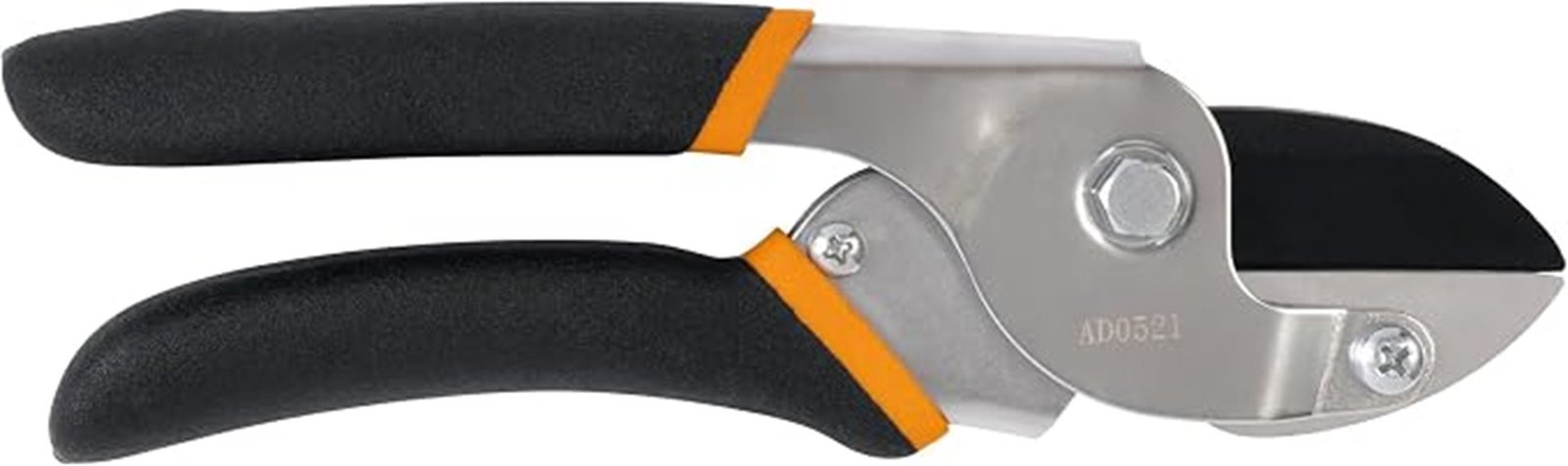
Bottom line: The Fiskars Power-Lever Anvil Pruner is a useful choice for removing small, dry branches with reduced hand effort. Its leverage mechanism and hardened steel blade make it well suited to routine garden maintenance.
- Model: 91105935J, the Power-Lever anvil design.
- Cut capacity: 5/8 inch, suitable for smaller woody stems.
- Blade: Precision-ground hardened steel with a low-friction coating.
- Grip: Ergonomic handles for controlled hand pruning.
The main advantage is Fiskars’ Power-Lever mechanism. It increases mechanical leverage as you close the handles, making dry stems easier to cut than with a simple pivot design.
The precision-ground blade has a low-friction coating that helps reduce sticking and rust. You can use this pruner for dead stems, faded flower stalks, and smaller branches that fit within its rated capacity. For delicate living stems, a bypass pruner is generally a better tool.
The manufacturer has advertised lifetime warranty coverage for this model. However, warranty terms and the product’s current retail status should be confirmed before purchase.
- Power-Lever mechanism increases cutting leverage
- Hardened steel blade helps maintain sharpness
- Low-friction coating reduces sticking and corrosion
- Comfortable design for routine garden cleanup
- 5/8-inch capacity limits thicker branch cutting
- Less suitable for delicate living stems
- Current manufacturer status needs confirmation
2. WORKPRO 8-Inch Anvil Pruning Shears
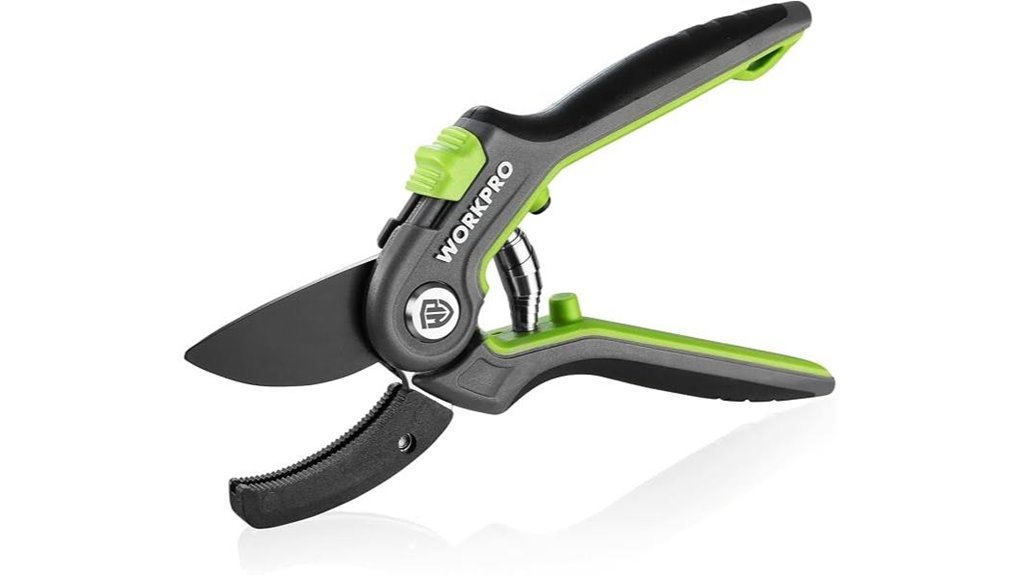
Bottom line: The WORKPRO 8-Inch Anvil Pruning Shears combine a 19 mm cutting capacity with SK5 steel blades and cushioned handles. They suit gardeners who want a practical hand pruner for dry branches without moving to a professional-grade tool.
- Model: WORKPRO 8-inch anvil, SKU W151022AH.
- Cut capacity: 3/4 inch (19 mm), for moderate-size branches.
- Blade: SK5 steel with a protective black coating.
- Grip: Anti-slip rubber handles and shock-absorbing pad.
The SK5 steel blade is designed for pruning woody growth, while its black coating helps resist corrosion. The anvil groove supports the branch as the cutting blade closes.
A responsive spring helps reopen the handles after each cut. The built-in locking mechanism holds the blades closed during storage, and the shock-absorbing pad helps reduce impact when the handles meet.
You can also use these shears around flowers, fruit plants, and vegetables. However, their anvil design is better suited to dry or stubborn stems than to precise cuts on healthy green growth.
- SK5 steel blades with a corrosion-resistant coating
- 19 mm cutting capacity offers useful versatility
- Anti-slip handles and shock-absorbing pad improve comfort
- Responsive spring and storage lock support convenient use
- Anvil action is less suitable for delicate green stems
- 19 mm capacity will not cover larger branches
- Not intended to replace long-handled loppers or a pruning saw
3. LeafLux Heavy Duty Anvil Pruning Shears LFXP1108S
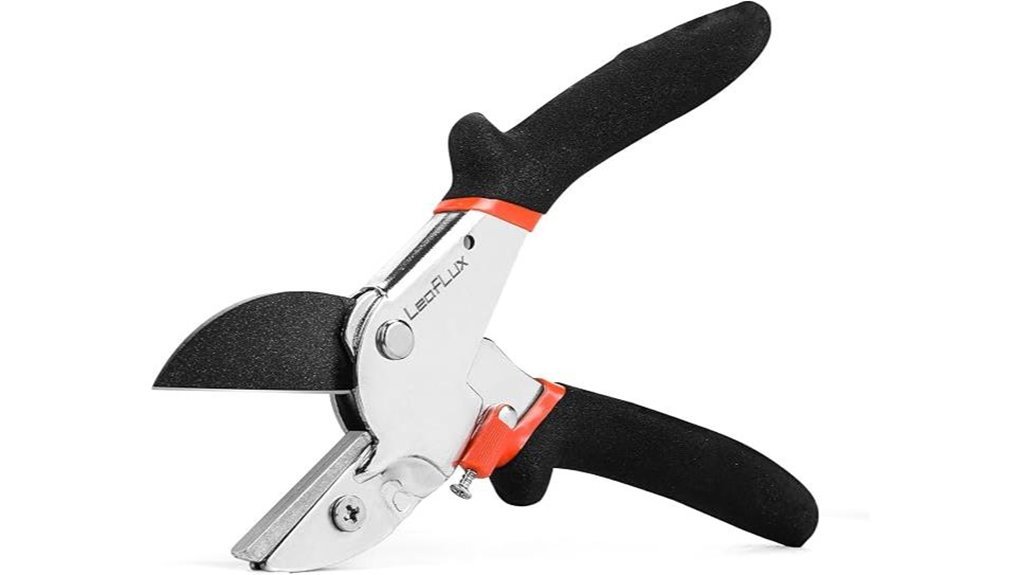
Bottom line: The LeafLux LFXP1108S is designed for gardeners who want a sturdy anvil pruner with a replaceable cutting blade. Its all-metal construction and internal spring distinguish it from basic disposable models.
- Model: LFXP1108S, heavy-duty anvil pruner.
- Cut capacity: 15 mm, for smaller woody branches.
- Blade: SK5 high-carbon steel, with a stated hardness of 58–60 HRC.
- Grip: Ergonomic PVC-covered handle.
- Service: Replaceable blade design.
LeafLux specifies heat-treated SK5 steel with an anti-friction lacquer. The coating is intended to reduce cutting drag and help protect the blade from corrosion when working with dry hardwood or damp stems.
The internal spring helps reduce the chance of an exposed spring becoming detached. A precision lever system transfers pressure through the cutting head, while the PVC handle provides grip during repetitive cutting.
The biggest long-term benefit is blade replacement. Instead of discarding the entire tool when the edge wears out, you can replace the cutting blade with the correct compatible part.
Despite the heavy-duty description, the stated 15 mm capacity is smaller than those of the WORKPRO, Original LÖWE, and FELCO models. Do not use it to cut metal or force it through oversized wood.
- SK5 high-carbon steel blade with protective coating
- Replaceable cutting blade may extend service life
- All-metal body and enclosed spring design
- PVC-coated handle provides a secure grip
- 15 mm capacity limits larger cutting jobs
- Not suitable for metal or stainless steel
- Replacement blades must match the specific model
4. Original LÖWE Professional Anvil Pruner 1.104
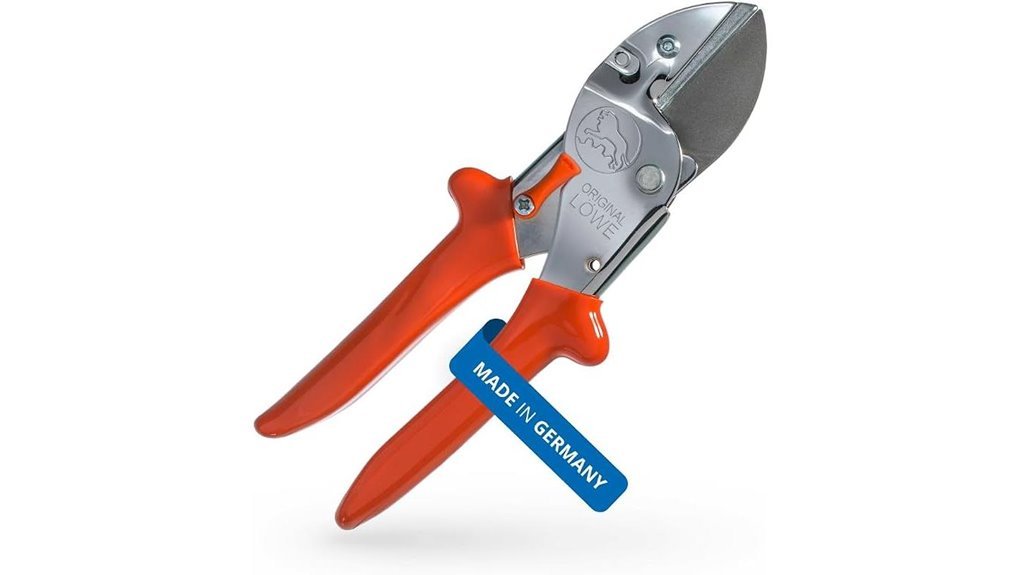
Bottom line: The Original LÖWE 1.104 is a professional-style anvil pruner made for hard, dry, and older wood. Its classic German design, 22 mm cutting capacity, and ambidextrous handling make it a strong choice for regular pruning.
- Model: Original LÖWE 1.104 with standard handles.
- Cut capacity: 22 mm, suitable for substantial woody stems.
- Blade: Coated steel blade designed for reduced friction.
- Grip: Standard handle for medium to large hands.
- Service: Manufacturer-supported replacement parts.
The Original LÖWE 1.104 uses a cutting action that draws the blade through the branch against the anvil. This helps transfer force through the cutting head when removing stubborn wood.
The tool measures 21 cm long and weighs approximately 290 g. Its standard handle accommodates medium to large hands, and the manufacturer specifies use with either hand.
A protective blade coating helps reduce friction and corrosion. The brand also supports blade and anvil replacement, making this a practical option for gardeners who prefer maintaining a familiar tool over replacing it regularly.
One detail worth checking is the handle version. The 1.104 has standard handles, while other Original LÖWE models use inward-curved or rotating grips.
- 22 mm cutting capacity for tougher woody branches
- Ambidextrous design suits left- and right-handed users
- Protective blade finish reduces friction
- Serviceable design with replacement components
- Standard handle may feel large for smaller hands
- 22 mm capacity still limits oversized branches
- Less suitable than bypass shears for delicate live growth
5. FELCO 31 Pruning Shears for Dry, Hard Wood
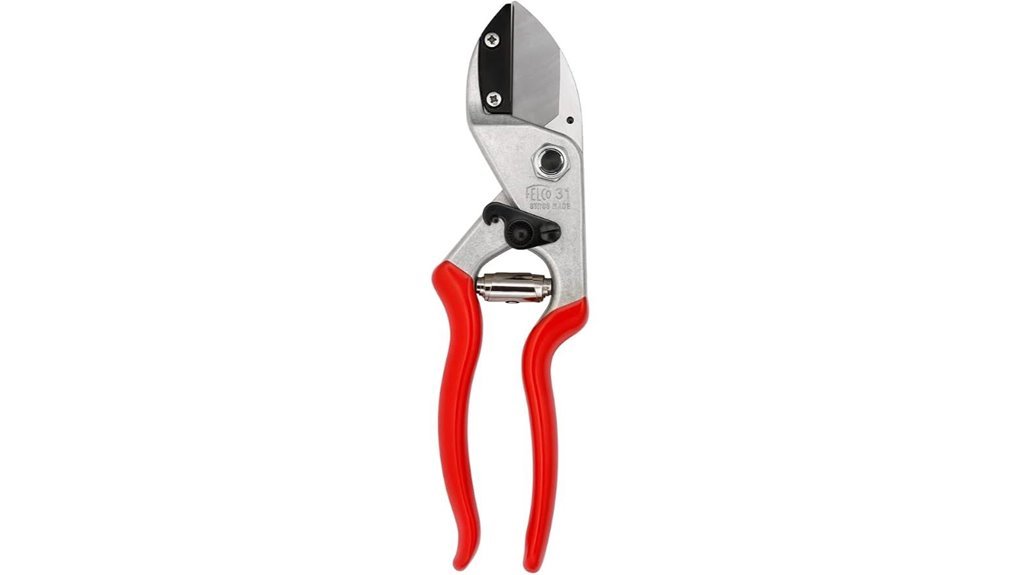
Bottom line: The FELCO 31 is the strongest choice here for gardeners who regularly cut thicker deadwood and want a repairable tool. Its 25 mm capacity, forged aluminum handles, and replaceable components support demanding pruning work.
- Model: FELCO 31, Swiss-made anvil pruning shear.
- Cut capacity: 25 mm, approximately 1 inch.
- Blade: Hardened steel with a straight, double-beveled cutting edge.
- Grip: Non-slip forged aluminum handles, designed for larger hands.
- Service: Replaceable parts and adjustable blade-to-anvil alignment.
The FELCO 31 uses a sharp steel blade that closes against an adjustable anvil. Its double-beveled cutting edge helps the blade pass through hard wood, while the narrow head gives you control around crowded branches.
At approximately 227 g and 215 mm long, the FELCO 31 is lighter than the earlier weight stated for this model. The manufacturer also describes its hand orientation as universal, making it suitable for both left- and right-handed use.
Its forged aluminum handles have non-slip covering for control. You can adjust the cutting mechanism to maintain proper blade contact, and replacement blades, anvils, springs, and other parts are available.
The primary trade-off is fit. FELCO designs this model for large hands, so gardeners with smaller hands may prefer a more compact pruner.
- 25 mm cutting capacity for larger dry branches
- Forged aluminum handles with non-slip covering
- Replaceable parts and adjustable anvil mechanism
- Suitable for left- and right-handed operation
- Swiss-made construction and manufacturer repair support
- Large-hand design may not fit smaller hands comfortably
- Premium construction costs more than basic pruners
- Not a substitute for loppers or a saw on oversized branches
Fiskars Power-Lever vs WORKPRO: Which Should You Get?
The Fiskars Power-Lever focuses on leverage and smaller cutting jobs, while the WORKPRO provides a larger rated capacity and cushioned grip. Your typical branch diameter and preferred handle design should determine which one you buy.
- Cutting capacity: WORKPRO handles up to 19 mm, compared with Fiskars’ 5/8-inch capacity.
- Cutting mechanism: Fiskars uses a Power-Lever system to increase force at the blade.
- Grip comfort: WORKPRO adds rubber handles with a shock-absorbing pad.
- Best application: Fiskars suits small dead stems, while WORKPRO allows slightly thicker branch cuts.
Which Anvil Pruning Shears Should You Buy?
The best choice depends on branch thickness, your hand size, and how often you prune. Match the tool to your most common task rather than choosing the largest cutting capacity automatically.
- For everyday deadwood cleanup: Get the Fiskars Power-Lever Anvil Pruner for smaller branches and extra leverage.
- For value and comfortable handling: Choose the WORKPRO 8-Inch Anvil with SK5 blades and a shock-absorbing grip.
- For replaceable blade convenience: Consider the LeafLux LFXP1108S, provided its 15 mm capacity meets your needs.
- For a classic professional tool: Pick the Original LÖWE 1.104 for 22 mm capacity and ambidextrous use.
- For thick deadwood and long-term service: Choose the FELCO 31 with its 25 mm capacity and replaceable components.
How We Chose These Anvil Pruning Shears
These recommendations compare product design, manufacturer specifications, and practical suitability for garden work. They are not based on original hands-on cutting tests.
- Cutting capacity: We compared rated branch diameters and prioritized realistic use rather than assuming larger always means better.
- Blade construction: We considered hardened steel, SK5 steel, blade coatings, and edge maintenance.
- Comfort and control: We reviewed grip materials, hand-size guidance, leverage systems, and handle design.
- Serviceability: Replaceable blades, adjustable parts, and maintenance support were considered where documented.
- Safety: We reviewed relevant product information and recall records, without assuming that unrelated tools from the same brand were affected.
Key references include the WORKPRO product specifications, Original LÖWE 1.104 specifications, FELCO 31 manufacturer specifications, and the U.S. Consumer Product Safety Commission recall database.
Factors to Consider When Choosing Anvil Pruning Shears in 2026
Choose anvil pruning shears according to your branch sizes, cutting frequency, and hand comfort. A sharp blade and properly sized handle matter more than an impressive product description.
Also consider repairability, locking mechanisms, and whether you need a separate bypass pruner for healthy growth. The following factors will help you narrow your choice.
Cutting Capacity
Cutting capacity is the maximum branch diameter a pruner is designed to handle. The models here range from 15 mm to 25 mm, so the right size depends on what you regularly cut.
For small dead stems and routine cleanup, the Fiskars and LeafLux models offer suitable capacities. WORKPRO provides a middle option, while Original LÖWE and FELCO handle larger diameters.
A rated maximum is not a guarantee that every branch of that size will cut easily. Very hard, dry wood can require more force than softer material of the same thickness.
Never force the handles together if a branch does not fit properly. Use loppers or a pruning saw for material beyond the tool’s capacity.
Blade Material
Blade material affects edge retention, cutting effort, and resistance to wear. High-carbon steel and hardened alloy steel are common choices for pruning tools because they can maintain sharp cutting edges.
SK5 steel is used by WORKPRO and LeafLux. The LeafLux listing specifies a hardness of 58–60 HRC, a Rockwell hardness measurement. A higher hardness rating may improve edge retention, but blade geometry and proper heat treatment also affect durability.
Anti-friction coatings help blades slide through material and reduce sap buildup. Keep the blade dry and clean even if the manufacturer describes it as corrosion-resistant.
Ergonomic Grip
A comfortable grip helps you maintain control and reduces strain during repetitive pruning. Look for handles that fit your palm without forcing your fingers to stretch excessively.
Rubber and PVC coverings improve grip security. WORKPRO also uses a shock-absorbing pad, while Fiskars relies on additional leverage to reduce cutting effort.
Hand size matters as much as handle material. Original LÖWE 1.104 is intended for medium to large hands, and FELCO 31 is designed for larger hands.
If possible, check how easily you can open, close, and lock the pruner with one hand before committing to a model.
Durability Features
Long-term durability depends on more than blade hardness. The pivot mechanism, handle construction, springs, and availability of replacement parts also affect how long a pruner remains useful.
LeafLux uses an all-metal body and internal spring design. Original LÖWE and FELCO provide manufacturer-supported service options, while FELCO specifically offers replacement blades, anvils, and other components.
A replaceable blade can reduce the need to buy an entirely new tool after damage or heavy wear. However, replacement parts must match the exact model.
Regular cleaning, lubrication, and adjustment help prevent avoidable wear, especially after cutting sappy or damp wood.
Safety Locking
A reliable safety lock keeps the cutting blade closed during transport and storage. It reduces the risk of accidental contact when the pruner is not being used.
Look for a mechanism that is easy to operate but does not release unexpectedly. A lock that sticks, loosens, or fails to secure the blade should be repaired before further use.
WORKPRO includes a dedicated locking mechanism, and the Fiskars model uses a sliding lock. Other designs may use different closures, so check the exact mechanism before buying.
Always keep pruning shears away from children and avoid carrying them with exposed blades.
Mistakes to Avoid When Buying Anvil Pruning Shears
- Choosing anvil shears for every pruning job: Use bypass pruners when you need precise cuts on healthy green stems.
- Ignoring branch diameter: Compare your typical stems with the tool’s rated capacity before purchasing.
- Overlooking handle fit: A high-quality pruner can still feel uncomfortable if its handles are too large or small.
- Forgetting maintenance: Clean, dry, sharpen, and lubricate your shears as recommended by the manufacturer.
- Confusing similar models: Verify the exact model number, cutting style, and replacement-part compatibility.
FAQs
How Often Should Anvil Pruning Shears Be Sharpened?
Anvil pruning shears should be sharpened whenever the blade begins to drag, crush wood excessively, or require more effort than usual. There is no fixed schedule for every gardener because cutting frequency and wood hardness vary. Inspect the edge after demanding jobs, clean it regularly, and follow the manufacturer’s sharpening guidance to preserve the correct blade angle.
Are Anvil Shears Good for Live Green Stems?
Anvil shears can cut some living stems, but bypass pruners are generally preferred for precise cuts on healthy green growth. Anvil mechanisms press a cutting blade against a supporting surface, which can compress tender plant tissue. A sharp, properly adjusted anvil pruner may still produce a good cut, but bypass shears remain the more practical choice for delicate pruning.
What Safety Gear Should I Use With Pruning Shears?
Wear gardening gloves, safety glasses, and sturdy closed-toe shoes when using pruning shears. Long sleeves can help prevent scratches from thorny branches. Keep your supporting hand away from the cutting head, secure the safety lock during storage, and never use ordinary pruning shears to cut electrical wires or materials beyond their intended purpose.
How Do I Clean Sticky Sap off Anvil Blades?
Remove sticky sap by wiping the blade with a cloth dampened with rubbing alcohol or a manufacturer-approved cleaner. For stubborn residue, use a soft nylon brush or pad without damaging the blade coating. Dry the blade thoroughly afterward, apply a light protective oil where recommended, and keep the pivot free of accumulated debris before storing the tool.
Can Anvil Pruning Shears Cut Thick Branches?
Yes, anvil pruning shears can cut thick branches within their stated capacity, particularly when working with dry or dead wood. The FELCO 31 is rated for 25 mm branches, while smaller models have lower limits. If cutting requires excessive force or the branch is too large for the blades, switch to suitable loppers or a pruning saw.
What Is the Difference Between Anvil and Bypass Pruning Shears?
Anvil pruning shears use one sharp blade that closes against a flat supporting surface. Bypass pruners have two cutting members that pass each other like scissors. Anvil designs are commonly chosen for tough deadwood, while bypass designs suit precise cuts on living stems. Neither design is automatically better for every task, so match the cutting action to the plant material.
Can You Replace the Blades on Anvil Pruning Shears?
Some anvil pruning shears have replaceable blades, but not every model supports convenient blade replacement. LeafLux LFXP1108S, Original LÖWE 1.104, and FELCO 31 offer serviceable cutting components. Before ordering replacements, confirm the model number and compatible part. If the blade is badly damaged or the pivot is worn, other components may need inspection as well.
Are Anvil Pruners Suitable for Left-Handed Gardeners?
Some anvil pruners are suitable for left-handed use, but you should confirm the manufacturer’s hand-orientation specification. Original LÖWE 1.104 is designed for either hand, and FELCO describes the FELCO 31 as universal-handed. Handle shape and locking mechanisms still affect comfort, so choose a tool that you can control and operate safely with your preferred hand.
Final Verdict
The best anvil pruning shears are the ones that match your branch sizes and fit your hand comfortably. For smaller dry stems, the Fiskars Power-Lever offers useful leverage. For frequent pruning of thicker deadwood, the FELCO 31 provides greater capacity and long-term repairability.
For comfortable, everyday pruning at a more accessible price level, consider the WORKPRO 8-Inch Anvil Pruning Shears. If you prefer a professional-style tool with strong cutting capacity and serviceable parts, the FELCO 31 deserves a closer look.
