When you pull a batch of cookies from an aluminum cookie sheet, you might wonder about the safety of using such bakeware. While aluminum is popular for its durability and heat conductivity, questions about its interaction with food, especially acidic ingredients, often arise. Understanding the materials and their potential risks is essential for making informed choices. What should you know about their safety before you bake your next treat?
What Health Risks Should You Know About Aluminum Bakeware?
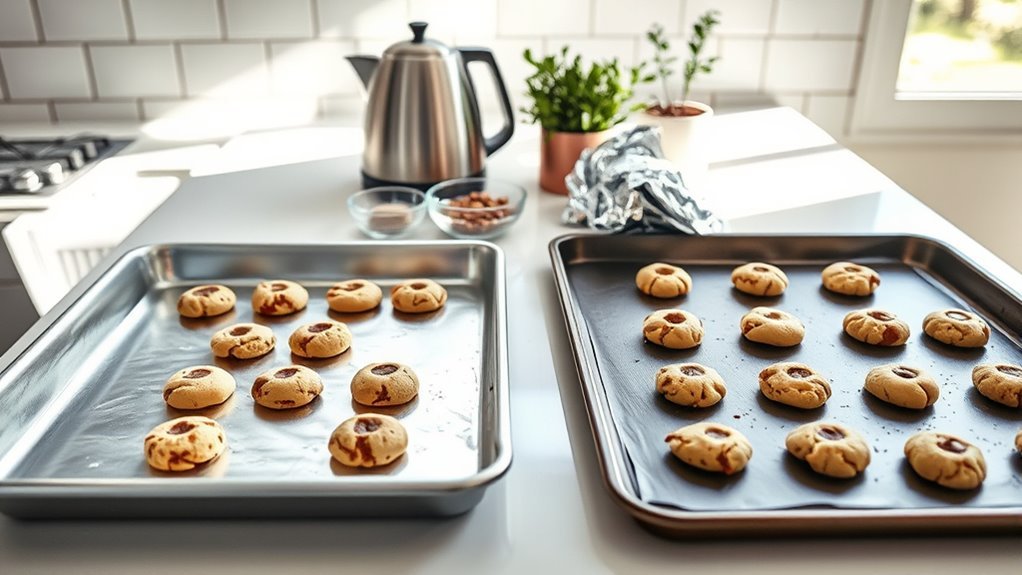
When using aluminum bakeware, it’s crucial to understand the potential health risks associated with it. Aluminum can react with acidic foods like tomatoes and citrus, leading to leaching of aluminum into your meals. This raises concerns, especially considering studies hinting at a possible link between high aluminum exposure and neurological conditions, including Alzheimer’s disease, though the evidence remains debated.
While pure aluminum is generally deemed safe, opting for anodized or coated aluminum can greatly reduce this reactivity and enhance safety. In contrast, non-reactive materials like stainless steel or glass pose fewer health risks.
To minimize exposure, you should limit the use of aluminum bakeware for acidic ingredients and explore alternatives made from safer materials. By being informed and proactive, you can make healthier choices in the kitchen, ensuring your culinary adventures don’t come at a potential cost to your well-being.
What Are Aluminum Cookie Sheets Made Of?
Aluminum cookie sheets, a staple in many kitchens, are primarily crafted from pure, uncoated aluminum, known for its excellent heat conductivity. This material guarantees even baking results, giving you that perfect golden-brown finish. Some sheets are anodized, providing a protective layer that enhances durability and minimizes reactivity with acidic foods.
Here’s a quick comparison of the types of aluminum cookie sheets:
| Type | Features |
|---|---|
| Pure Aluminum | Excellent heat conductivity; lightweight; safe for food contact |
| Anodized Aluminum | Protective layer; durable; reduced reactivity with acidic foods |
When choosing aluminum cookie sheets, consider the gauge; lower numbers indicate thicker, more durable pans that resist warping. Despite concerns about aluminum leaching, uncoated aluminum is generally safe for baking when used correctly.
How Do Aluminum Cookie Sheets Compare to Other Bakeware?
Choosing the right bakeware can greatly impact your baking results, especially when comparing aluminum cookie sheets to other materials. Aluminum baking sheets heat quickly and evenly, providing excellent heat conductivity and ensuring consistent baking. However, they can react with acidic foods, leading to aluminum leaching.
Choosing the right bakeware is crucial, as aluminum sheets offer quick, even heating but may react with acidic foods.
In contrast, stainless steel baking is non-reactive and more durable, making it a reliable choice for various recipes. If you’re looking for added durability, consider aluminized steel pans that resist warping.
For those who prefer non-stick options, silicone-coated aluminum sheets offer convenience but may degrade over time. Anodized aluminum presents a safer alternative, forming a barrier that prevents food contact with the reactive surface.
Each material has its pros and cons, so weigh the benefits of aluminum against stainless steel’s durability and non-reactivity to make an informed decision for your kitchen.
What Safer Alternatives to Aluminum Cookie Sheets Are Available?
If you’re concerned about the safety of aluminum cookie sheets, several alternatives can enhance your baking experience without compromising health.
Uncoated Stainless Steel is a top choice, known for its durability and non-reactivity, ensuring no harmful substances leach into your food.
Clear Borosilicate Glass is another excellent option, offering an inert surface that withstands high temperatures without degradation.
For those who prefer a rustic touch, Cast Iron provides a natural non-stick surface when seasoned correctly, though it’s best to avoid acidic foods.
True Ceramic and Porcelain bakeware are safe as long as they’re lead-free, delivering excellent heat retention.
Finally, Stoneware is dense and fired at high temperatures, ensuring both durability and non-reactivity.
Each of these non-toxic bakeware options allows you to bake confidently, prioritizing your health while achieving delicious results.
How Can You Minimize Risks With Aluminum Cookie Sheets?
While aluminum cookie sheets are popular for their lightweight and even heat distribution, there are effective strategies to minimize any potential health risks associated with their use.
Start by lining your aluminum pans with parchment paper. This creates a barrier that reduces direct contact, especially when baking with acidic foods like tomatoes or citrus, which can increase leaching.
Additionally, consider using anodized aluminum sheets. They’ve a protective layer that minimizes reactivity, enhancing safety.
It’s also wise to avoid high temperatures; sticking to recommended baking ranges (typically below 500°F) helps prevent warping and further leaching.
Finally, maintain your sheets by cleaning them promptly after use. This prevents food residues from reacting with the metal, ensuring your aluminum cookie sheets remain safe and easy to clean.
Tips for Proper Care and Maintenance of Aluminum Bakeware
Proper care and maintenance of aluminum bakeware can greatly extend its lifespan and guarantee peak baking performance.
Start by hand washing your aluminum bakeware with warm, soapy water and a sponge; this method’s easy to clean and prevents discoloration, unlike dishwashing.
Avoid using metal utensils on the surfaces, as they can scratch and compromise performance. For stubborn, baked-on residues, utilize a non-abrasive scrubber or a specialized cleaner like Dawn Powerwash Dish Spray to keep the surface intact.
Store your bakeware in a dry environment to prevent moisture accumulation, which can lead to rusting or pitting over time.
Additionally, to maintain peak performance, avoid using aluminum pans with acidic foods, as they can react with the metal, potentially affecting taste and safety.
Following these tips guarantees your aluminum bakeware remains effective and safe for all your baking needs.
Common Myths About Aluminum Bakeware
When it comes to aluminum bakeware, you might encounter several misconceptions about health risks and cooking performance.
Many believe that aluminum leaches harmful substances into food or affects baking results negatively. However, research shows that the risks are minimal, and professional kitchens often prefer uncoated aluminum for its superior heat conductivity.
Health Risks Misconceptions
Many people believe that using aluminum bakeware poses significant health risks, but this notion is often rooted in misconceptions.
While uncoated aluminum can leach into food, especially with acidic foods, the body naturally eliminates small amounts of aluminum. Current research hasn’t conclusively linked aluminum exposure from cookware to serious health issues like Alzheimer’s disease.
Anodized aluminum provides a non-toxic alternative, creating a protective barrier that prevents leaching and enhances safety.
Regulatory agencies, including the FDA, deem aluminum cookware safe when used as directed. Cooking with aluminum bakeware is common in professional kitchens for its excellent heat conductivity, ensuring even baking.
Understanding these facts can liberate you from unnecessary fears surrounding aluminum bakeware.
Cooking Performance Myths
Understanding the health aspects of aluminum bakeware sets the stage for addressing common cooking performance myths. Many believe aluminum reacts considerably with acidic foods, but this leaching is minimal and typically harmless.
When it comes to heat conductivity, aluminum excels, ensuring even baking and browning—something heavier materials often struggle with. While lightweight aluminum sheets may warp under high temperatures, high-quality versions, especially those with anodized finishes, boast impressive durability.
You might think aluminum needs non-stick coatings for peak performance, but many pans deliver excellent baking results without them. Embracing these truths empowers you to choose aluminum bakeware confidently, ensuring both safety and exceptional culinary outcomes.
Frequently Asked Questions
What’s the Healthiest Material for a Cookie Sheet?
The healthiest material for a cookie sheet is uncoated stainless steel. It offers excellent heat distribution, enhancing baking performance without leaching harmful substances.
Compared to other materials, its durability guarantees long-term use, minimizing environmental impact.
While non-stick coatings can simplify maintenance, they often contain chemicals that raise food safety concerns.
For best results, regularly season your stainless steel sheet to maintain its properties and guarantee your baked goods come out perfectly every time.
Which Is Better, Stainless Steel or Aluminum Cookie Sheets?
When comparing stainless steel and aluminum cookie sheets, aluminum excels in heat distribution efficiency, promoting even baking.
However, stainless steel offers better durability and longevity, resisting rust and maintaining its appearance.
Aluminum is lighter, making it versatile and easier to handle, while stainless steel is heavier but often considered more robust.
Price point analysis shows aluminum is generally more affordable, but consider maintenance tips like avoiding acidic foods to enhance longevity.
Which Is Healthier, Aluminum Foil or Parchment Paper?
When choosing between aluminum foil and parchment paper, think of parchment as a shield against chemical leaching.
While aluminum foil excels in heat conductivity, its potential to leach into food raises concerns about food safety.
Parchment paper, on the other hand, offers non-stick convenience and is compostable, making it a healthier, more environmentally friendly choice.
For best results, use parchment for baking and reserve aluminum foil for wrapping and grilling, ensuring you prioritize your health.
What Is the Least Toxic Bakeware?
The least toxic bakeware includes uncoated stainless steel and true ceramic, which offer eco-friendly options without harmful coatings.
For durability comparison, consider cast iron or borosilicate glass, both excellent for heat distribution.
Avoid non-stick coatings unless they’re BPA-free.
Maintenance tips include hand-washing to extend lifespan.
While initial costs may be higher, investing in quality bakeware reduces chemical exposure and enhances your baking experience, making it worthwhile in the long run.
Conclusion
In the world of baking, aluminum cookie sheets can be your trusty companions, shining like silver under the warm glow of your oven. While concerns about health risks linger, understanding their composition and using them wisely can help you enjoy perfectly baked treats. By opting for safer alternatives when needed and following proper care practices, you can savor the joy of baking without worry. With informed choices, you’ll create delicious memories that last long after the cookies are gone.