
The four best seder plates for 2027 are the Kosher Cook Disposable Passover Seder Plate (6-Pack), the Dreidel Company Disposable Passover Seder Plates (5-Pack), the Dreidel Company Passover Seder Plates, 3-Pack, and the Passover Seder Complete Set by Zion Judaica. Each stands out for convenience, durability, design, and value. Disposable options suit easy cleanup and travel, while melamine and complete sets offer a more elegant, reusable table presentation. More details can help narrow the best fit.
The Kosher Cook Disposable Passover Seder Plate (6-Pack)
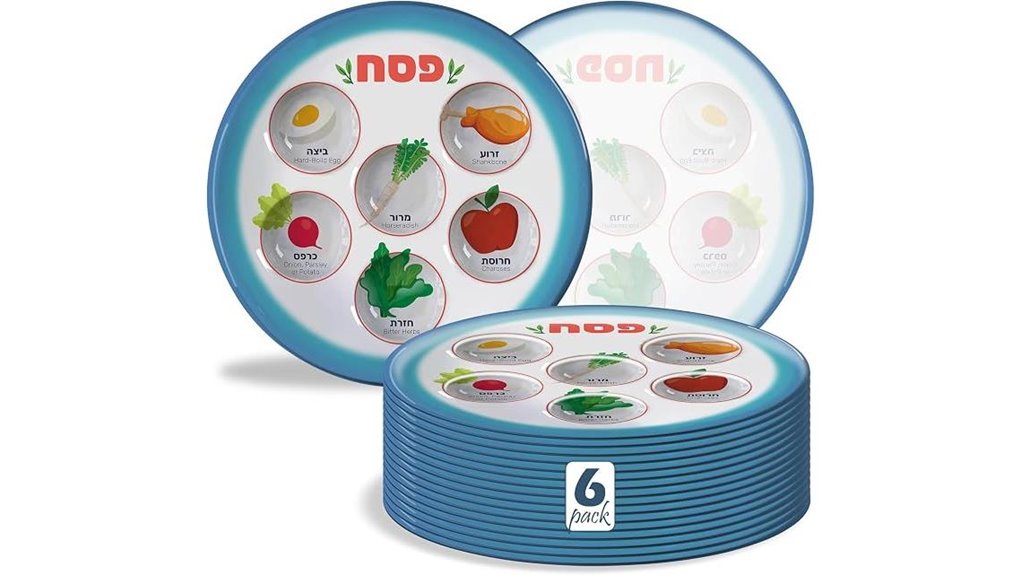
The Kosher Cook Disposable Passover Seder Plate (6-Pack) is a practical pick for families, children, and communal seders that need an easy, no-fuss option. Each 10-inch heavy-duty plastic plate features grooved sections and clear images for the seder items, helping keep the presentation organized and recognizable. The disposable design suits travel, mailing, or one-time use, while the thick material allows limited reuse if desired. It can also be wiped clean with a damp cloth. For households seeking convenience without sacrificing function, this six-pack offers a simple, dependable solution for Passover observance.
Best For: Families, children, and communal seder hosts who want a convenient, disposable, and easy-to-use Passover seder plate option.
Pros:
- Heavy-duty 10-inch plastic construction offers decent durability and limited reuse.
- Grooved sections and clear seder item images help keep the plate organized and easy to follow.
- Disposable design is convenient for travel, mailing, and one-time use.
Cons:
- Disposable format may not appeal to those looking for a more traditional or long-term seder plate.
- Plastic material may feel less premium than ceramic or glass alternatives.
- Best suited for simple use, so it may not satisfy users wanting a decorative centerpiece.
The Dreidel Company Disposable Passover Seder Plates (5-Pack)
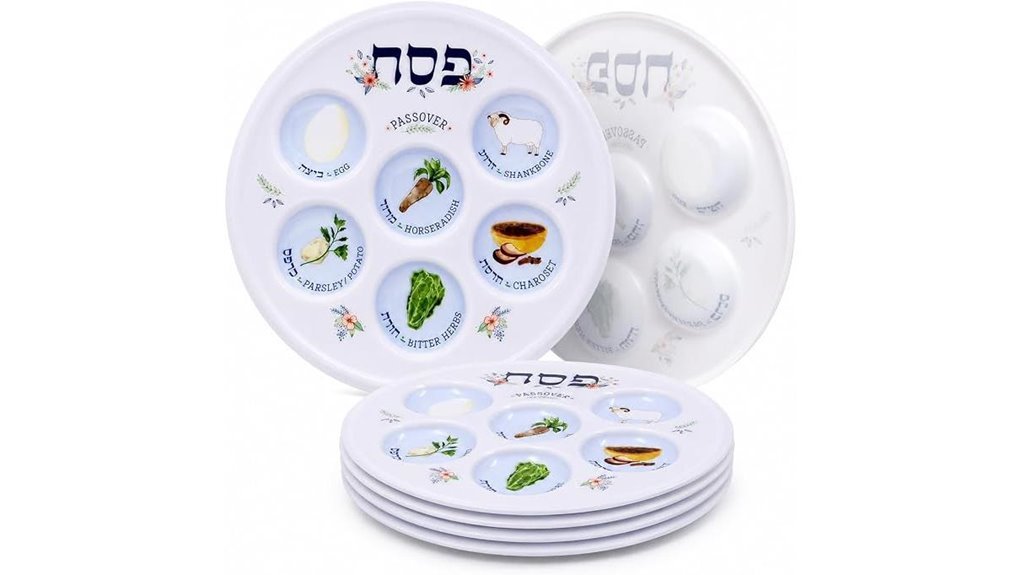
Designed for hosts seeking convenience without sacrificing tradition, this five-pack offers a polished Passover centerpiece. The Dreidel Company Disposable Passover Seder Plates measure 10 inches each and present a classic layout suited to Passover celebrations. Six labeled niches, marked in Hebrew and English, guide the placement of symbolic foods with clarity. Crafted from deluxe plastic, the plates provide durability while remaining easy to clean with a damp cloth. Their elegant design supports a festive table setting, blending practical reuse with ritual purpose for an orderly and attractive Seder experience.
Best For: Hosts and families looking for a convenient, reusable Seder plate set that keeps Passover traditions organized and visually polished.
Pros:
- 5-pack offers good value for multiple tables or repeated use.
- Six labeled niches in Hebrew and English make arranging symbolic foods simple.
- Deluxe plastic construction is durable and easy to clean with a damp cloth.
Cons:
- Plastic material may feel less premium than ceramic or metal alternatives.
- “Disposable” design may not appeal to those seeking a more formal long-term heirloom piece.
- 10-inch size may be larger than needed for smaller Seder tables.
The Dreidel Company Passover Seder Plates, 3-Pack
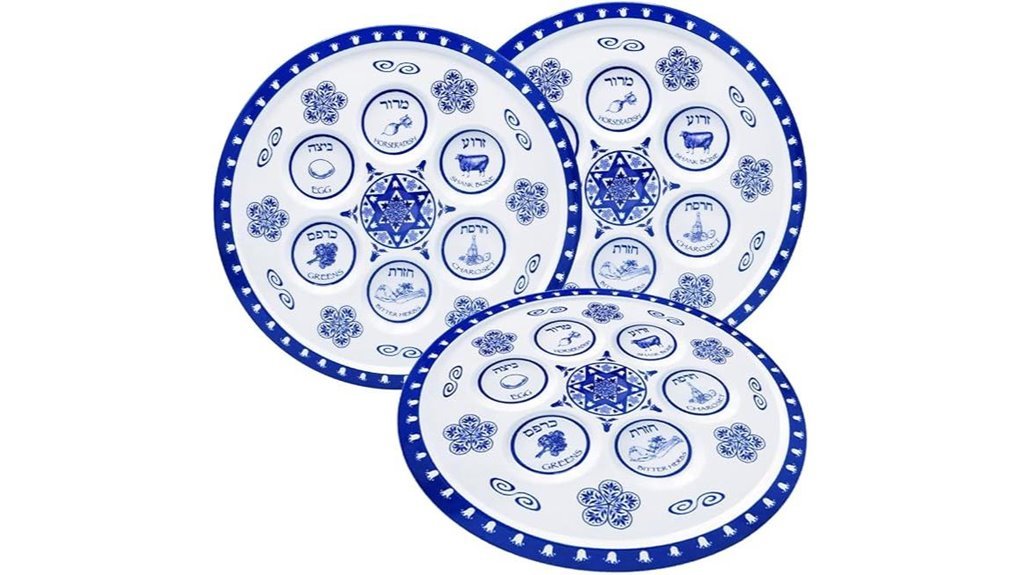
A three-pack of shatterproof melamine plates suits families hosting repeated Passover gatherings. The Dreidel Company Passover Seder Plates use an elegant blue Renaissance design on 12-inch round melamine plates. Each lightweight plate includes six labeled indentations for Shankbone, Egg, Bitter Herbs, Charoset, Parsley, and Lettuce in Hebrew and English. The reusable construction is intended for durability, while cleanup requires only a damp cloth. With three plates included, the set works well for Passover meals, Seder celebrations, and gifting. Its traditional styling adds a polished presence to the table without demanding careful handling.
Best For: Families, hosts, or gift-givers looking for a durable, elegant set of traditional Passover Seder plates for repeated celebrations.
Pros:
- Includes three 12-inch plates, making it convenient for multiple guests or gatherings.
- Shatterproof melamine construction is lightweight, reusable, and easy to wipe clean.
- Traditional blue Renaissance design with labeled Hebrew and English cavities adds a polished, classic look.
Cons:
- Melamine is not as premium-feeling as ceramic or porcelain.
- Plates require hand cleaning with a damp cloth rather than dishwasher washing.
- The traditional design may not appeal to those wanting a modern or minimalist style.
Passover Seder Complete Set by Zion Judaica
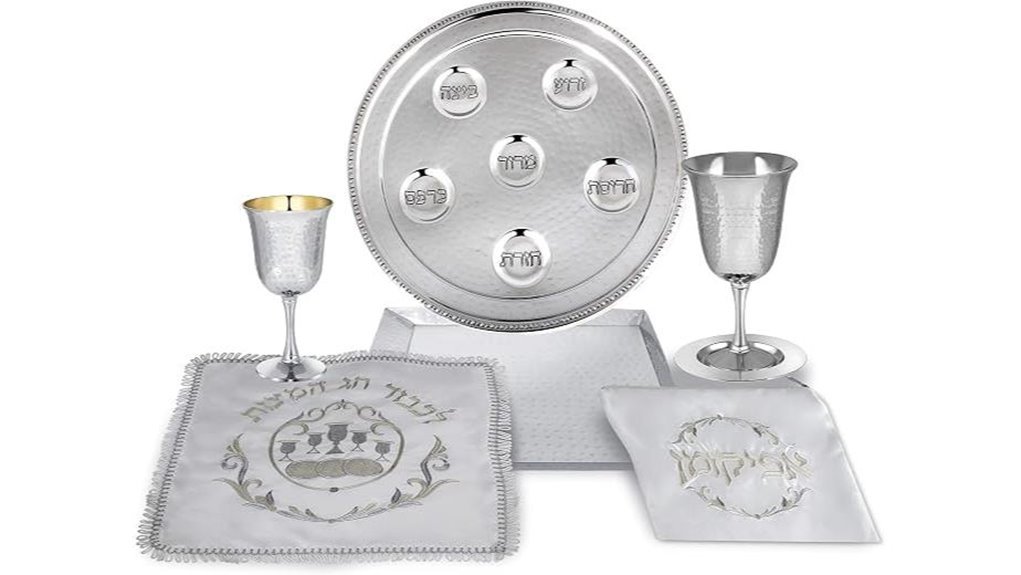
Zion Judaica’s Passover Seder Complete Set suits hosts seeking an elegant, all-in-one Passover table arrangement. The Hammered Vienna Collection includes seven coordinated pieces: a 12-inch seder plate, matzah tray, Elijah cup with coaster, Kiddush cup, square matzah cover, and zippered afikoman bag. Silver and white tones, floral accents, and loop fringe reinforce its understated style. Brass, aluminum, and fabric construction support durability, while proper care preserves each item. The set’s engraved symbols, embroidered textiles, and 5-ounce Kiddush cup make it a practical, polished choice for Passover observance.
Best For: Hosts and families looking for an elegant, coordinated Passover Seder set with all the essential table pieces in one polished package.
Pros:
- Includes seven matching pieces for a complete Seder table setup
- Elegant silver-and-white hammered design with embroidered textile accents
- Durable brass, aluminum, and fabric construction with care-friendly materials
Cons:
- Requires separate hand washing for metal pieces and careful laundering for fabrics
- The 12-inch plate and full set may take up significant storage space
- Higher-end decorative design may be more than needed for a very simple setup
Factors to Consider When Choosing Seder Plates in 2026
When choosing Seder plates in 2026, material and durability remain key, along with the plate’s size and how much space each section provides. Reusable or disposable options may suit different needs, while clear symbol labels and an organized layout can improve usability. Design also matters, since the plate should complement the overall table style.
Material And Durability
Material choice is one of the most important factors in a seder plate’s overall value, durability, and upkeep. Seder plates are commonly made from plastic, melamine, or metal, and each material serves a different purpose. Heavy-duty plastic options are practical for travel or communal use, especially when convenience matters, though they are usually intended for limited use and wear out faster. Melamine offers a stronger, shatterproof alternative that can be reused year after year, while remaining simple to clean after the seder. Metal plates, including brass or aluminum, provide a traditional, elegant appearance and can last for many seasons when maintained properly. The best choice depends on how often the plate will be used, cleaned, and stored over time.
Plate Size And Space
Plate size plays a major role in how well a seder plate fits the table and serves the meal. Seder plates typically measure 10 to 12 inches across, a range that balances symbolic food placement with a manageable footprint. A 10-inch option suits smaller gatherings or tables with limited room, while a 12-inch plate provides extra space for traditional items without crowding. When selecting a plate, the number of guests matters; larger groups may require more than one plate so essential foods remain accessible. Grooved sections can further improve organization and help keep items from shifting. The selected size should also align with surrounding tableware, creating a cohesive and practical setting for the Seder meal.
Reusable Or Disposable
Reusable and disposable seder plates each serve different needs, depending on how often they will be used and the setting of the meal. Reusable versions, often made from melamine or metal, offer durability and can be wiped clean after each seder, making them practical for repeated use. They also tend to provide a more refined look, which can suit formal tables. Disposable plates, usually heavy-duty plastic, are suited to one or two uses and remove the burden of cleanup, which is useful for travel or large gatherings. The choice also affects waste: reusable plates reduce environmental impact, while disposable options create more. Although disposables cost less at first, reusable plates are often more economical over time for families and communities that host seders regularly.
Symbol Labels And Layout
Beyond choosing between reusable and disposable options, shoppers also need to look closely at how a seder plate presents and organizes the ritual foods. A well-made plate usually includes six designated niches, giving each symbolic item a clear place during the Passover meal. Labels in Hebrew and English can improve accessibility, especially for participants with different levels of familiarity. Layout matters as well, since traditional placement often follows established custom, including the positioning of the Shankbone and Charoset in a culturally meaningful order. Many modern plates add decorative touches while preserving enough room for each food. Material also affects use, because reusable plastic or melamine can support both durability and practicality without sacrificing clear labels or orderly placement at the Seder table.
Design And Table Style
Design and table style can shape the entire feel of a Seder table, with options ranging from refined traditional plates to playful, child-friendly designs. A plate’s visual tone should match the broader Passover setting, whether that means classic elegance or a brighter, more casual presentation. Color schemes, decorative motifs, and overall finish help create a cohesive look alongside candles, linens, and other tableware. Plates with labeled sections in Hebrew and English add clarity without disrupting style. Size matters as well; 10- to 12-inch diameters usually provide enough room for symbolic foods while preserving table space. Material choice also affects the presentation, with plastic suited to disposable use and melamine offering a sturdier reusable option for varied table settings and family preferences.
Cleaning And Care
Cleaning and care can be a deciding factor when selecting a seder plate, especially for households that want a practical option for Passover use. Disposable plates often need only a damp cloth after the meal, which keeps cleanup simple and efficient. Reusable options made from melamine or heavy-duty plastic generally benefit from gentle hand washing, since harsher methods can reduce their durability and finish. Metal and fabric elements call for even more careful treatment, with warm water and mild soap helping prevent wear. Fabric pieces should also follow their specific instructions, such as being washed inside out on a gentle cycle. Careful maintenance protects appearance and extends lifespan, allowing the same plate to serve well across multiple Passover celebrations without unnecessary replacement.
Set Versus Single Plate
The choice between a set and a single seder plate often comes down to the size and style of the gathering. A single plate can suit a small, intimate seder, where simplicity and practicality matter most. By contrast, a set may better serve larger celebrations, especially when it includes matzah trays, cups, and other coordinated pieces. Beyond capacity, sets often create a more cohesive table through matching designs and decorative details, while single plates usually emphasize straightforward function. Engraved markings for the symbolic foods can also support the educational purpose of the meal. Material matters as well: reusable plates suit repeated observance, while disposable options offer convenience and faster cleanup.
Frequently Asked Questions
What Materials Are Best for Long-Lasting Seder Plates?
Durable seder plates are often made from porcelain, stoneware, stainless steel, or ceramic with a quality glaze. These materials resist wear, clean easily, and retain appearance, making them strong choices for long-term use.
Are Customizable Seder Plates Available in 2027?
Yes, customizable seder plates are widely available in 2027, with options for engraved names, personalized inscriptions, colors, and materials. Many artisans and retailers offer made-to-order designs to suit families, traditions, and celebrations.
How Do I Clean Ornate Seder Plates Safely?
Nearly 60% of decorative tableware damage happens during improper cleaning; ornate seder plates should be dusted with a soft brush, then wiped gently using mild soap, lukewarm water, and a microfiber cloth, avoiding abrasives entirely.
Which Seder Plates Suit Large Family Gatherings?
Large, compartmented seder plates suit big gatherings best, especially durable porcelain, stoneware, or melamine versions with raised sections. They keep symbolic foods organized, serve many guests gracefully, and withstand repeated use without crowding.
Can Seder Plates Be Used for Other Jewish Holidays?
Yes, seder plates can sometimes serve other Jewish holidays as decorative or symbolic trays, though their ritual purpose is specific to Passover. Their usefulness depends on tradition, family practice, and the plate’s design.
Conclusion
Choosing the right seder plate in 2027 comes down to balancing convenience, presentation, and value. Some may assume disposable options feel less meaningful, yet they can still support a beautiful and orderly Passover table while saving time and cleanup. Whether selecting a multi-pack for larger gatherings or a complete set for a more traditional display, each option offers a practical way to honor the holiday with ease and care.