
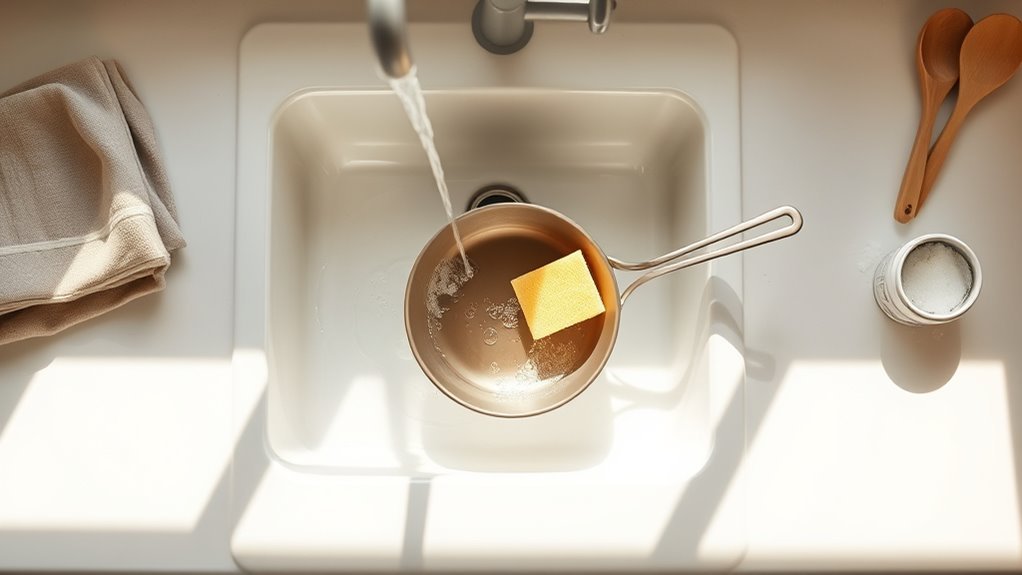
Caring for your Caraway pans is essential to guarantee they last and perform beautifully. You’ll want to start by preparing them properly before their first use, and daily maintenance is key to keeping them in top shape. From gentle cleaning routines to effective stain removal techniques, there are simple steps you can follow. Plus, knowing how to store your pans can prevent scratches and damage. Let’s explore the best practices for maintaining your cookware.
Getting Started: Preparing Your Caraway Pans for First Use
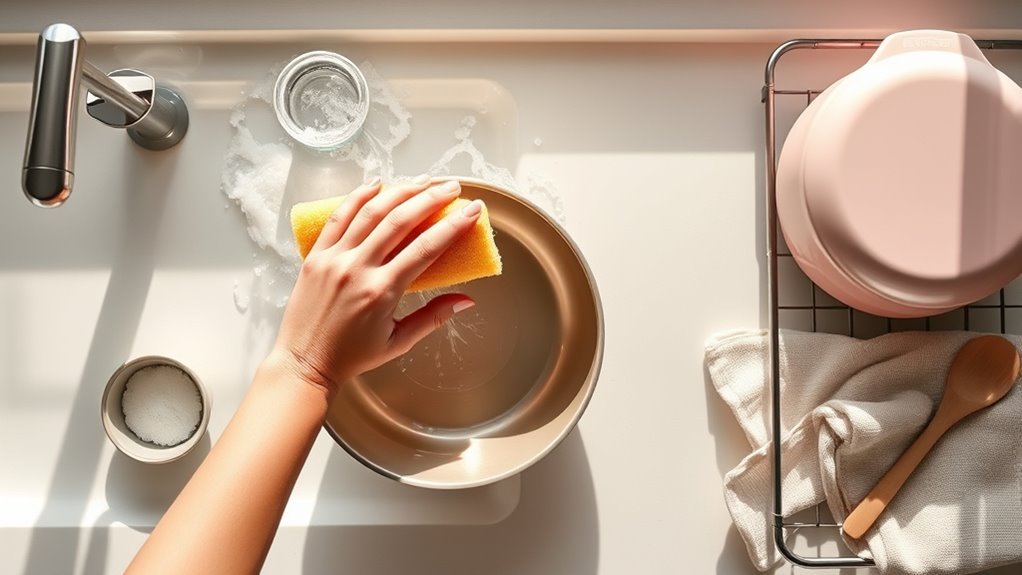
Before diving into your cooking adventures, it’s vital to properly prepare your Caraway pans for their first use. Start by washing with warm, soapy water to remove any residue from manufacturing.
Once cleaned, dry your pans thoroughly with a soft, non-abrasive dish towel. Making sure they’re completely dry is essential to prevent thermal shock, which could damage your beautiful cookware.
Dry your pans thoroughly with a soft, non-abrasive towel to prevent thermal shock and protect your cookware.
Caraway pans come ready to use, so there’s no need for seasoning, making your prep even easier.
When you’re ready to cook, preheat your pan on low to medium heat for about 90 seconds. This step enhances cooking performance and guarantees even heat distribution.
Remember, avoid cooking sprays or aerosols, as they can harm the non-stick surface.
With these simple steps, you’re set to release your culinary creativity, making every meal a delight!
Daily Cleaning Routine: Keeping Your Pans in Top Shape
To keep your Caraway pans shining and performing at their best, establish a daily cleaning routine.
Start by letting them cool completely before gently washing with warm, soapy water and a soft sponge.
Regularly checking for residue will help prevent stains and buildup, ensuring your cookware stays in top shape for years to come.
Daily Cleaning Essentials
Caring for your Caraway pans is essential to keeping them in peak condition, and a simple daily cleaning routine can make all the difference.
Follow these daily cleaning essentials to maintain that beautiful non-stick surface:
- Cool Down: Let your pans cool completely after cooking to avoid thermal shock.
- Wash Gently: Use warm water and mild dish soap with a soft sponge or cloth. Avoid abrasive materials.
- Rinse and Dry: Rinse thoroughly, then dry your pans with a soft towel to prevent water spots.
- Check for Buildup: Regularly inspect for any residue and address it promptly.
Preventing Stains and Buildup
While enjoying the culinary delights your Caraway pans bring, it’s crucial to prevent stains and buildup that can mar their beauty and performance. Start with a daily routine: wash your pans with warm, soapy water and a soft sponge right after use. Let them cool completely to prevent thermal shock. Opt for liquid oils or butter—cooking sprays can leave a stubborn residue. Regularly check for buildup, using vinegar and water for the exterior and a baking soda paste for tough stains. Finally, store your pans with protective layers to keep them scratch-free.
| Action | Purpose | Tips |
|---|---|---|
| Wash Immediately | Prevents hardening | Use warm, soapy water |
| Cool Before Cleaning | Avoids thermal shock | Wait until they’re at room temp |
| Use Liquid Oils | Prevents sticky buildup | Choose butter or olive oil |
| Check for Buildup | Maintains appearance | Use vinegar and baking soda |
| Store with Care | Protects from scratches | Use towels or sheaths |
Removing Stubborn Stains: Proven Techniques for Cleanup
When stubborn stains cling to your Caraway pans, don’t fret—effective solutions are at hand.
You can whip up a simple baking soda paste or simmer some soapy water to tackle those tough spots.
These techniques will help restore your pans without damaging their non-stick surface, keeping them in prime condition for cooking.
Baking Soda Paste Method
If you’ve ever faced stubborn stains on your caraway pans, the baking soda paste method offers an effective solution.
Here’s how to tackle those pesky marks:
- Mix three parts baking soda with one part water until it forms a thick paste.
- Apply the paste directly to the stained area and let it sit for 15-30 minutes to break down the residue.
- Gently scrub with a soft sponge to protect your non-stick surface while lifting the stains.
- Rinse thoroughly with warm water and dry with a soft towel to prevent water spots.
This method not only liberates your pans from stains but also maintains their beautiful finish, allowing you to enjoy cooking without worry!
Simmering Soapy Water Technique
To tackle stubborn stains on your Caraway pans effectively, the simmering soapy water technique is a game changer.
Start by filling your pan with water and adding a few drops of dish soap. Place it over low heat and bring it to a gentle simmer for about 10-15 minutes. This process loosens stuck-on food without compromising the non-stick coating.
Once the time’s up, grab a soft sponge or cloth and gently wipe away any residue. Avoid harsh abrasives that could scratch your pan’s surface.
For tougher stains, consider applying a baking soda paste and letting it sit briefly.
Always cool your pan completely before cleaning to protect its integrity and guarantee lasting beauty in your cookware.
Storing Your Pans: Tips to Keep Them Scratch-Free
Properly storing your Caraway pans is essential for keeping them in pristine condition.
To guarantee they remain scratch-free and functional, follow these tips:
To keep your pans in top shape, follow these simple tips for scratch-free storage and longevity.
- Use Protective Towels: Place protective towels or sheaths between your pans to avoid scratching and maintain that beloved non-stick surface.
- Utilize Magnetic Racks: Store your pans in the manufacturer-provided magnetic racks or sheet organizers to keep them separated and prevent dents.
- Organize Lids: Keep lids in a designated holder to protect pan surfaces and keep your storage area tidy.
- Ensure Dryness: Make certain your cookware is completely dry before storing it, as moisture can lead to damage.
Avoid These Common Mistakes in Caring for Your Caraway Pans
Caring for your Caraway pans can be a breeze, but a few common mistakes can easily compromise their longevity and performance. Avoiding these pitfalls will guarantee your cookware remains in top shape.
| Mistake | Consequence |
|---|---|
| Using metal utensils | Scratches and damage to the non-stick surface |
| Washing in the dishwasher | Shortened lifespan and potential warping |
| Exposing to harsh chemicals | Damage to the non-stick coating |
Remember not to use cooking sprays; they can leave a sticky residue that’s hard to clean. Also, steer clear of high temperatures and don’t place your pans under a broiler or in a microwave. Always let your pans cool completely before washing to prevent thermal shock. By sidestepping these mistakes, you’ll enjoy your Caraway pans for years to come!
Signs It’s Time to Replace Your Caraway Pans?
While you might cherish your Caraway pans for their non-stick convenience, knowing when to replace them is essential for maintaining safety and cooking efficiency.
Cherishing your Caraway pans is great, but recognizing when to replace them is key to safe and efficient cooking.
Here are some signs that indicate it’s time for a replacement:
- Significant Scratches: If the non-stick coating is scratched or damaged, it’s time to let them go to guarantee safe cooking.
- Discoloration: Stains that won’t come off may mean the non-stick coating is compromised, signaling a need for replacement.
- Uneven Cooking: Hot spots or burnt food can indicate lost heat retention, pointing to a pan that’s past its prime.
- Warped Shape: If your pan isn’t sitting evenly on the stovetop, it’s affecting performance and should be replaced.
Frequently Asked Questions About Caraway Pans Care
What should you know about taking care of your Caraway pans? First, always hand wash them with warm, soapy water and a soft sponge. This simple cleaning method preserves the non-stick surface, ensuring you enjoy hassle-free cooking.
Avoid using metal utensils; they can scratch and damage that precious coating. Let your pans cool completely before cleaning to prevent thermal shock, which can warp them.
When storing your cookware, place protective layers or towels between pieces to maintain their beautiful appearance and avoid scratches.
Lastly, steer clear of cooking sprays. Instead, use liquid oils or butter to keep the non-stick surface intact and free from residue buildup.
Best Practices for Maintaining Your Caraway Cookware
To guarantee your Caraway cookware stays in top shape, it’s vital to adopt effective maintenance practices. Following these best practices will make sure your pans remain beautiful and functional:
To keep your Caraway cookware in prime condition, embracing proper maintenance practices is essential for lasting beauty and functionality.
- Wash after use: Always clean your pans with warm, soapy water and a soft sponge to preserve the non-stick surface and prevent residue buildup.
- Use the right utensils: Avoid metal utensils; opt for silicone, wood, or plastic to prevent scratches.
- Store wisely: Place protective layers, like towels, between your pans when storing to maintain their aesthetic appeal and avoid scratches.
- Hand wash only: Never place your Caraway pans in the dishwasher. Hand washing is essential for extending their lifespan and protecting the non-stick coating.
Frequently Asked Questions
How to Get Brown Stains off Caraway Pans?
To tackle brown stains on your Caraway pans, mix baking soda and water into a paste, apply it to the stains, and let it sit for 15-30 minutes before gently scrubbing with a soft sponge.
For tougher spots, simmer warm soapy water for about 10 minutes.
Prevent food residue by cleaning your pans right after use.
Remember, steer clear of harsh chemicals to protect that beautiful non-stick surface.
Enjoy your cooking!
Can You Use Dawn Dish Soap on Ceramic Pans?
Yes, you can use Dawn dish soap on ceramic pans! Just remember to apply it gently to protect that non-stick surface. A small amount of soap is effective, so don’t overdo it.
Pair it with warm water and a soft sponge for safe cleaning. Rinse thoroughly to avoid residue that could affect cooking.
If you’re looking for Dawn alternatives, many gentle dish soaps also offer great soap effectiveness without harming your pans.
Can I Use Bar Keepers Friend on Caraway Pans?
No, you can’t use Bar Keepers Friend on your Caraway pans. Its abrasive nature risks scratching the delicate surface, compromising your pan’s durability and non-stick capabilities.
Instead, embrace safe cleaning methods like warm, soapy water and a soft sponge. This way, you’ll maintain the beauty and performance of your cookware, ensuring it lasts longer and stays free from damage.
Enjoy cooking with confidence, knowing you’re caring for your Caraway pans the right way!
Why Is Everything Sticking to My Caraway Pan?
If everything’s sticking to your Caraway pan, it’s likely due to improper cooking techniques or heat settings.
Make certain you’re using oils with high smoke points and preheat your pan for 20-30 seconds on low to medium heat.
Bringing your ingredients to room temperature can also help maintain the non-stick properties.
Finally, remember to use soft utensils to protect that precious surface, preventing unwanted sticking and enhancing your cooking experience.
Conclusion
In the culinary world, your Caraway pans can be your trusty Excalibur, wielding the power to create delicious meals. By following these care tips, you’ll guarantee they shine like new through countless feasts. Treat them with love, avoid common pitfalls, and they’ll reward you with exceptional performance and longevity. So, embrace your inner chef and let your pans be the canvas for your culinary masterpieces! Happy cooking!
