
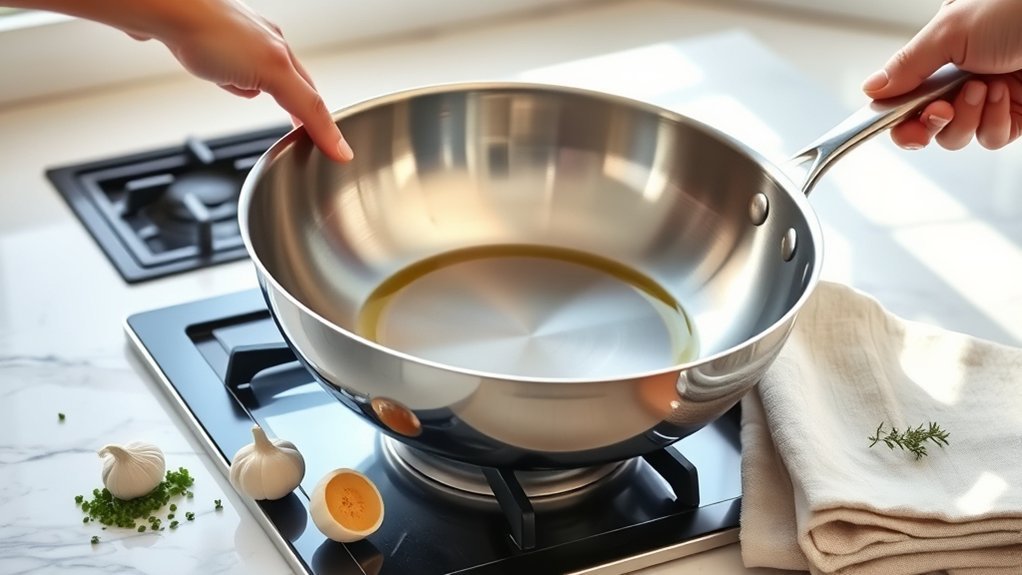
All-Clad stainless steel works best with controlled preheating, enough cooking fat, and patience. Wash and dry the pan before its first use. For browning, sautéing, or searing, preheat the empty pan briefly over low to medium heat, add oil once the pan is ready, then add dry food. Let food brown until it releases naturally, reduce the heat if the oil smokes, and allow the cookware to cool before washing.
Quick Answer
To cook with All-Clad stainless steel, preheat the dry pan over low to medium heat for about 1–3 minutes, then add enough oil to coat the cooking surface. Add dry food when the oil is hot, leave it undisturbed until it releases naturally, and lower the heat if the oil smokes or food browns too quickly.
Key Takeaways
- Preheat uncoated All-Clad stainless steel before adding oil, but do not leave an empty pan heating unattended.
- Low to medium burner settings are enough for most frying, sautéing, braising, and searing because bonded stainless cookware transfers heat efficiently.
- Dry food before cooking and wait for meat or other browned foods to release naturally before turning them.
- Stainless steel is non-reactive, so acidic ingredients such as tomatoes, citrus, and wine are suitable for normal cooking.
- Let the pan cool before washing; use soap, a soft sponge or nylon pad, and manufacturer-approved non-abrasive cleaners for stubborn stains.
At a Glance
| Time Required | About 1–3 minutes for preheating; total cooking time depends on the recipe |
| Difficulty | Beginner-friendly once you learn the heat and release cues |
| Tools Needed | All-Clad stainless pan, stovetop, cooking oil or butter, utensil, towel or paper towel; food thermometer when appropriate |
| Cost | No special supplies beyond normal cooking fat and routine cleaning products |
How to Prep All-Clad Before Cooking
Before the first use, wash All-Clad stainless steel cookware with warm, soapy water, rinse thoroughly, and dry it. All-Clad’s current care instructions recommend washing the cookware before its first use and cleaning it thoroughly between uses.
Before browning or searing, dry the food well. Surface moisture can cool the pan, increase splattering, and slow browning. All-Clad also recommends starting with food that is not refrigerator-cold when practical. However, do not leave meat, poultry, seafood, eggs, or other perishable foods at room temperature for extended periods. The USDA two-hour rule says perishable food should not remain unrefrigerated for more than two hours, or one hour when the surrounding temperature is above 90°F.
For uncoated bonded stainless steel, preheat the empty pan briefly over low to moderate heat before adding oil. This normal preheating step is different from leaving an empty pan on a hot burner for an extended period, which All-Clad warns can damage cookware.
- Place the clean, dry pan on a burner that closely matches the pan’s base.
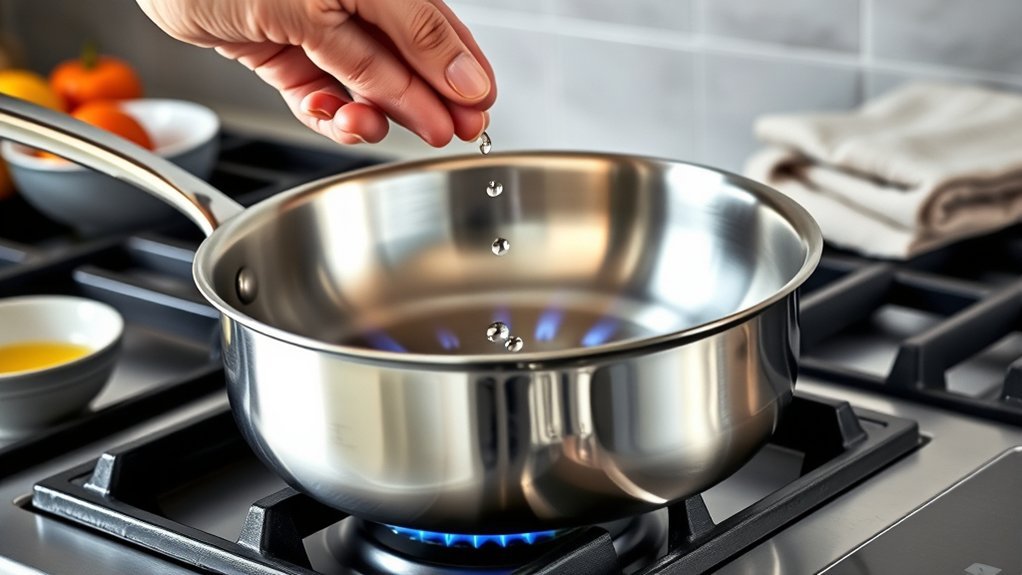
- Preheat over low to medium heat for roughly 1–3 minutes.
- Add a few drops of water. When they form mobile beads that move across the surface, the pan is ready for oil.
- Wipe away any remaining test water, then add enough oil or butter to coat the cooking area.
- Wait briefly for the oil to become fluid and hot, then add the dry food.
- Adjust the burner downward if the oil smokes or the food browns aggressively.
Warning: Do not leave an empty stainless steel pan heating unattended. All-Clad permits empty preheating for normal cooking preparation but warns that prolonged empty heating or excessive heat can damage or discolor the cookware. Handles can also become hot during extended stovetop use and in the oven, so use an oven mitt when needed.
Silicone, nylon, plastic, and wooden utensils are good choices when you want to minimize cosmetic marks. Metal utensils are also safe on All-Clad’s bonded stainless steel collections, although they can leave superficial markings on the cooking surface.
Oven limits depend on the specific collection. All-Clad currently lists its fully bonded D3, D5, G5, and Copper Core stainless collections as oven safe up to 600°F, including under the broiler. Stainless steel lids are also rated to 600°F, while glass lids are limited to 350°F. Always confirm the care instructions for your exact pan before using very high oven temperatures.
How to Keep All-Clad Stainless Steel From Sticking
Sticking usually comes from one of four problems: the pan was not preheated, the food surface was wet or very cold, too little fat was used, or the food was moved before browning created a natural release.
Preheat the pan over low to medium heat, use the dancing-water-bead test as a readiness cue, then add enough oil or butter to coat the cooking surface. Add food after the fat has heated. A steady sizzle is desirable; harsh crackling, rapid smoking, or immediate scorching means the pan is too hot.
Once meat, fish, or another browning food enters the pan, avoid repeatedly lifting or moving it. Proteins commonly grip stainless steel at first and loosen as the surface browns. If the food still resists when you try to turn it, give it more time unless it is clearly burning.
Pro Tip: Pat meat and fish dry immediately before cooking. A dry surface browns faster, splatters less, and makes it easier to judge whether the pan and oil are at an appropriate temperature.
Do not expect stainless steel to behave exactly like a coated nonstick skillet. Eggs, delicate fish, sticky cheese, and very lean foods can require more careful temperature control and enough butter or oil. They are not prohibited foods; they are simply less forgiving when the pan is too hot, too cool, or too dry.
Avoid relying on aerosol nonstick spray as a substitute for proper preheating and cooking fat. All-Clad advises against aerosol nonstick sprays because residue can accumulate on cookware surfaces.
Searing, Sautéing, and Frying in All-Clad
All-Clad bonded stainless steel conducts heat efficiently, so high burner settings are usually unnecessary. The manufacturer recommends low to medium heat for frying, braising, sautéing, and simmering, with high heat generally reserved for boiling.
Searing Meat
Preheat on low to moderate heat, add a thin layer of oil, and wait until the oil is hot. Add dry meat in a single layer without overcrowding. Leave it undisturbed until a browned crust develops and the meat releases with little resistance. Flip and finish according to the recipe and safe internal temperature.
There is no need to chase a universal 400–450°F pan-surface number. Burner output, pan size, food quantity, and cookware construction all affect surface temperature. Visual and sensory cues—steady sizzling, controlled browning, and oil that is hot without producing heavy smoke—are more practical for everyday All-Clad cooking.
Sautéing
Use low to medium heat and add food after the oil is hot. Stir or toss ingredients as needed so they cook evenly, but avoid overcrowding the pan. Too much food releases moisture and can turn sautéing into steaming.
Shallow Frying
Add enough oil for the recipe and monitor the oil with a thermometer when temperature matters. Many fried-food recipes call for oil in roughly the 350–375°F range, but that is an oil-temperature target, not an instruction to set the burner to high. Adjust the burner as needed to keep the oil near the recipe’s target after food is added.
After searing or sautéing, the browned bits stuck to the pan—called fond—can become the base of a sauce. Remove the cooked food, reduce the heat as needed, add wine, stock, or water, and scrape the loosened browned bits into the liquid. All-Clad specifically recommends deglazing stainless cookware after browning.
How to Control Heat in All-Clad Pans
Heat control is the main skill that makes All-Clad stainless steel easier to use. Start lower than you might with thin cookware and increase the burner only when the food actually needs more heat. All-Clad’s current guidance recommends low-to-medium settings for most stovetop techniques.
The water test is useful, but it is not an exact thermometer. When a few droplets gather into mobile beads and move across the preheated surface, the pan is ready for oil. Do not assume that this behavior corresponds to one precise surface temperature on every burner and pan.
Use the water test as a readiness cue, not as a precision thermometer: mobile water beads tell you it is time to remove the test water and add cooking fat.
If the oil begins producing substantial smoke, turn the heat down. If food scorches before it releases, the pan is also too hot. If food enters with almost no sizzle and sticks while slowly turning pale, the pan may have been too cool or overcrowded.
Note: To help prevent small white pits in stainless steel, All-Clad recommends waiting until water is boiling or food has started cooking before adding salt. Pitting is usually cosmetic but can permanently mark the interior.
For induction cooking, begin conservatively because induction can deliver energy very quickly. Keep the pan centered over a suitably sized cooking zone, and do not slide or drag the cookware across glass or ceramic cooktops.
Food Safety When Cooking in All-Clad
The pan material does not change safe internal cooking temperatures. Use a food thermometer when cooking meat, poultry, seafood, ground meat, or reheated leftovers rather than judging safety only by browning.
USDA guidance lists 145°F plus a three-minute rest for whole cuts of beef, pork, veal, and lamb; 160°F for ground meats; 165°F for poultry; and 145°F for fish and shellfish. Reheated leftovers should reach 165°F. Follow the recipe and current USDA food-safety guidance when a food requires a higher temperature.
Troubleshooting Common All-Clad Problems
| Problem | Likely Cause | What to Do |
|---|---|---|
| Food sticks immediately | Pan too cool, wet/cold food, too little fat | Preheat properly, dry the food, add enough oil, and wait for a steady sizzle. |
| Food sticks while browning | Turned too early | Give it more time; browned food often releases naturally. |
| Oil smokes quickly | Pan is too hot | Reduce heat and let the temperature stabilize before continuing. |
| Food burns before cooking through | Excessive burner setting | Lower the heat; All-Clad generally recommends low to medium heat for stovetop cooking. |
| Blue or rainbow discoloration | Heat-related discoloration | After the pan cools, wipe with white vinegar, rinse, and dry. |
| Cloudy white spots | Hard-water minerals | Boil a 1:1 white-vinegar-and-water solution, then wash, rinse, and dry. |
| Burned-on food | Overheating or residue left to bake onto the surface | Add baking soda and water, bring it to a boil, then loosen residue carefully with a wooden utensil. |
How to Clean All-Clad After Cooking
Allow the pan to cool before washing it. Placing a very hot stainless steel pan under cold water can create thermal shock and may warp the cookware.
| Task | Method | Purpose |
|---|---|---|
| General wash | Warm soapy water | Remove everyday residue |
| Scrub | Soft sponge or nylon pad | Clean while protecting the finish |
| Stubborn stains | Non-abrasive, non-chlorine stainless cleaner | Lift burned or stubborn residue |
| Rainbow discoloration | White vinegar | Remove heat discoloration |
| Hard-water film | 1:1 white vinegar and water | Dissolve mineral deposits |
| Burned food | Baking soda and water | Loosen stuck-on residue |
For routine cleaning, use warm soapy water with a sponge or soft cloth. A nylon scrubbing pad may be used on stainless steel for more difficult residue. Rinse thoroughly and dry immediately to reduce spotting.
For tough stains such as burnt fat, protein shadows, or charred food, All-Clad currently recommends a non-abrasive, non-chlorine cleaner such as All-Clad Cookware Cleaner, Bar Keepers Friend, or Bon Ami. Mix the cleaner with a small amount of water to form a paste, apply it gently with a soft cloth or sponge, rinse, and dry.
For blue or rainbow discoloration, wipe the cooled surface with white vinegar. For cloudy hard-water deposits, All-Clad recommends boiling a 1:1 mixture of white vinegar and water in the pan. For burned-on food, add baking soda and water, bring the mixture to a boil, and carefully loosen the residue with a wooden spoon.
Warning: Do not use oven cleaner, steel wool, steel scouring pads, chlorine bleach, peroxide-based detergents, or other harsh cleaners on All-Clad stainless cookware. Check the care instructions for your exact collection before using a dishwasher because recommendations vary by product and finish.
Frequently Asked Questions
How to Cook With All Clad Stainless Steel?
Preheat the pan over low to medium heat, use the dancing-water-bead test as a readiness cue, remove the test water, and add enough oil or butter to coat the cooking surface. Add dry food once the fat is hot, then leave browning foods alone until they release naturally. Reduce the heat if the oil smokes or the food browns too quickly.
How to Cook With Stainless Steel for Beginners?
Beginners should focus on four habits: preheat the pan, use enough cooking fat, keep the burner at low to medium for most foods, and wait before flipping. Dry food before adding it and listen for a steady sizzle rather than harsh crackling. If food sticks, give it time to brown unless it is clearly burning.
What Foods Should Not Be Cooked in a Stainless Steel Pan?
Uncoated stainless steel is versatile and non-reactive, so acidic foods such as tomatoes, citrus, and wine are suitable. Delicate eggs, fish, sticky cheese, sugary sauces, and very lean foods can be more challenging because they stick easily when temperature or fat is poorly controlled, but they can still be cooked successfully with proper technique.
Do You Need to Prep a Stainless Steel Pan Before First Use?
Yes. Wash a new stainless steel pan with warm soapy water, rinse it thoroughly, and dry it before cooking. All-Clad does not require seasoning its uncoated bonded stainless steel cookware before normal use.
Can You Use Metal Utensils on All-Clad Stainless Steel?
Yes. All-Clad states that metal utensils are safe on its bonded stainless steel collections, although they can leave superficial marks. Wood, silicone, nylon, or plastic utensils are better when preserving the cosmetic finish is a priority.
Why Does Food Keep Sticking to My All-Clad Pan?
Common causes are insufficient preheating, wet or refrigerator-cold food, too little oil, overcrowding, or trying to turn the food before it has browned enough to release. If the pan is smoking or food scorches rapidly, excessive heat can also contribute to sticking.
Conclusion
All-Clad stainless steel rewards proper preparation, moderate heat, and patience. Preheat the pan before adding cooking fat, dry food before it goes into the pan, and allow browned foods to release naturally instead of forcing them loose. Low to medium burner settings are sufficient for most cooking, while careful cleaning after the pan cools helps preserve both appearance and performance. Once these habits become routine, stainless steel becomes reliable for searing, sautéing, frying, deglazing, sauces, vegetables, and many other everyday techniques.
Sources
- All-Clad Care & Use Guide — official guidance for stainless-steel preheating, oil, food release, heat control, cleaning, vinegar, baking soda, salt pitting, and thermal-shock precautions.
- All-Clad Product Support & FAQ — official guidance for heat settings, sticking, utensils, oven limits, glass lids, handles, and first-use preparation.
- All-Clad Stainless Steel Cookware Guide — manufacturer information on stainless steel being durable, non-reactive, and suitable for browning, searing, and deglazing.
- USDA Food Safety Basics — safe room-temperature handling limits and minimum internal cooking temperatures.

2 thoughts on “How to Cook With All-Clad Stainless Steel: Simple Step-By-Step Guide”