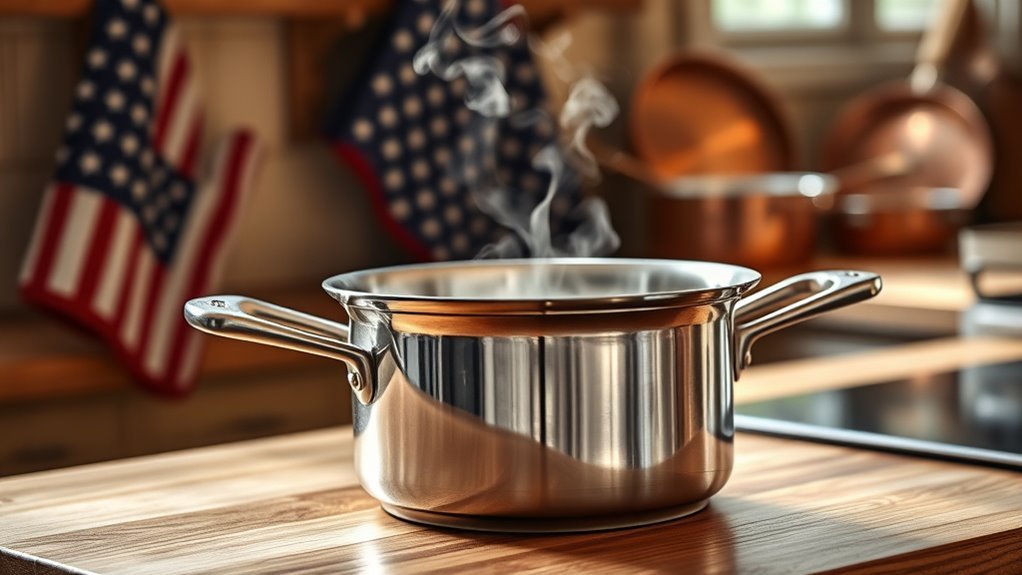
If you’re wondering where All-Clad cookware is made, the answer depends on the collection. All-Clad has deep roots in American manufacturing, but not every product bearing its name comes from the United States. Knowing the differences can help you choose cookware that matches your expectations for quality, materials, and country of origin.
Quick Answer
All-Clad’s fully bonded stainless steel cookware, including D3, D5, Copper Core, and G5, is made at its Canonsburg, Pennsylvania, factory using U.S. and imported materials. However, not every All-Clad product is American-made. The brand’s Essentials, HA1 Expert, and NS Pro nonstick collections are designed in Pennsylvania and manufactured in China.
Last checked: November 14, 2026. Dates and figures were verified against official sources.
Key Takeaways
- All-Clad began in 1971 when metallurgist John Ulam applied his metal-bonding expertise to cookware.
- Fully bonded construction spreads heat through the bottom and sides of a pan, unlike cookware with a bonded base alone.
- D3, D5, and Copper Core stainless cookware supports induction and is generally oven-safe up to 600°F.
- The company’s limited lifetime cookware warranty covers manufacturing defects, not normal wear or misuse.
- Country-of-origin labels matter because All-Clad also sells imported nonstick cookware, appliances, and accessories.
The Birth of All-Clad: A Legacy in Cookware Innovation
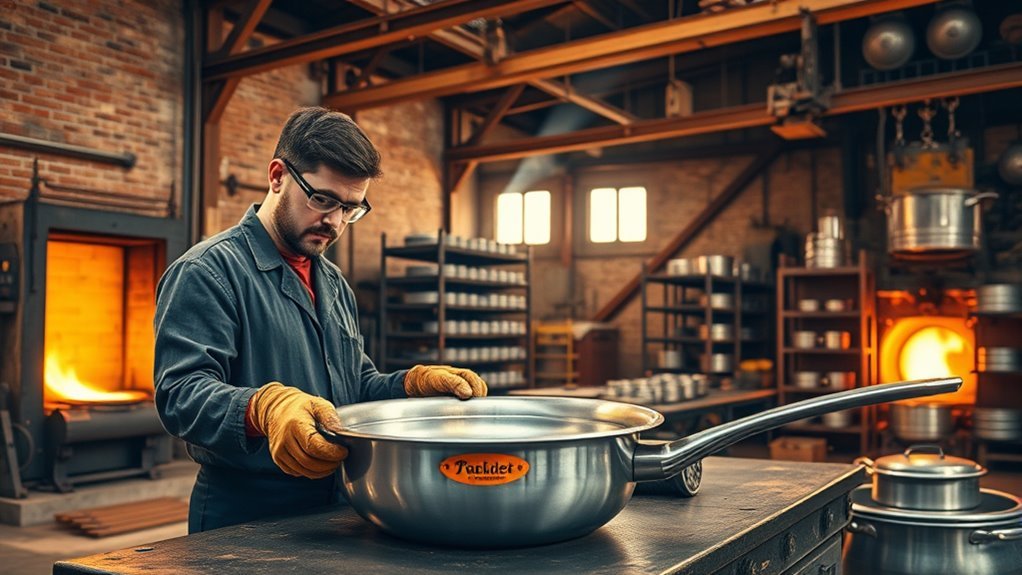
All-Clad began in 1971 when metallurgist John Ulam founded All-Clad Metalcrafters in western Pennsylvania. His knowledge of joining different metals helped create cookware that combined durability with better heat distribution.
Before entering the cookware industry, Ulam developed metal-bonding techniques used in other manufacturing fields. According to All-Clad’s official history, he held more than 75 patents related to metal crafting.
Those patents belonged to Ulam, rather than representing a confirmed total of patents issued directly to All-Clad.
His central idea was straightforward: different metals have different strengths.
Stainless steel resists corrosion and provides a durable cooking surface. Aluminum transfers heat more efficiently. Bonding the metals creates cookware that offers advantages from both materials.
Early All-Clad cookware used these properties to provide more even heating, easier cleaning, and dependable cooking performance.
The success of the technology led to a manufacturing operation near Ulam’s hometown in western Pennsylvania.
Today, the company’s fully bonded cookware continues to be manufactured in Canonsburg, maintaining a connection to its original production methods.
What Makes All-Clad Cookware Different?
All-Clad is best known for its fully bonded construction. Instead of attaching a heat-conducting disc only to the bottom, the company bonds metal layers across the cooking surface and up the sides.
This design helps distribute heat more consistently throughout the pan. It is especially useful when searing, sautéing, simmering sauces, or cooking foods that need controlled heat.
Fully Bonded Stainless Steel Construction
The D3 Stainless collection uses three bonded layers:
- Stainless steel interior: Provides a durable, corrosion-resistant cooking surface.
- Aluminum core: Transfers heat quickly and helps reduce hot spots.
- Stainless steel exterior: Adds strength and supports induction cooking through its magnetic properties.
Other All-Clad collections use different metal combinations.
D5 cookware features five bonded layers, while Copper Core includes copper for responsive heat transfer. G5 Graphite Core uses graphite as part of its heat-conducting construction.
These designs offer different balances of heat response, weight, and cooking control.
Induction Compatibility and Oven Safety
All-Clad’s bonded stainless steel collections work with gas, electric, ceramic, and induction cooktops.
Its magnetic stainless steel exterior allows induction burners to transfer energy into the cookware.
D3, D5, Copper Core, and G5 stainless cookware is generally oven-safe up to 600°F, according to All-Clad’s product guidance.
However, the temperature limit can change when a pan has a nonstick coating or glass lid.
- Bonded stainless steel cookware: Generally oven-safe up to 600°F.
- Many conventional hard-anodized nonstick collections: Oven-safe up to 500°F.
- HA1 and NS Pro ceramic nonstick collections: Listed up to 450°F.
- Glass lids: Generally limited to 350°F.
Nonstick cookware should not be used under the broiler unless the specific product instructions explicitly permit it.
Warning: Never assume every All-Clad pan or lid shares the same oven-temperature limit. Check the exact collection and lid material. Stainless steel handles can also become hot during extended cooking or oven use, so protect your hands when handling heated cookware.
Where Is All-Clad Cookware Manufactured?
All-Clad manufactures its main fully bonded cookware collections in Canonsburg, Pennsylvania, USA. The factory bonds, forms, and finishes cookware using a combination of U.S. and imported materials.
However, All-Clad also sells cookware and kitchen products manufactured outside the United States.
The clearest way to identify where a product originates is to look at its collection name and country-of-origin information.
All-Clad Manufacturing Locations by Collection
The following comparison reflects the manufacturer’s official cookware collection information.
| All-Clad Collection | Construction | Manufacturing Origin |
|---|---|---|
| D3 Stainless / D3 Everyday | Fully bonded, 3-ply stainless and aluminum | USA with global components |
| D5 Stainless | Fully bonded, 5-ply construction | USA with global components |
| Copper Core | Fully bonded construction with copper | USA with global components |
| G5 Graphite Core | Fully bonded construction with graphite | USA with global components |
| HA1 Expert Nonstick | Hard-anodized aluminum with nonstick coating | China |
| Essentials Nonstick | Hard-anodized aluminum | China |
| NS Pro Nonstick | Hard-anodized aluminum with nonstick coating | China |
The key distinction is that fully bonded stainless cookware and conventional hard-anodized nonstick cookware follow different manufacturing processes.
All-Clad also makes some fully bonded stainless cookware with nonstick cooking surfaces in the United States. Therefore, the presence of a nonstick coating alone does not prove a pan was manufactured overseas.
Are All All-Clad Lids and Accessories Made in America?
No. Manufacturing locations can differ for lids, utensils, appliances, and other accessories.
Some single-layer components and accessories are sourced from overseas manufacturing partners, including facilities in China.
Most All-Clad kitchen electrical appliances are also manufactured in China, according to the company’s customer-service information.
This does not automatically mean imported products fail All-Clad’s quality requirements. However, they should not be described as American-made without supporting origin information.
Pro Tip: Before purchasing All-Clad cookware for its American manufacturing origin, identify the exact collection and model. Compare the product’s country-of-origin statement with its packaging. For sets, check whether the origin statement applies to the complete set or individual components.
How All-Clad Cookware Is Made
All-Clad produces its fully bonded cookware through a multi-stage manufacturing process. The process combines metal bonding, shaping, finishing, handle attachment, and quality inspection.
Its Pennsylvania manufacturing facility uses specialized equipment and skilled craftspeople to turn bonded metal into finished pots and pans.
Step 1: Bonding the Metal Layers
The process starts with carefully selected metals, including stainless steel, aluminum, and sometimes copper or other heat-conducting materials.
All-Clad uses its metal-bonding expertise to join the layers into a single structure.
This creates a bonded sheet with the desired combination of heat conductivity, strength, and corrosion resistance.
Step 2: Shaping the Cookware
Manufacturing equipment cuts and forms the bonded material into cookware shapes.
The process produces the base and sidewalls that will become frying pans, saucepans, sauté pans, and other cooking vessels.
Proper shaping helps maintain consistent dimensions and supports balanced cooking performance.
Step 3: Finishing and Assembly
After shaping, workers finish the cookware surfaces, refine the edges, and attach handles.
All-Clad uses riveted stainless steel handles on many collections. Some designs feature double-riveted handles for a secure connection.
Workers also inspect the finished surfaces and prepare the cookware for packaging.
The company’s description of American cookware manufacturing explains the combination of machinery, metalworking expertise, and human inspection involved.
| Step | Material Used | Key Feature |
|---|---|---|
| Bonding | Stainless steel, aluminum, and other core materials | Creates a multi-layer structure for heat distribution |
| Shaping | Bonded metal sheets | Forms precise cookware dimensions |
| Finishing | Formed stainless steel cookware | Creates finished surfaces and prepares the pan for assembly |
The result is cookware designed to distribute heat consistently and withstand regular use when maintained correctly.
How All-Clad Ensures Quality Through Sourcing and Craftsmanship
All-Clad maintains quality by combining material specifications, controlled manufacturing processes, and product inspections.
The company also benefits from keeping engineering and manufacturing teams closely connected at its Pennsylvania facility.
Sourcing Premium Materials
Material selection is essential to All-Clad’s cookware performance. Stainless steel provides a durable cooking surface, while aluminum and copper help transfer heat.
The company’s current manufacturing descriptions identify a combination of U.S. and imported materials.
This means that American manufacturing and exclusively American-sourced materials are not the same claim.
Several material characteristics influence the final product:
- Stainless Steel Quality: All-Clad specifies food-contact stainless steel with controlled material properties. Its stainless cooking surfaces use a formulation of 304-grade stainless steel.
- Heat-Conducting Metals: Aluminum, copper, and other core materials help move heat through the cookware.
- Bond Strength: Properly joined metal layers support durability and consistent heating.
- Material Inspection: Checks help confirm that incoming metals meet manufacturing requirements.
Earlier descriptions emphasized regional metal sourcing near the Pennsylvania factory. However, the company’s present origin statement includes global components rather than guaranteeing that every material comes from a specific local radius.
Skilled Craftsmanship Process
Skilled workers support the manufacturing process by inspecting materials, operating equipment, finishing cookware, and checking completed products.
Manufacturing quality depends on both the equipment used and the consistency of the people operating it.
All-Clad’s production includes checks at multiple stages rather than relying only on a final inspection.
| Process Stage | Material Used | Quality Control Check |
|---|---|---|
| Initial Shaping | Bonded Metal | Dimensions and Surface Condition |
| Bonding | Aluminum, Steel, and Other Core Materials | Bond Integrity and Material Consistency |
| Final Assembly | Cookware and Handle Components | Handle Attachment and Structural Condition |
| Polishing | Finished Cookware | Surface Appearance and Finish |
| Packaging | Completed Product | Final Product Condition |
These are the main quality characteristics that matter at each production stage, rather than a published list of individual factory tests.
Consistent manufacturing helps reduce defects and supports reliable performance over the cookware’s useful life.
Rigorous Quality Control
All-Clad uses quality checks to assess material consistency, construction, and finished cookware.
These checks help identify problems before products reach customers.
Its quality-control priorities include:
- Material Verification: Checking whether incoming materials meet required specifications.
- Construction Consistency: Maintaining the intended shape, dimensions, and bonded structure.
- Handle Security: Ensuring handles are properly attached to cookware.
- Surface Inspection: Checking the appearance and condition of finished cooking surfaces.
- Final Inspection: Reviewing completed products before packaging.
Quality control cannot guarantee that every product will remain free from wear or damage. Proper use and maintenance still affect cookware life.
How All-Clad Benefits the Local Community
All-Clad’s manufacturing presence supports jobs and industrial skills in western Pennsylvania. Its Canonsburg operation connects modern cookware manufacturing with the region’s long history of steelworking and metal fabrication.
The company employs skilled workers involved in bonding, forming, finishing, assembly, and related production activities.
Maintaining production in the area helps preserve specialized manufacturing knowledge and supports the surrounding economy.
All-Clad also has a strong regional identity. The company’s community heritage account describes its continuing connection with Canonsburg and the importance of local craftsmanship.
The brand’s community activities have also included efforts to encourage culinary education and interest in cooking.
The All-Clad Factory Sale
One visible example of the company’s regional presence is its recurring Factory Sale.
Previously known as a Factory Seconds Sale, the event brings cookware shoppers to Washington County, Pennsylvania.
It includes discounted cookware and other kitchen products, including items from selected product categories.
According to the official All-Clad Factory Sale announcement, the next scheduled event is:
- Dates: December 4–5, 2026.
- Location: Washington County Fairgrounds, 2151 N Main Street, Washington, Pennsylvania.
- Friday hours: 9:00 a.m. to 6:00 p.m.
- Saturday hours: 9:00 a.m. to 3:00 p.m.
- Advertised discounts: Up to 70% off selected merchandise.
A further sale is scheduled for June 4–5, 2027.
These events attract customers to the region while making selected cookware products available at reduced prices.
However, discounted items can include imported All-Clad products. A Factory Sale purchase does not automatically mean the product was made in Pennsylvania.
Understanding All-Clad Warranty and Care
All-Clad offers warranty protection for manufacturing defects, but proper care remains essential for long-term performance.
The warranty does not guarantee that cookware will remain free from scratches, discoloration, or normal wear.
Warranty Coverage Details
All-Clad cookware generally comes with a limited lifetime warranty covering defects in materials, construction, or workmanship.
The warranty applies under specified conditions, including normal household use and proper care.
The manufacturer’s official warranty information provides the applicable terms for different product categories.
Important coverage details include:
- Manufacturing Defects: Covered cookware may qualify for repair or replacement after a warranty evaluation.
- Proof of Purchase: You should retain valid proof of purchase from All-Clad or an authorized retailer.
- Normal Wear: Surface scratches, ordinary discoloration, and gradual loss of nonstick release are generally excluded.
- Improper Use: Damage caused by overheating, thermal shock, accidents, or failure to follow care instructions is generally not covered.
- Product Differences: Cookware, kitchen electrics, accessories, and replacement components can have different warranty terms.
The warranty also contains exclusions involving commercial use, unauthorized sellers, and certain types of damage.
If you notice a suspected manufacturing defect, retain your purchase documentation and contact All-Clad’s customer-service team for an evaluation.
Product registration can make support easier, but proof of purchase remains the key documentation identified in the warranty terms.
Care Instructions Overview
Proper cleaning helps All-Clad cookware maintain its appearance and cooking performance.
Although cleaning methods depend on the material, hand washing is a reliable choice for both stainless steel and nonstick cookware.
The manufacturer’s care and customer-support guidance recommends warm, soapy water and a soft sponge for routine cleaning.
For stainless steel cookware:
- Allow the pan to cool before washing.
- Use warm water, mild dish soap, and a non-abrasive sponge.
- Remove stubborn food residue with an appropriate stainless steel cleaner.
- Rinse thoroughly and dry immediately to reduce water spots.
- Avoid chlorine bleach, steel wool, and harsh abrasive cleaners.
Stainless steel cookware does not need seasoning before its first use.
For nonstick cookware, use soft cleaning tools and avoid methods that can scratch or damage the coating.
Current All-Clad product guidance generally recommends hand washing its bonded stainless cookware, even where older instructions describe some pieces as dishwasher-safe.
Maintenance Tips for Longevity
Simple cooking habits can help extend the useful life of your All-Clad pans.
Here are the most useful practices:
- Control Cooking Heat: Use low to medium heat for most tasks. Avoid heating empty nonstick cookware for extended periods.
- Choose Suitable Utensils: Stainless steel cookware can tolerate metal utensils, but wooden, silicone, or nylon utensils are better for nonstick coatings.
- Prevent Thermal Shock: Avoid placing a very hot pan under cold running water or into cold water.
- Remove Stubborn Stains Carefully: Use a cleaner suitable for the cookware material. A mild baking soda mixture can help remove residue from appropriate surfaces.
- Inspect Your Cookware: Check handles, pan bases, and nonstick coatings for changes that may affect safe or effective use.
Warning: Do not use metal utensils or abrasive cleaning pads on All-Clad nonstick coatings. These can scratch the surface and reduce its performance. Avoid sudden temperature changes as well, since thermal shock can warp cookware and may fall outside warranty coverage.
With regular cleaning and appropriate heat control, bonded stainless steel cookware can remain useful for many years.
Frequently Asked Questions
Who Is All-Clad Owned By?
All-Clad is owned by Groupe SEB, a French cookware and small-appliance company. Groupe SEB acquired the American brand in 2004. However, ownership does not determine where each pan is manufactured. All-Clad still makes its core fully bonded cookware collections in Pennsylvania, while other products come from overseas factories.
Why Is All-Clad So Expensive?
All-Clad costs more because its premium cookware combines multiple bonded metal layers with specialized manufacturing and finishing processes. American production also contributes to its positioning in the premium cookware market. Whether the price is worthwhile depends on how often you cook, which materials you prefer, and how long you plan to use the cookware.
Is All-Clad Made in China or the USA?
Both countries manufacture All-Clad products. Fully bonded D3, D5, Copper Core, and G5 cookware is made in Pennsylvania with global components. HA1 Expert, Essentials, and NS Pro nonstick collections are made in China. Check the exact product’s country-of-origin statement because the All-Clad name alone does not guarantee American manufacturing.
What Brand Is Better Than All-Clad?
No single brand is better for every kitchen. Cuisinart MultiClad Pro offers a lower-cost stainless steel option, while Calphalon has alternatives in nonstick cookware. Le Creuset is known for enameled cast iron, and KitchenAid offers additional cookware choices. Compare construction, durability, care requirements, and cooking needs before choosing a brand.
Are All All-Clad Pans Induction-Compatible?
No, not every All-Clad pan works on induction. Its fully bonded stainless steel collections are induction-compatible, and several hard-anodized nonstick collections also support induction cooking. However, Essentials Nonstick is not induction-compatible. A useful first check is whether a magnet sticks firmly to the bottom of the pan.
Do All-Clad Stainless Steel Pans Need Seasoning?
No, All-Clad stainless steel pans do not need seasoning before use. Wash new cookware with warm, soapy water, rinse it thoroughly, and dry it before cooking. For better food release, preheat the pan appropriately, use enough cooking fat, and allow food to develop a crust before attempting to turn it.
Conclusion
All-Clad remains closely connected to American cookware manufacturing through its fully bonded stainless steel collections made in Canonsburg, Pennsylvania.
However, the brand also offers imported cookware and kitchen products. The distinction matters when country of origin influences your buying decision.
For a dependable choice, compare the specific collection, material construction, manufacturing origin, cooking compatibility, and warranty terms. That approach will help you choose All-Clad cookware based on its actual features rather than the brand name alone.
Sources
- All-Clad Official History: Founder John Ulam, the company’s establishment in 1971, and metal-bonding innovations.
- All-Clad Cookware Collection Comparison: Construction, manufacturing origins, induction compatibility, and oven-temperature limits.
- All-Clad American Manufacturing: Manufacturing processes and the people working at the Pennsylvania factory.
- All-Clad Community Heritage: The Canonsburg manufacturing operation and regional industrial history.
- Official All-Clad Factory Sale: Scheduled event dates, location, hours, and advertised discounts.
- All-Clad Warranty Information: Warranty categories and coverage documentation.
- All-Clad Customer Service and Care: Cookware cleaning, safe use, warranty exclusions, and technical specifications.
- Groupe SEB: Discovering All-Clad: All-Clad ownership and its acquisition by Groupe SEB in 2004.