
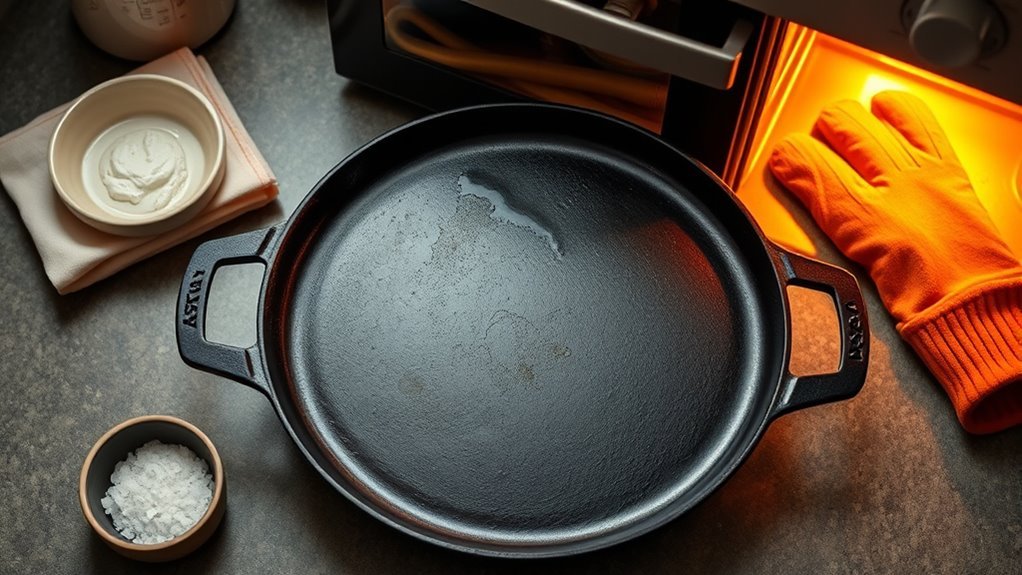
Learning how to season a new cast iron pan helps you prevent rust, reduce sticking, and build a cooking surface that improves with use. The process is simple, but using too much oil or the wrong oven temperature can leave a sticky finish. I’ll walk you through preparing your skillet, seasoning it in the oven, and keeping it in good condition.
Quick Answer
To season a new bare cast iron pan, wash and dry it thoroughly. Apply a very thin coat of vegetable or canola oil, then bake it upside down at 450–500°F for one hour. Let it cool in the oven. Repeat if needed. Factory-preseasoned pans usually don’t require this treatment before cooking.
At a Glance
| Time Required | 1 hour of oven heating per coat, plus preparation and cooling |
| Difficulty | Easy |
| Tools Needed | Mild dish soap, sponge, clean towel, cooking oil, oven, and aluminum foil |
How to Season a New Cast Iron Pan: What You Need to Know
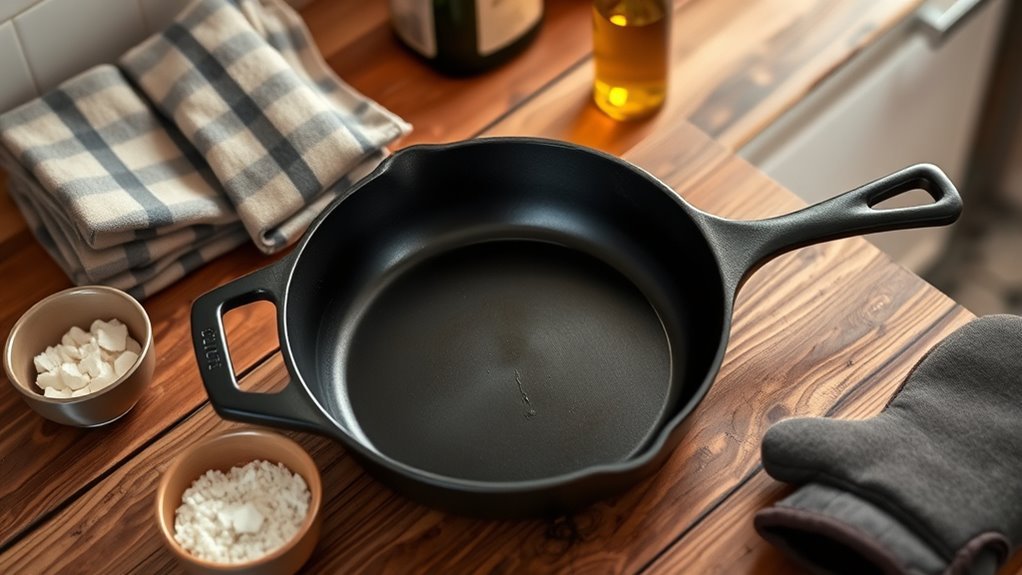
Before seasoning your skillet, check whether it already has a factory-applied coating. Most modern cast iron skillets come pre-seasoned, which means you can wash them and begin cooking without additional oven treatment.
If your skillet is bare, unseasoned iron, it needs a protective seasoning layer before regular use. The same process also works when restoring a rusty pan or repairing damaged seasoning.
Seasoning is not about adding flavor to food. It happens when heated cooking oil undergoes polymerization, forming a hard coating that bonds to the iron.
This coating helps prevent corrosion and creates a natural, easy-release cooking surface. You can read more in the manufacturer’s cast iron seasoning instructions.
Here’s how to handle the three common types of new cast iron cookware.
| Pan Type | Before First Use | Oven Seasoning Needed? |
|---|---|---|
| Factory-preseasoned cast iron | Wash, dry, and start cooking | Optional |
| Bare, unseasoned cast iron | Remove any factory protective coating, wash, and dry | Yes |
| Enameled cast iron | Wash according to the manufacturer’s care instructions | No |
Factory-preseasoned cookware continues developing seasoning as you cook with it. The manufacturer’s before-first-use instructions confirm that extra seasoning layers are optional.
Enameled cast iron is different. Its glass-like coating does not need traditional seasoning, even when the interior looks black. Follow the manufacturer’s enameled cookware care guidance instead.
Inspect Your New Cast Iron Pan Before Seasoning
Inspect your new skillet for cracks, serious pitting, rust, and manufacturing residue before you begin. A quick inspection helps you identify defects that cleaning or seasoning cannot fix.
Check the cooking surface, exterior, rim, and handle. Minor casting texture is normal, but structural damage needs attention.
Check for Cracks and Pitting
Look closely for visible cracks, deep holes, and damaged edges. Small surface imperfections may be harmless, but cracks can become worse during heating and cooling.
- Inspect the bottom and sidewalls under bright light.
- Look for hairline cracks around the rim and handle.
- Check whether deep pits have collected dirt, rust, or other residue.
- Inspect the handle and confirm that any attached parts are secure.
Some cooks also tap a pan and listen for a clear ringing sound. However, a ringing sound alone cannot reliably confirm that a skillet is free from hidden damage.
Warning: Do not use a cast iron skillet with a visible structural crack or an unsafe handle. Return or replace a defective new pan rather than trying to repair it through seasoning.
Inspect the Surface Finish
A new cast iron pan does not have to feel perfectly smooth. Many skillets have a slightly rough texture because manufacturers cast them in sand molds.
Look for sharp burrs, significant bumps, or rough edges that could damage your hands or cleaning tools. Small casting marks generally do not affect cooking performance.
You can carefully smooth a minor sharp burr if necessary. However, sanding a factory-seasoned cooking surface removes some of its protective coating and creates more work.
Also consider the pan’s weight. Thicker, heavier cast iron generally retains heat well, but weight alone does not prove better manufacturing quality.
Check for Manufacturing Residue
Check the new skillet for dust, casting debris, protective oil, or wax before its first use. These materials should not remain on the cooking surface.
Factory-preseasoned cookware may already have a dark, baked-on protective layer. Do not mistake this normal seasoning for dirt that needs aggressive removal.
If your unseasoned pan has a wax or other temporary protective coating, remove it according to its manufacturer’s instructions.
For light residue, warm water, mild dish soap, and a sponge are usually sufficient. Stubborn deposits may need additional gentle scrubbing.
Initial Cleaning: How to Wash and Dry a New Cast Iron Pan
Wash your new cast iron skillet with warm water and mild dish soap. Rinse it well, then dry it completely before seasoning or cooking.
Proper drying is essential because moisture left on exposed iron can cause rust.
Wash With Mild Soap
Modern mild dish soap is safe for properly seasoned cast iron. It removes grease and food residue without automatically destroying the seasoning layer.
Follow these steps:
- Wet the pan with warm water.
- Add a small amount of mild dish soap.
- Scrub the cooking surface with a sponge or nylon brush.
- Rinse away all soap and loosened residue.
- Dry the pan with a clean towel.
Avoid soaking the skillet or placing it in a dishwasher. Extended water exposure can promote rust, while dishwasher cleaning can damage the seasoning.
For more details, see the manufacturer’s cast iron cleaning guidance.
Thoroughly Dry and Heat the Pan
After towel-drying, place the skillet over low stovetop heat briefly to remove any remaining moisture. This is particularly helpful around the handle, rim, and cooking surface.
Once the pan is dry, turn off the burner and allow it to cool enough to handle safely.
For an unseasoned pan, you’re now ready to apply the first protective oil layer. If your cookware is already seasoned, you can proceed with normal cooking instead.
First Seasoning: Oven Method Step by Step
The oven method builds an even seasoning layer across the entire cast iron skillet. It works especially well for bare, unseasoned pans and cookware that needs substantial restoration.
The recommended process uses a thin layer of neutral cooking oil and an oven temperature of 450–500°F for one hour.
Warning: Seasoning at high temperatures can create smoke and makes the entire skillet extremely hot. Use ventilation, follow your oven’s safety instructions, and check that every part of the cookware is oven-safe at the selected temperature. Remove detachable accessories that cannot tolerate the heat.
Begin with a clean, completely dry skillet.
- Preheat the oven. Set it to 450–500°F, using a temperature compatible with your pan and oven.
- Apply the oil. Rub a small amount of vegetable or canola oil over the cooking surface, outside walls, bottom, and cast iron handle.
- Remove excess oil. Buff the entire pan with a clean, lint-free cloth until it looks almost dry. There should be no visible pools or drips.
- Position the skillet. Place it upside down on the center oven rack. Put aluminum foil on a lower rack to catch possible drips.
- Bake for one hour. Keep the pan in the heated oven so the thin oil layer can form seasoning.
- Cool the skillet. Turn off the oven and let the pan cool inside before handling it.
After cooling, inspect the surface. A successful seasoning layer should feel dry and firm, not sticky or greasy.
The color may range from brown to dark black. You do not need a perfectly glossy or uniformly black surface after the first treatment.
If your pan started as completely bare iron, you can repeat the oiling and baking process to develop additional protection. Each coat must remain extremely thin.
For factory-preseasoned cookware, extra rounds are a choice rather than a requirement.
Stovetop Seasoning for Quick Touch-Ups
Stovetop seasoning is useful for maintaining an existing cast iron surface or treating a small dull area. It is quicker than running a full oven cycle, but it may heat the surface less evenly.
Because the burner mainly heats the bottom, the oven remains a better choice for restoring extensive seasoning damage.
For a simple stovetop touch-up:
- Start with a clean, dry skillet.
- Warm it gradually over medium heat.
- Apply a very thin layer of canola or grapeseed oil to the cooking surface using an appropriate cloth or towel.
- Carefully heat the lightly oiled surface until the oil begins to form a faint wisp of smoke.
- Turn off the burner and let the pan cool safely.
- Wipe away any remaining excess oil after cooling.
Use ventilation throughout the process and never leave a heating skillet unattended.
You do not need to repeat stovetop seasoning after every meal. Routine cooking with oil and proper drying are often enough to maintain a healthy seasoning layer.
Building Seasoning Layers: How Many Coats and Which Oils?
Good cast iron seasoning develops through multiple thin layers of heated oil. The right number of coats depends on whether your skillet is bare, factory-preseasoned, or already in regular use.
There is no universal requirement to apply four or five oven coats to every new pan.
How Many Layers of Seasoning Do You Need?
A factory-preseasoned pan generally needs no additional oven coats before its first meal. If you want to build extra seasoning, a few light coats may help, but regular cooking also develops the surface.
For completely bare iron, several thin coats can produce a stronger initial barrier against rust. Three to five rounds are sometimes used, but they are not mandatory if the surface is already adequately protected.
Each oven coat requires the full heating cycle and cooling period. Avoid rushing between applications while the cookware is too hot to handle safely.
Which Oil Is Best for Cast Iron Seasoning?
Canola oil and vegetable oil are practical choices for seasoning cast iron. They are widely available, affordable, and commonly recommended by cookware manufacturers.
Grapeseed oil is another suitable option. Olive oil can be used, but neutral oils are generally easier choices for high-temperature oven seasoning.
For additional guidance, read these seasoning oil recommendations.
| Oil or Fat | Suitability | What to Know |
|---|---|---|
| Canola oil | Recommended | Affordable and suitable for oven seasoning |
| Vegetable oil | Recommended | A reliable everyday seasoning option |
| Grapeseed oil | Suitable | Useful for thin seasoning layers |
| Olive oil | Usable | Smoke point varies by type; neutral oils are simpler for oven seasoning |
| Bacon grease or lard | Not preferred for storage | Residual animal fat can become rancid |
| Flaxseed oil | Use with caution | Some seasoning layers may become brittle and flake |
You do not need to switch from olive oil to bacon grease after the first coat. A single suitable neutral oil can be used for the entire seasoning process.
How Do You Know the Seasoning Worked?
A properly seasoned pan should have a dry, bonded coating rather than a wet or tacky film. Some color variation is normal.
Its cooking surface should become easier to use over time, although seasoning alone does not guarantee that delicate foods will never stick.
According to the manufacturer’s cast iron seasoning FAQ, everyday cooking can develop durable seasoning without frequent oven treatments.
First Cooks and Routine Maintenance for Seasoned Cast Iron
Your first few meals help establish and maintain the seasoning on a new cast iron skillet. Choose foods that use cooking oil or fat, and give the pan time to heat evenly.
Frying chicken, sautéing vegetables, cooking potatoes, or making cornbread are useful starting points.
What Should You Cook First?
Start with meals that use a moderate amount of oil or fat. Bacon can also be cooked in cast iron, although sugary or heavily seasoned bacon may leave residue that needs extra cleaning.
Eggs are possible, but they may stick more easily when the seasoning is new. Use enough cooking fat and allow the skillet to warm gradually.
Most everyday meals work well over low to medium heat once the pan is preheated.
Avoid lengthy cooking sessions with strongly acidic ingredients, such as tomato sauce or vinegar-based dishes, until the seasoning is better established.
Acidic ingredients are not permanently forbidden. A mature seasoning layer can better tolerate them, as explained in these tips for cooking acidic foods in cast iron.
How Should You Clean Cast Iron After Cooking?
After cooking, allow the skillet to cool enough for safe handling. Remove leftover food with warm water and a brush or scraper.
For stubborn residue, gently scrub with a non-abrasive cleaning tool. A small amount of dish soap is fine when needed.
Wash your cast iron, dry it completely, and protect the surface with a very thin coat of oil when needed.
After cleaning, dry the pan promptly. If you apply oil before storage, buff away the excess so the surface does not feel greasy.
Keep the skillet in a dry cabinet or another place protected from moisture.
When Should You Re-Season Your Skillet?
You generally need additional seasoning when the protective layer has worn away, exposed iron begins to rust, or large sections have become damaged.
Minor color differences and ordinary food sticking do not always mean the coating has failed.
Before starting another oven treatment, check whether the problem is caused by insufficient preheating, too little cooking fat, or food residue.
Troubleshooting Rust, Sticky Seasoning, and Uneven Spots
Most common cast iron seasoning problems are repairable. Rust needs cleaning and renewed protection, while sticky seasoning usually comes from excess oil or incomplete curing.
Start with the simplest fix before stripping the entire pan.
How to Remove Rust From Cast Iron
Surface rust can often be removed without replacing the skillet. However, the affected iron must be thoroughly cleaned and dried before applying fresh seasoning.
- Scrub the rusty area with steel wool or an appropriate scouring tool.
- Wash away loosened rust using warm, soapy water.
- Rinse the pan thoroughly.
- Dry the cookware immediately and completely.
- Apply a very thin coat of suitable cooking oil.
- Re-season in the oven if extensive cleaning exposed bare iron.
For stubborn rust, a diluted white vinegar solution can help with removal. Avoid prolonged exposure and rinse the pan thoroughly afterward.
Light rust may only require cleaning and oiling. More extensive damage can need additional seasoning treatments.
How to Fix Sticky Cast Iron Seasoning
Sticky seasoning usually means the pan received too much oil or the oil did not fully harden during heating.
If the surface is only slightly tacky, another full oven seasoning cycle without adding more oil may help finish curing it.
For thick, gummy deposits, scrub away the excess buildup first. Then apply a fresh, extremely thin coat and repeat the oven method.
Avoid adding new oil over a thick, sticky layer because this can make the problem worse.
How to Fix Uneven or Blotchy Seasoning
Patchy colors are common on newly seasoned cast iron. They do not always indicate damaged cookware.
If the surface feels smooth and dry, you can usually continue cooking. Normal use helps new seasoning layers develop.
When a patch exposes bare iron, clean and dry the area before applying a thin coat of oil. Use the full oven method if the protective coating needs rebuilding.
What if the Seasoning Is Flaking Off?
Black flakes may appear when old seasoning layers become loose or fail to bond properly. Repeated thick oil applications can contribute to this problem.
Remove loose material with a suitable scrubber. Wash and dry the pan before assessing whether additional seasoning is necessary.
You usually do not need to strip the entire skillet unless the coating is extensively damaged.
The manufacturer’s cast iron troubleshooting guide covers rust, sticky surfaces, and peeling seasoning.
When Should You Replace the Pan?
Surface rust and damaged seasoning can often be repaired. Structural cracks, severe physical damage, or unsafe handles are different problems.
Do not rely on additional seasoning to repair a cracked skillet. Replace a structurally damaged pan instead.
Key Takeaways
- Factory-preseasoned cast iron is generally ready for cooking after washing and drying.
- Bare iron needs seasoning, but a fixed number of oven coats is not required for every skillet.
- Canola and vegetable oils are convenient choices for building a durable coating.
- Modern mild dish soap is safe for routine cast iron cleaning.
- Use moderate heat and enough cooking fat while the seasoning develops.
- Rust, sticky buildup, and uneven seasoning can often be repaired without replacing the pan.
Frequently Asked Questions
What to Do With a New Cast Iron Pan Before First Use?
Wash your new cast iron pan with warm water and mild dish soap, then dry it completely. Check whether it is factory-preseasoned. If it is, you can begin cooking. Bare, unseasoned iron needs a protective seasoning layer before regular use.
How Do You Season a Cast Iron Pan for the First Time?
Clean and dry the skillet, then apply a very thin layer of vegetable or canola oil. Bake it upside down at 450–500°F for one hour and allow it to cool in the oven. Repeat the process if the bare iron needs additional protective layers.
What Should I Do With My Cast Iron Cookware for the First Time?
Start with a clean, dry, properly seasoned cooking surface. Preheat the skillet gradually, add cooking oil or fat, and prepare a simple meal such as sautéed vegetables or potatoes. After cooking, clean and dry the pan thoroughly before storing it.
Do I Need to Season a Brand New Cast Iron Pan?
You do not need to season a new pan if it already has a factory-applied seasoning layer. Most modern cast iron skillets come ready for cooking. However, bare unseasoned iron must be seasoned, while enameled cookware does not need traditional seasoning.
Can You Use Dish Soap on a Seasoned Cast Iron Pan?
Yes, mild modern dish soap is safe for cleaning properly seasoned cast iron. Use a sponge or suitable brush, rinse thoroughly, and dry immediately. Avoid soaking the skillet or placing it in a dishwasher because prolonged moisture exposure can lead to rust.
Can You Season Cast Iron on the Stovetop Instead of the Oven?
Yes, stovetop seasoning works for small touch-ups and routine maintenance. Apply a thin film of oil to a dry skillet and heat it carefully. However, oven seasoning is generally better when you need to build or restore an even protective coating across the entire pan.
Conclusion
Knowing how to season a new cast iron pan makes maintenance easier and helps your cookware last for years. Start by checking whether the skillet already has factory seasoning. If it needs treatment, use a thin coat of suitable oil and the proper oven method.
Once your pan is ready, focus on regular cooking, gentle cleaning, and complete drying. These simple habits help maintain the protective coating and reduce the need for frequent re-seasoning.
Sources
- Lodge Cast Iron: How to Season: Oven temperature, heating time, seasoning process, and cooling.
- Victoria Cookware: Before First Use: Factory seasoning, initial cleaning, and optional extra seasoning layers.
- Lodge Cast Iron: Enameled Cast Iron Care: Why enameled cookware does not need traditional seasoning.
- Lodge Cast Iron: How to Clean: Dish soap, drying, rust prevention, and routine maintenance.
- Lodge Cast Iron: Cooking and Seasoning Oils: Suitable oils and considerations for animal fats.
- Field Company: Cast Iron Care and Seasoning FAQ: Seasoning layers, oil selection, sticky surfaces, and everyday cooking.
- Lodge Cast Iron: Cooking Acidic Foods: Tomato sauces, vinegar, and established seasoning.
- Lodge Cast Iron: Troubleshooting: Rust removal, sticky seasoning, flaking, and restoration.
