
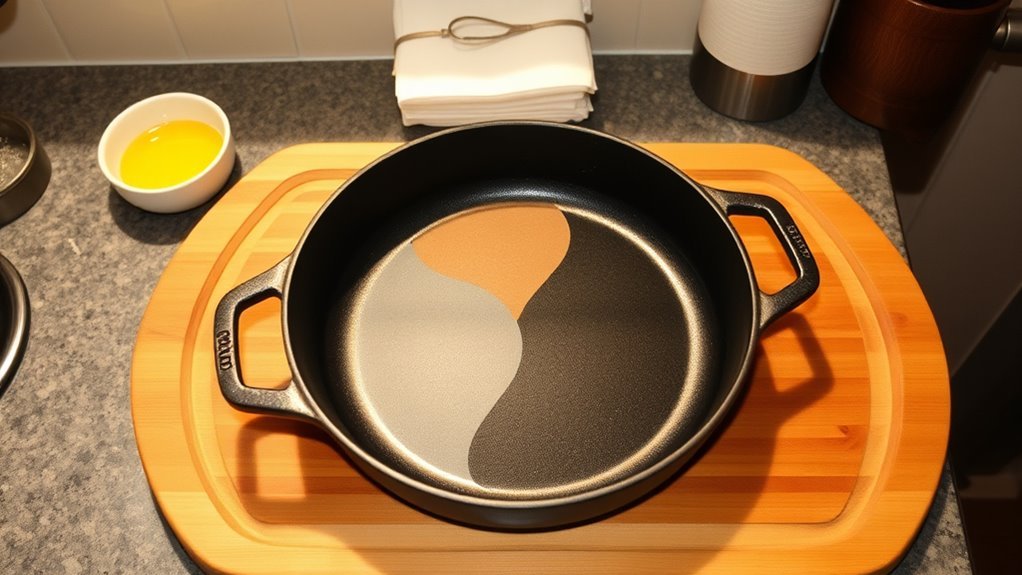
When it comes to seasoning your cast iron, you might say it’s an art form, rather than a chore. The number of layers you apply can greatly affect your cooking experience and the pan’s longevity. Are you looking for a simple nonstick surface or something that elevates your culinary creations? Understanding the ideal number of coats is just the beginning of mastering this essential kitchen skill. Let’s explore what really matters in your seasoning journey.
Why Seasoning Layers Matter for Your Cast Iron
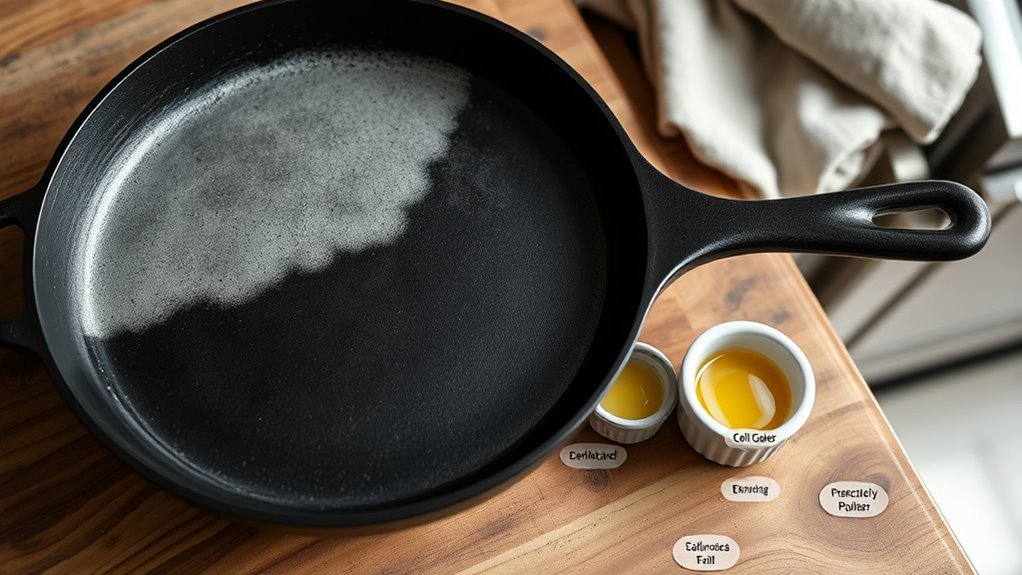
When you season your cast iron, you’re not just adding flavor; you’re building a protective barrier that enhances its performance and longevity. The layers of seasoning create a robust protective coating, preventing rust and elevating the pan’s nonstick properties.
During the seasoning process, oils undergo polymerization, forming a hard, blackened surface that improves with each use. Regular cooking, especially with fats, further strengthens this coating, allowing your pan to develop a naturally nonstick finish.
Oils undergo polymerization during seasoning, creating a durable, blackened surface that enhances nonstick properties with each use.
While many recommend 2-3 layers of seasoning for peak results, your personal cooking habits can influence this number. If you cook frequently, consider adding more layers for enhanced durability.
Thicker layers can provide a sturdier surface, but be mindful of applying them evenly to avoid pooling. Embrace the art of seasoning, and your cast iron will reward you with superior cooking experiences and lasting satisfaction.
How Many Coats of Seasoning Are Ideal for Your Cast Iron?
How many coats of seasoning do you really need for your cast iron? Most users recommend applying 2-3 layers for ideal nonstick performance, especially after restoring your cast iron skillet. However, personal preference plays a significant role; some stick to two coats, while others, like Dewey, dive deep with up to 80 layers!
Here’s a quick breakdown to help you decide:
| Coats of Seasoning | Benefits | Ideal For |
|---|---|---|
| 2-3 | Strong, durable nonstick surface | Regular use |
| 4-5 | Enhanced flavor retention | Enthusiastic cooks |
| 6+ | Robust seasoning experience | Experimenters |
Each layer’s thickness impacts durability, so go for thinner layers baked at high heat. Your seasoning process is as unique as your cooking style, so find what liberates your culinary creativity!
Techniques for Applying Seasoning Layers
When it comes to applying seasoning layers, thickness matters.
You’ll want to experiment with different oils, as each type can impact the durability and look of your finish.
Finding the right balance between thin layers and the right oil can elevate your cast iron cooking experience.
Layer Thickness Considerations
To achieve a perfectly seasoned cast iron skillet, it’s essential to pay attention to the thickness of each oil layer you apply. Thin layers of oil are vital; they prevent pooling and guarantee even bonding with the skillet.
For best seasoning cast iron, aim for 2-3 coats, but feel free to experiment with up to 80 layers for a unique approach! Buff each layer until the pan looks non-greasy, avoiding excess oil that can cause uneven seasoning and dimples.
Inverting the pan during the process promotes uniform heat distribution, securing a consistent layer of oil. High smoke point oils, like canola or vegetable, are ideal since they polymerize effectively to create a durable, non-stick coating.
Oil Types and Effects
Selecting the right oil can significantly impact the seasoning process and the final performance of your cast iron skillet. High smoke point oils like vegetable, canola, and grapeseed are your best bets, as they polymerize effectively at high heat.
Here’s how to maximize your seasoning layers:
- Choose the Right Oil: Opt for oils with high smoke points for best results.
- Apply Thin Layers: This prevents pooling and guarantees even coverage.
- Invert the Pan: Doing this during seasoning promotes uniformity, reducing dimpling.
- Experiment: Try different oils and techniques to discover variations in your skillet’s nonstick surface.
Debunking Myths About Cast Iron Seasoning Layers
When it comes to seasoning your cast iron, you might hear a lot of conflicting advice. Some folks swear by multiple layers for that perfect nonstick surface, while others argue that less is more.
It’s crucial to understand the truths behind these misconceptions, including how oil types and cooking habits play a significant role in building your ideal seasoning.
Common Misunderstandings About Seasoning
Have you ever wondered what truly makes the seasoning on your cast iron skillet effective? Many common misunderstandings can lead you astray. Here are four key myths to clear up:
- More isn’t always better: 2-3 well-applied layers of seasoning often suffice for excellent nonstick properties.
- Old doesn’t mean done: Even seasoned pans benefit from additional layers over time.
- Soap isn’t the enemy: Using mild soap occasionally won’t ruin your seasoning; it’s okay for cleaning.
- Thin is in: A thick application of cooking oil can lead to pooling, so stick to thin layers for best bonding.
Ideal Number of Coats
Understanding the ideal number of seasoning coats for your cast iron skillet can greatly enhance its nonstick performance. Generally, 2 to 4 layers are recommended, allowing for personal preference in thickness and durability.
Start with 2 to 3 coats after an initial sanding for a solid foundation; this strikes a balance between functionality and ease. Some enthusiasts, like Reddit user Dewey, go wild with up to 80 coats, but that’s unnecessary for effective seasoning.
Remember, the magic lies in applying thin layers of oil, letting each coat fully polymerize in the oven. This method prevents pooling or stickiness, ensuring your skillet achieves that beautifully smooth surface you crave.
Embrace the process, and liberate your cooking!
Oil Types Matter Most
Choosing the right oil for seasoning your cast iron skillet can make all the difference in achieving that coveted nonstick finish.
The oil types you select not only influence the flavor but also the durability of your cooking surface. Here are some key factors to take into account:
- High Smoke Point: Oils like vegetable, canola, or grapeseed allow ideal polymerization.
- Thin Layers: Applying thinner seasoning layers prevents pooling, ensuring even coverage.
- Personal Preference: Some swear by 2-3 layers, while others, like Dewey, go for as many as 80.
- Refined Oils: Oils that undergo refinement can bond more effectively to the cast iron, enhancing seasoning.
Choosing wisely transforms your skillet into a reliable kitchen ally!
What to Do If Your Seasoning Layers Don’t Stick?
When seasoning layers don’t stick to your cast iron, it can be frustrating, but there are several steps you can take to turn things around.
First, make sure your pan is completely clean and dry; any moisture can prevent proper bonding.
Next, use a high smoke point oil, like vegetable or canola oil, which works wonders in the polymerization process.
Apply thin layers of oil—thick ones can pool and lead to uneven seasoning or flaking.
Preheat your oven to the right temperature, ideally between 450–500°F, ensuring that the oil bonds effectively to the cast iron.
If you still face issues with sticking layers, consider sanding the pan to remove any old, uneven seasoning.
This fresh start can pave the way for a beautifully seasoned surface that’s ready for culinary adventures.
Take these steps, and you’ll reclaim the magic of your cast iron cookware!
How to Maintain Your Cast Iron’s Seasoning Layers
To keep your cast iron cookware in top shape, regularly applying a thin layer of oil after each use is key. This practice reinforces the nonstick surface and prevents rust.
Here’s how to effectively maintain your cast iron skillet’s seasoning layers:
- Clean with Care: Rinse with hot water and use a stiff brush—skip the soap to preserve the seasoning.
- Dry Immediately: Make sure your skillet is thoroughly dried to avoid moisture damage.
- Reapply Oil: After drying, coat the surface lightly with oil to maintain a protective layer.
- Cook with Fats: Use oils or fats during cooking to build and enhance the seasoning over time.
If you notice any flaking or unevenness, don’t hesitate to think about re-seasoning by washing the pan and applying multiple thin layers of oil before baking at high heat.
This revitalizes your cherished cast iron skillet!
Frequently Asked Questions
Can You Put Too Many Layers of Seasoning on Cast Iron?
Yes, you can put too many layers of seasoning on your cast iron. While seasoning benefits your pan, overdoing it can lead to a sticky surface that’s less effective.
Use seasoning techniques like applying 2-4 thin layers instead of thick ones. Don’t fall for seasoning myths—less is often more.
If you encounter issues, seasoning removal can help restore your pan. Embrace a balanced approach for ideal nonstick properties and longevity!
How Do You Know When Cast Iron Is Seasoned?
You’ll know your cast iron’s seasoned when it boasts a smooth, shiny surface that’s easy to cook on.
Did you know that some enthusiasts layer up to 80 coats?
To guarantee you’re reaping seasoning benefits, use proper techniques like applying oil evenly and maintaining it after each use.
Watch out for common mistakes, like skipping oiling.
Regular maintenance keeps your skillet in top shape, making cooking a joy and cleanup effortless!
Should I Season Cast Iron at 350 or 450?
You should definitely season cast iron at 450°F for ideal heat. This higher temperature promotes better polymerization of the oil, enhancing the curing process and creating a durable, nonstick surface.
Using oils with high smoke points, like flaxseed or grapeseed, can further elevate your results. Seasoning at 350°F won’t bond as effectively, leaving you with a less resilient finish.
Embrace the heat, and your cast iron will reward you with a beautifully seasoned surface!
How Long to Wait Between Coats of Seasoning Cast Iron?
You should wait about 30 minutes between coats of seasoning to achieve ideal oil bonding.
This seasoning duration allows the pan to cool slightly while still warm, promoting better layer thickness.
For best results, buff out the oil thoroughly to prevent pooling, which can affect your finish.
Embrace these maintenance tips, and you’ll elevate your cast iron’s nonstick properties, ensuring your cooking experience is both liberating and enjoyable.
Enjoy the process!
Conclusion
To sum up, finding the right number of seasoning layers for your cast iron skillet is all about personal preference and cooking style. Did you know that a well-seasoned cast iron can last a lifetime, often passed down through generations? By applying thin layers and maintaining your skillet, you’ll not only enhance its nonstick properties but also its flavor. So, embrace the art of seasoning and watch your culinary creations shine with every meal!
