

If you’re wondering whether Caraway pans are truly nonstick, you’re not alone. Their ceramic coating is designed for easy food release, but you might notice some decline in performance over time. Factors like high heat or metal utensils can contribute to this issue. Curious about the common reasons behind this decline and how to effectively restore your pans’ nonstick capabilities? Let’s explore what you need to know.
Identify Common Reasons Your Caraway Pans Lose Nonstick Performance?
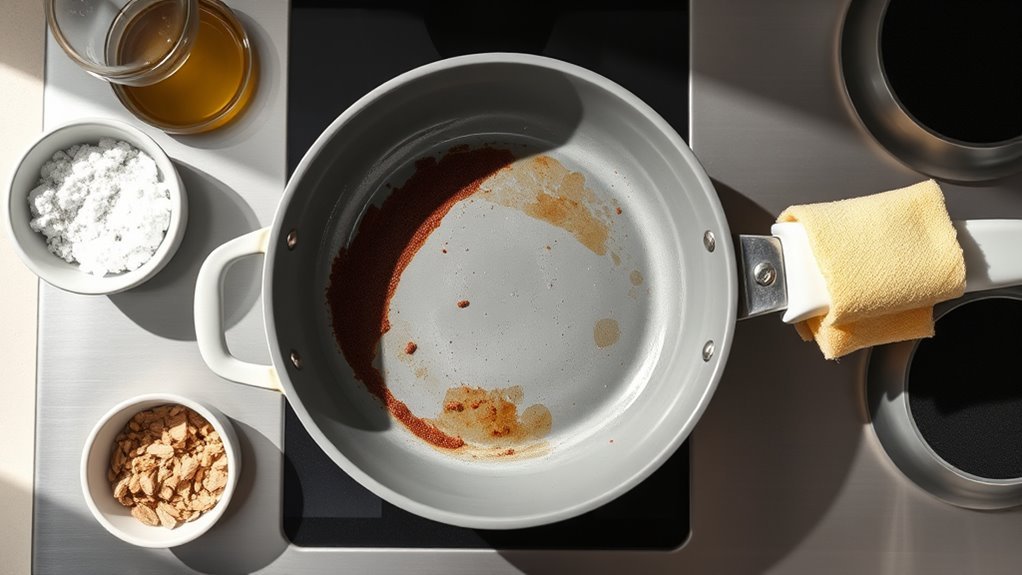
When you’re cooking with Caraway pans, it’s frustrating to notice a decline in their nonstick performance. One common culprit is the use of metal utensils, which can scratch the delicate ceramic coating, compromising its integrity.
Using metal utensils on Caraway pans can scratch the ceramic coating, leading to frustrating nonstick performance issues.
If you frequently crank up the heat beyond 550°F, you might find that your pans degrade faster, leading to annoying sticking issues. Harsh cleaning tools and abrasive sponges can also wreak havoc on that nonstick surface, making it essential to treat your pans gently.
Residual cooking oils and food particles can accumulate, reducing effectiveness and necessitating thorough cleaning to restore performance.
Finally, improper storage—like stacking without protective padding—can cause scratches or dents that ruin that smooth surface you love. By being mindful of these factors, you can keep your Caraway pans in top shape and enjoy the liberating experience of effortless cooking.
Explore Key Features of Nonstick Coating
Although many nonstick coatings can be riddled with harmful chemicals, Caraway pans stand out with their non-toxic ceramic surface, ensuring a healthier cooking experience. This innovative ceramic coating is free from PTFE, PFOA, and PFAS, allowing you to cook with peace of mind.
You’ll love how effortlessly food glides across the non-stick surface, reducing your need for excessive oil or butter. Plus, Caraway’s design promotes even heating, minimizing those frustrating hot spots that can ruin a meal.
What’s more, these pans are oven safe up to 550°F, maintaining their impressive non-stick properties even at high heat settings. This means you can confidently explore new cooking techniques without fear.
Just remember to use gentle utensils to protect the ceramic coating, ensuring your pans stay in top shape for safe cooking. Embrace the freedom of effortless meal preparation with Caraway!
Caring for Your Caraway Pans Made Easy
Caring for your Caraway pans doesn’t have to be a chore; with a few simple steps, you can keep their non-stick surface in top condition. By following these guidelines, you’ll guarantee effortless cooking for years to come.
| Task | Recommendation | Purpose |
|---|---|---|
| Cooking | Use minimal oil or butter | Protect the non-stick ceramic coating |
| Cleaning | Hand wash preferred | Prolong the ceramic lifespan |
| Storage | Use protective padding | Prevent scratches and damage |
| Cleaning tools | Avoid harsh cleaning tools | Prevent scratching the surface |
| Heat settings | Follow suggested temperatures | Maintain non-stick performance |
Techniques to Restore Nonstick Performance
Revitalize your Caraway pans’ nonstick performance with a few straightforward techniques. Start by applying a small amount of cooking oil, heating it on low for a few minutes. This allows the oil to seep into the ceramic coating, helping to restore performance.
For daily care, use gentle cleaning methods—a soft sponge with mild soap—to maintain the surface and prevent scratches. Always avoid high heat; it can degrade your ceramic coating, so keep those settings moderate.
If you encounter stubborn stains, mix baking soda with water to form a paste. Apply it to the affected area, let it sit for 15-20 minutes, and rinse.
Finally, opt for silicone utensils, wooden, or plastic tools during cooking to minimize damage. With these techniques, you’ll keep your cookware in top shape and enjoy the liberation of seamless cooking once again!
When to Replace Your Caraway Pans?
Knowing when to replace your Caraway pans is vital for maintaining both cooking quality and safety.
Watch for signs of deterioration like significant scratches or wear on the ceramic coating, which can compromise their non-stick properties. If you find food sticking consistently, even with minimal oil, it’s time to contemplate a replacement.
Discoloration or staining that doesn’t wash off is another clear indicator that your pans have reached the end of their lifespan. For peak performance, especially during high-heat cooking, aim to replace your Caraway pans every 2-3 years, particularly if you use them frequently.
Additionally, if your pans warp or become misshapen, it’s important to replace them to guarantee even cooking and prevent safety hazards.
Frequently Asked Questions
Why Is Caraway Cookware Being Sued?
Caraway cookware’s facing lawsuits due to claims about its nonstick performance and product durability.
Consumers have provided feedback suggesting the ceramic coating wears off too quickly, contradicting marketing claims.
The lawsuits detail potential violations of safety standards and misleading advertising, raising concerns about the manufacturing processes.
If you’re considering Caraway, check customer support responses and competitor comparisons to better understand cookware maintenance and guarantee you make an informed decision.
What’s Better, Hexclad or Caraway?
When it comes to Hexclad versus Caraway, you’ll find both have unique strengths.
Hexclad boasts impressive heat retention and versatility, making it great for high-heat cooking. On the other hand, Caraway offers stunning design aesthetics and a non-toxic cooking experience.
However, Hexclad’s durability outshines Caraway’s delicate surface. While Hexclad typically comes at a higher price, user experiences often reflect the investment in quality.
Choose based on your cooking style and maintenance preferences!
What Are the Negative Reviews of Caraway Pans?
Negative experiences with Caraway pans often stem from consumer feedback on durability issues and cooking performance. Many users report that the nonstick coating deteriorates, especially with metal utensils, leading to sticking problems.
Maintenance tips suggest avoiding the dishwasher, as this may worsen the nonstick properties. Heat retention isn’t as robust as traditional options, and warranty concerns arise with frequent use.
Consider alternative brands if you’re weighing price comparisons and user testimonials for better longevity.
Why Is Everything Sticking to My Caraway Pan?
When you find your sautéed veggies sticking to your Caraway pan, frustration sets in.
Sticking issues often stem from improper cooking techniques. If you’re using high heat levels, switch to medium or low. Don’t skip oil application; even a little can work wonders.
Different food types may require different approaches, too. Always season your pans and be gentle with cleaning methods to avoid surface damage.
Following these maintenance tips can transform your cooking experience!
Conclusion
To sum up, taking proper care of your Caraway pans can greatly extend their lifespan and nonstick performance. Did you know that 60% of nonstick cookware users experience diminished performance within just a year? By following simple maintenance techniques, like avoiding metal utensils and using gentle cleaning methods, you can keep your pans in top shape. So, invest a little time in care, and enjoy the effortless cooking experience that these pans can offer for years to come!
