

Can you put a glass lid in the oven? The answer depends on the lid’s construction, temperature rating, and handle materials. Even tempered glass can break if you use it incorrectly. Before you bake, you need to know your lid’s limits and how to prevent thermal shock.
Quick Answer
Yes, some glass lids can go in the oven, but only when the manufacturer confirms they are oven-safe. Temperature limits vary by product. All-Clad specifies 350°F for its glass lids, while Lodge rates its round tempered-glass lids to 400°F. Check the knob and gasket, avoid sudden temperature changes, and never assume all glass lids have the same rating.
Can a Glass Lid Go in the Oven? What You Need to Know
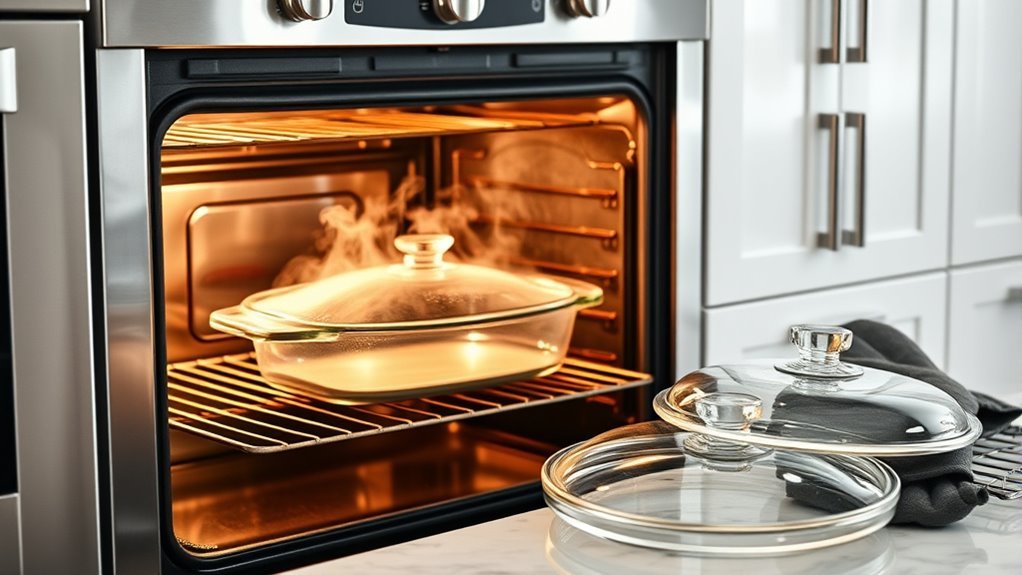
A glass lid can go in the oven if its manufacturer approves it for that use. The glass, metal rim, handle, and any seals must withstand the planned temperature.
Two types of glass commonly appear in heat-resistant cookware:
- Tempered glass: Glass that undergoes special heat treatment to improve its strength. It is common in saucepan and skillet lids.
- Borosilicate glass: Glass designed to resist temperature changes better than ordinary glass. It is often used in baking dishes and some cookware accessories.
Neither material is automatically oven-safe. A product’s design and manufacturer instructions determine whether you can put it in the oven.
For example, Pyrex sells a borosilicate glass cover with high thermal resistance, yet its official product instructions explicitly prohibit oven use.
This shows why checking the material alone is not enough.
How to Check Whether Your Glass Lid Is Oven-Safe
Before placing a glass lid in the oven, follow these steps:
- Identify the manufacturer. Find the brand, model, or product identification on the lid or original packaging.
- Look for oven-safe instructions. Check the manual, product information, or any oven-safe marking.
- Confirm the temperature limit. Make sure the lid’s maximum approved temperature meets or exceeds your recipe’s oven setting.
- Inspect every component. Check the glass, knob, rim, and gasket for damage or material restrictions.
- Confirm the cooking method. Make sure the instructions allow conventional oven use, not just stovetop cooking or microwave reheating.
A lid that works safely on a saucepan is not necessarily suitable for oven use. Likewise, an oven-safe pot does not guarantee that its glass lid has the same temperature rating.
Note: If you cannot identify your lid or confirm its oven-safe rating, do not use it in the oven. Contact the manufacturer with the product details or use a properly rated metal lid instead.
How to Avoid Thermal Shock When Using Glass in the Oven
Thermal shock occurs when a sudden temperature difference creates stress inside glass. If that stress becomes too great, the glass may crack or shatter.
Even a lid rated for your oven temperature can break if it experiences an extreme temperature change.
Avoid Sudden Temperature Changes
The safest heating method depends on the manufacturer’s instructions. Do not assume that placing a glass lid inside a cold oven during preheating is always safer.
Some ovens use intense heating elements or broiler elements during preheating. These can expose glass to uneven heat.
For example, Pyrex glassware safety instructions require the oven to be fully preheated before inserting approved glassware.
Use these precautions:
- Follow the manufacturer’s preheating instructions for your specific lid.
- Avoid transferring a refrigerated or frozen lid directly into a hot oven unless the manufacturer specifically permits it.
- Never place a hot glass lid on a cold or wet countertop.
- Do not pour cold water over hot glass.
- Keep glass lids away from direct flames, broilers, and exposed heating elements unless explicitly approved.
- Allow the lid to cool naturally before washing it.
Warning: A glass lid can shatter even below its stated temperature limit if it has chips, cracks, impact damage, or severe thermal stress. Stop using damaged glass lids immediately. Broken glass and escaping hot food or steam can cause serious cuts and burns.
Does Borosilicate Glass Prevent Thermal Shock?
Borosilicate glass generally offers better resistance to rapid temperature changes than ordinary glass. However, that does not mean it is unbreakable or suitable for every oven.
Heat resistance and approved oven use are different things.
For example, the OXO glass bakeware care instructions allow certain borosilicate baking dishes to move from a freezer to a preheated 450°F oven. However, the same instructions prohibit using their accompanying lids in the oven.
This distinction matters when choosing glass cookware.
- Look for an oven-safe rating for the complete lid, not just the glass material.
- Check whether the lid has plastic, silicone, or other temperature-sensitive components.
- Use the lid only within its approved temperature and cooking conditions.
Borosilicate glass can be a good choice for certain baking applications, but a verified oven-safe product is more important than the glass type alone.
Handling and Caring for Glass Lids
Proper handling helps protect an oven-safe glass lid from damage. Cleaning and storage also matter because chips, scratches, and loose parts can affect its safety.
A few simple habits can help your glass lids last longer.
Safety Precautions
Inspect the lid before each oven use, especially around its edges and handle attachment. Small defects can weaken glass and increase the risk of breakage.
Pay attention to these areas:
- Glass surface: Look for chips, cracks, or significant scratches.
- Metal rim: Check for dents, looseness, or damage where the rim meets the glass.
- Handle and knob: Make sure the handle is secure and approved for oven temperatures.
- Silicone gasket: Check whether the gasket is heat-rated, properly fitted, and free from damage.
Do not tighten handle screws while the lid is hot. Let the lid reach room temperature first, and avoid overtightening.
When removing a lid from the oven, use dry, heat-resistant oven mitts. Lift the lid carefully and direct escaping steam away from your face and hands.
Proper Cleaning Techniques
Clean glass lids after each use to remove grease, food residue, and buildup. Gentle cleaning protects the glass and keeps the lid clear.
Follow these steps:
- Allow the lid to cool completely.
- Wash it with warm water and mild dish soap.
- Use a soft sponge or non-abrasive cleaning pad.
- Clean around the rim and handle attachment where food can collect.
- Remove silicone gaskets only if the manufacturer recommends or permits removal.
- Rinse thoroughly and dry before reassembling or storing.
Avoid steel wool, abrasive scouring pads, and harsh cleaners that may scratch the glass.
If the manufacturer confirms the lid is dishwasher-safe, you can follow its recommended dishwasher instructions. Otherwise, hand washing is the safer choice.
Storage Recommendations
Store glass lids where they cannot fall, slide, or strike other cookware. Protecting the edges is especially important because impacts can weaken the glass.
- Use a dedicated lid organizer or a secure cabinet space.
- Keep lids separated to prevent direct glass-to-glass contact.
- Place padding between lids if you must stack them.
- Avoid storing heavy cookware on top of glass lids.
- Make sure all components are completely dry before storage.
Keep lids away from cabinet edges and unstable stacks of pots.
Pro Tip: If your lid has no visible temperature marking, save a copy of its manufacturer’s care instructions with your cookware information. This makes it easier to confirm the correct oven limit when preparing a recipe.
What Temperature Can Glass Lids Handle in the Oven?
Oven-safe glass lids have different temperature limits depending on their manufacturer and construction. Some are rated for 350°F, others for 400°F or higher.
There is no reliable universal maximum temperature for every glass lid.
Glass Lid Temperature Limits by Manufacturer
The following examples come from published manufacturer specifications. They show why you should identify your lid before using it in the oven.
| Manufacturer / Lid | Maximum Oven Temperature | Important Details |
|---|---|---|
| All-Clad glass lids | 350°F (177°C) | Lower limit than many All-Clad stainless steel pots and lids. |
| Lodge round glass lid | 400°F (204°C) | Tempered glass with a silicone knob. |
| Le Creuset glass lid with phenolic knob | 390°F (200°C) | The heat-resistant phenolic knob limits oven temperature. |
| Le Creuset glass lid with stainless steel knob | 425°F (220°C) | Applies to the specified heat-resistant glass lid configuration. |
These limits apply to the named products, not every lid made by those brands. Older designs and different collections may have other restrictions.
Can You Use a Glass Lid at 350°F, 400°F, or 450°F?
Whether a particular oven temperature is safe depends on your lid’s documented rating.
- At 350°F (177°C): You can use a lid rated for at least 350°F, provided you follow all other manufacturer instructions.
- At 400°F (204°C): You need a lid rated for at least 400°F. A lid limited to 350°F is not suitable.
- At 450°F (232°C): Only use a lid specifically rated for 450°F or higher. Do not assume tempered or borosilicate glass can handle this temperature.
- At 500°F (260°C): Do not use a glass lid unless the manufacturer explicitly approves that temperature for the complete lid assembly.
The lid must meet the temperature requirements independently of the pot.
For example, a metal Dutch oven might tolerate temperatures well above 450°F, while its glass lid may have a much lower maximum.
Do Plastic Knobs and Silicone Gaskets Affect Oven Safety?
Yes. The temperature limit of a complete lid can depend on its handle, knob, rim, and sealing materials.
Some silicone components are designed for oven heat, while others are not. Plastic and phenolic handles also have different ratings.
Do not assume removing an unsuitable component makes the remaining lid oven-safe. Only use the configuration approved by its manufacturer.
Best Alternatives to Glass Lids for Baking Sourdough
For sourdough baking, a metal lid or covered baking vessel is often a more practical option than a glass lid. Bread recipes frequently use high oven temperatures, and trapped steam helps the loaf expand before its crust becomes firm.
Choose an alternative that can safely withstand the recipe’s full temperature.
1. Cast Iron Dutch Oven With a Metal Lid
A cast iron Dutch oven is an effective option for baking crusty sourdough bread. Its heavy construction retains heat, while the fitted lid traps steam released by the dough.
This steam keeps the bread’s surface flexible during the early part of baking, helping improve oven spring.
Use a cast iron lid with an oven-safe handle or knob. Check the manufacturer’s instructions for any temperature restrictions, especially on enameled cookware.
2. Stainless Steel Pot With an Oven-Safe Lid
A suitable stainless steel pot can also trap moisture during baking. Choose a heavy, oven-safe model with a secure metal lid.
Confirm that both the pot and lid are rated for the recipe’s temperature. Avoid cookware with handles or other components that cannot tolerate the heat.
3. Baking Sheet With a Metal Cover
If you do not have a Dutch oven, a heavy baking sheet or baking steel can support the bread while an inverted oven-safe metal bowl or deep roasting pan traps steam.
The cover must be large enough to fit over the loaf without touching the dough as it rises.
A baking sheet alone does not trap steam. It needs a suitable cover or a separate steam-generating method.
According to King Arthur Baking’s guide to baking with steam, covering bread during the first stage of baking helps promote expansion and a shiny crust. Removing the cover later allows the crust to brown and become crisp.
4. Enameled Cast Iron or Other Covered Bakers
Enameled cast iron and purpose-built covered bread bakers can also work well for sourdough.
However, different materials have different heating and preheating requirements. Some baking vessels should not be heated empty.
Follow the instructions for your specific cookware rather than assuming all Dutch ovens or covered bakers should be preheated the same way.
Common Mistakes to Avoid With Glass Lids in the Oven
The biggest mistakes involve assuming that all glass lids have the same heat resistance or overlooking the condition of the lid.
Avoid these common problems:
- Using an unidentified lid: Without a confirmed oven-safe rating, you cannot know whether it will tolerate the heat.
- Confusing pot and lid ratings: A saucepan rated for 500°F may have a glass lid rated for a much lower temperature.
- Ignoring handle materials: Plastic knobs and unsuitable gaskets may soften, melt, or become damaged.
- Using direct heat: A broiler, stovetop flame, or exposed heating element may damage glass that is otherwise suitable for ordinary oven use.
- Placing hot glass on a wet surface: Rapid cooling can cause thermal stress.
- Continuing to use damaged glass: Chips and cracks can compromise the lid’s strength.
Also remember that a glass lid can become extremely hot in the oven. Use dry oven mitts, handle it carefully, and set it on a suitable heat-resistant surface.
Never try to repair a cracked glass lid for continued cooking use. Replace it with an appropriate lid instead.
Frequently Asked Questions
How Do I Know if My Glass Lid Is Oven Safe?
Check the manufacturer’s product instructions or oven-safe markings for your exact glass lid. Confirm the maximum temperature and any restrictions involving handles or gaskets. Tempered or borosilicate glass alone does not guarantee oven safety. If you cannot verify the rating, do not place the lid in the oven.
Can Glass Go in a 400 Degree Oven?
Yes, oven-safe glass cookware can go in a 400°F oven if its approved temperature limit is at least 400°F. However, not every glass lid qualifies. For example, Lodge rates its round tempered-glass lid to 400°F, while All-Clad specifies a 350°F limit for its glass lids. Always follow the instructions for your specific product.
Can I Put a Glass Lid in the Oven at 350°F?
Yes, you can put a glass lid in a 350°F oven when the manufacturer rates it for that temperature or higher. Check the handle, gasket, and glass condition before use. Do not assume that every tempered-glass lid is suitable. Keep the lid away from direct heating elements and avoid sudden temperature changes.
What Kind of Lids Can Go in the Oven?
Oven-safe lids can be made from tempered glass, borosilicate glass, stainless steel, cast iron, or heat-rated silicone. Their actual safety depends on the complete product’s design and temperature rating. For high-temperature cooking, a properly rated metal lid is often a practical choice. Always confirm the manufacturer’s instructions before use.
Can You Put a Glass Lid Under the Broiler?
Generally, no. A broiler exposes cookware to intense direct heat that can exceed the conditions approved for ordinary oven use. Many manufacturers prohibit exposing glass cookware and lids to broiler heat. Unless your exact lid is specifically approved for broiling, remove it before using the broiler.
Can a Glass Lid With a Plastic Knob Go in the Oven?
Only if the manufacturer confirms that the complete lid, including its knob, is oven-safe at your intended temperature. Some heat-resistant knobs have specific temperature limits, while ordinary plastic knobs may melt or become damaged. Never assume that removing the knob makes the glass lid safe for oven use.
Conclusion
Using a glass lid in the oven can be safe when the lid is designed for oven use and you follow its temperature restrictions. The most important step is to verify the exact rating of your lid, including its handle and other components.
Protect the glass from sudden temperature changes, inspect it for damage, and use a properly rated metal lid when higher baking temperatures are required. These precautions help you cook safely while protecting your cookware.
Sources
- All-Clad Customer Service and FAQ: Official oven temperature limits for glass and stainless steel lids.
- Lodge Round Glass Lid: Tempered-glass construction, silicone knob, and 400°F oven rating.
- Le Creuset Care and Use: Glass lid temperature limits, handle restrictions, and safety precautions.
- Pyrex Glass Cover: Official restrictions on oven use for a borosilicate glass cover.
- Pyrex Product Safety and Usage: Preheating requirements, thermal shock prevention, and glassware precautions.
- OXO Glass Bakeware Use and Care: Borosilicate glass properties, oven restrictions, and lid safety.
- King Arthur Baking: A Guide to Baking Bread With Steam at Home: Covered baking methods, steam retention, oven spring, and crust development.
