

When you hear “pots and pans,” you’re really talking about cookware—the tools that shape how food cooks, from high-sided pots for simmering to shallow pans for searing. You’ll learn how design, material, and lids change outcomes, why some pieces are indispensable, and which choices chefs favor for specific methods; that context will make picking the right pan feel less random and more intentional.
Definition: Pots, Pans, and Bakeware – The Quick Answer
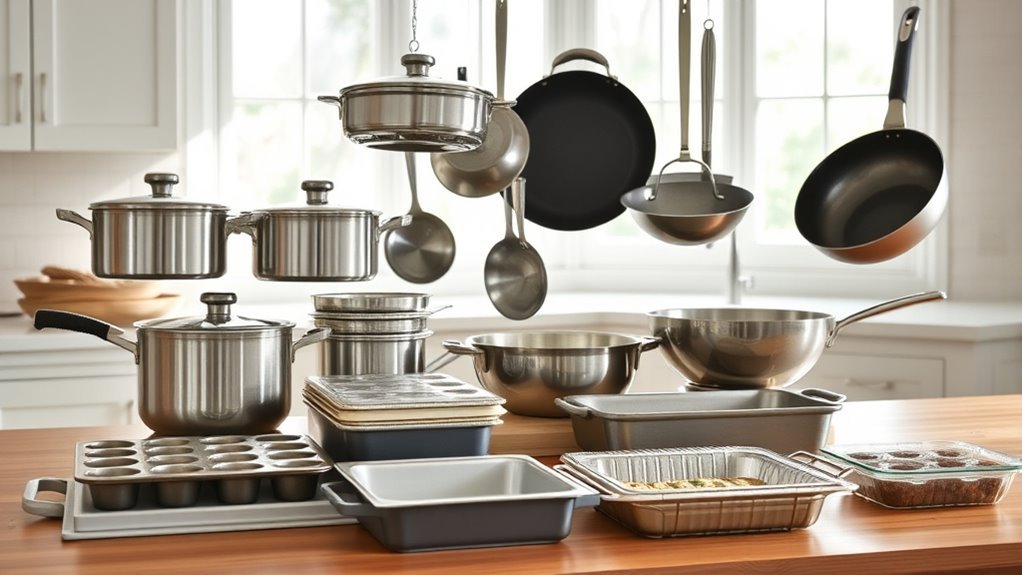
Think of cookware as your kitchen’s toolbox: it includes all the heat-resistant vessels you use to cook on stovetops, in ovens, or over other heat sources.
You’ll learn that cookware is an umbrella term covering pots, pans, and bakeware—cooking vessels designed with distinct shapes and functions.
Pots, like a stock pot or Dutch ovens, have higher walls for liquids and long simmering; pans, including skillets and sauté pans, are shallower for direct-surface techniques.
Baking pans and other bakeware live primarily in the oven for breads, cakes, and roasting.
Knowing these differences—materials, wall height, and intended heat interaction—frees you to choose tools that match technique and fuel, whether gas, electric, induction, or open flame.
Recognizing materials, wall height, and heat interaction helps you pick cookware suited to your technique and heat source.
Pay attention to features like non-stick surfaces and construction; they determine how food releases and how you maintain control.
This clarity helps you cook more deliberately and claim mastery of your kitchen.
Pots vs. Pans vs. Bakeware: Key Differences and When to Use Each
Although pots, pans, and bakeware all turn raw ingredients into finished dishes, each is engineered for specific techniques: pots hold and circulate liquids for simmering and braising, pans expose food to direct, high heat for searing and sautéing, and bakeware is built for even, dry-heat oven cooking like roasting or baking.
You’ll choose tools by matching cooking methods to design: depth and lids help pots retain moisture for stocks and sauces; shallow pans and cast iron pans give a responsive cooking surface for shallow frying and sears; bakeware delivers uniform heat distribution in the oven.
- Pots: deep, often stainless steel cookware with lids—best for simmering, braising, and liquid-based recipes.
- Pans: shallow, varied materials—ideal for sautéing, searing, and quick evaporation on stovetops.
- Bakeware: oven-only pieces—cakes, roasting, consistent heat distribution across surfaces.
- Materials: pick stainless steel cookware for neutrality, cast iron pans for heat retention and flavor-building.
Seven Essential Pans and What You Should Use Them For
Seven pans will cover most home-cooking needs, and knowing what each one does saves you time and improves results.
You’ll rely on a large skillet (about 12 inches) for browning, pan-roasting, and braising because its generous surface area lets liquids reduce and sear evenly.
A cast iron skillet (10–11 inches) gives you superb heat retention for high-heat searing and even oven-to-stovetop work.
Use a nonstick skillet (≈10 inches) when delicate eggs or pancakes must release cleanly.
A saucier’s rounded sides make sauces and reductions effortless, bridging sauté and simmer techniques.
Reach for a Dutch oven (5–7 quarts) when you need a versatile vessel for slow cooking, braising, or baking bread that locks in moisture.
A stockpot handles broths and large-batch soups with steady simmering.
Finally, a braiser combines a wide base and tight lid to tenderize tougher cuts.
Match each pan to your cooking needs, and you’ll cook with more freedom and better results.
Seven Essential Pots and Their Primary Uses
You’ll want a core set of pots that match the techniques you cook most—each one shapes how liquids heat, reduce, and carry flavor—so choosing the right vessel matters as much as choosing the recipe.
You’ll pair pots and pans to free your cooking: a large skillet serves as a versatile kitchen staple for browning and pan-roasting, often built with tri-ply stainless steel for even heat distribution. A cast iron skillet holds searing temps, a go-to for crust and depth.
A nonstick skillet protects delicate eggs and pancakes, while a sauté pan gives you straight sides for reduction and tossing. Your cooking pot lineup should include a saucier for whisked sauces and a Dutch oven for slow cooking and braises—5 to 7 quarts covers most needs.
- Large skillet — browning, pan-roast (even heat distribution)
- Cast iron skillet — high-heat searing
- Nonstick skillet — delicate items
- Dutch oven/saucier — slow cooking, sauces
How Cookware Materials Affect Performance (Cast Iron, Stainless, Aluminum, Copper)
When you match a dish to its vessel, the metal beneath your hands does as much work as the recipe—cast iron locks and holds heat for steady sears and long braises, stainless steel resists reaction and lets you brown and deglaze without off-flavors, aluminum brings rapid, even heating (best when anodized or clad), and copper gives you the most responsive temperature control but needs a nonreactive lining. You choose cookware materials knowing each alters cooking performance: cast iron cookware supplies unmatched heat retention and even heating once seasoned; stainless steel stays non-reactive and durable, often enhanced with an aluminum or copper core; aluminum cookware offers lightness and swift thermal conductivity but benefits from anodizing; copper cookware delivers precision control but requires a lining. Your culinary freedom grows when you match metal to technique, trusting thermal conductivity and surface chemistry to influence flavor and outcome.
| Material | Strength |
|---|---|
| Cast Iron | Heat retention, even heating |
| Stainless Steel | Non-reactive, durable |
| Aluminum | Fast heating, lightweight |
| Copper | Rapid response, precise control |
Choosing the Right Pot or Pan by Cooking Method (Frying, Braising, Simmering, Roasting)
Although the metal and construction matter, choosing the right vessel for a technique is what turns heat into the result you want: you match form to function and free your cooking from compromise.
Consider the cooking method and heat distribution needs.
Match your cookware to the method—let heat flow where it’s needed for precise, uncompromised results.
- Frying — Use frying pans with a wide surface area and shallow depth so oil heats quickly and you can flip or sear efficiently.
- Braising — Choose a braiser or Dutch oven; heavy walls and a tight lid trap moisture, letting low, steady heat convert collagen into tenderness.
- Simmering — Reach for a saucepan with tall sides and a narrow base to maintain gentle, even simmering without excess evaporation; it supports sauces and soups.
- Roasting — Use roasting pans, usually rectangular with low sides and optional rack, to promote even air circulation around meats and vegetables.
Each selection honors heat distribution and the technique’s intent, so your dishes achieve liberation through precise cookware choices.
Quick Ways to Pick the Right Cookware : Shape, Size, Lid, and Maintenance
When you pick cookware, match shape to function—a wide, shallow pan for searing and frying, a tall pot for boiling and simmering—to get predictable heat behavior.
Size should reflect the quantities you cook so food cooks evenly and energy isn’t wasted, while a snug-fitting lid traps moisture and heat for faster, cleaner results.
Finally, consider maintenance: nonstick needs gentle cleaning to protect its coating, cast iron requires regular seasoning, and stainless steel offers durable, even heating if you’re after low-maintenance performance.
Shape And Function
Pick cookware by matching shape and function to the technique you’re using: shallow, sloped frying pans let you flip and reduce quickly, while tall, straight-sided saucepans keep simmering liquids from evaporating and concentrate flavors.
You choose pots and pans by considering how shape guides heat flow and technique: a wide pan accelerates evaporation and browning; a deep pot preserves moisture for stocks.
Match materials to tasks—cast iron for searing, stainless for neutral sauces—because maintenance and heat distribution differ.
Think regarding liberation: select tools that enable creativity and efficiency.
- Frying pans: shallow, sloped for flipping and quick reduction.
- Saucepans: tall, straight for simmering and control.
- Stockpots: large sizes for batches and even heat.
- Lids/materials: control evaporation and maintenance needs.
Size, Lid, Maintenance
Because the pot or pan you reach for most is the one that fits both your recipes and your routine, size, lid, and upkeep should shape your buying decisions as much as material and form. Pick size by your cooking style: a large size suits batch cooking; smaller pans serve quick meals. Match shape to task—deep pots for stocks, wide pans for even heat distribution when sautéing. Choose cookware with a lid to aid retaining heat and moisture during simmering or slow cooking. For maintenance, treat non-stick gently with non-abrasive tools; season cast iron regularly to prevent rust and sustain its surface. Consider material—stainless for durability, cast iron for retaining heat—and pick pieces that free you to cook boldly.
| Size | Lid | Maintenance |
|---|---|---|
| Small/Large | Glass/Metal | Non-stick care |
| Deep/Wide | Tight-fitting | Season cast iron |
Frequently Asked Questions
What Is a Fancy Name for Pots and Pans?
The fancy name is “cookware.” You’ll use cooking vessels and stovetop equipment as kitchen essentials and culinary tools for meal preparation and food preparation.
Choose cookware materials like stainless steel, cast iron, or copper—trusted heat conductors that elevate a gourmet kitchen and liberate your technique.
Organize these items within kitchen organization systems to streamline cooking, embrace creative control, and transform everyday tasks into empowered, reference-driven culinary practice.
Are Pots and Pans Called Utensils?
No — pots and pans aren’t usually called utensils; they’re cookware and essential cooking tools.
You’ll use them for frying techniques, boiling methods and sautéing tips, and you’ll care about cookware materials, heat distribution and maintenance practices.
Their design variations reflect culinary history and liberating kitchen essentials that empower you to cook creatively.
Adopt reference-driven practices to choose and maintain pieces that match your techniques and aesthetic.
What Is a Collective Word for Pots and Pans?
Cookware. You’ll laugh at how modest this label masks revolutions in your kitchen: cooking vessels that double as culinary tools, heat conductors and kitchen essentials.
You’ll study cookware materials and adopt brave cooking techniques, streamlining food preparation, meal presentation and kitchen organization.
You’ll value kitchen safety and choose pieces that free you from recipes’ tyranny. This reference-rich view nudges you toward liberation through better tools and smarter use.
What Do We Call Pots and Pans?
You call them cookware — cooking vessels and kitchen essentials you’ll rely on.
You’ll choose pieces by cookware materials for heat conduction, ergonomic designs and recipe compatibility.
Treat them as culinary tools: use proper cleaning techniques, storage solutions and meal preparation strategies to free your time and creativity.
Knowing heat conduction and materials lets you cook reliably, so you’ll select vessels that match your techniques and empower liberated, confident cooking.
Conclusion
Now that you know pots, pans, and bakeware by name, material, and method, you can pick tools that actually match what you cook. Think of cookware as an extension of your hands—each shape and metal helping you reach a specific result. Refer back to material guides and method pairings when you’re unsure: stainless for versatility, cast iron for heat retention, nonstick for delicate foods. With that map, you’ll cook smarter, not harder.
