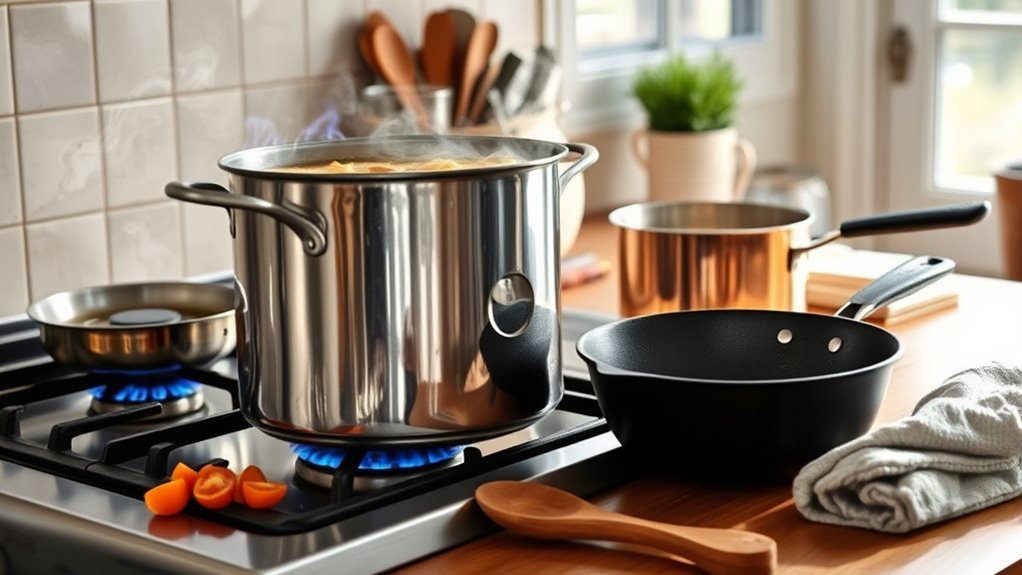
Choosing the right metal pots for cooking starts with understanding how different materials handle heat, food, and daily use. Stainless steel, cast iron, aluminum, and copper each offer benefits, but no single metal is perfect for every dish. This guide compares their heating performance, durability, safety, induction compatibility, and maintenance so you can choose cookware that fits your kitchen.
Quick Answer
Fully clad stainless steel is a versatile choice for everyday cooking because it combines a durable, non-reactive interior with good heat distribution. Cast iron works well for searing and slow cooking, while aluminum heats quickly and weighs less. Copper offers precise temperature control but usually costs more and requires careful maintenance.
Key Takeaways
- Aluminum and copper conduct heat better than stainless steel, but layered cookware combines conductivity with a durable cooking surface.
- A heavy pot usually stores more heat, although its thickness, size, and construction also affect performance.
- Stainless steel and intact enamel are practical surfaces for tomato sauces and other acidic dishes.
- Induction cooking requires a compatible magnetic base, even when the pot contains aluminum or copper.
- Nickel sensitivity, coating condition, weight, and maintenance deserve attention before buying.
How to Choose Metal Pots for Cooking
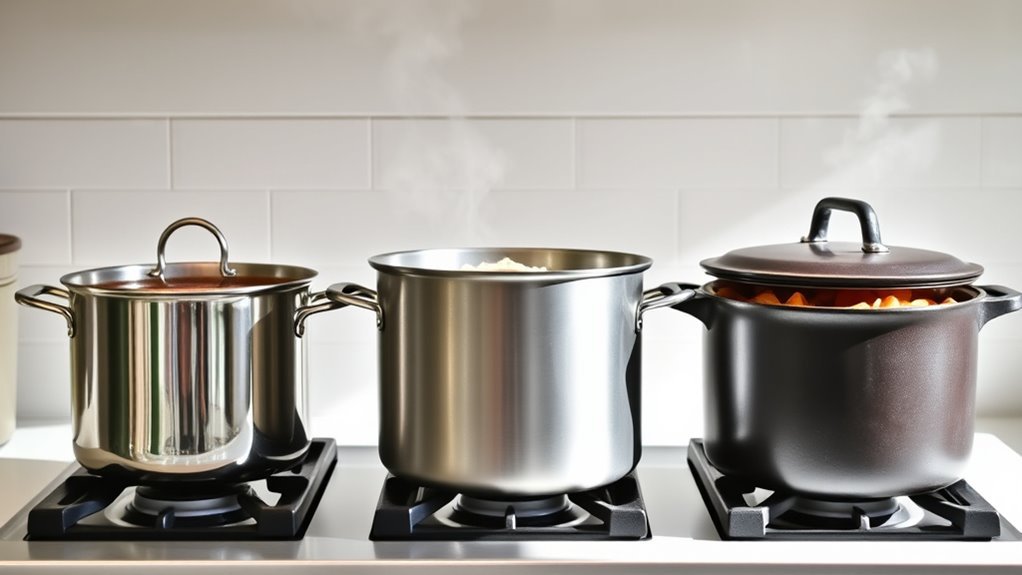
The best metal pot depends on your cooking method, stove type, and preferred level of maintenance. Start by identifying the dishes you make most often rather than choosing a material based on appearance alone.
Use this practical checklist before buying:
- Match the material to the dish. Choose stainless steel for everyday sauces and soups, cast iron for steady high-heat cooking, and aluminum for lightweight handling and quick heating.
- Check heat distribution. A stainless steel pot with an aluminum or copper core usually heats more evenly than one made from a single thin layer of stainless steel.
- Confirm stove compatibility. Induction cooktops require a magnetic base. Gas and conventional electric burners accept a wider range of materials.
- Consider acidic ingredients. Stainless steel or intact enamel is preferable for long cooking sessions involving tomatoes, citrus, or wine.
- Test weight and handles. Think about how easily you can lift, carry, and pour from a pot when it is full.
- Compare maintenance needs. Stainless steel requires relatively little care, while bare cast iron needs protection against rust.
Also inspect the pot’s base. It should sit flat on your cooking surface without rocking. A stable, properly sized base improves contact with the burner and makes handling safer.
Finally, consider whether you need a lid for simmering or braising. A well-fitting lid limits moisture loss and helps you control the cooking process.
Heat Properties That Matter for Metal Pots (Conductivity, Capacity, Retention)
Three properties explain how a metal pot responds to heat: thermal conductivity, heat capacity, and heat retention. They affect how quickly the pot warms, how evenly heat spreads, and how much its temperature changes when you add food.
Thermal conductivity describes how easily heat travels through a material. Copper and aluminum conduct heat efficiently, while stainless steel is a relatively poor conductor.
Heat capacity describes the energy needed to raise an object’s temperature. It depends on both the material and the amount of material in the pot.
Heat retention describes how well the pot resists cooling. Thick, heavy cookware usually has more stored thermal energy available when cold food touches its surface.
The Chemistry LibreTexts explanation of cookware heating illustrates how material properties and mass affect heat storage and transfer.
| Property | Practical effect |
|---|---|
| Thermal conductivity | Helps heat spread across the pot. Copper and aluminum perform especially well. |
| Heat capacity | Determines how much energy a pot stores as its temperature rises. Both material and mass matter. |
| Heat retention | Helps the pot resist temperature drops. Heavy cast iron is particularly effective during searing. |
For example, a thin aluminum pot responds quickly when you reduce the burner setting. A heavy cast iron pot responds more slowly because it stores substantial heat.
However, heat retention does not automatically mean even heating. Cast iron can develop hot spots if you heat it too quickly or use a burner that covers only a small area.
For daily cooking, a thick aluminum core inside stainless steel provides a useful balance of heat distribution, durability, and temperature control.
Why Non-Reactive Surfaces Matter for Acidic Foods
Non-reactive cookware is important when cooking tomatoes, vinegar, citrus, and wine-based sauces. These acidic ingredients can react with certain bare metals, affecting flavor and increasing the transfer of metal into food.
Stainless steel is generally a reliable option for acidic cooking because its chromium-rich protective surface resists corrosion. Intact enamel also separates acidic ingredients from the metal underneath.
Uncoated aluminum and copper are more reactive. Long cooking or food storage can increase unwanted metal transfer, particularly when ingredients are acidic or salty.
According to Health Canada’s cookware safety guidance, acidic and salty foods can increase metal migration from some cookware surfaces.
Seasoned cast iron offers some protection, but seasoning does not make the surface completely non-reactive. Long simmering with tomatoes or vinegar can produce metallic flavors and wear down the seasoning.
For a short cooking session, a well-seasoned cast iron pan may be suitable. For a long tomato-based braise, stainless steel or enameled cast iron is the more practical choice.
If you regularly cook acidic meals, prioritize a stable food-contact surface rather than choosing cookware solely for heat retention.
Surface Finishes Compared: Stainless, Seasoned Cast Iron, Enamel, Nonstick
A pot’s surface finish affects food release, cleaning, durability, and compatibility with acidic ingredients. The material underneath controls much of the heating performance, while the surface determines how food contacts the cookware.
Stainless steel is durable, corrosion-resistant, and suitable for browning or deglazing. Food can stick if the pan is heated incorrectly, but the surface tolerates regular cooking and cleaning.
Seasoned cast iron develops a protective layer from heated cooking oils. This layer improves food release and helps prevent rust, although it requires occasional maintenance.
Enameled cast iron has a glass-like coating over its metal body. It combines the heat storage of heavy iron with a surface suitable for acidic foods. However, the enamel can chip if damaged.
Nonstick cookware uses a coating designed to reduce food sticking. It works well for eggs, pancakes, and delicate ingredients, but the coating usually has a shorter lifespan than bare stainless steel.
| Finish | Strength | Care/Use |
|---|---|---|
| Stainless Steel | Durable, corrosion-resistant, suitable for acidic foods and browning | Easy routine cleaning; remove stuck food with soaking and gentle scrubbing |
| Seasoned cast iron | Excellent heat storage, durable surface, improves with proper seasoning | Dry promptly, prevent rust, and maintain seasoning when needed |
| Enamel / Nonstick | Enamel: non-reactive cooking surface; Nonstick: easy food release | Enamel: prevent chips; Nonstick: avoid overheating and abrasive cleaning |
Not all nonstick finishes are the same. Conventional nonstick coatings commonly use PTFE, while many ceramic-labeled nonstick coatings use a silica-based sol-gel finish.
These ceramic nonstick coatings differ from traditional porcelain enamel. The American Ceramic Society explains ceramic-coated cookware and why its composition and long-term performance deserve careful consideration.
A ceramic label alone does not guarantee superior safety or longer-lasting nonstick performance. Construction quality and proper use matter more than marketing claims.
Material Tradeoffs: Stainless vs Cast Iron vs Aluminum
Stainless steel, cast iron, and aluminum offer different combinations of heat control, durability, weight, and maintenance. Your ideal choice depends on which tradeoffs matter most during everyday cooking.
Stainless steel provides a strong, versatile cooking surface. Cast iron excels at storing heat, while aluminum spreads heat quickly and remains easy to lift.
Copper also deserves consideration because it responds rapidly to temperature changes. However, quality copper cookware is often expensive and generally needs a non-reactive lining.
Heat Conductivity & Weight
Aluminum and copper conduct heat much better than stainless steel or cast iron. That makes them useful when you need quick adjustments during sautéing, boiling, or delicate sauce preparation.
Cast iron takes longer to heat evenly, but its substantial mass helps it resist cooling when food enters the pot.
Stainless steel alone is not especially conductive. Manufacturers often improve performance by bonding it to aluminum or copper.
| Property | What it means for you |
|---|---|
| Heat conductivity | Aluminum and copper distribute heat efficiently; stainless steel benefits from a conductive core. |
| Weight considerations | Aluminum is usually light; cast iron is heavy; stainless steel weight depends on construction. |
| Durability | Stainless steel and cast iron can last for decades; thin aluminum may dent or warp. |
| Cost efficiency & health and safety | Basic aluminum is often affordable; stainless steel offers long service life; safety depends on surface condition and proper use. |
Remember that thickness can matter as much as the metal itself. A thick aluminum pot may perform better than a thin stainless steel pot, even if the stainless steel model looks more substantial.
For frequent use, focus on the complete construction rather than a single material label.
Durability & Reactivity
Durability determines how well cookware withstands repeated heating, cleaning, and handling. Reactivity determines how the cooking surface interacts with ingredients.
Consider these differences:
- Stainless steel: Resists corrosion and everyday wear. Its protective surface handles most foods well, although prolonged contact with acidic ingredients can release small amounts of metals.
- Cast iron: Can last for generations with proper care. Bare iron may rust or react with acidic foods, and seasoning requires occasional renewal.
- Aluminum: Lightweight and conductive, but softer than steel. Uncoated aluminum can react with acidic or salty ingredients.
- Copper: Excellent for precise heating, but requires protection against direct food contact through a suitable lining. The exterior may also need polishing.
Anodized aluminum offers an additional option. Anodizing creates a harder surface that improves wear resistance and reduces aluminum transfer into food.
However, damaged or worn anodized surfaces may no longer provide the same protection.
For most households, fully clad stainless steel offers a practical balance of long-term durability, versatility, and manageable upkeep.
Base Construction and Induction Compatibility (Sandwich Bottoms, Magnetic Bases)
A pot’s base has a major effect on heat distribution and stove compatibility. Two common constructions are encapsulated sandwich bottoms and fully clad multi-layer bodies.
A sandwich bottom usually places an aluminum or copper layer between stainless steel layers at the base. This improves heat spreading across the bottom of the pot.
Fully clad cookware extends bonded layers through the base and sidewalls. This can improve heating along the sides, which is useful for sauces and dishes requiring controlled simmering.
Neither construction eliminates every hot spot. Base thickness, burner size, and cookware quality still affect performance.
Does Every Stainless Steel Pot Work on Induction?
No. Induction cooktops require cookware with a magnetic, or ferromagnetic, base. Some stainless steel alloys are not sufficiently magnetic by themselves.
According to Maytag’s induction compatibility guidance, a magnet that sticks firmly to the bottom is a useful way to identify compatible cookware.
Check these features before purchasing:
- Magnetic base: Confirm that the bottom attracts a magnet firmly.
- Flat bottom: A flat cooking surface supports good contact and stable placement.
- Suitable diameter: The base should match the size requirements of your induction burner.
- Manufacturer compatibility: Look for an induction-compatible designation in the cookware specifications.
Cast iron generally works with induction because it contains magnetic iron. Aluminum and copper normally require a bonded magnetic base.
A magnetic bottom does not guarantee identical performance on every induction cooktop. Very small or poorly designed bases may not activate certain cooking zones.
A thick conductive core helps distribute heat, while a properly designed magnetic base makes layered cookware suitable for induction cooking.
If you use gas, electric, and induction cooktops, compatible multi-layer stainless steel is a flexible option.
Weight, Handling, and Lid/Handle Ergonomics
Comfort and safety matter as much as heating performance. A pot that feels manageable when empty may become difficult to lift once it contains several portions of food and liquid.
Heavier cast iron pots offer stability and substantial heat storage. However, lifting them can strain your wrists, especially when transferring hot liquids.
Aluminum pots are usually easier to move. Stainless steel falls between the two in many designs, although thick multi-layer construction can add considerable weight.
Look for the following features:
- Secure handles: Choose sturdy, firmly attached handles that provide a confident grip.
- Comfortable lifting: Test the pot’s balance and consider whether you need two side handles rather than one long handle.
- Heat-resistant design: Metal handles may become hot during cooking, particularly in the oven.
- Well-fitting lid: A snug lid helps retain moisture and control evaporation during simmering.
- Stable base: A flat bottom reduces rocking and improves stability on the cooking surface.
Tempered glass lids let you observe food without opening the pot. However, they may have different oven-temperature limits from the metal pot itself.
Metal lids can tolerate high temperatures when designed for oven use, but always follow the manufacturer’s stated limits.
Also consider the shape of the handles. Wide side handles can make a large stockpot easier to carry, while a long handle may suit a small saucepan.
Before buying, imagine lifting the pot when full rather than judging its empty weight alone.
Safety and Health: Leaching, Nickel Allergy, and Safe Coatings
Cookware safety depends on material composition, surface condition, cooking temperature, and food acidity. No material is completely free from every possible concern, but well-made cookware is generally safe when used as directed.
The main issues to consider are metal migration, nickel sensitivity, damaged coatings, and overheating.
Stainless Steel and Nickel Leaching
Stainless steel resists corrosion because chromium forms a protective layer on its surface. However, the material is not completely immune to metal migration.
Many cookware products use grades labeled 18/10 or 18/8, which generally contain chromium and nickel. The numbers refer to nominal alloy composition rather than a guaranteed difference in cooking quality.
In contrast, 18/0 stainless steel is typically a ferritic grade without intentionally added nickel.
The British Stainless Steel Association’s explanation of stainless steel grades describes these alloy classifications and their magnetic properties.
Research also shows that nickel and chromium release can increase during acidic cooking. The amount depends on cookware condition, cooking duration, and other factors.
A published study of nickel and chromium release from stainless steel pots found that acidity, cooking time, and previous use influenced metal migration.
For most people, stainless steel remains a practical cooking choice. However, those with significant nickel sensitivity may need cookware with a verified low-nickel or nickel-free food-contact surface.
Note: If you have a diagnosed nickel allergy, an iron-overload condition, or another medical reason to limit metal exposure, ask your healthcare professional which cookware materials are appropriate for you. Individual sensitivity and dietary requirements vary.
Nonstick Coating Safety
Nonstick cookware can be suitable for everyday cooking when used within its recommended temperature limits. However, overheating and surface damage deserve attention.
PTFE is commonly used in conventional nonstick coatings. PFOA, a chemical previously used in producing some coatings, has been phased out of many manufacturing processes.
PTFE itself belongs to the broader PFAS family, so a PFOA-free label does not necessarily mean PFAS-free.
The German Federal Institute for Risk Assessment’s PTFE guidance explains that properly used PTFE cookware is not expected to cause adverse health effects, but severe overheating can release hazardous gases.
Warning: Never leave empty PTFE-coated cookware heating unattended. Avoid high-temperature cooking and follow the manufacturer’s limits. Health Canada advises avoiding temperatures above 260°C (500°F) for nonstick cookware.
Use wooden, silicone, or other suitable utensils when recommended. Avoid abrasive cleaning methods that can damage the coating.
Replace cookware when the surface is extensively damaged, peeling, or no longer functioning as intended.
Aluminum, Copper, and Lead Concerns
Aluminum cookware is not automatically unsafe, but its quality and surface condition matter. Worn or uncoated aluminum can release more metal into acidic or salty foods.
Unlined copper should not be used for routine acidic cooking because copper can migrate into food. A suitable intact lining provides a protective food-contact surface.
Lead contamination is a separate and more serious concern with certain cookware products.
The US Food and Drug Administration’s warning about imported cookware identifies certain aluminum, brass, and aluminum-alloy products that may release unsafe amounts of lead.
Warning: Do not use cookware identified in an official lead-contamination warning or recall. The FDA advises consumers to discard affected products rather than donate or refurbish them.
Buy cookware intended for food preparation from reputable sellers. Avoid using decorative metal or glazed items unless they are explicitly suitable for food contact.
Best Uses by Metal Type: Which Pot for Which Dish
Different cooking methods benefit from different metal properties. A pot that works well for simmering soup may not be ideal for delicate sauces or high-heat searing.
Use the following examples to match cookware with common kitchen tasks.
- Stainless steel for sauces, soups, and braises: Its durable, non-reactive surface handles a wide range of ingredients. A conductive core improves temperature control and reduces uneven heating.
- Cast iron for searing and frying: Heavy cast iron stores substantial heat, making it useful for browning meat and cooking foods that benefit from a stable hot surface.
- Enameled cast iron for stews and long braises: It combines substantial heat storage with a non-reactive interior suitable for tomato-based dishes.
- Aluminum for quick boiling and everyday cooking: Lightweight construction and good conductivity make it convenient for tasks requiring frequent lifting or quick heating.
- Lined copper for delicate sauces: Copper responds rapidly to temperature adjustments, making it useful when precise heat control matters.
- Nonstick for eggs and delicate foods: A suitable nonstick surface helps prevent sticking with less added cooking fat, although high-heat searing is not its strongest use.
For example, consider preparing short ribs. A heavy Dutch oven provides stability during browning, while a suitable lid helps maintain moisture during the braising stage.
If the recipe contains a large amount of tomato or wine, an enameled Dutch oven provides a more suitable cooking surface than bare cast iron.
The best cooking results come from matching the pot’s heating behavior and surface finish to the ingredients and technique.
You do not need a separate pot made from every material. A versatile stainless steel saucepan, a larger stockpot, and one heavy pot for searing or braising can cover many everyday cooking needs.
Final Buying Checklist: Budget, Cooking Style, and Maintenance
Before buying a metal cooking pot, compare its total value rather than its price alone. Construction quality, durability, stove compatibility, and maintenance all influence how useful the cookware will be over time.
A higher initial price can be worthwhile when the pot serves several cooking purposes and remains reliable for years.
Budget and Value
Budget-friendly cookware can perform well when its construction matches your needs. However, unusually thin metal may heat unevenly, dent, or warp more easily.
Consider these buying priorities:
- Choose useful construction: A well-made aluminum-core stainless steel pot may provide better everyday performance than an expensive pot selected only for appearance.
- Consider long-term durability: Stainless steel and cast iron often provide excellent value because they can remain functional for many years.
- Check versatility: Cookware compatible with your stove and oven may replace the need for several specialized pieces.
- Evaluate cleaning requirements: Low-maintenance finishes can save time, while copper and bare cast iron may require more attention.
- Inspect the warranty: Review what the manufacturer covers, especially for bonded bases, handles, and surface defects.
Also compare the pot’s usable capacity with the meals you normally prepare. Buying an oversized pot can add unnecessary weight, while one that is too small may lead to spills or overcrowding.
For everyday households, a practical combination of material quality, comfortable handling, and reliable heat distribution matters more than premium branding.
Care and Longevity
Proper cleaning and storage help cookware maintain its performance and appearance. Different materials require different routines, so follow the instructions for your specific pot.
For stainless steel, allow the cookware to cool before washing. Use warm water and mild detergent, and soak stubborn residue before scrubbing.
Although many stainless steel pots are dishwasher-safe, handles, decorative finishes, and manufacturer recommendations can affect cleaning requirements.
For cast iron, clean away food residue, dry the surface thoroughly, and maintain a light protective seasoning layer. Do not leave bare cast iron soaking in water for extended periods.
For aluminum, avoid harsh abrasives and aggressive cleaning methods that can scratch or damage the surface. Hand washing is often preferable, especially for anodized finishes.
For copper, use gentle cleaning methods that protect the inner lining. Polish the exterior only when needed and with products suitable for the finish.
For enamel and nonstick surfaces, avoid sharp utensils and sudden temperature changes. Follow the manufacturer’s cleaning guidance to protect the coating.
Before each use, inspect the base, handles, and food-contact surface for damage.
A durable pot should remain stable, heat predictably, and feel safe to handle. If the base becomes severely warped or the cooking surface is badly damaged, replacement may be the safer option.
Frequently Asked Questions
What Physical Property Makes Metal Pots Good for Cooking?
Thermal conductivity is a major property that makes metal pots useful for cooking. It allows heat to travel from the burner through the pot and into the food. Heat capacity, durability, and corrosion resistance also matter. The best cookware balances these properties with suitable construction and comfortable handling.
What Are the Downsides of Using Stainless Steel Pots and Pans?
Stainless steel conducts heat poorly compared with aluminum and copper, so thin pots may heat unevenly. Food can stick, and burnt residue may require extra cleaning. Quality multi-layer cookware can also be expensive. However, stainless steel remains durable, versatile, and relatively easy to maintain.
What Is the Healthiest Metal for Cookware?
Stainless steel is a practical choice for most people because it resists corrosion and works with many foods. However, no metal is completely risk-free. Cast iron can add iron to food, while nickel-containing stainless steel may be unsuitable for sensitive individuals. Material quality and proper use matter more than a single healthiest label.
Which Metal Pot Is Best for Cooking?
Fully clad stainless steel is an excellent all-purpose choice because it combines durability, a non-reactive surface, and improved heat distribution. Cast iron is better for substantial heat storage, aluminum is useful for lightweight cooking, and lined copper offers precise control. Choose according to your dishes, stove, and maintenance preferences.
Conclusion
The right metal pot depends on how you cook. Choose aluminum for fast heating and easy handling, stainless steel for versatile everyday meals, and cast iron for searing and slow cooking. Enameled cast iron suits long, acidic braises, while lined copper offers excellent temperature control.
Before buying, check the pot’s construction, stove compatibility, weight, and maintenance requirements. A well-made pot that fits your cooking habits will provide better long-term value than one chosen for its material alone.
Sources
- Health Canada: The Safe Use of Cookware and Bakeware: Supports information about metal migration, acidic ingredients, cookware materials, and nonstick safety.
- Chemistry LibreTexts: The Cooking Efficiency of Pots and Pans: Explains thermal conductivity, heat capacity, and the effect of material properties on heating.
- The American Ceramic Society: Ceramic-Coated Cookware Safety: Explains ceramic nonstick coatings, composition, and performance considerations.
- British Stainless Steel Association: Stainless Steel Grades: Explains the composition and magnetic characteristics of 18/8, 18/10, and 18/0 stainless steel.
- Maytag: Induction Compatible Cookware: Supports the magnetic-base test and induction compatibility guidance.
- German Federal Institute for Risk Assessment: PTFE Nonstick Cookware: Supports guidance about PTFE coating safety and overheating.
- US Food and Drug Administration: Imported Cookware Lead Warning: Identifies certain imported cookware associated with lead migration concerns.
- PubMed: Release of Nickel and Chromium During Cooking in Stainless Steel Pots: Supports the discussion of metal migration during acidic cooking.