
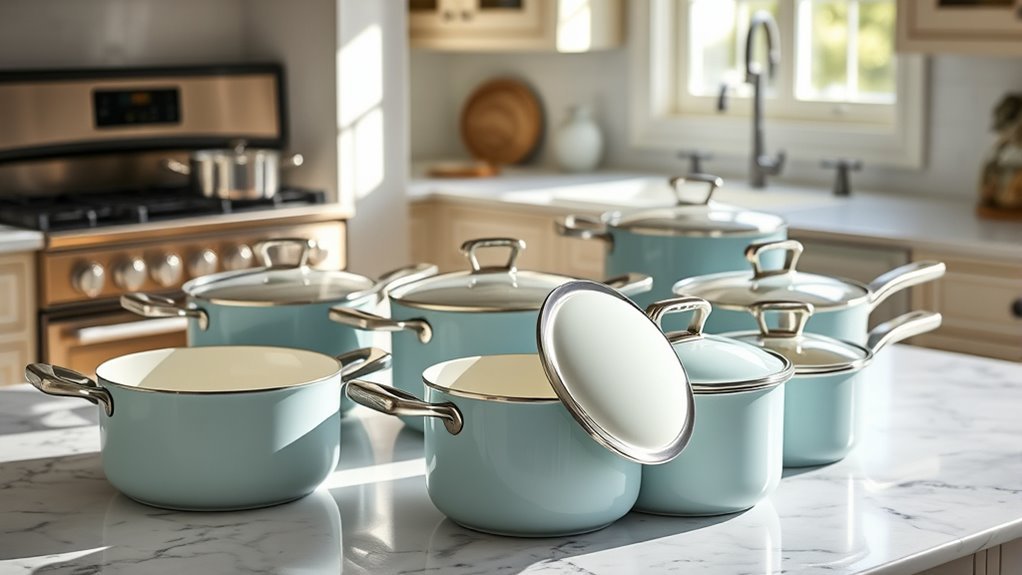
Why is Caraway cookware so expensive compared with ordinary nonstick pots and pans? The difference comes from its ceramic coating, aluminum construction, coordinated design, storage accessories, and brand positioning. However, a higher price does not automatically mean better durability or safer cooking than every cheaper alternative.
Quick Answer
Caraway cookware costs more because it combines a PTFE-free ceramic nonstick coating, an aluminum body, stainless steel components, premium colors, and coordinated storage accessories. The brand also emphasizes third-party testing and responsible manufacturing. These features add value, but ceramic coatings still require gentle care and may lose their nonstick performance over time.
Last checked: November 14, 2026. Key specifications, pricing, warranty terms, and legal information were checked against manufacturer and authoritative sources.
Key Takeaways
- The standard 12-piece ceramic set contains four cooking vessels, three lids, and five storage organizers. Not all 12 pieces are pots or pans.
- Caraway ceramic cookware is oven-safe up to 550°F, but the manufacturer recommends low-to-medium stovetop heat.
- Caraway’s ceramic cooking surface is made without intentionally added PTFE, PFOA, or PFAS, according to its testing information.
- Good initial nonstick performance does not guarantee that the coating will remain slippery indefinitely.
- The ceramic cookware has a one-year limited US warranty, but ordinary coating wear and cosmetic damage are excluded.
Who Should Buy Caraway Cookware?

Caraway cookware is best for home cooks who want PTFE-free ceramic nonstick cookware with a polished appearance and matching storage accessories. It suits everyday meals that benefit from easy food release, even heating, and simple cleanup.
You may find Caraway worth the premium if you value:
- Material preferences: A ceramic cooking surface made without PTFE, PFOA, PFAS, lead, or cadmium, according to the brand’s testing information.
- Everyday cooking: Smooth food release for eggs, vegetables, pancakes, and other foods that tend to stick.
- Kitchen design: Coordinated cookware colors and matching storage solutions.
- Cooking flexibility: Compatibility with gas, electric, and induction stovetops, plus oven use within the stated temperature limit.
- Easy cleaning: A smooth surface that usually needs only a soft sponge and warm, soapy water.
Caraway is less appealing if you regularly sear food over very high heat, use metal utensils, or prefer dishwasher-safe cookware.
It may also disappoint anyone expecting a ceramic nonstick coating to last as long as uncoated stainless steel or well-maintained cast iron.
If your main priority is lifetime durability rather than easy food release, consider an uncoated cooking surface instead.
Which Kitchen Problems Does Caraway Solve?
Caraway addresses several common kitchen frustrations: sticking food, difficult cleanup, uneven heating, and cluttered cookware storage. Its ceramic-coated aluminum design is built for everyday cooking rather than heavy-duty high-heat use.
The ceramic surface helps release delicate foods with a small amount of oil or butter. That can make cooking eggs, fish, and pancakes easier than using an unseasoned metal pan.
The aluminum body spreads heat across the cooking surface. This helps reduce hot spots that can burn one section of food while leaving another undercooked.
Caraway also offers cookware suitable for moving dishes from the stovetop into the oven. Its standard ceramic cookware is rated for oven temperatures up to 550°F.
However, that oven rating does not mean you should use maximum heat on a stovetop burner. The ceramic coating lasts longer when you follow the recommended low-to-medium heat guidance.
Storage is another advantage. The standard 12-piece set includes magnetic pan organizers and a canvas lid holder to keep cookware separated and accessible.
These accessories can help prevent scratches caused by stacking pans directly against each other.
Caraway does not eliminate every cooking problem. Its ceramic surface can still develop stains, lose some slipperiness, or suffer damage from overheating and rough utensils.
Why Is Caraway Cookware So Expensive? Materials and Construction
Caraway cookware is expensive partly because you are purchasing a complete cookware system rather than basic metal pans. Its ceramic coating, aluminum construction, stainless steel components, fitted lids, and storage accessories all contribute to the product’s features.
The standard ceramic cookware has an aluminum body, ceramic-coated cooking surface, stainless steel handles, and a stainless steel induction-compatible base.
These materials have different jobs:
- Aluminum body: Conducts heat efficiently and responds to temperature changes.
- Ceramic nonstick surface: Helps food release and makes cleanup easier.
- Stainless steel base: Allows the cookware to work with induction burners.
- Stainless steel handles: Provide a sturdy grip, although they can become hot during cooking.
- Storage accessories: Help organize cookware and reduce direct contact between stored pieces.
What Comes in the Standard Caraway Cookware Set?
Caraway’s 12-piece ceramic cookware set includes four cooking vessels, three lids, and five storage components. Understanding that breakdown is important because the advertised piece count is not the number of pans.
| Included Item | Quantity | Purpose |
|---|---|---|
| 10.5-inch fry pan | 1 | Eggs, pancakes, and everyday frying |
| 3-quart saucepan | 1 | Sauces, grains, and small batches |
| 4.5-quart sauté pan | 1 | One-pan meals and larger portions |
| 6.5-quart Dutch oven | 1 | Soups, stews, and larger meals |
| Matching lids | 3 | Covering compatible cookware pieces |
| Storage organizers | 5 | Four pan organizers and one lid holder |
The official Caraway cookware set specifications and pricing confirm these components and the available set configurations.
How Much Does Caraway Cookware Cost?
Caraway prices depend on the set size, finish, and available promotions. Discounts can substantially change the amount you pay.
During the November 2026 check, Caraway’s US website displayed the following figures for its standard 12-piece ceramic cookware set:
- $675: Listed original or reference price.
- $445: A discounted set price displayed on some product configurations.
- $356: A promotional price displayed with additional holiday savings.
These amounts are not guaranteed future prices. The final amount depends on the offer and any discounts applied at checkout.
The difference between the reference price and promotional price also shows why comparing the actual checkout total matters more than judging a cookware set by its advertised savings percentage.
Caraway’s manufacturing costs and profit margins are not publicly broken down in these listings. Therefore, the exact share of the price attributable to ceramic coating, labor, packaging, and branding cannot be established from the retail price alone.
Why Do PTFE-Free and Non-Toxic Claims Affect Caraway’s Price?
Caraway markets its ceramic cookware as an alternative to conventional PTFE-based nonstick cookware. Its value proposition includes material selection, third-party testing, and documentation intended to support its safety claims.
PTFE stands for polytetrafluoroethylene, the fluoropolymer commonly associated with traditional nonstick coatings such as Teflon.
Caraway says its ceramic coating is made without:
- PTFE
- PFOA
- PFAS
- Lead
- Cadmium
The company publishes information about its independent testing of cookware materials. Its stated testing program includes screening for hundreds of PFAS compounds and other substances.
That testing is a meaningful consideration for shoppers who specifically want cookware made without fluoropolymer coatings.
However, a PTFE-free coating does not automatically make a pan healthier than every competing product.
The US Food and Drug Administration’s explanation of PFAS in food-contact materials states that certain approved polymerized nonstick coatings have negligible PFAS migration into food.
Caraway’s material choices may appeal to your preferences, but claims of broad health improvements or zero exposure to harmful substances would require stronger evidence.
Note: The term “non-toxic” describes Caraway’s material and testing claims. It does not mean the cookware has been proven to deliver better health outcomes than every other nonstick pan. If you have specific concerns about chemical exposure or an existing health condition, seek guidance from a qualified healthcare professional.
In August 2025, the National Advertising Division of BBB National Programs found support for Caraway’s PFAS-free and non-toxic product claims.
However, its advertising review of Caraway also recommended changing certain comparisons that suggested competing nonstick cookware was inherently unsafe.
This distinction matters when comparing prices. You can reasonably value Caraway’s tested material specifications without assuming every conventional coating presents a demonstrated danger during normal use.
Manufacturing, Sustainability, and Supply-Chain Cost Factors
Caraway’s pricing also reflects how it positions its manufacturing, packaging, and supply-chain practices. The company emphasizes responsible sourcing, factory oversight, and reduced packaging waste.
These practices may contribute to operating expenses, although Caraway does not publish enough detailed cost data to establish exactly how much they increase its prices.
Sustainable Material Sourcing
Caraway emphasizes material selection and testing as part of its product development. Its ceramic coating is designed without intentionally added PTFE or other PFAS, while its cookware construction combines aluminum and stainless steel.
The company also highlights packaging made with recycled materials and lower-impact dyes.
These choices can appeal to people seeking products that match their environmental preferences.
However, environmental impact involves more than the materials used in the cooking surface. Manufacturing energy, shipping, packaging, product lifespan, and disposal also affect a cookware product’s overall footprint.
A pan that needs replacement sooner may create more waste than one that lasts much longer, even if the original purchase includes sustainability-focused packaging.
For that reason, consider both the manufacturing claims and how long you expect to use the cookware.
Ethical Factory Practices
Caraway states that it works with manufacturing partners associated with BSCI and SMETA social compliance programs.
These programs address working conditions, labor practices, and responsible business operations.
The company’s materials and manufacturing information describes its approach to worker safety, fair compensation, working hours, and packaging.
Such programs provide useful information about supplier expectations. They do not, by themselves, prove that every supplier or production stage has a better environmental record than competing manufacturers.
It is also important not to confuse ethical factory practices with domestic manufacturing. Caraway’s reviewed materials do not establish that all its ceramic cookware is manufactured locally in the United States.
If factory transparency is an important part of your buying decision, consider the information the brand makes available about its specific products.
Logistics and Tariffs
Transportation, import duties, storage, and distribution can affect the retail price of imported cookware. These expenses are part of the supply chain for many cookware brands, not just Caraway.
Shipping cookware requires protective packaging because pans, finishes, and lids can be damaged in transit.
International manufacturing may also expose brands to changes in freight costs, customs fees, and tariffs.
Still, there is no verified public breakdown showing exactly how much these factors add to the price of a specific Caraway set.
It would therefore be inaccurate to claim that tariffs or specialized transportation explain a particular percentage of Caraway’s premium.
The practical point is that retail price reflects more than raw materials. Packaging, distribution, marketing, product development, and retailer margins may also contribute.
Design, Colors, and Presentation: What Are You Paying For?
Caraway cookware is designed to look coordinated rather than purely utilitarian. Its colors, smooth exterior finishes, matching lids, and storage accessories are part of the product’s premium appeal.
Available finishes include neutral options and more noticeable shades such as Marigold, Navy, and Sage.
These choices let you match cookware with cabinets, countertops, or other kitchen accessories.
For example, a cream-colored cookware set may blend into a light kitchen, while a darker or brighter finish can become a visual feature on the stovetop.
The matching storage system also helps maintain a coordinated appearance when the pans are not in use.
Caraway puts similar attention into its packaging and product presentation. That creates a more polished buying and unboxing experience than many basic cookware sets offer.
Design has practical value when it helps you organize cookware or choose tools you enjoy using.
However, colors and presentation do not establish cooking performance, coating durability, or food safety.
If you care more about functionality than appearance, you may find comparable cooking features in less expensive ceramic cookware.
Real-World Performance: Nonstick Life, Heating, and Upkeep
Caraway’s ceramic cookware performs well in everyday cooking, especially when food release and easy cleaning are priorities. Independent testing supports its ability to heat evenly and release food, but coating longevity still depends on use and care.
In Consumer Reports’ frying-pan testing, Caraway’s ceramic-coated pan performed well for food release, even heating, and simulated nonstick durability.
That provides useful evidence of performance under controlled testing conditions. It does not guarantee that every owner’s pan will keep the same nonstick properties for a particular number of years.
How Long Does Caraway’s Nonstick Coating Last?
Caraway’s ceramic coating can provide smooth food release during regular cooking, but its useful nonstick lifespan varies. Cooking temperatures, cleaning methods, utensil choice, and frequency of use all matter.
A well-cared-for ceramic surface may continue performing better than one exposed to excessive heat or abrasive cleaning.
However, ceramic nonstick coating is not permanent.
Over time, you may notice that eggs stick more easily, food requires more oil, or the surface develops visible stains.
Those changes do not necessarily mean the pan is unsafe, but they can reduce the convenience that made it appealing in the first place.
Caraway’s performance should also not be described as universally longer-lasting than traditional PTFE cookware. Both coating types vary in quality and durability.
Uncoated stainless steel and cast iron offer a different advantage: their usefulness does not depend on preserving a factory-applied nonstick layer.
Does Caraway Cookware Heat Evenly?
Caraway ceramic cookware uses an aluminum body to distribute heat across the cooking surface. This construction can reduce uneven heating and improve control during everyday cooking.
It is the aluminum underneath the coating, rather than a solid ceramic body, that provides much of the heat conduction.
This makes a difference when preparing sauces, simmering vegetables, or cooking foods that need steady temperature control.
The cookware also responds to burner adjustments, although its heating speed depends on the pan, burner, and amount of food.
Caraway’s induction-compatible stainless steel base allows it to work on induction, electric, and gas cooktops.
For delicate foods, moderate heat usually provides better control than turning the burner to its highest setting.
The manufacturer’s 550°F oven rating gives you additional flexibility for oven finishing, roasting, and other suitable cooking methods.
However, the oven rating and recommended stovetop heat setting are two different limits.
How Should You Maintain Caraway Cookware?
Proper maintenance helps protect Caraway’s ceramic coating and preserve its nonstick performance. The most useful habits are gentle cleaning, careful temperature control, and avoiding sharp or abrasive tools.
Caraway’s official ceramic cookware care instructions recommend low-to-medium stovetop heat, hand washing, and non-abrasive utensils.
Warning: Do not heat an empty ceramic pan over high heat or place a very hot pan directly into cold water. Excessive heat and sudden temperature changes can damage the coating or cookware. Use oven mitts when handling hot pans and lids.
Follow these habits during regular use:
- Preheat gently on low-to-medium heat before adding a small amount of oil or butter.
- Choose wooden, silicone, or other non-abrasive utensils.
- Avoid aerosol cooking sprays that can leave stubborn residue.
- Let the pan cool before washing it.
- Use warm, soapy water and a soft sponge rather than abrasive scrubbers.
- Store cookware with separators or the included organizers to avoid rubbing the cooking surfaces together.
If food residue sticks, gently simmering a small amount of soapy water on low heat can help loosen it.
| Task | Best Practice | Why it Matters |
|---|---|---|
| Cleaning | Hand wash with a soft sponge | Helps preserve the coating |
| Utensils | Wooden or silicone | Reduces scratching |
| Heat | Low to medium on the stovetop | Limits overheating and premature wear |
These steps cannot make ceramic coating last forever, but they help reduce avoidable damage.
Caraway vs. GreenPan, Our Place, Cast Iron, and Budget Ceramic
Caraway is not the only option for PTFE-free ceramic nonstick cooking. GreenPan and Our Place also offer ceramic-coated products, while cast iron provides a different approach to durability and heat management.
The best choice depends on how you cook, how much care you are willing to provide, and which features matter most.
| Cookware | Main Advantage | Main Trade-Off | Best For |
|---|---|---|---|
| Caraway ceramic | Coordinated design, easy food release, and storage accessories | Premium pricing and hand-washing requirements | Style-focused everyday cooking |
| GreenPan ceramic | Multiple collections with different features and price points | Performance and care requirements depend on the collection | Shoppers comparing ceramic options |
| Our Place Always Pan | Multifunctional design and included accessories | Limited cooking capacity compared with a full cookware set | Smaller kitchens and versatile one-pan cooking |
| Cast iron | Long service life and excellent heat retention | Heavier handling and material-specific maintenance | Searing, braising, and long-term use |
| Budget ceramic | Lower initial purchase cost | Construction, coating quality, and support vary | Budget-conscious households |
Caraway vs. GreenPan
Caraway and GreenPan both offer ceramic nonstick cookware made without intentionally added PFAS. The main differences are in their collections, included accessories, finishes, and care requirements.
For example, GreenPan’s Valencia Pro ceramic cookware is rated for oven use up to 600°F, while its glass lids have a lower 425°F limit.
GreenPan also describes that collection as dishwasher-safe, although hand washing is recommended.
Caraway’s standard ceramic cookware has a 550°F oven limit and requires hand washing.
GreenPan offers a broader range of ceramic cookware styles and configurations. Caraway puts greater emphasis on a coordinated set with matching storage.
Neither brand automatically wins on coating longevity. Compare the exact collections rather than treating all ceramic pans from a brand as identical.
Caraway vs. Our Place
Our Place emphasizes multifunctional cookware, while Caraway focuses on coordinated cooking vessels and storage.
The Our Place Always Pan 2.0 combines several cooking functions and includes accessories such as a steamer basket and spatula.
The ceramic version is oven-safe up to 450°F and designed for low-to-medium heat cooking.
Caraway’s full set offers separate pans and pots for preparing different dishes at the same time.
Choose Our Place if compact versatility matters most. Caraway may be more practical if you want a matching collection of separate cooking vessels.
Caraway vs. Cast Iron and Le Creuset
Cast iron and ceramic-coated aluminum cookware serve different cooking needs.
Caraway’s lighter construction and slick cooking surface make routine frying and cleanup convenient.
Cast iron offers greater mass and heat retention, making it suitable for searing, slow cooking, and braising.
For example, a Le Creuset enameled cast iron Dutch oven is oven-safe up to 500°F and comes with a limited lifetime warranty.
Its enameled cooking surface is not the same as a slick ceramic nonstick coating, but it does not depend on the same type of nonstick layer.
Raw cast iron can also last for decades with proper care and seasoning.
If your priority is high-heat cooking and long-term durability, cast iron is often the more suitable material.
Caraway vs. Budget Ceramic Cookware
Budget ceramic cookware can offer easy food release at a lower upfront price. Some affordable ceramic collections also advertise PTFE-free or PFAS-free coatings.
Therefore, Caraway should not be considered the only option for buyers avoiding PTFE.
Its advantages are more closely connected to its specific construction, coordinated appearance, testing information, and storage accessories.
Before paying more, compare the actual pan sizes, oven limits, induction compatibility, warranty, and cleaning instructions.
A cheaper ceramic pan may be the better value if you only need one everyday skillet rather than a full matching collection.
How to Get Caraway Performance for Less: Buying Tips, Care, and Warranty
You can reduce the cost of Caraway-style cooking by buying fewer pieces, shopping during genuine promotions, or choosing a suitable alternative. The smartest purchase is the one that matches your cooking habits without paying for unused accessories.
Start by identifying which cookware pieces you actually use.
If most of your meals involve eggs, vegetables, and quick stovetop cooking, a single ceramic frying pan may be enough.
A full cookware set makes more sense if you regularly need several pans and pots for the same meal.
Compare the Real Price Per Cooking Vessel
Cookware sets often include lids, organizers, utensils, or other accessories in their total piece count.
For Caraway’s standard 12-piece set, divide the checkout price by the four cooking vessels to understand the approximate cost per pan or pot.
For example, at a $356 promotional total, the calculation is $356 divided by four, or $89 per cooking vessel.
That calculation assigns no separate value to the lids and organizers, so it is only a comparison tool, not an accounting breakdown.
It does help you avoid comparing a 12-piece package directly with a competing set containing 12 actual cooking vessels.
Use Sales Carefully
Caraway offers set discounts and promotional pricing throughout different sales periods.
Compare the amount you would actually pay rather than relying on the claimed percentage discount.
Also consider whether buying individual pieces would cost less than purchasing a complete set filled with items you rarely use.
For buyers focused on function, GreenPan and other ceramic cookware options may offer useful alternatives at different prices.
| Action | Impact |
|---|---|
| Buy on sale | Can reduce the upfront cost substantially |
| Compare GreenPan or other ceramic cookware | May provide similar cooking features at a different price |
| Understand warranty coverage | Helps distinguish manufacturing defects from normal wear |
Understand Caraway’s Warranty Before Buying
Caraway offers a one-year limited US warranty for covered manufacturing defects under normal household use.
The official Caraway warranty terms explain which problems qualify and which are excluded.
Covered defects may involve faulty materials, construction, or workmanship.
However, the warranty excludes several common problems associated with regular use, including:
- Normal nonstick deterioration
- Cosmetic scratches and discoloration
- Minor paint chips that do not impair functionality
- Damage from overheating
- Damage from metal or sharp utensils
- Improper cleaning or storage damage
This means the warranty should not be treated as a promise that the nonstick coating will remain in perfect condition.
Keep your proof of purchase and follow the manufacturer’s care instructions. A valid purchase record is important when requesting warranty service.
Pro Tip: Before buying any cookware set, list the cooking vessels you already own and use regularly. Compare only the pieces you genuinely need. This prevents you from paying extra for a larger set simply because its advertised piece count looks impressive.
With thoughtful purchasing and proper care, you can enjoy many of Caraway’s main benefits without automatically paying the highest available price.
Frequently Asked Questions
Is Caraway Really Worth It?
Caraway can be worth the price if you value PTFE-free ceramic nonstick cookware, attractive colors, even heating, and matching storage accessories. It performs well for many everyday cooking tasks. However, the higher price does not guarantee permanent nonstick performance or better durability than all cheaper cookware.
What Is the Lawsuit Against Caraway?
On February 13, 2026, Groupe SEB USA and Meyer Corporation filed a federal lawsuit against Caraway concerning alleged false advertising and misleading comparisons involving traditional nonstick cookware. Caraway has disputed the allegations. The case is separate from ordinary customer complaints about coating wear, and the allegations should not be treated as proven findings. No final judgment was confirmed in the reviewed records.
What Are the Downsides of Caraway Cookware?
The main downsides of Caraway cookware are its premium price, hand-washing requirement, and the possibility of ceramic coating wear. High heat, rough utensils, and improper cleaning can reduce nonstick performance. The exterior finish may also develop stains or cosmetic damage during regular use.
Is Caraway as Good as Le Creuset?
Caraway and Le Creuset serve different cooking needs. Caraway’s ceramic-coated aluminum cookware provides easy food release and lighter handling. Le Creuset’s enameled cast iron is heavier, retains heat well, and is suited to braising and long-term use. Neither is automatically better for every cooking task.
How Long Does Caraway Cookware Last?
Caraway cookware has no guaranteed nonstick lifespan because durability depends on cooking habits and maintenance. Gentle cleaning, low-to-medium heat, and non-abrasive utensils can help preserve the coating. The ceramic surface may gradually become less slippery even when the pan remains usable.
Can Caraway Cookware Go in the Dishwasher?
No, Caraway recommends hand washing its ceramic-coated cookware rather than using a dishwasher. Let the pan cool, then clean it with warm, soapy water and a soft sponge. Avoid harsh abrasives because they can damage the ceramic coating and reduce its useful nonstick performance.
Conclusion
Caraway cookware costs more because it combines PTFE-free ceramic nonstick cooking, aluminum construction, coordinated design, storage accessories, and a premium brand experience.
Its attractive appearance and strong everyday cooking performance can justify the cost for some households. However, its ceramic coating still needs careful maintenance, and the price does not guarantee lifetime durability.
Before buying, compare the actual checkout price, the number of cooking vessels, warranty coverage, and your usual cooking methods. Choose Caraway if its combination of convenience, materials, and appearance is worth the extra expense to you.
Sources
- Caraway Official Cookware Set: Product construction, included pieces, cooking compatibility, oven rating, and displayed US pricing.
- Caraway Materials and Manufacturing: Ceramic coating claims, testing, manufacturing partners, and packaging practices.
- Caraway Third-Party Testing: Published testing information and material exclusion claims.
- US Food and Drug Administration: Scientific and regulatory information concerning PFAS in food-contact materials.
- BBB National Programs: August 2025 advertising review and findings about Caraway’s safety-related claims.
- Federal Court Docket: Groupe SEB USA and Meyer Corporation v. Caraway Home: Filing date, parties, and available court proceedings.
- Caraway Care and Cleaning: Stovetop heat recommendations, oven limits, utensil guidance, and cleaning instructions.
- Consumer Reports Frying-Pan Testing: Independent findings about Caraway’s heating, food release, and simulated nonstick durability.
- GreenPan Valencia Pro: Ceramic coating specifications, oven ratings, and cleaning guidance.
- Our Place Always Pan: Construction, accessories, oven rating, and maintenance information.
- Le Creuset Signature Round Dutch Oven: Enameled cast iron construction, oven temperature limit, and warranty.
- Caraway Limited Warranty: US warranty duration, covered defects, and exclusions.
