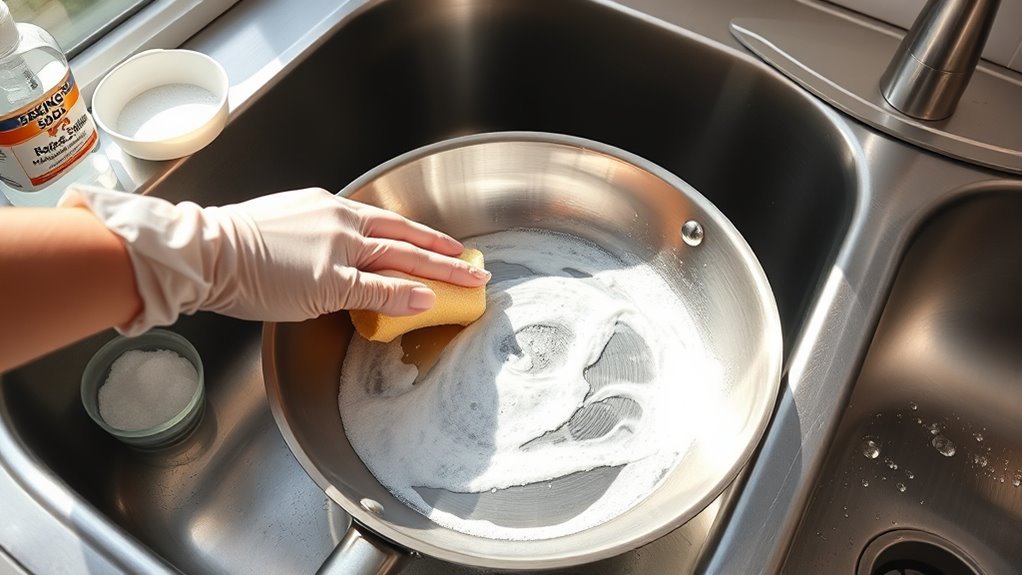
Stainless steel frying pans can develop brown stains, burnt-on food, cloudy spots, and rainbow marks. Each problem needs a slightly different cleaning method. If you want to know how to clean a stainless steel frying pan without scratching it, start with the gentlest option and work up only when needed.
Quick Answer
Let your stainless steel frying pan cool, then wash it with warm water, mild dish soap, and a non-scratch sponge. Rinse and towel-dry. Soak stuck-on food before scrubbing. Use a baking soda paste for brown residue, a cookware-safe cleaner for stubborn buildup, and white vinegar for cloudy mineral spots or rainbow discoloration.
At a Glance
| Time Required | A few minutes for routine washing; about 15 minutes to soak stuck-on food, plus cooling time |
| Difficulty | Easy for everyday cleaning |
| Tools Needed | Dish soap, warm water, soft sponge, clean towel; baking soda or vinegar for stains |
How to Clean Your Stainless Steel Frying Pan: A Step-by-Step Guide
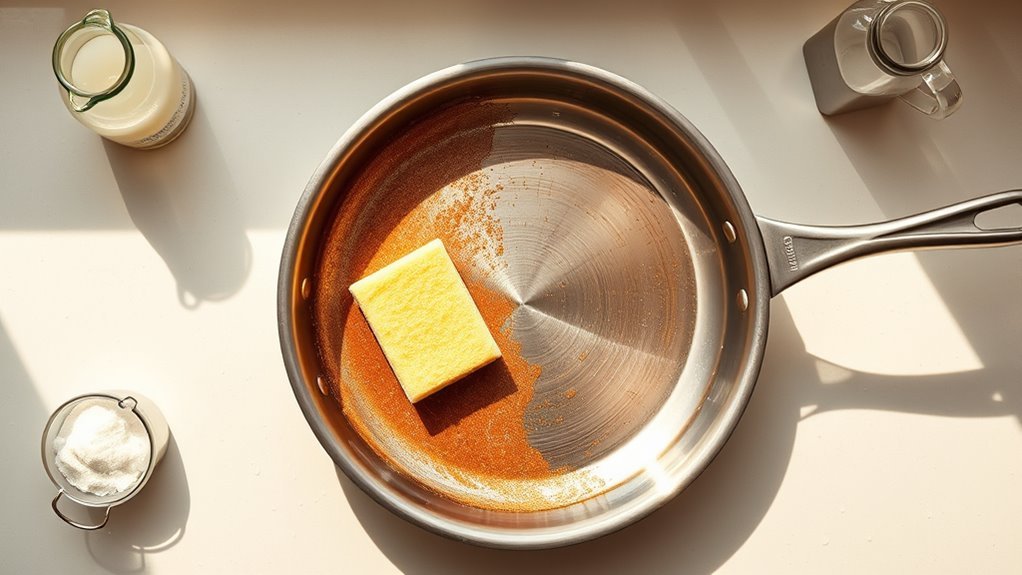
For everyday cleaning, you only need warm soapy water and a gentle sponge. The key is to let the metal cool before washing and remove all leftover grease before drying. These steps apply to an uncoated stainless steel cooking surface, not a pan with a nonstick coating.
- Let the pan cool. Take it off the burner and wait until it is safe to handle. Sudden contact with cold water can warp hot cookware.
- Remove loose food and grease. Wipe away excess oil and lift food scraps with a wooden utensil or soft cloth.
- Wash gently. Add warm water and mild dish soap. Clean the cooking surface, sides, rivets, and outer base using a soft sponge or nylon brush.
- Soak stuck-on bits. If food will not lift, add hot, soapy water after the pan has cooled and leave it for about 15 minutes. Scrub again without forcing the sponge against the metal.
- Rinse and dry. Rinse away soap and loosened residue, then wipe the inside and outside dry with a clean towel.
Soften stuck food with water before scrubbing. Gentle, repeated cleaning is better for a polished finish than aggressive scouring.
The surface should feel smooth, with no sticky grease or gritty food left behind. A rainbow sheen or pale water mark may still show after washing; those stains need a different treatment. The stainless steel cleaning instructions from a cookware manufacturer also recommend mild washing, nylon pads for difficult spots, and immediate drying.
Essential Supplies for Cleaning Stainless Steel Pans
You do not need a large cleaning kit. Start with simple supplies and bring out a stain remover only when soap and water fail. Choose tools meant for cookware rather than heavy-duty pads used on grills or ovens.
- Warm water and mild dish soap: Remove everyday grease, sauces, and food films.
- Soft sponge or long-handled nylon dish brush: Clean the base, curved sides, and spaces around handle rivets.
- Non-scratch Scotch-Brite sponge: A suitable gentler option; the brand’s Zero Scratch scrubber guidance distinguishes it from more abrasive scouring products.
- Baking soda: Make a mild cleaning paste for brown residue or sticky marks.
- Bar Keepers Friend cookware cleanser: Use on compatible uncoated stainless steel when stains resist gentler methods.
- Cleaning gloves and a dry towel: Protect your hands from cleanser and hot cleaning water; finish without leaving droplets behind.
Use a fresh sponge when possible. Trapped grit from another cleaning task can scratch a shiny finish, even if the sponge itself is gentle.
How to Remove Tough Stains and Burnt Food
Burnt food and brown stains are not always the same problem. Crusty pieces need softening, while smooth brown or black patches often come from oil that has baked onto the metal. Try these fixes in order.
For brown, sticky, or baked-on oil stains
Mix baking soda with a little water to make a spreadable paste. Apply it to the stained area, wait 5–10 minutes, then rub gently with a damp, non-abrasive sponge. Rinse and repeat if necessary.
If the stain stays, use Bar Keepers Friend made for cookware according to its label. Wet the surface, apply a small amount, scrub gently, and rinse thoroughly within one minute. The manufacturer’s cookware cleanser directions say not to leave the paste on longer, even for difficult marks.
For thick, burnt-on food
Cover the burnt area with water and a little baking soda, then warm it on the stove. As it loosens, gently lift the residue with a wooden spoon. A plain-water simmer is another good first step; for stubborn scorching, stainless steel cookware cleaning guidance describes using equal parts water and white vinegar when water alone is not enough.
Warning: Never pour cold water into a very hot pan. Handle hot cleaning liquid carefully, and never mix bleach or ammonia with cookware cleaners. Avoid oven cleaners, steel wool, and harsh scouring products that can damage the finish.
For a heavily scorched pan, the original approach of gently simmering water with baking soda or vinegar for 15–30 minutes may help loosen residue. Use them as separate treatments, not as one combined mixture. Turn off the heat and let the pan cool before washing.
Some cleaning guides also suggest soaking severe burnt-on residue overnight with powdered dishwasher detergent. Because cookware makers may warn against harsh detergents, treat this as a last resort only if your pan’s care instructions allow it. Rinse especially thoroughly afterward.
Pro Tip: After searing food, use a little water or stock to loosen the browned bits while the pan is still on low heat. You can turn those flavorful bits into a pan sauce and leave less residue to scrub later.
How to Clean Water Spots and Discoloration on Stainless Steel Pans?
White spots and rainbow marks usually need a different cleaner from burnt food. White or chalky marks often come from hard-water minerals. Blue or rainbow colors are usually heat tint, a thin surface discoloration caused by heating.
White, cloudy, or chalky water spots
Put equal parts white vinegar and water in the stainless steel pan and bring the mixture to a gentle simmer. Let it cool, empty it, then wash with dish soap and rinse. Dry with a clean towel so new droplets do not leave marks.
This treatment targets mineral residue rather than grease. A separate cookware care guide covering mineral deposits and pitting also explains that white water marks can be removed, while actual pits in the metal cannot.
Blue, purple, or rainbow discoloration
Wipe the discolored cooking surface with a soft cloth dampened with white vinegar, then wash, rinse, and dry. Unlike sticky food residue, ordinary heat tint is mainly cosmetic and does not automatically mean the pan is ruined.
Brown marks that remain after washing
Use the baking soda paste from the stain-removal section. If the stain feels smooth but stays visible, a cookware-safe stainless steel cleanser may work better. Avoid reaching straight for a rough pad, which can leave lasting scratches.
Best Practices for Long-Term Care of Stainless Steel Cookware
Good habits prevent most difficult cleaning jobs. Moderate heat, gentle washing, and careful storage protect the pan’s finish and keep grease from building into a hard brown layer. Use the same care on the outside and underside, not just the cooking surface.
| Action | Tip |
|---|---|
| Cooling | Let the pan cool before washing; avoid sudden hot-to-cold temperature changes that may cause warping. |
| Routine Cleaning | Wash after cooking with mild dish soap and a soft sponge; remove grease from the outside, too. |
| Drying | Towel-dry thoroughly after rinsing to limit hard-water spots. |
| Storage | Put a pan protector or clean dishtowel between stacked pans to reduce scratches. |
| Preheating | Warm the pan gradually over low to medium heat, with a burner suited to the base size; avoid prolonged overheating. |
Do not let salt sit in cold water in your pan. It can contribute to small permanent pits, so dissolve salt after the liquid is hot. If you see isolated tiny craters rather than a wipeable white film, cleaning will not fill them in.
Dishwasher guidance varies by model. Some stainless steel pans are labeled dishwasher-safe, while others require hand washing. Hand washing is the more cautious choice for preserving a polished finish, especially if the pan has exposed edges or special exterior materials.
Key Takeaways
- A gritty burnt patch needs softening; a smooth brown film usually needs grease and stain removal.
- Rainbow heat tint is generally cosmetic, but tiny pits in the metal cannot be washed away.
- A product labeled non-scratch is a safer starting point than an unspecified heavy-duty scouring pad.
- Baking soda and vinegar work best as separate treatments for different types of stains.
- Check your exact pan’s care instructions before using a dishwasher or strong detergent.
Frequently Asked Questions
What Are Common Mistakes When Cleaning Stainless Steel?
The biggest mistakes are putting a hot pan under cold water, scrubbing with steel wool, using harsh bleach-based cleaners, and leaving the pan wet after washing. Rough cleaning can scratch the finish, while leftover grease can become harder to remove the next time you cook. Start with soap and a soft sponge.
Can I Use Dawn Dish Soap on Stainless Steel?
Yes. Dawn dish soap can remove everyday grease from an uncoated stainless steel pan. Add a small amount to warm water, clean with a soft sponge, then rinse and dry thoroughly. Dawn’s cleaning guidance also lists stainless steel cookware among surfaces suitable for its dish-cleaning products.
How Do I Get the Brown Stuff off My Stainless Steel Pan?
Use a paste of baking soda and water on brown, sticky residue. Let it sit for 5–10 minutes, then rub with a non-scratch sponge. If that fails, try a cleaner labeled safe for stainless steel cookware. For a thick burnt crust, simmer water to soften it before scrubbing.
Can You Use Vinegar and Baking Soda on Stainless Steel Pans?
Yes, but use them separately for better results. Baking soda helps scrub brown residue, while white vinegar helps remove mineral spots and rainbow discoloration. Mixing them makes fizz, but their acid-base reaction reduces their separate cleaning effects. A chemist’s explanation of the reaction shows why fizz is not proof of stronger cleaning.
Can You Put a Stainless Steel Frying Pan in the Dishwasher?
Only if the manufacturer says that particular pan is dishwasher-safe. Many stainless steel pans can go in a dishwasher, but detergents and repeated cycles may dull finishes or affect exposed edges. If you want to preserve the shine, hand washing with soap and warm water is a dependable choice.
Is a Rainbow Stainless Steel Pan Still Safe to Use?
Ordinary rainbow heat tint is usually a cosmetic change, not a sign that the stainless steel pan has failed. Remove it with a brief white-vinegar wipe, then wash and dry. If you find cracks, a loose handle, major warping, or damage to a coating, stop and check the manufacturer’s advice.
Conclusion
For most meals, your stainless steel frying pan needs only soap, warm water, and a soft sponge. Treat burnt food, brown oil marks, and mineral stains differently instead of scrubbing harder. Dry the pan before storing it, and reach for stronger cookware cleaners only when the gentler options do not work.
Sources
- All-Clad: Care and Use: Routine cleaning, baking soda, vinegar, heat tint, and products to avoid.
- Scotch-Brite: Zero Scratch Foam Scrubber: Non-scratch sponge properties and suitable surfaces.
- Bar Keepers Friend: Cookware Cleanser and Polish: Product use, time limit, rinsing, and cleaner precautions.
- Made In: How to Clean Stainless Steel Pans: Simmering, scraping, and care for scorched cookware.
- Made In: How to Prevent Pitting: Salt damage, mineral spots, and prevention.
- Dawn: How to Clean Hard Surfaces: Dish cleaner compatibility and rinsing practices.
- ABC News: Vinegar and Baking Soda Chemistry: Explanation of the fizzing reaction and its cleaning limits.