
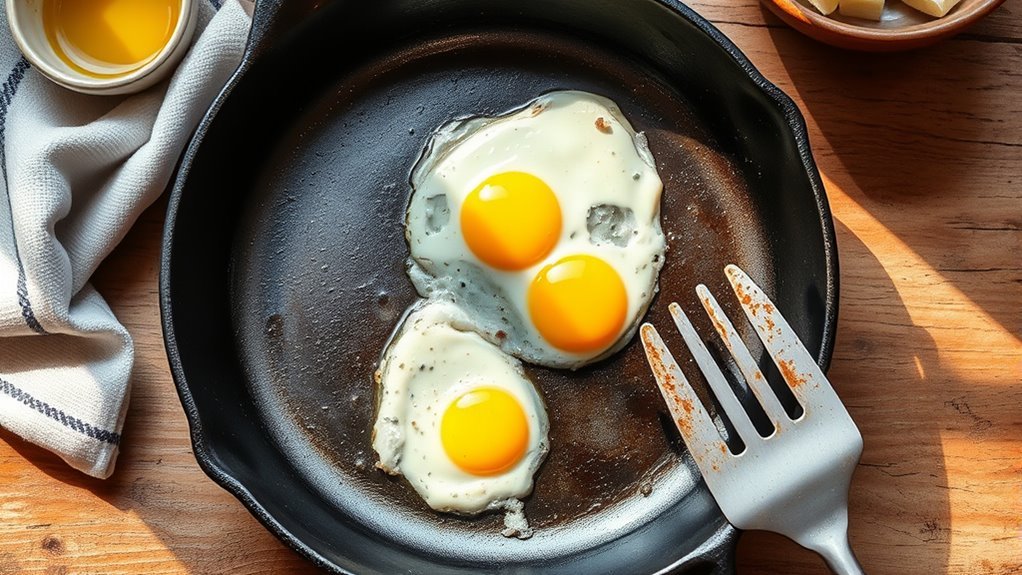
Like the age-old debate over whether a classic recipe can be improved, the question of cast iron’s nonstick capabilities often stirs up much discussion. While cast iron skillets can indeed be nonstick, this quality hinges on proper seasoning and maintenance. However, when food begins to stick, it raises concerns about the skillet’s condition. Understanding why this occurs and how to effectively restore that coveted surface is essential for any cook.
Steps to Restore Your Cast Iron’s Nonstick Surface
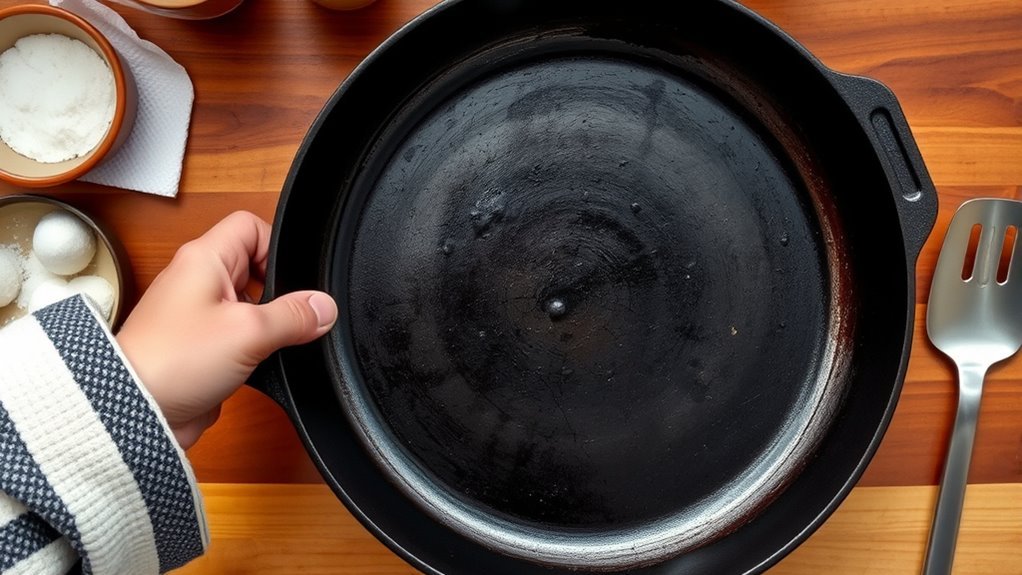
Restoring your cast iron’s nonstick surface is essential for maintaining its cooking efficiency and longevity.
Start by cleaning the skillet thoroughly with a mixture of coarse salt and water to eliminate any stuck-on food or rust. Once clean, dry the skillet completely to prevent moisture from interfering with the seasoning process.
Start by cleaning the skillet with coarse salt and water, then dry it thoroughly to ensure optimal seasoning.
Apply a thin layer of high-smoke point oil, such as flaxseed or avocado oil, to promote effective seasoning. Preheat your oven to 450°F (232°C) and place the skillet upside down on the middle rack for an hour. This allows the oil to polymerize, creating a durable nonstick layer.
For best results, repeat the seasoning process several times, and incorporate fatty foods into your cooking.
Regular maintenance, like avoiding harsh detergents and cooking with oil, will help preserve your cast iron’s nonstick properties, enhancing your culinary experience.
Why Does Food Stick to Cast Iron Skillets?
When you cook with a cast iron skillet, food sticking can be a frustrating experience, often stemming from improper seasoning or cooking techniques. Understanding the causes can help you achieve that coveted nonstick surface:
- Insufficient Seasoning: If your skillet isn’t well-seasoned, food can cling to the surface instead of sliding off.
- Too Little Oil: Cooking with inadequate oil can lead to sticking, as food bonds directly to the pan.
- High Temperatures: Excessive heat can cause food to adhere, overriding the benefits of your skillet’s seasoning.
- Acidic Ingredients: Cooking with tomatoes or vinegar can break down the seasoning, increasing the likelihood of sticking.
To maintain a nonstick surface, focus on proper seasoning and techniques.
Regularly using fatty foods can enhance the patina, making your cast iron skillet a reliable kitchen ally.
What Makes Cast Iron Naturally Nonstick?
Cast iron skillets achieve their natural nonstick properties through a process known as seasoning, where oil is baked onto the surface to create a durable, polymerized layer. This layer considerably reduces food sticking, making cooking more enjoyable.
As you regularly use your cast iron, especially with fatty foods, the seasoning improves, reinforcing its nonstick surface. Unlike chemical coatings found on nonstick pans, cast iron’s seasoning is non-toxic and can even contribute trace amounts of iron to your diet.
Proper maintenance allows your skillet to develop a smooth patina, further enhancing its nonstick qualities. Additionally, the unique heat retention and distribution of cast iron promote even cooking, which helps prevent hotspots that could lead to sticking.
Best Oils for Seasoning Cast Iron Cookware
Seasoning your cast iron cookware effectively hinges on the choice of oil. Selecting the right oil not only impacts the nonstick quality but also enhances the durability of your cookware.
Here are the top oils you should consider:
- Flaxseed Oil: Renowned for its ability to polymerize, it creates a hard, nonstick surface ideal for long-term seasoning.
- Grapeseed Oil: A budget-friendly option, it has a smoke point of about 420°F, making it suitable for high-heat cooking and effective seasoning.
- Avocado Oil: With a smoke point around 520°F, it offers a robust nonstick coating that improves with each use.
- Coconut Oil: Though it has a lower smoke point, it adds a unique flavor and can still contribute to effective seasoning.
Regularly applying a thin layer after each use can enhance your seasoning, ensuring better nonstick properties and longevity for your cast iron cookware.
Tips for Maintaining Your Cast Iron Skillet’s Nonstick Quality
To maintain your cast iron skillet’s nonstick quality, regular care is essential. Start by seasoning your cast iron pan with a thin layer of high-smoke-point oil like avocado or grapeseed oil. Cooking fatty foods, such as bacon, enhances seasoning and improves nonstick qualities over time. Always preheat your skillet before adding oil or food to guarantee it heats evenly and creates a protective barrier.
After each use, clean your skillet with hot water and a brush, steering clear of harsh detergents that can strip the seasoning. Finally, store your skillet in a dry place and consider placing a paper towel inside to absorb moisture and prevent rust.
| Maintenance Tip | Purpose | Frequency |
|---|---|---|
| Season with oil | Build nonstick surface | Every few uses |
| Cook with fatty foods | Enhance seasoning | Regularly |
| Clean with hot water | Preserve seasoning integrity | After each use |
Top Mistakes to Avoid When Using Cast Iron Cookware
Using cast iron cookware can elevate your culinary skills, but several common mistakes can undermine its effectiveness. Avoid these pitfalls to maintain your cast iron’s nonstick properties:
- Neglecting Seasoning: Regularly season your skillet. Without this, food will stick, and the pan’s performance will suffer.
- Using Harsh Cleaners: Steer clear of abrasive scrubbers or harsh detergents. They strip away the seasoning, damaging the nonstick surface.
- Cooking with Low-Fat Foods: Initially, avoid low-fat foods in cast iron. The lack of fat can hinder the development of a nonstick layer.
- Overheating the Pan: Don’t heat your skillet too quickly. Overheating can create an uneven surface, leading to sticking.
Always preheat on low to medium heat.
How Seasoning Enhances Cast Iron’s Nonstick Properties
Maintaining your cast iron cookware’s nonstick properties hinges on effective seasoning techniques. Seasoning involves applying a thin layer of oil and baking it, which initiates polymerization to create a natural nonstick surface.
Over time, with regular use and proper care, this seasoning layer improves, enhancing its nonstick capabilities and developing a rich patina that adds flavor to your dishes.
Cooking with fatty foods, especially during the initial uses, reinforces this seasoning and maximizes the nonstick effect.
However, if you neglect proper seasoning or use harsh detergents, you risk stripping away this essential layer, diminishing the pan’s effectiveness.
To fully enjoy the benefits of your cast iron cookware, prioritize maintaining a well-seasoned skillet. This not only boosts its nonstick properties but also extends the lifespan and overall cooking performance of the pan, empowering you in your culinary endeavors.
Frequently Asked Questions
What Are the Downsides of Cast Iron?
Cast iron has its downsides. You’ll find it heavy and cumbersome, especially when full. If you neglect maintenance tips, rust can develop, ruining your cookware.
Improper cooking techniques, like using acidic foods, can strip away the seasoning, leading to food sticking. To avoid these issues, regularly use effective seasoning methods.
Embrace the care your cast iron needs, and it’ll reward you with delicious meals for years to come.
Which Is Better, Cast Iron or Nonstick?
When it comes to choosing between cast iron and nonstick, cast iron often wins. Its benefits include exceptional heat retention and the ability to improve your cooking techniques over time.
Unlike nonstick pans, which can wear out, cast iron offers longevity if maintained. You’ll find that cast iron not only enhances flavors but also allows for high-heat cooking, making it a versatile tool in your kitchen arsenal.
Embrace the liberation of culinary creativity!
Why Did People Stop Using Cast Iron?
People stopped using cast iron due to perceived maintenance challenges and the rise of convenient alternatives.
Despite its rich history and versatile cooking techniques, many find the seasoning and cleaning intimidating. You might prefer lighter cookware or modern nonstick options that promise easy upkeep.
Misunderstandings about cast iron’s reactivity with acidic foods also contribute to its decline.
Embracing maintenance tips can revive your appreciation for this durable, time-honored cookware.
What Should Never Be Cooked in Cast Iron?
You wouldn’t paint a masterpiece with the wrong brush, right? Similarly, avoid cooking acidic foods like tomatoes or citrus in cast iron; they can ruin your seasoning.
Delicate proteins, like fish, often stick if your pan isn’t perfectly seasoned. High-sugar items, such as caramel, may react poorly, damaging the surface.
Stick to robust dishes that complement your skillet, and you’ll find joy in your cooking techniques while preserving the pan’s integrity.
Conclusion
To sum up, mastering your cast iron skillet’s nonstick prowess can feel like wielding a culinary superpower! By understanding the intricacies of seasoning and maintenance, you can transform your trusty pan into a slick, food-repelling marvel. Remember, it’s not just cookware; it’s a kitchen legend waiting to shine. Avoid common pitfalls, use the right oils, and soon you’ll be flipping pancakes like a pro, with nothing sticking to your skillet—except for your culinary dreams!
