
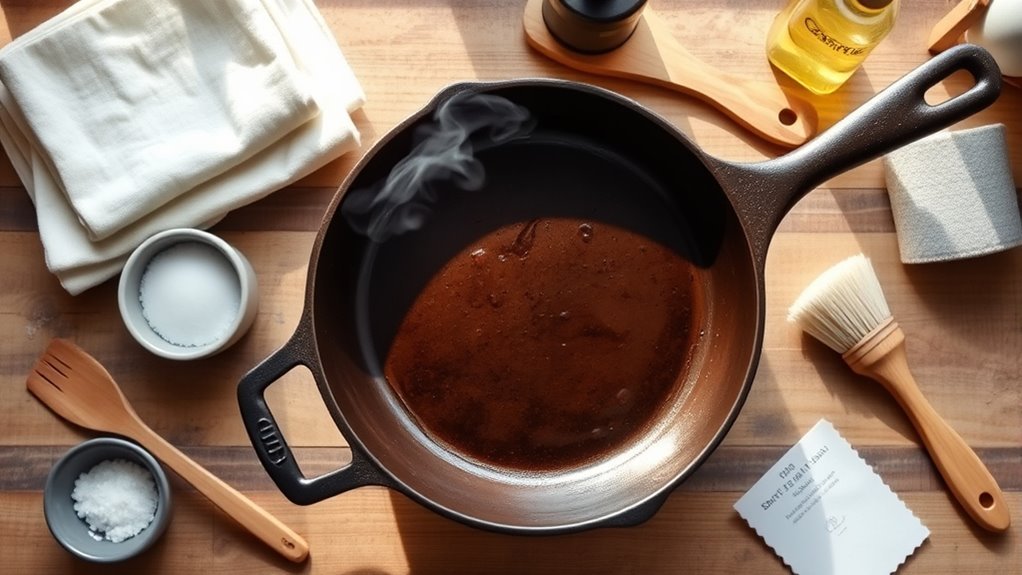
When it comes to using a cast iron skillet, the right tools and techniques can make all the difference. You’ll want to choose utensils that won’t damage the seasoned surface, and knowing how to season and clean your skillet properly is essential for longevity. Plus, understanding which oils work best can elevate your cooking. Curious about the common pitfalls to avoid and how to keep your skillet in top shape? Let’s explore.
What Utensils Are Best for Your Cast Iron Skillet?
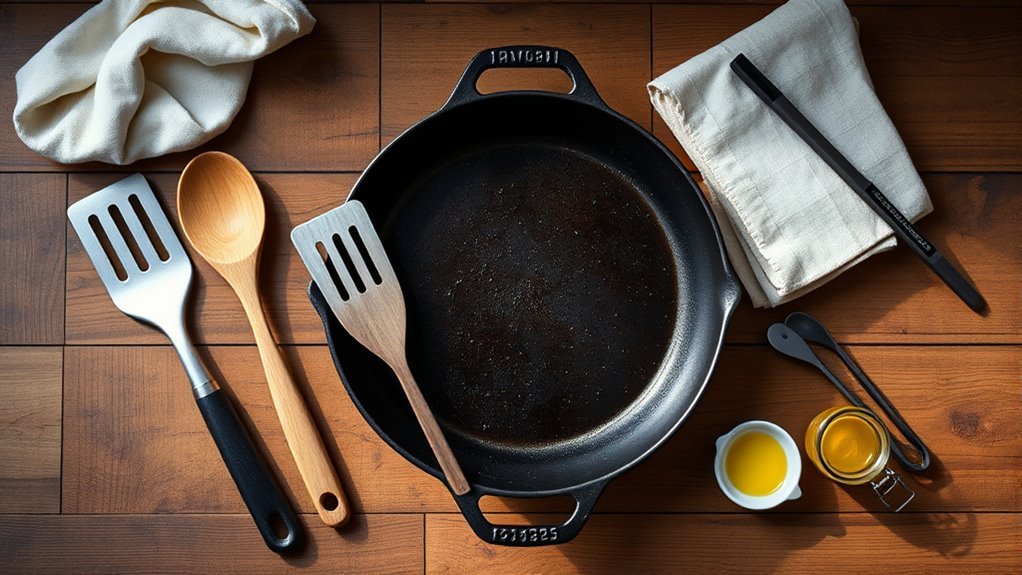
When it comes to cooking with your cast iron skillet, what utensils should you reach for? Opt for wooden or silicone utensils, like spatulas and spoons, to keep your skillet’s non-stick surface intact. These materials glide smoothly, ensuring you don’t scratch the precious seasoning.
You can also use high-quality plastic spatulas; they’re gentle yet effective for flipping and scraping.
Avoid metal utensils at all costs, as they can chip the seasoning and create rough spots, leading to sticking.
When it’s time to clean, chain mail scrubbers are your best friend. They tackle stubborn residues without damaging your skillet’s surface or stripping its seasoning.
And remember, steer clear of abrasive tools like steel wool or harsh sponges that can compromise your skillet’s longevity and cooking performance.
With the right utensils, you’ll keep your cast iron thriving for years to come!
How to Season Your Cast Iron Skillet Properly
Seasoning your cast iron skillet is essential for releasing its full potential and ensuring a non-stick cooking surface. Start with proper cleaning: use warm water and mild soap to remove any residue, then dry it thoroughly to prevent rust.
Next, apply a thin layer of oil—flaxseed or vegetable oil works well—covering the entire surface evenly without excess.
Apply a thin layer of flaxseed or vegetable oil evenly across the skillet’s surface for optimal seasoning.
To bond the oil with the cast iron, heat your skillet using the oven method; preheat to 200–220°C (about 400°F) and place it upside down for one hour.
For deeper seasoning, repeat the oiling and heating process 2–3 times to enhance its non-stick properties and durability.
Remember, regular use of your skillet, along with occasional light re-seasoning, helps maintain the seasoning and protects against rust, ensuring excellent cooking performance for years to come.
Enjoy the liberation of cooking with a perfectly seasoned skillet!
The Right Oils: Best Choices for Cooking
Choosing the right oil for your cast iron skillet can make a significant difference in your cooking experience.
For seasoning, flaxseed oil is a top choice, boasting a high smoke point of around 225°C (437°F) and its ability to polymerize, forming a durable non-stick layer.
Vegetable oil is another versatile option, perfect for both cooking and seasoning with a smoke point of about 230°C (446°F).
If you prefer a neutral flavor, canola oil fits the bill, providing a high smoke point of around 204°C (400°F), which is great for frying.
Grapeseed oil is also excellent for seasoning, with a high smoke point of approximately 216°C (420°F) and a light flavor that won’t overpower your dishes.
While coconut oil can be used for light cooking and seasoning, its lower smoke point means you’ll need to reapply it more often to maintain that essential seasoning.
Clean Your Cast Iron Skillet Safely
Cleaning your cast iron skillet safely is essential for maintaining its longevity and performance. You don’t want to lose that beautiful seasoning!
Here’s how to effectively clean your cast iron skillet:
- Clean While Warm: Always clean your skillet while it’s still warm to prevent food from hardening.
- Scrape Off Residue: Use a spatula or scraper to gently remove food without damaging the seasoning.
- Tackle Stubborn Spots: For tough spots, sprinkle coarse salt and scrub with a non-abrasive sponge or chain mail scrubber.
- Rinse and Dry: Rinse under warm water—just avoid soaking to keep rust at bay.
Finally, after drying, apply a thin layer of oil to maintain that protective layer and enhance its non-stick properties.
With these steps, you’ll keep your skillet in top shape for delicious meals ahead!
Avoid These Products on Your Cast Iron Skillet
When caring for your cast iron skillet, it’s crucial to steer clear of certain products that can jeopardize its seasoning and overall performance.
First off, avoid harsh detergents and soaps; they can strip away the seasoning, leaving your skillet vulnerable and less non-stick. Steel wool and abrasive scrubbers are off-limits too, as they scratch the surface and remove that precious protective layer.
Avoid harsh detergents and abrasive scrubbers; they can damage your skillet’s seasoning and compromise its non-stick surface.
You should also refrain from cooking acidic foods like tomatoes or vinegar in newly seasoned skillets; they can react with the iron, leaving a metallic taste that spoils your meals.
Don’t soak your cast iron skillet in water either—prolonged exposure can cause rust and damage the seasoning.
Finally, steer clear of non-stick cooking sprays. They create a sticky residue that’s tough to remove and disrupts the seasoning you’ve worked hard to maintain.
Protect your skillet, and it will serve you well for years!
Techniques for Enhancing Your Cast Iron Skillet’s Seasoning
To truly elevate the seasoning of your cast iron skillet, cooking with fat-rich foods is a game changer. These delicious meals not only enhance flavor but also reinforce that coveted non-stick surface.
Here are some techniques to supercharge your skillet’s seasoning:
- Sear Fatty Meats: Cook bacon or fatty cuts of meat to create a rich layer of seasoning.
- Oil After Cleaning: Apply a thin layer of oil after each use to maintain and protect your skillet.
- Repeat the Process: For deeper seasoning, repeat the oiling and heating multiple times to boost non-stick properties.
- Store Properly: Keep your cast iron pans in a dry place, and use paper towels between stacked pans to absorb moisture.
Remember to avoid using soap, as it can strip away the seasoning and diminish your skillet’s performance.
Common Mistakes and What to Avoid With Cast Iron Skillets
When caring for your cast iron skillet, it’s easy to make a few common mistakes that can ruin its seasoning. You might think using soap is fine, but too much can strip away that precious non-stick layer.
And don’t forget to dry it thoroughly; moisture left behind can lead to rust and damage your skillet’s integrity.
Overusing Soap Products
Overusing soap on your cast iron skillet can be a common mistake that undermines its performance. When you scrub too hard, you risk stripping away the seasoning that makes your skillet non-stick and prone to rust.
To keep your skillet in prime condition, remember these tips:
- Use mild soap sparingly—just a drop can be enough.
- Avoid using harsh detergents that can damage the natural oils.
- Clean immediately after use to maintain durability.
- Try coarse salt or a chain mail scrubber as effective alternatives.
With the right care, you can enjoy the benefits of your cast iron skillet for years to come, ensuring delicious meals without sacrificing its integrity.
Ignoring Proper Drying Techniques
Proper maintenance of your cast iron skillet doesn’t stop at avoiding harsh soaps; it extends to how you dry it after washing. Failing to dry your skillet immediately can lead to rust, threatening its integrity and longevity.
Moisture left behind increases the risk of pitting and deteriorates the seasoning layer, making cooking more challenging. To prevent these issues, use a lint-free cloth or paper towel to dry the skillet promptly.
After rinsing, heating it on medium-high guarantees all moisture evaporates before you store it. Don’t forget to apply a thin layer of oil before putting it away; this simple step protects the non-stick surface and keeps your skillet in top shape for years to come.
Storing Your Cast Iron Skillet
When it comes to storing your cast iron skillet, choosing the right environment is essential.
Keep it in a dry spot with good airflow to ward off rust, and always avoid stacking it with a lid on to prevent moisture buildup.
A simple paper towel between pans can help protect the seasoning, ensuring your skillet stays in top shape for years to come.
Ideal Storage Conditions
To keep your cast iron skillet in top shape, it’s essential to store it under ideal conditions. Proper storage prevents moisture accumulation and preserves the seasoning that makes your skillet a kitchen gem.
Here are four key tips:
- Choose a Dry Spot: Store your skillet in a well-ventilated area to avoid moisture buildup.
- Use Paper Towels: Place a paper towel between stacked skillets to absorb moisture and prevent scratches.
- Avoid Tight Covers: Don’t seal your skillet with a lid or plastic wrap; it traps moisture and invites rust.
- Lightly Oil: For long-term storage, lightly oil the surface to enhance seasoning and shield against rust.
Following these steps guarantees your skillet remains ready for culinary adventures!
Preventing Rust Accumulation
While many people cherish their cast iron skillets for their durability and cooking prowess, neglecting proper storage can lead to unwelcome rust. To safeguard your cast iron cookware, always store it in a dry place.
Before stacking skillets, place a paper towel or cloth between them to absorb moisture and protect the seasoning. Make sure your skillet is completely dry before putting it away, as any leftover moisture can invite rust.
Avoid tightly covering your skillet; instead, leave it uncovered to allow maximum airflow. Finally, don’t forget to apply a thin layer of cooking oil before storage. This not only shields against moisture but also enhances the seasoning, keeping your skillet in top shape for your culinary adventures.
What to Do When Food Sticks to Your Skillet?
Food sticking to your cast iron skillet can be frustrating, but don’t worry—there are effective ways to tackle this issue. Here’s how to handle stuck-on food like a pro:
- Warm Water Method: While the skillet’s still warm, pour in a small amount of warm water. This helps loosen stubborn residue.
- Chain Mail Scrubber: Use a chain mail scrubber to gently lift off the stuck-on food. It’s tough on residue but gentle on your skillet.
- Evaporation Trick: Heat the skillet on medium-high until all moisture evaporates. This reestablishes the non-stick surface.
- Reapply Oil: After cleaning, always apply a thin layer of oil to maintain the seasoning and prevent future sticking.
Recipes to Maximize Your Cast Iron Skillet’s Potential
Releasing the full potential of your cast iron skillet opens up a world of culinary delights.
Try baked Fontina, where you’ll broil gooey cheese with olive oil, garlic, and herbs until it’s irresistibly bubbly—perfect for your next gathering.
For a fresh meal, sauté onions and cherry tomatoes before searing salmon fillets, creating vibrant layers of flavor.
If you crave dessert, whip up skillet brownies that blend semisweet chocolate chips with a hint of coffee for a rich treat.
Want something savory? Cook juicy chicken thighs in your skillet, finishing with a creamy mustard sauce that showcases its versatility.
Finally, elevate your dinner with panko-crusted salmon, enhancing both flavor and texture.
With each recipe, you’ll appreciate your skillet’s ability to distribute even heat, making cooking effortless and delicious.
Just remember to use oil generously for a flawless experience!
Frequently Asked Questions
What’s the Best Oil to Put on Cast Iron?
The best oil to put on cast iron is flaxseed oil, thanks to its high smoke point and excellent oil absorption rates. It creates a durable seasoning layer that enhances your skillet.
For seasoning maintenance tips, apply a thin layer to avoid stickiness. Vegetable and grapeseed oils are great alternatives, too.
Remember to store your oil properly in a cool, dark place to keep it fresh for your next cooking adventure!
What Ruins Cast Iron Seasoning?
Excessive soap and abrasive scrubbing can chip away at your skillet’s protective armor.
Common mistakes like soaking it in water or cooking acidic foods for too long can lead to a rust-prone battlefield.
You’ll find that improper cleaning techniques and neglecting to maintain oil can invite trouble.
Keep your cooking temperature in check and avoid those food types that wear down your skillet’s seasoning.
Treat it right, and you’ll enjoy a loyal companion in the kitchen!
Is Dawn Dish Soap Good for Cast Iron?
Dawn dish soap can be used on your cast iron skillet, but do it sparingly. Frequent use might strip away the seasoning, impacting your cooking techniques.
For stubborn residue, consider soap alternatives like a chain mail scrubber or coarse salt. Remember to rinse thoroughly and add a thin layer of oil afterward for rust prevention.
These simple maintenance tips keep your skillet in top shape, enhancing your culinary adventures while preserving its non-stick properties.
Do You Put Oil on Cast Iron After Seasoning?
Absolutely, you should put oil on your cast iron after seasoning.
Imagine you’ve just perfected your skillet’s seasoning techniques; a light layer of oil enhances its non-stick surface and guards against rust. Using oils like vegetable or flaxseed guarantees durability.
As a maintenance tip, always wipe off excess oil before storage. This way, you’re ready for any cooking methods, and your skillet remains in top shape for all your culinary adventures!
Conclusion
By following these tips, you’ll keep your cast iron skillet in tip-top shape, ensuring it serves you well for years to come. Remember, a well-cared-for skillet is like having a trusty friend in the kitchen; it only gets better with time. So, embrace the art of seasoning, choose your utensils wisely, and clean it gently. With a little love and attention, your skillet will be ready to tackle any culinary adventure you undertake!
