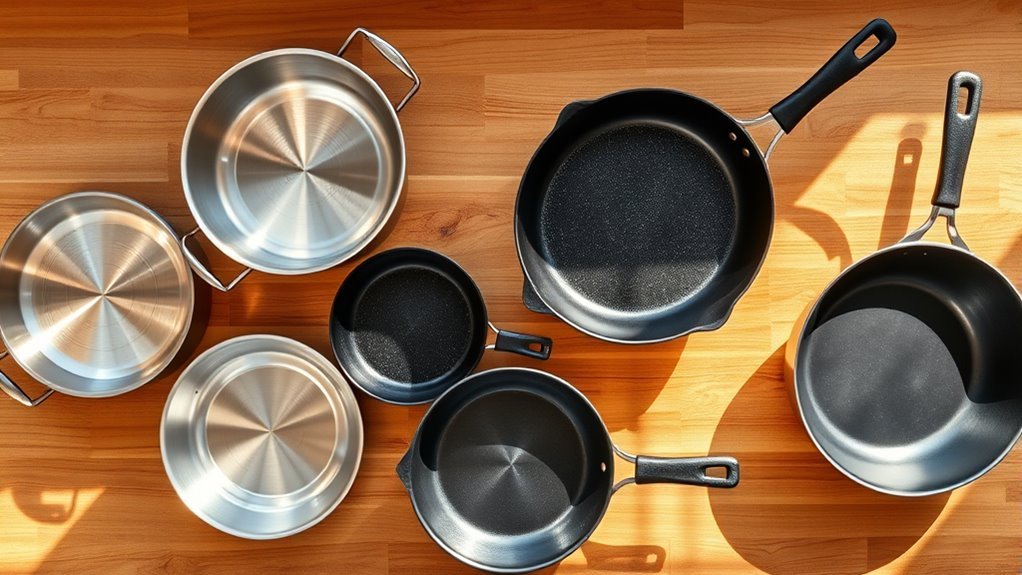
When you think about pots and pans, the materials they’re made from play an essential role in your cooking experience. Whether it’s the durability of stainless steel or the heat retention of cast iron, each option has its advantages. Understanding these materials can greatly impact your culinary results. But what about the newer nonstick coatings and eco-friendly alternatives? Let’s explore how these choices can elevate your cooking game.
Understanding Cookware: Materials and Types
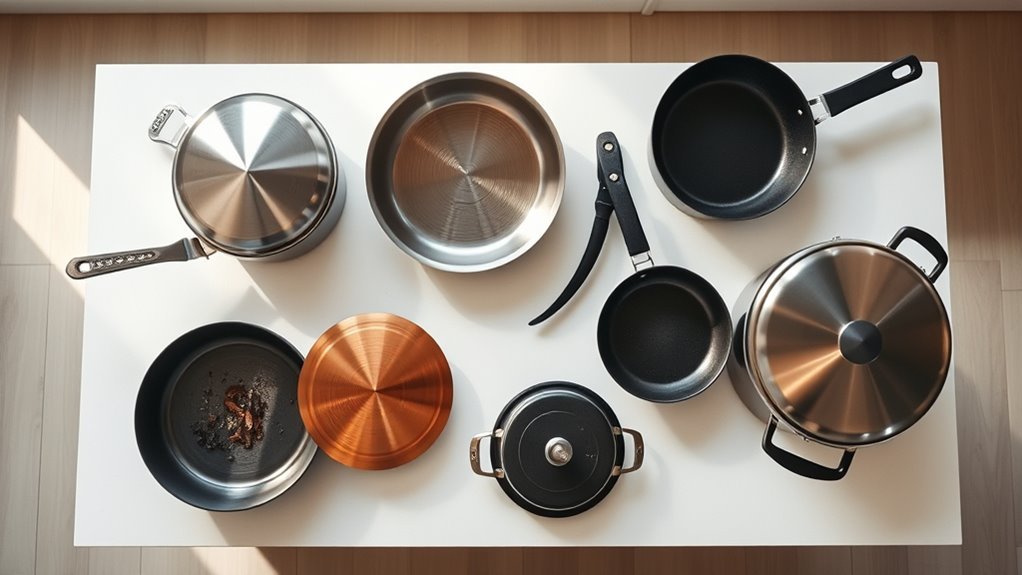
When you step into the kitchen, the type of cookware you choose can make a world of difference in your culinary experience. Understanding cookware materials is key to revealing your cooking potential.
Stainless steel, for instance, offers durability and non-reactivity, often paired with aluminum or copper to enhance heat conduction. It’s dishwasher safe, making cleanup a breeze.
Stainless steel combines durability and non-reactivity, often enhanced with aluminum or copper, and is dishwasher safe for easy cleanup.
On the other hand, cast iron cookware is a timeless favorite. It excels at retaining heat and can be seasoned for a natural nonstick surface, though it does require some maintenance to prevent rust.
Aluminum is lightweight and great at conducting heat, but watch out for its reactivity with acidic foods unless it’s coated.
Finally, copper is the king of heat conduction, delivering rapid and even heating, but you’ll need a nonreactive lining to keep your meals safe.
Choose wisely, and elevate your cooking game!
The Evolution of Cookware Materials
Cookware materials have come a long way from the clay and stone vessels of ancient times.
As metallurgy advanced, you saw the rise of bronze, iron, and later, aluminum and stainless steel, each bringing unique benefits to your kitchen.
Today, innovations like nonstick coatings have transformed how you cook and clean, making your culinary experience more efficient and enjoyable.
Historical Material Development
Long before modern kitchens filled with high-tech gadgets, early humans relied on simple pottery vessels for cooking, a practice that dates back to around 19,600 years ago in ancient China. This historical material development laid the groundwork for future innovations.
As time marched on, the Medieval period introduced bronze and iron cookware, though their adoption was slow due to costs and limited metallurgy. By the 17th century, you’d find brass, copper, and iron cookware in kitchens across Asia and Europe, showcasing regional materials and advancements.
The 19th and 20th centuries ushered in significant metallurgical progress, paving the way for mass production of stainless steel and aluminum cookware. Each evolution has enhanced cooking efficiency and safety, transforming your culinary experience.
Modern Cookware Innovations
As culinary needs evolve, so do the materials that make up modern cookware, enhancing both performance and safety in your kitchen. Innovations like hard-anodized aluminum offer strength and non-reactivity, elevating nonstick applications. Clad cookware combines stainless steel with conductive metals, ensuring exceptional heat distribution and durability.
| Material | Benefits | Innovations |
|---|---|---|
| Hard-Anodized Aluminum | Enhanced strength, non-reactive | Ideal for nonstick cooking |
| Clad Cookware | Improved heat distribution | Durable, non-reactive |
| Ceramic Coatings | PFAS-free, safer options | Health-conscious choice |
| Diamond-Infused | Scratch-resistant, thermal conductivity | Long-lasting performance |
| Borosilicate Glass | Heat-resistant, versatile | Safe for microwaves |
These modern cookware innovations empower you to cook with confidence and creativity!
Metal Cookware Types and Their Benefits
When it comes to metal cookware, each type brings unique benefits to your kitchen.
For instance, stainless steel offers durability and a non-reactive surface, while copper’s superior heat conductivity guarantees your dishes cook evenly.
Plus, nonstick coatings can make cooking and cleanup a breeze, allowing you to enjoy your culinary creations without the hassle.
Stainless Steel Advantages
Stainless steel cookware offers a remarkable blend of durability and versatility that makes it a top choice for both novice and seasoned chefs.
Crafted from a mix of steel, chromium, and nickel, it’s resistant to rust and staining, ensuring your kitchen stays pristine. The 18/10 stainless steel grade is particularly favored, providing outstanding corrosion resistance and enhanced longevity.
What’s more, its non-reactive nature means acidic foods won’t alter the flavors of your dishes, keeping them pure. Clad stainless steel options further enhance heat distribution with layers of conductive metals, perfect for high-heat cooking.
Plus, being dishwasher, oven, and broiler safe, it’s low maintenance, allowing you to focus on your culinary creations without worry.
2. Copper Heat Conductivity
Copper cookware stands out in the culinary world for its exceptional heat conductivity, making it the go-to choice for chefs who demand precise temperature control.
As a superior heat conductor, copper provides rapid and even heating, allowing you to make quick adjustments while cooking delicate sauces. This responsiveness is why professional chefs love it.
However, when using copper, keep in mind its reactivity with acidic foods; that’s why most copper cookware is lined with nonreactive metals like stainless steel or tin.
While it can be a bit pricey, the aesthetic appeal and outstanding cooking performance often justify the investment for both serious home cooks and professionals.
Just remember, copper isn’t suitable for induction cooking and requires regular care to maintain its shine.
3. Nonstick Coating Benefits
Cooking with nonstick coatings brings a whole new level of convenience to your kitchen. Whether you opt for PTFE-coated nonstick or ceramic cookware, these options enhance your culinary experience and promote healthier eating.
Here are some key benefits:
- Requires minimal oil for cooking
- Easy cleanup, saving you time
- Ideal for delicate foods like eggs and pancakes
- Lightweight, reducing fatigue during meal prep
- PTFE-coated options offer durability comparable to stainless steel
Embracing nonstick coatings means you can enjoy delicious meals without the hassle of sticking or burning.
While ceramic cookware is easier to clean, PTFE-coated nonstick provides long-lasting performance, ensuring your kitchen stays both efficient and enjoyable.
How Nonstick Cookware Coatings Enhance Performance
When you choose nonstick cookware, you’re not just opting for convenience; you’re enhancing your cooking experience. Nonstick coatings, primarily made from PTFE or ceramic, transform how you cook.
PTFE surfaces, known for being chemically inert, allow you to use less oil or fat, promoting healthier meals without sacrificing flavor. On the other hand, ceramic coatings offer a more eco-friendly option, harnessing silica for a natural touch.
PTFE surfaces reduce the need for oil, fostering healthier meals, while ceramic coatings provide an eco-friendly alternative with a natural feel.
Both types can withstand impressive heat—up to 260°C (500°F) for PTFE and around 370°C (700°F) for ceramic—ensuring versatility for various cooking methods.
To keep your nonstick cookware performing at its best, regular maintenance is key. Avoiding metal utensils and extreme heat can prolong the life of these coatings, ensuring you enjoy smooth, effortless cooking and easy cleanup every time you step into the kitchen.
Embrace the liberation that nonstick cookware brings to your culinary adventures!
Exploring Non-Metallic Cookware Options
Exploring non-metallic cookware options opens up a world of possibilities beyond traditional pots and pans.
These versatile materials can elevate your cooking experience, offering unique benefits tailored to your needs.
- Ceramic: Known for its nonstick properties, it handles moderate temperatures but may chip.
- Glass: Durable and non-reactive, borosilicate glass is safe for conventional and microwave ovens.
- Silicone: Flexible and heat-resistant up to 220 °C (428 °F), it releases food effortlessly.
- Stoneware: Excellent for baking, it retains heat well but requires careful handling to prevent cracks.
- Nonstick options: Ideal for low-fat cooking, these surfaces make cleanup a breeze.
How Material Selection Influences Cooking Performance
Selecting the right cookware material can dramatically shape your culinary outcomes. Think about heat conductivity; copper excels, while aluminum follows closely.
Stainless steel, though less efficient, is perfect for acidic dishes due to its non-reactive properties. If you’re cooking with cast iron, you’ll enjoy its exceptional heat retention, but remember to preheat it properly to avoid uneven cooking.
Stainless steel is ideal for acidic dishes, while cast iron offers remarkable heat retention—just remember to preheat for even cooking.
The construction of your cookware also plays a crucial role. Clad designs combine materials to optimize both heat distribution and durability, enhancing your cooking experience.
Nonstick coatings, like PTFE and ceramic, simplify cleanup and reduce oil usage, but their effectiveness can wane at high temperatures or with abrasive tools.
Ultimately, choosing the right cookware material isn’t just about functionality; it’s about elevating your culinary freedom and creativity. With the right tools, you can transform ordinary meals into extraordinary ones.
Cookware Safety: What to Watch Out For
Cooking with the right materials enhances your culinary experience, but safety should always be a top priority. Here are some cookware safety tips to keep in mind:
- Watch out for aluminum cookware: It can leach into food, especially with acidic dishes, posing potential health risks.
- Beware of nonstick pans: If overheated, PTFE (Teflon) can release toxic fumes, affecting indoor air quality.
- Inspect your nonstick surfaces: Chipped or scratched pans may leach toxins, so replace them when damaged.
- Check for harmful substances: Older cookware could contain lead or PFOA, which can seep into your food.
- Choose high-quality stainless steel: While generally safe, it can leach trace heavy metals; opt for food-grade options to minimize risks.
Choosing the Right Cookware for Your Cooking Style
How can you elevate your culinary creations if you don’t choose the right cookware? Understanding the materials and their properties is key. Here’s a quick guide to help you decide:
| Material | Best For | Key Features |
|---|---|---|
| Stainless Steel | Acidic foods | Durable, non-reactive |
| Nonstick Surface | Easy cleanup | Reduces oil usage |
| Carbon Steel | High-heat techniques | Excellent heat retention, seasoning |
If you’re after versatility, opt for stainless steel for its durability or high-quality nonstick for effortless cooking. Carbon steel is fantastic for searing, while aluminum works well if coated. Remember to have a range of sizes from skillets to stockpots to match your cooking methods. Choose wisely, and you’ll liberate your culinary potential!
Frequently Asked Questions
Which Material Is Healthiest for Pots and Pans?
For a healthy choice in pots and pans, consider stainless steel, cast iron, and ceramic coatings.
Stainless steel is non-reactive, making it great for acidic foods.
Cast iron, when seasoned, offers durability and adds iron to your diet, perfect for most people.
Ceramic coatings provide a Teflon-free nonstick option, ensuring your cooking stays safe.
Each material has its strengths, so pick what suits your cooking style and enjoy a healthier culinary experience!
Which Pots and Pans Are Not Toxic?
When you cook, think of your pots and pans as the stage for your culinary performance.
For a non-toxic experience, choose ceramic coatings, which offer safety and style, or go for sturdy stainless steel that won’t leach harmful chemicals.
Cast iron is another great option, providing a natural, chemical-free surface while adding iron to your diet.
Embrace these materials, and you’ll create delicious meals without the worry of toxins lurking in your cookware.
What Material to Avoid in Pots and Pans?
You should avoid pots and pans with nonstick coatings that aren’t labeled PTFE- and PFOA-free, as they can leach harmful chemicals.
Uncoated aluminum cookware can react with acidic foods, altering flavors and health safety.
While stainless steel offers great durability and non-reactivity, verify it’s free from any toxic additives.
Choosing the right materials empowers your cooking, keeping your meals not just delicious, but also safe and healthy.
Embrace liberation in your kitchen!
Is Made in Pots and Pans Non-Toxic?
Absolutely, Made In pots and pans are non-toxic!
Think of them as your kitchen’s superhero, ensuring safe cooking without harmful coatings. Crafted from high-quality stainless steel, they skip the toxic PTFE and PFOA found in some nonstick options.
With a focus on cookware safety, you can whip up your favorite dishes without worrying about leaching chemicals. Embrace the liberation of cooking with confidence, knowing your tools are both effective and environmentally friendly!
Conclusion
In the grand symphony of cooking, each pot and pan plays its unique note, whether it’s the robust timbre of cast iron or the delicate trill of ceramic. By understanding the materials that shape your cookware, you can orchestrate culinary masterpieces with confidence. As you select the right tools for your kitchen, remember: the right material can turn a simple dish into a culinary canvas, inviting flavors to dance and aromas to sing. Cook with intention, and let your creativity flourish!