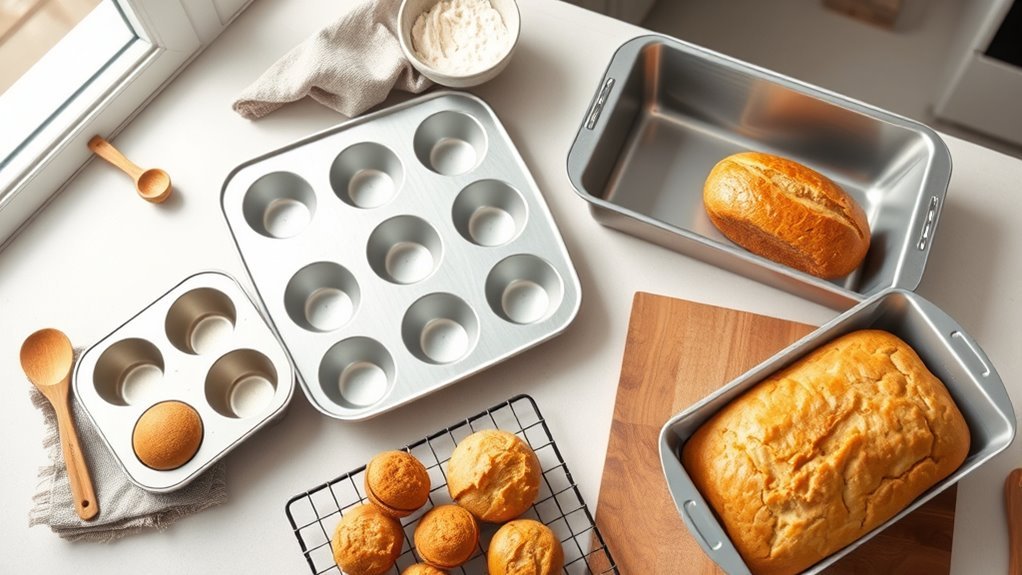
Aluminized steel bakeware combines a strong steel base with a protective aluminum-based coating. It is widely used for baking sheets, cake pans, muffin tins, and bread pans because it offers durability and reliable baking performance. But is it better than regular aluminum or stainless steel, and is it safe for everyday baking? Understanding its construction, temperature limits, and care requirements will help you choose the right pans.
Quick Answer
Aluminized steel bakeware is steel coated with an aluminum-based alloy to improve corrosion resistance and baking performance. It is strong, distributes heat reliably, and often includes a separate nonstick coating. Most popular home-baking lines have a 450°F (232°C) oven limit, although specifications vary. Follow the manufacturer’s instructions for safe use and cleaning.
Last checked: November 14, 2026. Dates and figures were verified against official sources.
Key Takeaways
- Aluminized steel has a steel core, while regular aluminum bakeware is made primarily from aluminum.
- The aluminum-based coating protects the steel against corrosion. A separate nonstick layer may improve food release.
- The finished pan’s oven-temperature rating matters more than the industrial heat resistance of aluminized steel.
- Heavy-gauge construction, reinforced rims, and proper handling help reduce warping.
- Hand washing, non-metal utensils, and dry storage help protect the surface.
What Is Aluminized Steel Bakeware?
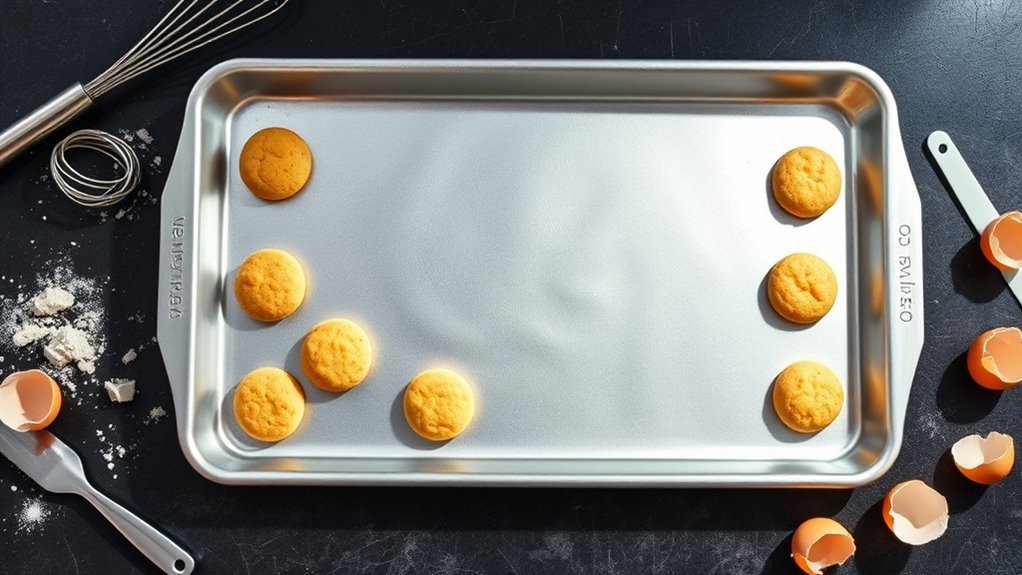
Aluminized steel bakeware is made from steel that has been coated with aluminum or an aluminum-silicon alloy. The steel provides strength and shape, while the outer metallic layer helps resist corrosion and supports heat transfer.
This material is different from solid aluminum. An aluminized steel pan has a steel core, so its heat response and weight depend on the thickness and construction of that core.
You will often find aluminized steel in professional-style baking sheets, loaf pans, cake pans, and muffin tins.
Aluminized steel combines a rigid steel core with a protective aluminum-based surface, making it a practical material for long-lasting bakeware.
One detail matters when choosing a pan: aluminized steel is not automatically nonstick.
The aluminum-based metal layer and a nonstick food-release coating are two different things. Some manufacturers add silicone-based or other nonstick coatings, while others sell uncoated aluminized steel pans.
For example, USA Pan offers both coated and uncoated aluminized steel bakeware. The coated versions are designed for easier food release, while uncoated versions may need grease, flour, or parchment paper.
Aluminized steel bakeware is also generally easier to lift than heavy cast iron. However, it may weigh more than an equivalent thin aluminum pan.
How Is Aluminized Steel Made?
Manufacturers commonly make aluminized steel by passing steel through a bath of molten aluminum-based metal. This process, called hot-dip coating, bonds a protective metallic layer to the steel surface.
The resulting material keeps the structural strength of steel while gaining additional protection against oxidation and corrosion.
The ASTM A463/A463M specification covers hot-dip aluminum-coated steel sheet and recognizes two main coating types.
- Type 1: Uses an aluminum-silicon alloy. A common example contains about 90% aluminum and 10% silicon. Silicon helps the coating bond to the steel and supports performance in high-temperature applications.
- Type 2: Uses commercially pure aluminum. It is mainly intended for applications requiring corrosion resistance.
Type 1 aluminized steel is particularly relevant to heat-resistant industrial products and commercial bakeware.
Another useful characteristic is its ability to reflect radiant heat. For example, ArcelorMittal’s Alusi coating can reflect approximately 80% of radiant energy under specified industrial conditions.
However, this reflective property does not mean that every aluminized steel baking pan spreads oven heat 80% more efficiently. Actual baking results depend on the entire pan, including its thickness, finish, coating, and shape.
Manufacturers form the coated steel into baking pans and may add rolled rims, surface textures, or separate nonstick coatings.
These finishing details affect how well the pan resists bending, releases food, and handles repeated baking.
Benefits of Aluminized Steel Bakeware
The main benefits of aluminized steel bakeware are durability, corrosion resistance, and consistent baking performance. Its steel core gives pans rigidity, while the aluminum-based coating adds useful surface protection.
Many manufacturers combine this construction with reinforced rims and nonstick finishes to make everyday baking easier.
| Feature | Description | Benefit |
|---|---|---|
| Heat Distribution | Aluminum-based coating and carefully designed steel construction | Supports consistent baking and browning |
| Nonstick Surface | Available on many models as a separate coating | Makes food release and cleanup easier |
| Oven Temperature | Many home models are rated to 450°F (232°C) | Suitable for common baking recipes within the rated limit |
| Strength and Corrosion Resistance | Rigid steel protected by an aluminum-based layer | Helps maintain pan shape and resist rust |
Why Does Pan Thickness Matter?
Pan thickness is an important part of durability. Heavy-gauge steel generally resists bending and flexing better than thinner material of similar construction.
Rolled or reinforced edges can also help a baking sheet maintain its shape during repeated heating and cooling.
However, no metal baking pan is completely warp-proof. Rapid temperature changes, uneven heating, and poor handling can still damage a pan.
Does Aluminized Steel Produce Better Browning?
Aluminized steel can produce consistent browning, but its performance depends on the pan’s surface finish and your recipe.
A darker baking surface often absorbs more radiant heat than a shiny, lighter surface. This can affect how quickly the bottoms and edges of baked goods brown.
For that reason, two aluminized steel pans with different finishes may produce slightly different results.
When using a new pan, watch your first batch of cookies or cake closely. Make small adjustments to baking time if needed rather than assuming every pan behaves the same way.
Typical Applications for Aluminized Steel Bakeware
Aluminized steel works well for many common baking tasks, from cookies and muffins to bread and casseroles. Its rigid construction makes it especially useful for pans that must keep their shape during repeated use.
Common applications include:
- Baking sheets: Suitable for cookies, biscuits, dinner rolls, and roasted vegetables.
- Loaf pans: Useful for sandwich bread, banana bread, pound cake, and meatloaf.
- Muffin tins: Designed for muffins, cupcakes, and other individual baked goods.
- Cake pans: Available in round, square, and rectangular shapes for cakes and brownies.
- Roasting and casserole pans: Useful for oven-baked savory dishes when their coating and temperature ratings permit.
For cookies, a light-colored baking sheet can help you monitor browning without the aggressive bottom heat associated with some dark pans.
For bread, a rigid loaf pan supports the dough as it rises and helps maintain a consistent loaf shape.
For muffins and cakes, a nonstick finish can make releasing delicate baked goods easier. However, using paper liners or following recipe greasing instructions may still improve results.
Pro Tip: When choosing a baking sheet, look at its usable interior dimensions rather than only its outside measurements. Large rolled rims and handles can reduce the available baking surface.
Health and Safety Considerations for Aluminized Steel Bakeware
Aluminized steel bakeware is generally suitable for food preparation when it is made for food contact and used according to the manufacturer’s instructions. Safety depends on the pan’s condition, its additional coatings, and the temperature at which you use it.
One common concern is aluminum transferring into food.
According to Health Canada’s cookware safety guidance, worn or pitted aluminum cookware can transfer more aluminum into food. Acidic or salty foods can increase that transfer.
This does not mean all aluminum-containing bakeware is dangerous. It means surface condition, food type, and correct use deserve attention.
| Aspect | Detail | Recommendation |
|---|---|---|
| Material Safety | Food-contact suitability depends on construction and surface condition | Choose food-grade products and inspect them regularly |
| Temperature Resistance | Many home-baking products are rated to 450°F (232°C) | Follow the specific product’s oven limit |
| Surface Coatings | Nonstick finishes have their own temperature and care requirements | Avoid overheating and replace badly damaged coatings |
Is Aluminum Leaching a Serious Concern?
Aluminum exposure can come from food, water, cookware, and other everyday sources. The amount transferred from a baking pan depends on several factors.
Ordinary use of properly maintained food-grade bakeware is not the same as prolonged contact between acidic food and a badly damaged aluminum surface.
To reduce unnecessary metal transfer, avoid prolonged contact with highly acidic or salty foods in worn, uncoated aluminum surfaces.
If a pan has deep corrosion, exposed rusting steel, or extensive damage to its food-contact surface, replacing it is a sensible precaution.
Are Nonstick Coatings on Aluminized Steel Safe?
Many aluminized steel pans have an added nonstick coating. The type of coating varies by brand and product line.
For example, USA Pan uses a silicone-based Americoat coating on many of its baking products. Other manufacturers offer different nonstick finishes.
Do not assume that every nonstick aluminized steel pan is PTFE-free or uses the same coating chemistry.
The safest approach is to identify the actual coating and follow its temperature, cleaning, and utensil requirements.
Warning: Do not use the steel’s industrial heat-resistance rating as the oven limit for a finished baking pan. Nonstick coatings can have much lower temperature limits. Avoid broiling or using an oven’s self-cleaning cycle with coated bakeware unless the manufacturer specifically permits it.
Research into aluminum exposure and long-term health effects continues. For most home bakers, proper temperature control and maintaining the pan’s surface are practical steps to reduce avoidable risks.
Caring for Aluminized Steel Bakeware
Proper cleaning and storage help aluminized steel bakeware last longer. The main goals are to protect its surface, avoid sudden temperature changes, and prevent moisture from causing corrosion.
You should also follow any special instructions for the pan’s nonstick coating.
Proper Cleaning Techniques
Hand washing is generally a good way to protect aluminized steel bakeware, especially when it has a nonstick coating.
The manufacturer’s care instructions take priority, but you can use this basic cleaning routine:
- Let the pan cool: Allow hot bakeware to return to a safe handling temperature before washing.
- Use warm, soapy water: Clean with mild dish soap and a soft sponge or cloth.
- Remove stuck-on food gently: Use a non-abrasive cleaning tool rather than scraping with metal.
- Rinse thoroughly: Remove soap and food residue from the corners and edges.
- Dry completely: Wipe the pan with a clean towel before storing it.
Avoid steel wool, harsh scouring powders, and metal scrapers because they can damage protective surfaces.
For baked-on residue, follow the manufacturer’s soaking instructions. Some products allow brief soaking, while others specifically advise against it.
For example, USA Pan’s bakeware care instructions recommend hand washing and avoiding soaking its products.
Can Aluminized Steel Bakeware Go in the Dishwasher?
Some aluminized steel bakeware is dishwasher-safe, but not all of it. Dishwasher suitability depends on the product and its surface coating.
Many manufacturers prefer hand washing because strong detergents and repeated dishwasher cycles may affect a pan’s appearance or finish.
Check the individual model before using a dishwasher. An uncoated pan should not automatically be treated like a dishwasher-safe nonstick pan.
Storage Recommendations
Store aluminized steel bakeware in a clean, dry location after washing. Moisture trapped between stacked pans can contribute to staining or corrosion, especially if the protective surface is damaged.
You can stack pans to save space, but place a soft cloth, paper towel, or protective liner between them.
This reduces rubbing between the surfaces and helps prevent scratches.
Keep sharp metal utensils away from the food-contact surfaces during storage.
Inspect your pans periodically for deep scratches, dents, rust, and peeling coatings.
Minor discoloration does not necessarily mean a pan is unsafe. Surface staining can occur during normal baking without affecting performance.
However, extensive peeling, rust, or severe physical damage is a good reason to replace the pan.
How Does Aluminized Steel Stack Up Against Other Bakeware?
Aluminized steel offers a useful balance between the rigidity of steel and the surface properties of aluminum. However, it is not automatically better than every other bakeware material.
Solid aluminum, stainless steel, and cast iron each have strengths that may suit different baking tasks.
| Material | Main Strength | Main Limitation | Best For |
|---|---|---|---|
| Aluminized Steel | Rigid steel construction with corrosion-resistant coating | Surface damage and coating temperature limits | Everyday baking sheets, loaf pans, and muffin tins |
| Aluminum | Excellent heat conductivity and relatively low weight | Thin pans can bend; bare surfaces can react with acidic foods | Cookies, pastries, and roasting |
| Stainless Steel | Good corrosion resistance and easy maintenance | Lower thermal conductivity than aluminum | Roasting and recipes involving acidic ingredients |
| Cast Iron | High heat retention and heavy-duty construction | Heavy and requires suitable care | Cornbread, skillet desserts, and rustic bread |
Heat Distribution Efficiency
Aluminum is a better heat conductor than ordinary steel. That is why pure aluminum pans are often valued for their fast response to oven heat.
Aluminized steel combines a steel core with an aluminum-based surface, but the entire pan does not conduct heat exactly like solid aluminum.
Its baking performance depends on the thickness and shape of the steel, the surface finish, and the oven conditions.
A well-designed aluminized steel pan can bake evenly. However, it would be misleading to claim that it always heats faster than a solid aluminum pan.
Other factors also matter:
- Surface color: Dark finishes may promote faster browning than lighter finishes.
- Pan thickness: Changes how the pan absorbs, stores, and transfers heat.
- Nonstick coating: Primarily affects food release and surface maintenance, not the metal’s basic conductivity.
- Oven placement: Rack position and airflow can affect how evenly food bakes.
If your main priority is quick heat response, solid aluminum is worth considering. If you want a rigid pan with a protective finish, aluminized steel is a strong alternative.
Durability Compared to Alternatives
Aluminized steel is durable because its steel base provides strength and rigidity. Many baking pans also have reinforced edges to help resist warping.
The aluminum-based coating protects against corrosion, but that protection can be reduced if the surface becomes deeply damaged.
Stainless steel resists rust without requiring an aluminum coating. Cast iron offers exceptional toughness but is substantially heavier than most baking sheets.
Aluminized steel often provides a useful middle ground, especially for larger pans that you need to lift and handle regularly.
However, a nonstick aluminized steel pan is not necessarily more scratch-resistant than every nonstick alternative. The finish and how you use it determine how long the food-release surface lasts.
What Temperature Can Aluminized Steel Bakeware Withstand?
The maximum oven temperature depends on the finished pan, not simply the type of steel used to make it.
For example, many USA Pan, All-Clad Pro-Release, and Williams Sonoma Goldtouch Pro products are rated to 450°F (232°C).
Some commercial baking equipment is designed for higher temperatures. Chicago Metallic’s commercial bakeware guidance states a maximum baking temperature of 700°F for its pans.
That higher rating does not apply to every home-baking product.
Industrial aluminized steels can tolerate even higher temperatures in specific applications. However, those material specifications must not be used as consumer baking-pan ratings.
Note: If a recipe requires a very hot oven, such as for certain pizzas or artisan breads, choose a pan or baking surface specifically rated for that temperature. Do not assume ordinary nonstick aluminized steel bakeware is suitable.
Common Questions Before Buying Aluminized Steel Bakeware
Before buying an aluminized steel pan, consider its construction, surface coating, temperature limit, and care requirements. These details are often more useful than the material name alone.
- Is every aluminized steel pan nonstick? No. Some have a separate food-release coating, while others have an uncoated metallic surface.
- Does it resist rust? Yes, the aluminum-based coating helps protect the steel. However, deep damage can expose the underlying metal to corrosion.
- Is it easy to handle? Most baking sheets and cake pans are manageable for everyday use, although weight varies with thickness and size.
- Does it need seasoning? Most household aluminized steel bakeware does not need cast-iron-style seasoning. Follow the manufacturer’s preparation instructions.
Also consider whether you prefer an uncoated surface that can be lined with parchment or a nonstick finish that simplifies removing delicate baked goods.
Where to Buy Aluminized Steel Bakeware
You can find aluminized steel bakeware through specialty kitchen retailers, manufacturer websites, Amazon, and local kitchen-supply stores.
Williams Sonoma, USA Pan, and All-Clad offer specific aluminized steel products. Online marketplaces may also carry different sizes and sets, but you should confirm the actual material in the product specifications.
Here are examples of buying options and manufacturer-listed prices checked on November 14, 2026.
| Retailer | Product Offerings | Price Range |
|---|---|---|
| Williams Sonoma | Goldtouch Pro Nonstick Bakeware, 15-piece set | $449.95 listed for the set |
| USA Pan | Nonstick aluminized steel half-sheet pan | $26.99 listed for the pan |
| Amazon | Individual pans and multipiece sets from various brands | Varies by seller and product |
| Local Kitchen Stores | Baking sheets, cake pans, muffin tins, and specialty bakeware | Varies by store |
| Online Marketplaces | New products, sets, and replacement pans | Varies by listing |
| Social Media | Retailer announcements, promotions, and product availability updates | Not a fixed price source |
These examples are not like-for-like products, and prices can change. A single baking sheet costs less than a large matching set.
The official USA Pan half-sheet product page identifies its aluminized steel construction, nonstick coating, and maximum oven temperature.
Williams Sonoma also provides detailed material and care information for its Goldtouch Pro range.
Before buying, check the pan’s usable dimensions, coating type, oven limit, and cleaning requirements.
Choose a sheet pan with reinforced edges if you expect frequent use. For loaf pans and cake pans, make sure the dimensions match the recipes you usually bake.
Best Brands for Aluminized Steel Bakeware
Several established kitchenware brands offer aluminized steel bakeware. However, not every product from these brands uses the same material.
It is best to compare specific product lines rather than assume a brand makes all its bakeware from aluminized steel.
Williams Sonoma
Williams Sonoma offers aluminized steel bakeware in its Goldtouch Pro collection.
The Goldtouch Pro bakeware specifications describe commercial-grade aluminized steel, a reinforced nonstick coating, and a 450°F oven limit.
This range is worth considering if you want matching baking pans with a nonstick finish.
USA Pan
USA Pan is known for heavy-gauge aluminized steel bakeware, including sheet pans, loaf pans, cake pans, and muffin tins.
Many of its products feature a textured surface and silicone-based Americoat coating.
The company also offers uncoated options for people who prefer using grease, flour, or parchment paper for food release.
USA Pan is a practical option if you want professional-style construction for everyday home baking.
All-Clad
All-Clad offers aluminized steel bakeware in its Pro-Release collection.
Its Pro-Release half-sheet pan specifications describe heavy-gauge aluminized steel and a ceramic-reinforced nonstick finish.
The collection is designed for consistent baking and easier food release, with a stated oven limit of 450°F.
Calphalon
Calphalon offers nonstick bakeware in several shapes and sizes.
Its 10-piece nonstick bakeware set lists carbon steel and aluminized steel among its construction materials.
This makes the set worth comparing if you want coordinated bakeware for cakes, muffins, cookies, and bread.
Check the individual product specifications because material and care requirements may differ across Calphalon’s range.
Nordic Ware
Nordic Ware is another established bakeware manufacturer, but many of its popular baking sheets are made from solid aluminum rather than aluminized steel.
For example, the Nordic Ware Naturals Baker’s Half Sheet uses pure aluminum with a reinforced rim.
It is a useful alternative if you prefer an uncoated aluminum baking sheet with excellent heat conductivity.
For this reason, Nordic Ware products should not automatically be categorized as aluminized steel.
Pro Tip: When comparing brands, check three specifications first: the base metal, the food-contact coating, and the maximum oven temperature. Two pans that look almost identical may have different materials and care requirements.
Frequently Asked Questions
Is Aluminized Steel Safe Bakeware?
Yes, food-grade aluminized steel bakeware is generally safe when used according to the manufacturer’s instructions. Avoid overheating nonstick finishes and replace pans with severe corrosion or peeling coatings. Using non-metal utensils and keeping the surface in good condition helps protect the pan during everyday baking.
Which Is Better, Aluminized Steel or Stainless Steel?
Aluminized steel is often a good choice for baking sheets, cake pans, and loaf pans because it combines rigidity with a protective aluminum-based surface. Stainless steel offers excellent corrosion resistance and is useful for acidic ingredients. The better choice depends on your recipe, pan construction, and cleaning preferences.
What Is the Least Toxic Bakeware?
Food-grade stainless steel, oven-safe glass, and properly manufactured ceramic bakeware are common choices for people who want to avoid certain nonstick coatings. No material is automatically the safest in every situation. Choose products intended for food contact, avoid damaged surfaces, and follow their temperature limits.
Which Is Better for Baking, Aluminum or Aluminized Steel?
Aluminum is better if you prioritize quick, efficient heat transfer, while aluminized steel is attractive if you want a rigid pan with a protective metallic coating. Both can produce excellent baked goods. Compare the pan’s thickness, surface finish, temperature rating, and intended recipe before choosing.
Conclusion
Aluminized steel bakeware is a practical option if you want durable baking pans with a corrosion-resistant metallic surface. It works well for cookies, cakes, bread, muffins, and many everyday oven recipes.
Its biggest advantages are rigid construction, dependable baking performance, and the availability of easy-release coatings. However, its heat tolerance depends on the finished product, not just the metal.
For your next baking sheet or cake pan, focus on a suitable size, sturdy construction, and a coating that matches your needs. With the right temperature and proper care, aluminized steel bakeware can serve as a reliable part of your kitchen equipment.
Sources
- ASTM International, A463/A463M-25b: Hot-dip aluminum-coated steel specifications and coating types.
- ArcelorMittal, Alusi: Aluminum-silicon composition, heat resistance, and radiant heat reflectivity.
- Chicago Metallic, Resources: Commercial bakeware construction, coating properties, and maximum baking temperature.
- USA Pan, Bakeware Use & Care: Oven limits, coating care, cleaning, utensils, and storage.
- Health Canada, The Safe Use of Cookware and Bakeware: Aluminum exposure, food contact, cookware maintenance, and nonstick safety.
- All-Clad, Pro-Release Half Sheet Pan: Aluminized steel construction, nonstick finish, and oven-temperature rating.
- Williams Sonoma, Goldtouch Pro Bakeware: Materials, finish, care, temperature rating, and product information.
- USA Pan, Half Sheet Pan: Product materials, listed price, and temperature specifications.
- Calphalon, Nonstick Bakeware 10-Piece Set: Construction materials and included bakeware.
- Nordic Ware, Naturals Baker’s Half Sheet: Solid aluminum construction and product specifications.