
The 8 best vertical garden planters for 2027 include the VIVOSUN 2-Pack 5 Tier Vertical Gardening Stackable Planter, GameXcel 5-Tier Vertical Planter Tower with Wheels, VECELO 5 Tier Vertical Garden Planter with Wheels, VECELO 5-Tier Vertical Garden Bed with Wheels, 4FT Vertical Raised Garden Bed with Drainage System, Vertical 4-Tier Stackable Garden Planter, Vertical Garden Planter 4-Tier Stackable System, and ETELI 3-Tier Vertical Garden Planter. They suit small spaces, offer drainage, and improve mobility. More details follow below.
VIVOSUN 2-Pack 5 Tier Vertical Gardening Stackable Planter for Strawberries
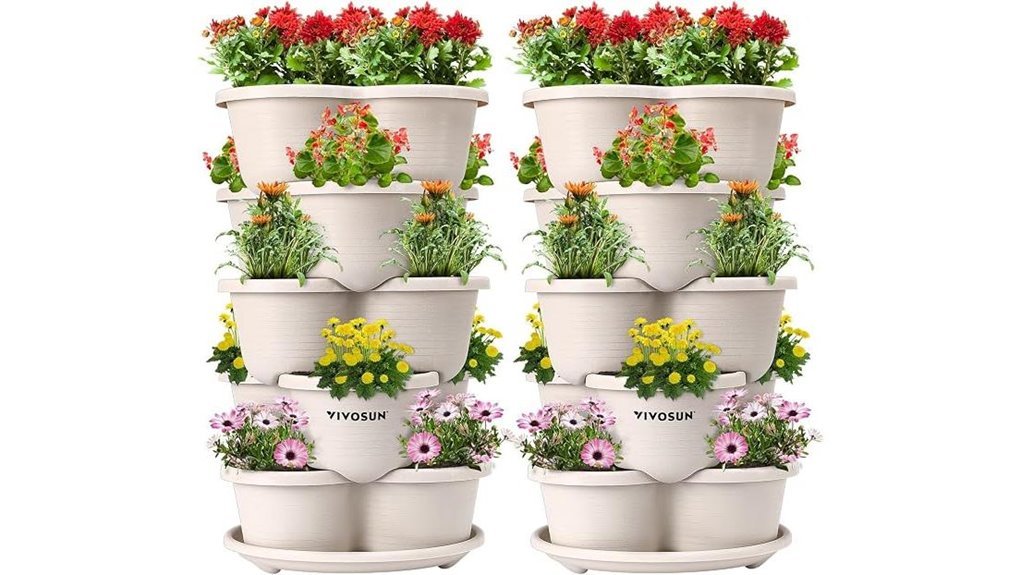
The VIVOSUN 2-Pack 5 Tier Vertical Gardening Stackable Planter is best suited for gardeners who need to maximize growing space without sacrificing variety. Its thick polypropylene construction supports repeated use, while the stackable format allows 2, 3, or 4 tiers for adaptable planting layouts. Hanging chains or cylindrical rods expand placement options indoors or outdoors. A top-to-bottom drainage system helps retain moisture without waterlogging, and internal holes improve runoff. The included bottom dish reduces surface stains. It suits strawberries, vegetables, fruits, and flowers in kitchens, balconies, or compact gardens.
Best For: Gardeners with limited space who want a durable, stackable planter for growing strawberries, vegetables, fruits, or flowers indoors or outdoors.
Pros:
- Stackable 5-tier design maximizes vertical growing space
- Durable thick polypropylene construction supports repeated use
- Top-to-bottom drainage system helps prevent waterlogging
Cons:
- Best suited for small plants rather than larger root systems
- Stackable setup may require careful balancing when fully loaded
- Limited planting area compared with traditional garden beds
GameXcel 5-Tier Vertical Planter Tower with Wheels
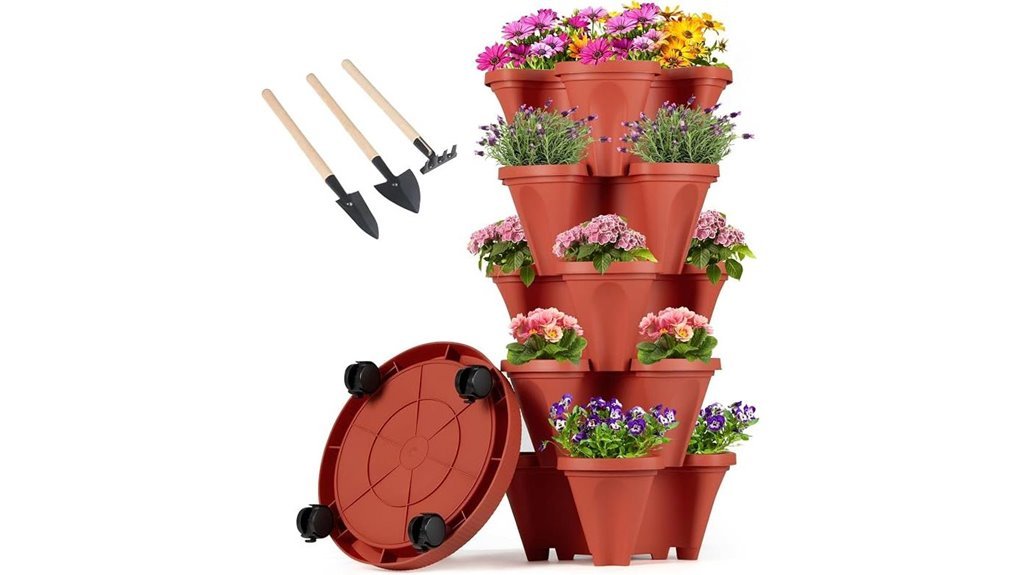
With lockable wheels and a slim five-tier footprint, it suits gardeners who need mobility and vertical efficiency. The GameXcel Vertical Planter Tower uses a round, red polypropylene design to stack plants in a compact 13.6-inch frame. Four swivel wheels make repositioning simple, while bottom drainage holes help reduce overwatering. Its soil boards retain moisture and create airflow gaps that support roots and limit rot. Suitable for strawberries, herbs, flowers, and vegetables, it works indoors or outdoors. A saucer and wheels are included, along with a 30-day return guarantee.
Best For: Gardeners who want a compact, mobile vertical planter for growing herbs, strawberries, flowers, or vegetables in small indoor or outdoor spaces.
Pros:
- Space-saving 5-tier vertical design maximizes growing area in a small footprint.
- Lockable swivel wheels make it easy to move and reposition.
- Soil boards and airflow gaps help retain moisture while reducing root rot.
Cons:
- Limited capacity may not suit larger plants or bigger harvest goals.
- Plastic polypropylene construction may feel less premium than heavier materials.
- The narrow tower design may require more frequent watering in hot conditions.
VECELO 5 Tier Vertical Garden Planter with Wheels
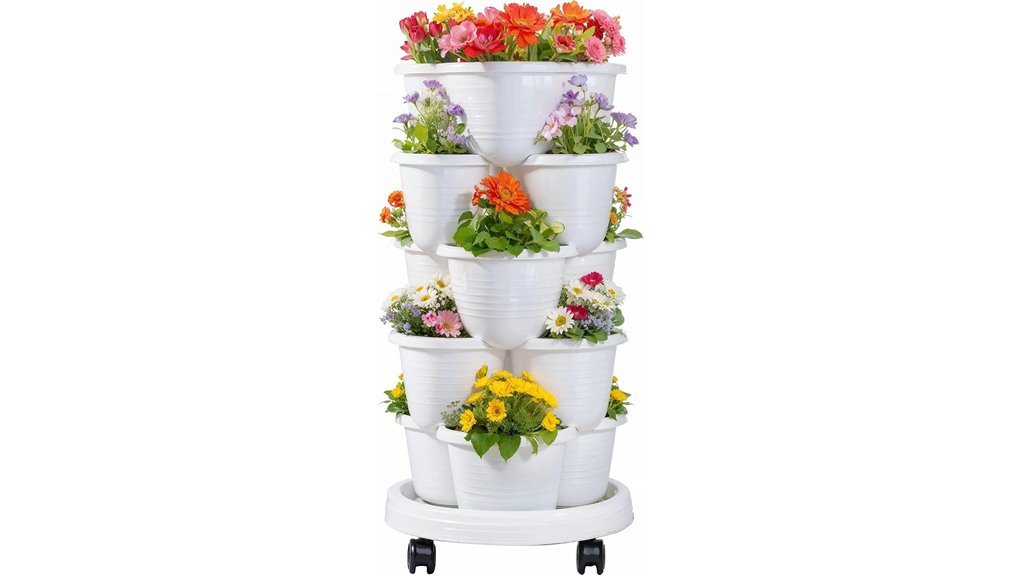
VECELO’s 5-tier planter suits space-limited gardeners seeking portable vertical growing. This white plastic tower measures 13.19 x 13.19 x 30.31 inches and weighs 5.51 pounds, making it manageable for patios, balconies, or indoor corners. Its round floral pattern gives it a modern look. The stackable design supports strawberries, herbs, flowers, vegetables, and succulents. Built-in drainage helps avoid waterlogging while preserving moisture. Wheels improve repositioning for sunlight and cleaning. The set includes five pots, a tray, pipes, a connector, soil separators, a hanging chain, and a fixing metal piece. Manufacturer support is available for warranty requests.
Best For: Space-limited gardeners who want a portable, modern-looking vertical planter for growing herbs, strawberries, flowers, vegetables, or succulents on patios, balconies, or indoors.
Pros:
- Space-saving 5-tier stackable design maximizes planting area in a small footprint.
- Built-in drainage and self-watering features help prevent waterlogging and reduce watering frequency.
- Wheels make it easy to move for better sunlight, rearranging, or cleaning.
Cons:
- Plastic construction may feel less durable than metal or ceramic alternatives.
- 30.31-inch height may be too tall or top-heavy for some tight spaces.
- Best suited for smaller plants, so it may not work well for larger-rooted crops.
VECELO 5-Tier Vertical Garden Bed with Wheels
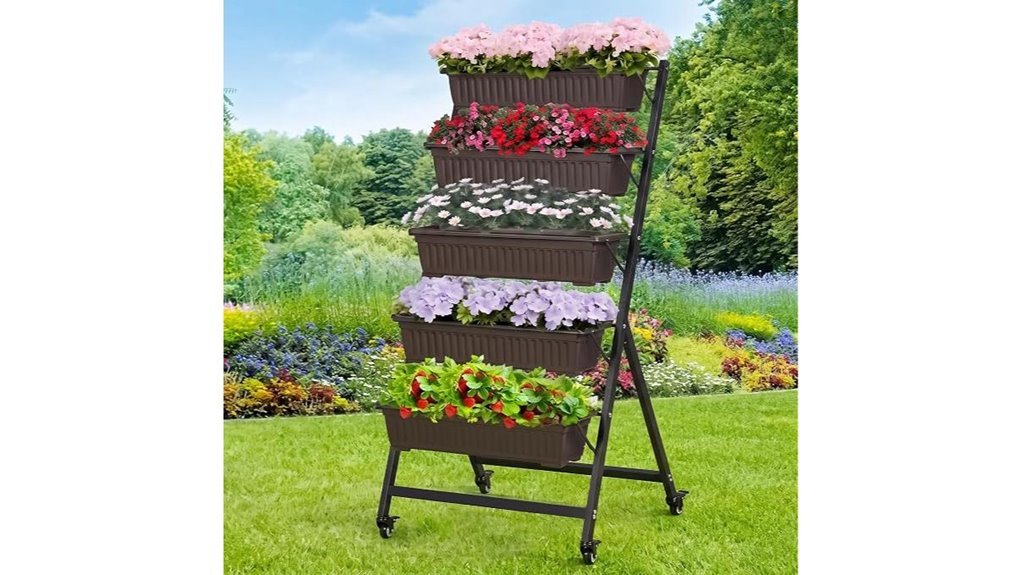
Ideal for space-conscious gardeners, the VECELO 5-Tier Vertical Garden Bed with Wheels maximizes planting capacity in a compact footprint. Its five staggered planter boxes support vegetables, herbs, flowers, and other plants while improving sunlight exposure and airflow. A heavy-duty rust-resistant metal frame and food-grade polypropylene boxes provide durable, long-term outdoor use. Built-in drainage holes help prevent waterlogging and root rot, and excess moisture is directed downward. Four smooth-rolling casters, including two lockable wheels, add mobility and stability. Simple assembly, removable boxes, and compact dimensions suit patios, apartments, and organized gardening.
Best For: Space-conscious gardeners, apartment dwellers, and patio growers who want a compact, mobile vertical planter for herbs, vegetables, flowers, and other plants.
Pros:
- Five staggered planter boxes maximize growing space while improving sunlight exposure and airflow.
- Lockable caster wheels make it easy to move and then secure in place.
- Drainage holes and a rust-resistant metal frame support healthier plants and long-term outdoor use.
Cons:
- The vertical design may be less suitable for very large or deep-rooted plants.
- Assembly is required, which may take some time despite the simple structure.
- Limited planting capacity per box compared with full-size raised garden beds.
4FT Vertical Raised Garden Bed with Drainage System
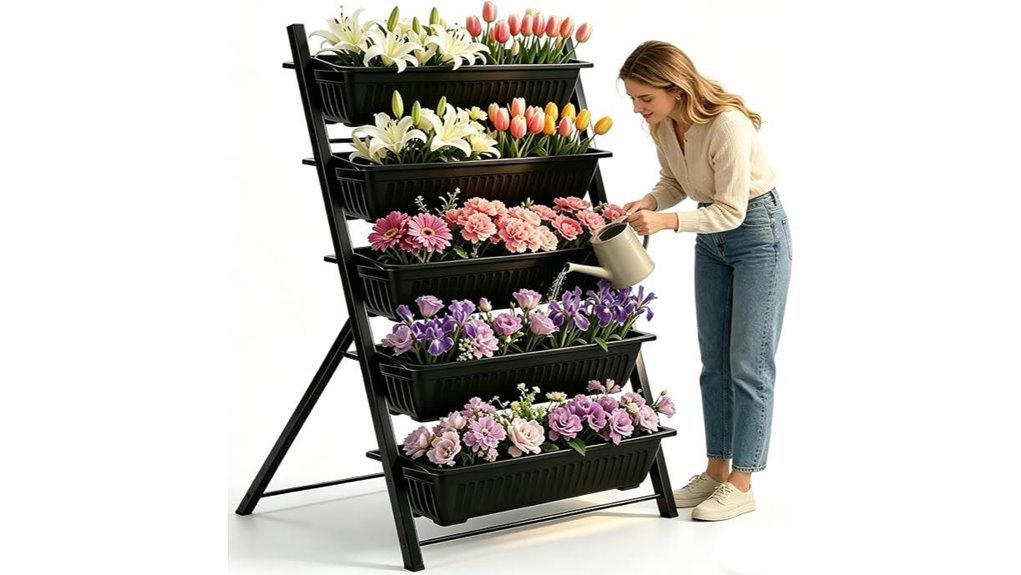
The 4FT Vertical Raised Garden Bed suits gardeners needing compact, ergonomic growing space with reliable drainage. This 5-tier planter measures 23.5 by 25.4 by 48.6 inches and supports vegetables or flowers in five detachable PP boxes. Its powder-coated steel frame resists rust and weather, while triangular brackets and bottom stabilizing rods improve rigidity. Two drainage holes per tier help reduce root rot and excess drying. The staggered layout directs overflow downward, and the bottom tray includes sealable holes for indoor use. Easy assembly and a one-year service plan add practical value.
Best For: Gardeners with limited space who want a sturdy, elevated planter for growing vegetables or flowers with easy drainage and less bending.
Pros:
- 5-tier vertical design maximizes growing space while using a small footprint.
- Powder-coated steel frame and reinforced supports improve durability and stability.
- Built-in drainage holes and detachable PP planting boxes help prevent root rot and simplify use.
Cons:
- The tall, tiered structure may be less suitable for very large or deep-rooted plants.
- Assembly may still take some time despite included tools and instructions.
- The size may be too large for very tight balconies or indoor areas.
Vertical 4-Tier Stackable Garden Planter (16 Plants)
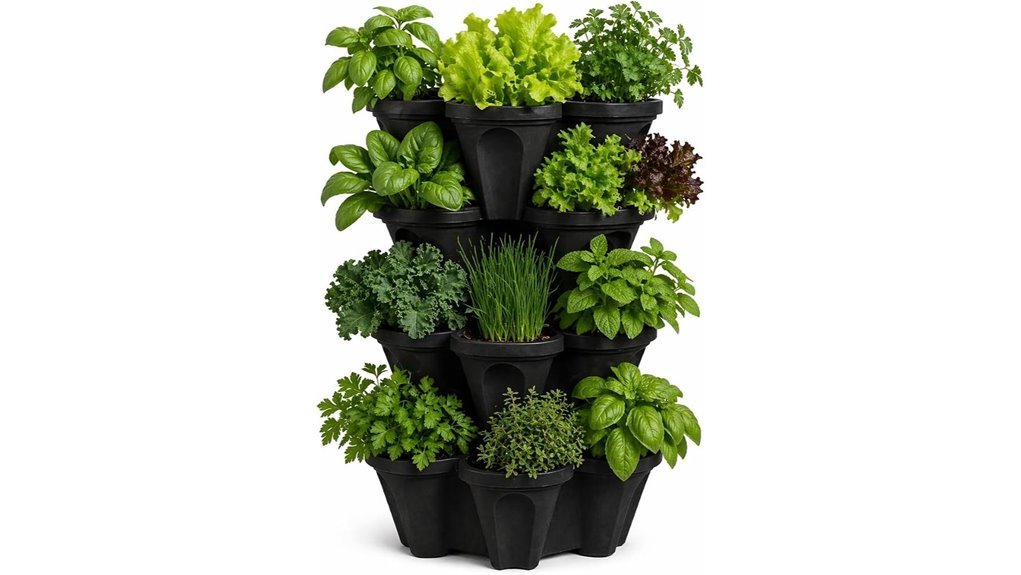
With four stackable tiers, it suits gardeners needing 16 plant spaces in tight areas. The Vertical Garden Planter 4 Tier Stackable System comes in midnight black, uses durable plastic, and measures 12 x 12 x 5.5 inches. Its clover-shaped design holds 19.2 quarts of soil, encouraging healthy root growth. A self-watering layout sends moisture from the top tier downward, reducing maintenance. Made in the USA by GAIM Plastics Inc., it supports three small businesses. Suitable indoors or outdoors, it works well for strawberries, herbs, flowers, and leafy greens, even year-round with supplemental light.
Best For: Gardeners with limited space who want a compact, self-watering vertical planter for growing strawberries, herbs, flowers, or leafy greens indoors or outdoors.
Pros:
- Holds 16 plants in a space-saving 4-tier vertical design.
- Self-watering system helps distribute moisture and reduce maintenance.
- Made in the USA from durable, weather-resistant plastic.
Cons:
- Small footprint may limit plant size and root depth for larger crops.
- Plastic construction may not appeal to those wanting more premium materials.
- Best performance may require supplemental light for year-round indoor growing.
Vertical Garden Planter 4-Tier Stackable System
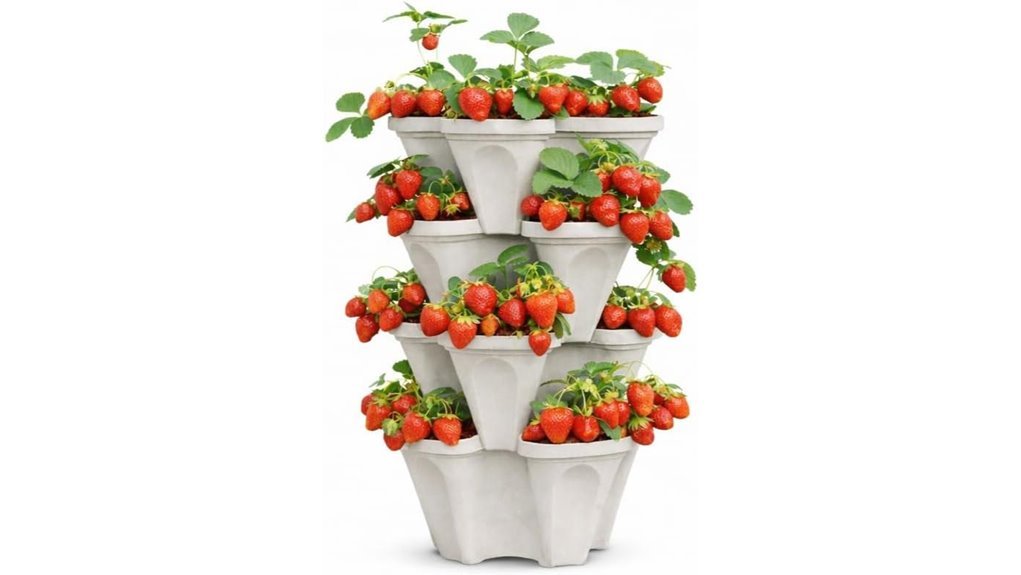
Designed for compact spaces, the Vertical Garden Planter 4-Tier Stackable System suits apartment gardeners and patio growers. It accommodates 16 plants and holds 19.2 quarts of soil in a 12 x 12 x 5.5 inch frame, using a stone finish and vertical American planter style. Its self-watering tiers help distribute moisture evenly, supporting healthier roots and steady growth. Made in the USA by GAIM Plastics Inc., it supports three small U.S. businesses. Suitable for strawberries, herbs, flowers, and leafy greens, it works indoors with a tray or outdoors in weather-resistant conditions.
Best For: Apartment gardeners, balcony growers, and patio users who want a compact, self-watering vertical planter for herbs, strawberries, flowers, or leafy greens.
Pros:
- Space-saving 4-tier stackable design fits small indoor or outdoor areas.
- Self-watering system helps distribute moisture evenly for healthier root growth.
- Made in the USA and supports three small U.S. businesses.
Cons:
- Indoor use requires a tray, which is not included.
- Limited soil capacity may not suit larger plants or deep-rooted vegetables.
- Best for sun-loving or supplemented-light plants, so low-light spaces may not work well.
ETELI 3-Tier Vertical Garden Planter with Boxes
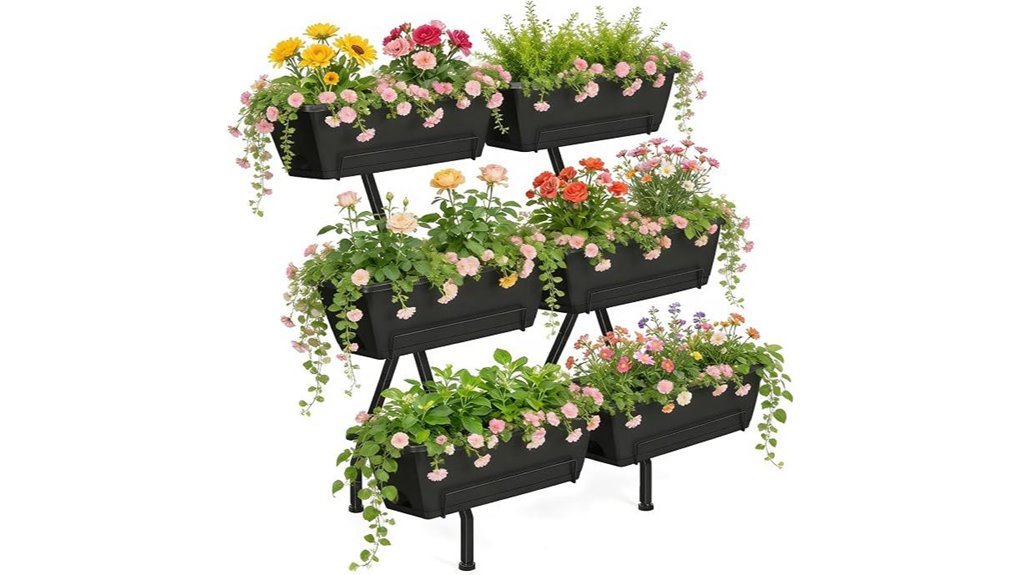
ETELI’s 3-tier layout suits gardeners who need compact vertical planting with strong stability. The black, modern planter uses a solid metal frame and a triangular structure that helps it hold steady in wind and rain. Measuring 31.4 x 14.2 x 31.9 inches, it fits indoor or outdoor spaces without demanding much room. Six planter boxes provide space for flowers, fruits, vegetables, and herbs. Drainage holes help prevent water buildup, while the breathable, fade resistant, rot resistant, and rust resistant build supports easier maintenance. Labeled parts, instructions, and a 180-day warranty add practical reassurance.
Best For: Gardeners who want a compact, stable vertical planter for growing flowers, herbs, vegetables, or fruits in small indoor or outdoor spaces.
Pros:
- Six planter boxes provide good planting variety in a space-saving vertical design.
- Solid metal frame with a triangular structure adds stability in wind and rain.
- Drainage holes and rust-resistant, fade-resistant materials help with maintenance and durability.
Cons:
- The compact size may not be enough for gardeners needing a larger growing area.
- Assembly is required, even though instructions and labeled parts are included.
- Metal construction may be less lightweight or portable than simpler plastic alternatives.
Factors to Consider When Choosing Vertical Garden Planters in 2026
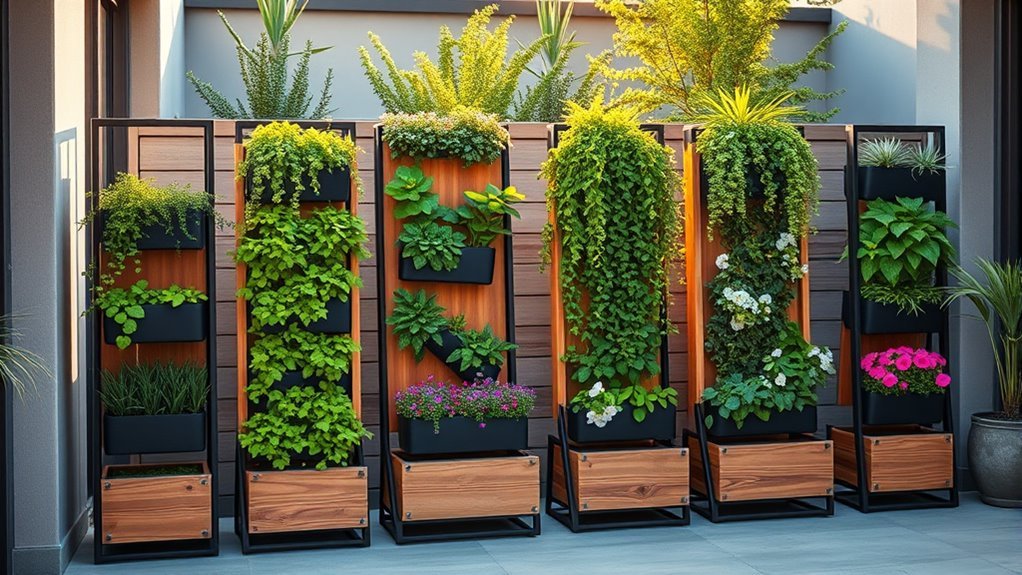
Choosing a vertical garden planter in 2026 often begins with space and footprint, since the unit must fit the intended area without crowding it. Drainage, moisture control, material durability, mobility, and stability also shape how well the planter performs over time. Tier count and overall capacity then determine how much planting space it can support for the available footprint.
Space And Footprint
When evaluating vertical garden planters in 2026, space and footprint remain central considerations, especially in small gardens, balconies, and other urban settings. Vertical planters are built to expand growing capacity without demanding much ground area, which makes them practical where square footage is limited. Stackable designs let users adjust height and arrangement to fit available space, while compact bases help preserve room for movement and other outdoor features. Multi-tier models further increase planting capacity by using vertical layers instead of spreading outward. This approach supports a wide range of plants, including vegetables and flowers, while keeping the layout organized and efficient. In tight environments, a smaller footprint can make the difference between a cluttered corner and a productive garden.
Drainage And Moisture
Beyond footprint and layout, drainage and moisture management play a major role in how well vertical garden planters perform in 2026. Effective drainage is essential because standing water can suffocate roots, encourage rot, and reduce nutrient uptake. Many planters address this with built-in drainage holes and moisture-retaining soil boards, which help balance water levels without leaving the growing medium saturated. Well-engineered systems also let excess water move downward through all tiers, supporting healthier roots and more even growth. Staggered configurations can improve this flow by guiding runoff away from upper sections. Self-watering designs add another advantage, redistributing moisture from top tiers to lower ones automatically and helping maintain consistent conditions throughout the structure.
Material And Durability
Material and durability remain central considerations in vertical garden planters for 2026, with high-quality polypropylene or rust-resistant metal offering the best balance of strength and weather resistance. These materials help planters endure rain, heat, and seasonal changes without warping, cracking, or corroding. UV-resistant coatings add another layer of protection by limiting fading and surface breakdown during prolonged sun exposure. For larger installations, the material’s weight-bearing capacity matters because soil, water, and mature plants can place substantial stress on the structure. Durable drainage components also contribute to long-term performance by resisting clogging and supporting healthy root systems. A well-engineered planter using resilient materials is more likely to maintain appearance, function, and reliability over time, especially in demanding outdoor conditions and extended use.
Mobility And Stability
Mobility can make a vertical garden planter far more practical, especially when wheels or casters allow it to be repositioned for better sunlight or seasonal changes. That flexibility is useful in changing weather and shifting outdoor layouts. Yet mobility should never come at the expense of stability. Lockable wheels help keep the planter fixed once the ideal spot is found, while a sturdy base reduces the chance of tipping in wind. Frames with triangular or heavy-duty construction often resist shifting better than simpler designs. It also matters that the planter can safely support the combined weight of soil, water, and plants. Wider bases generally provide stronger support for taller structures, helping keep the planter steady and secure over time.
Tier Count And Capacity
Vertical garden planters typically offer three to five tiers, and each added level increases growing space without demanding much floor area. A higher tier count generally supports more plants in a compact footprint, making efficient use of vertical space. Capacity matters just as much, since a five-tier planter may hold from 0.11 to 19.2 quarts of soil per tier, shaping what can be grown. Smaller tiers suit strawberries and herbs, while larger vegetables need deeper, roomier sections. Staggered tiers can improve sunlight exposure and airflow, helping plants develop evenly. Overall height also influences maintenance; planters reaching 53 inches or more may be harder to access, especially at the lower levels.
Indoor Outdoor Versatility
After considering tier count and capacity, the next choice is whether a vertical garden planter can perform well both indoors and outdoors. Models built for dual use offer strong space efficiency on balconies, patios, and small gardens, while still fitting neatly into interior settings. Integrated drainage helps prevent waterlogging, supporting healthy plants across changing weather and indoor conditions. Mobility features, including wheels or lightweight construction, make repositioning easier for sunlight, airflow, and display needs. Stackable tiers also expand planting options, allowing herbs, flowers, and vegetables to share a compact footprint. Durable, weather-resistant materials add outdoor reliability without sacrificing appearance in the home. For urban gardeners, this versatility is often the difference between a temporary display and a practical long-term system.
Frequently Asked Questions
How Do Vertical Planters Prevent Root Rot?
Vertical planters prevent root rot by improving drainage, increasing airflow around roots, and reducing water pooling. Their layered design lets excess moisture escape quickly, while porous materials and proper spacing help roots stay healthier and drier.
Can Vertical Planters Withstand Strong Winds Outdoors?
Like a sail in a storm, they can, if securely anchored. Strong winds may topple lightweight units, so sturdy materials, wall mounting, low profiles, and sheltered placement are essential for outdoor resilience.
What Plants Grow Best in Shaded Vertical Planters?
Shaded vertical planters favor ferns, hostas, ivy, begonias, impatiens, and mosses. These plants tolerate low light and retain moisture well, making them reliable choices for vertical arrangements in dimmer outdoor or indoor spaces.
How Often Should Vertical Planter Soil Be Replaced?
Vertical planter soil should be replaced every one to two years; annual refreshes often suffice if compost is added. Although it seems unnecessary, depleted nutrients and compaction quickly reduce plant health and drainage.
Do Vertical Planters Attract More Pests Than Raised Beds?
Vertical planters do not inherently attract more pests than raised beds, though crowded foliage and retained moisture can increase risk. Regular inspection, airflow, and sanitation usually keep infestations comparable or lower.
Conclusion
In the end, choosing the right vertical garden planter can feel almost revolutionary for a cramped patio or tiny balcony. From towering stackable systems to wheeled beds that glide like garden carts, each option offers a different path to turning bare walls into lush, productive green space. The best pick depends on drainage, mobility, capacity, and durability—but whichever planter is chosen, it can transform even the smallest corner into a surprisingly abundant vertical oasis.
