
The best leaf mulchers help you turn bulky piles of fallen leaves into manageable garden mulch. But the right machine depends on your yard size, power source, and whether you also need a blower or leaf vacuum.
For dedicated shredding, the WORX WG430 is our top pick because of its 13-amp motor, 11:1 reduction ratio, and simple collection system. If you want one tool for blowing, vacuuming, and mulching, consider the WORX Trivac WG512.
We compared five models using published specifications, mulching ratios, portability, collection systems, and practical limitations. Each serves a different yard cleanup need.
Best Leaf Mulchers Compared
This comparison shows the main differences between the five leaf mulchers. Standalone shredders work best when you already collect leaves into piles. Blower-vacuum-mulcher combinations let you collect and shred leaves with one tool.
| Product | Best for | Power source | Mulch ratio |
|---|---|---|---|
| Dedicated leaf shredding | 13-amp corded electric | 11:1 | |
| Large leaf piles and composting | 15-amp corded electric | 16:1 | |
| Cordless yard cleanup | 40V battery powered | 15:1 | |
| High-airflow 3-in-1 cleanup | 12-amp corded electric | 16:1 | |
| High-speed blowing and fine mulching | 12-amp corded electric | 18:1 |
Best Leaf Mulchers: Our Top Picks
1. WORX WG430 13-Amp Leaf Mulcher
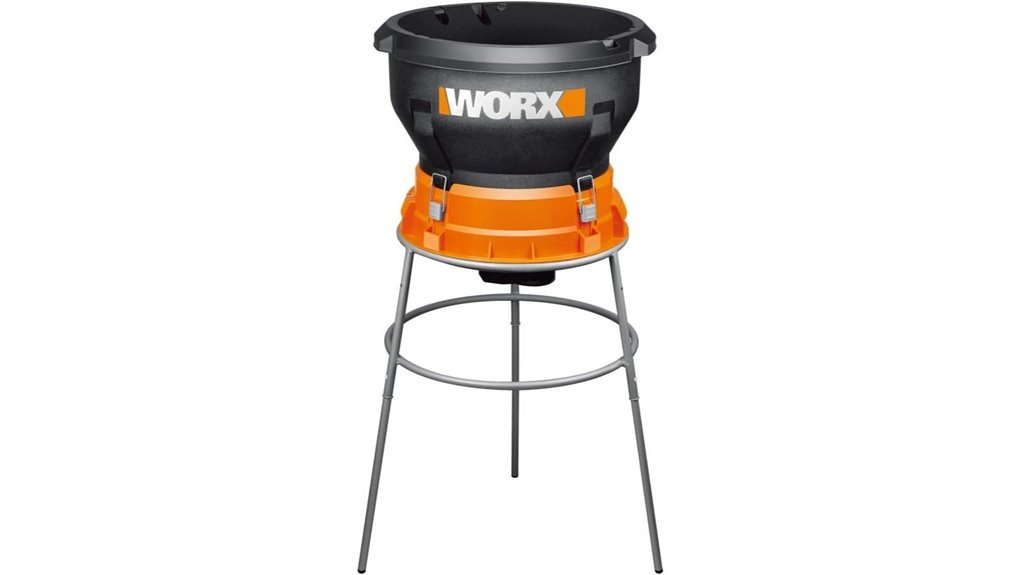
Bottom line: The WORX WG430 is a practical choice if you mainly need to shred collected leaves. Its simple design, strong throughput, and compact storage make it useful for seasonal yard cleanup.
Key specs:
- Power: 13-amp corded motor, designed for continuous electric operation.
- Mulch ratio: 11:1, reducing eleven bags of loose leaves to roughly one.
- Processing capacity: Up to 53 gallons per minute, according to WORX.
- Cutting system: Bladeless Flex-a-Line with replaceable cutting lines.
- Weight: 20 pounds, with a collapsible design for storage.
The WORX WG430 uses an 8,500 RPM motor to spin flexible cutting lines through the leaf feed area. Its 11:1 reduction ratio can help you prepare leaves for composting, garden beds, or easier disposal.
Unlike a leaf vacuum, this machine stays in one place. You rake or collect leaves first, then feed them into the opening. The included bag support ring lets you attach your own collection bag underneath.
Tool-free assembly, replaceable cutting lines, an oversized power switch, and clean-air motor cooling make maintenance straightforward. The unit also folds down for off-season storage.
- Rated to process up to 53 gallons of leaves per minute.
- Tool-free assembly and replaceable cutting lines.
- Compact storage design with direct bag attachment.
- Bladeless cutting system simplifies routine line maintenance.
- Does not blow or vacuum leaves from the ground.
- Requires a power outlet and suitable extension cord.
- Collection bag is not included.
- Cutting lines need periodic replacement.
2. EWORK 15-Amp Leaf Mulcher/Shredder
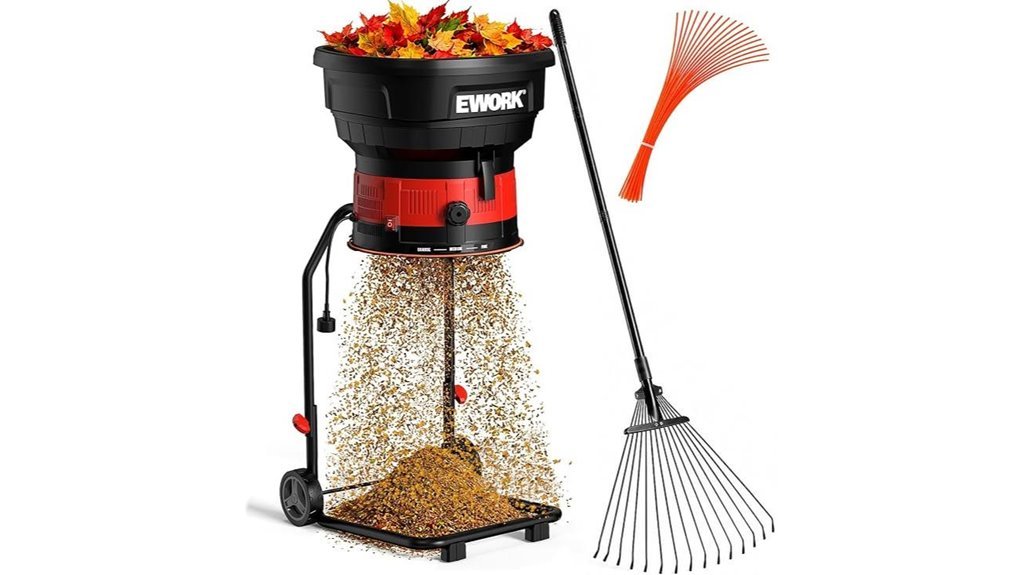
Bottom line: The EWORK 15-Amp Leaf Mulcher/Shredder is designed for gardeners who handle substantial leaf piles and want finer control over the resulting mulch.
Key specs:
- Power: 15-amp corded motor rated at 8,000 RPM.
- Mulch ratio: 16:1, designed to reduce loose leaf volume substantially.
- Cutting system: Replaceable, wear-resistant cutting lines.
- Shred settings: Three adjustable settings for different mulch textures.
- Weight: Approximately 24.6 pounds, based on the original specifications.
The EWORK 15-Amp Leaf Mulcher/Shredder uses a high-speed motor and line-based cutting system to reduce leaves into smaller pieces. Its claimed 16:1 ratio makes it appealing for compost preparation and seasonal waste reduction.
Three shred settings let you choose different output textures. Coarser pieces can work as ground cover, while smaller fragments offer more exposed surface area for composting.
The design includes an enlarged feed opening, anti-clogging features, and a 4.1-foot adjustable rake. The rake helps gather scattered leaves before shredding. Replacement cutting lines provide a practical maintenance option.
Its heavier build and corded operation make it better for planned cleanup sessions than for quick trips around a large property. It is still primarily a leaf shredder, not a substitute for a branch chipper.
- 15-amp motor rated for high-volume leaf shredding.
- 16:1 mulching ratio reduces collection volume.
- Three adjustable shred settings offer texture choices.
- Replaceable cutting lines and adjustable rake support routine cleanup.
- Wet leaves can still clump and restrict feeding.
- Heavier than the WORX WG430.
- Requires cord management and access to outdoor power.
- Not intended to replace a dedicated wood chipper.
3. MZK 40V Leaf Vacuum Mulcher
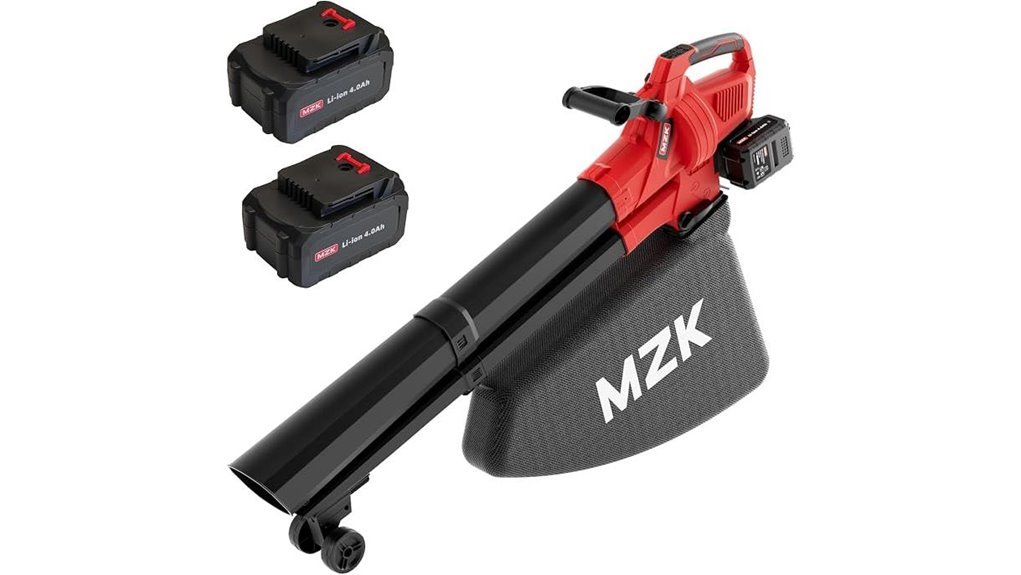
Bottom line: The MZK 40V Leaf Vacuum Mulcher gives you three yard cleanup functions without a trailing power cord. It makes sense for homeowners who value mobility and can work within battery runtime limits.
Key specs:
- Power: 40V battery-powered operation.
- Mulch ratio: 15:1, reducing the volume of collected leaves.
- Airflow: Up to 600 CFM in the red version identified by linked-ASIN records.
- Collection: 40-liter debris bag.
- Runtime: Up to 30 minutes in published specifications for the dual-battery configuration.
The MZK 40V Leaf Vacuum Mulcher combines blowing, vacuuming, and mulching. Its cordless setup helps when you need to clean paths, driveways, and lawn areas away from an outlet.
Published specifications for a related 600-CFM configuration list up to 160 MPH airspeed, two 4.0Ah batteries, and a 15:1 mulching ratio. The product description also identifies multiple speed settings, a short turbo boost, and a 40-liter collection bag. Configuration details should match the exact version you order.
An anti-jam intake, quick-access cleaning gate, secure bag connection, and adjustable support wheels are practical features for repeated cleanup. The wheels can help support the machine while collecting leaves.
Battery runtime is its main limitation. Long sessions or maximum-speed operation may require charging breaks, so this tool is less suited to uninterrupted all-day shredding.
- Three functions in one cordless machine.
- 15:1 mulching ratio and 40-liter collection capacity.
- Speed controls and turbo function offer flexibility.
- Support wheels and quick-access cleaning features improve handling.
- Limited runtime compared with corded machines.
- Higher speed settings place greater demand on the batteries.
- Can feel tiring during long handheld sessions.
- Published configurations differ, so exact specifications require attention.
4. WORX Trivac WG512
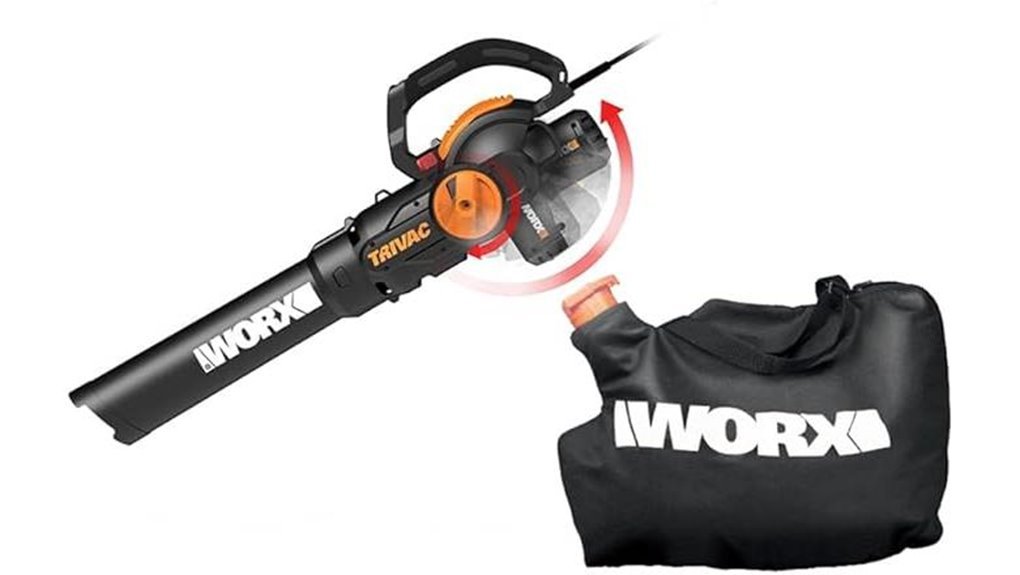
Bottom line: The WORX Trivac WG512 is a strong choice if you want to blow leaves into piles, vacuum them, and reduce their volume without changing tools.
Key specs:
- Power: 12-amp corded electric motor.
- Mulch ratio: 16:1, helping reduce loose leaf volume.
- Airflow: Up to 600 CFM for moving larger volumes of air.
- Collection: 1.4-bushel bag capacity in the WG512 manual.
- Weight: Approximately 9 pounds in blowing mode.
The WORX Trivac WG512 combines three common yard tasks in one machine. It delivers up to 600 CFM and a rated airspeed of 70 MPH, making airflow volume a major strength.
Its 16:1 mulching system helps reduce disposal volume after vacuuming. Switching modes does not require separate tools, and the collection bag attaches to the vacuum system for convenient cleanup.
Two speed ranges help you adjust performance to the job. The quick-release bag connection makes emptying easier, while the integrated tube design reduces the need to handle multiple attachments.
Unlike the standalone WORX WG430, this tool must be carried or guided during use. It is better for active leaf collection than stationary shredding of pre-gathered piles.
- Blower, vacuum, and mulcher in one machine.
- 600 CFM airflow supports substantial leaf movement.
- 16:1 reduction ratio reduces collection volume.
- Tool-free mode changes and a quick-release collection bag.
- Requires an outdoor power outlet and extension cord.
- Repeated carrying can cause fatigue.
- Not intended for thick branches or heavy wood debris.
5. WORX Trivac WG509
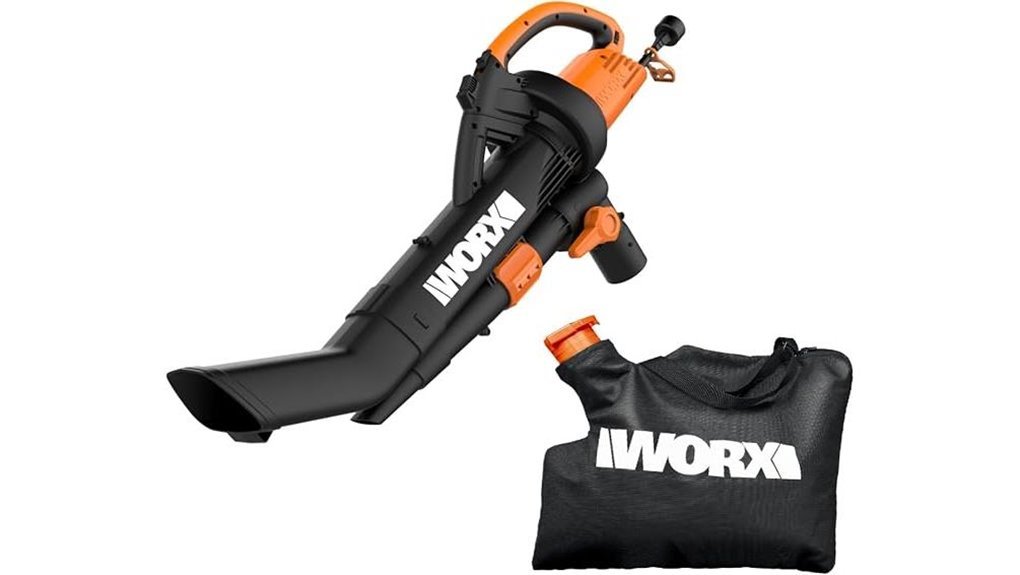
Bottom line: The WORX Trivac WG509 is worth considering if you want strong airspeed, a metal mulching system, and a compact 3-in-1 design.
Key specs:
- Power: 12-amp corded electric motor.
- Mulch ratio: 18:1, the highest stated ratio in this comparison.
- Airflow: Up to 350 CFM with variable airspeed.
- Collection: 1.2-bushel debris bag.
- Weight: 9.3 pounds.
The WORX Trivac WG509 delivers up to 210 MPH airspeed, with a published working range of 80 to 210 MPH. It suits lawns, driveways, patios, walkways, and other areas where leaves tend to collect.
Its two-stage metal impeller and shredder blade create an 18:1 mulch ratio. That can make collected leaves easier to store, dispose of, or add to a compost pile.
Variable-speed control helps you adjust blowing force around delicate areas. A quick mode switch changes the tool from blower to vacuum operation, and the collection bag gathers the shredded material.
The main trade-off against the WG512 is airflow volume. The WG509 offers greater stated airspeed and a higher mulch ratio, but its 350 CFM rating is lower than the WG512’s 600 CFM.
- Three useful functions in one corded tool.
- Up to 210 MPH airspeed for concentrated blowing.
- 18:1 mulching ratio with a two-stage metal cutting system.
- Variable-speed operation and quick mode changes.
- Lower airflow volume than the WG512.
- Corded design restricts movement around larger properties.
- Collection bag must be emptied as it fills.
- Not designed for large branches or wood chipping.
WORX WG430 vs WORX Trivac WG512: Which Should You Get?
The WG430 and WG512 solve different parts of leaf cleanup. The WG430 specializes in shredding piles you have already collected. The WG512 combines leaf collection and shredding with a blower function.
- Leaf shredding: The WG430 handles stationary feeding and uses replaceable cutting lines.
- Leaf collection: The WG512 vacuums leaves directly into its bag after mulching.
- Mulching ratio: The WG430 is rated at 11:1, while the WG512 offers 16:1.
- Handling: The WG430 rests on its stand, while the WG512 is a portable handheld tool.
Which Leaf Mulcher Should You Buy?
Choose a leaf mulcher based on how you collect leaves and what you plan to do with the shredded material. The most powerful motor is not always the most useful choice.
- For collected leaf piles: Get the WORX WG430 for dedicated shredding with simple setup.
- For frequent compost preparation: Consider the EWORK 15-Amp Leaf Mulcher/Shredder and its adjustable shred settings.
- For cordless movement: Choose the MZK 40V Leaf Vacuum Mulcher if battery portability matters more than uninterrupted runtime.
- For general lawn cleanup: Pick the WORX Trivac WG512 for its 600 CFM airflow and 3-in-1 functions.
- For concentrated blowing and finer reduction: Choose the WORX Trivac WG509 with its 210 MPH maximum airspeed and 18:1 mulch ratio.
How We Chose These Leaf Mulchers
We compared the models using their published features and practical suitability for residential yard cleanup. These recommendations are based on specification research, not claimed hands-on testing.
- Mulching performance: We compared reduction ratios, cutting systems, and stated processing capabilities.
- Functionality: We considered whether each machine only shreds leaves or also blows and vacuums them.
- Practical handling: We compared weight, collection bags, portability, battery operation, and maintenance requirements.
- Documentation: We checked available product listings, manufacturer information, manuals, and relevant product-safety recall records. Manufacturer references include the WORX WG430 specifications, WORX WG509 specifications, and WORX WG512 manual.
Factors to Consider When Choosing Leaf Mulchers in 2026
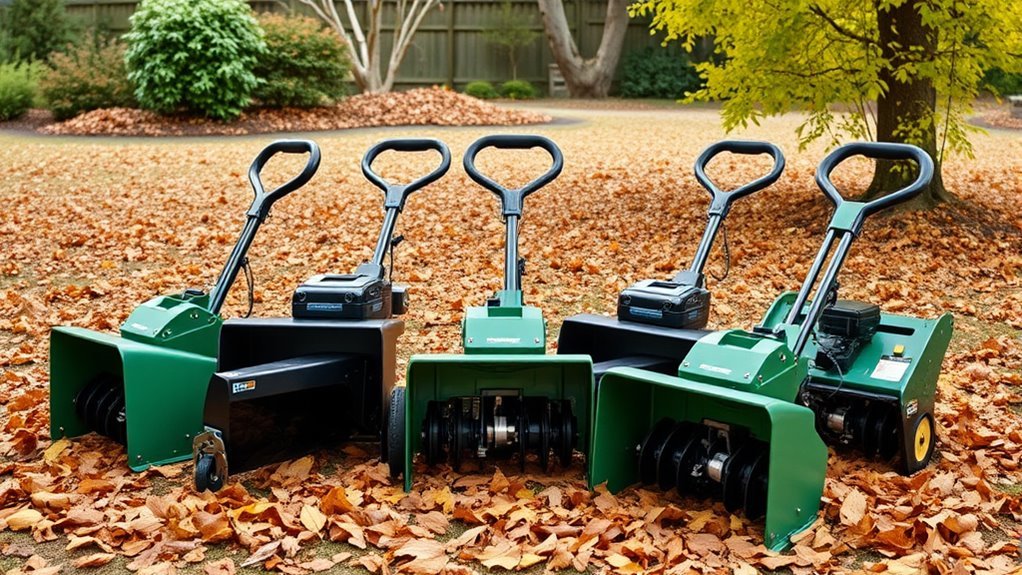
The best leaf mulcher for your yard depends on more than motor size. You should also consider the reduction ratio, how leaves enter the machine, collection capacity, and ease of maintenance.
Standalone Mulcher or 3-in-1 Tool?
A standalone leaf mulcher is designed for leaves you have already gathered. It works well if you prefer raking, collecting, and processing leaves in a central location.
A 3-in-1 blower, vacuum, and mulcher can collect leaves directly from the ground. This reduces the need for separate tools but means carrying or moving the machine around your property.
Power And Performance
Power affects how effectively a leaf mulcher processes yard debris. Corded models in this comparison use motors rated between 12 and 15 amps, while the MZK uses a battery-powered system.
The WORX WG430 operates at 8,500 RPM, and the EWORK model lists 8,000 RPM. These figures describe motor speed, not the total amount of leaves a machine can shred in a given time.
For blower-vacuum combinations, pay attention to both CFM and MPH. CFM measures airflow volume, while MPH describes airspeed. Higher airflow can help move larger volumes of loose leaves, while higher speed can help direct a concentrated stream.
Mulch Reduction Ratio
Mulch reduction ratio describes how much loose leaf volume a machine can reduce. For example, a claimed 16:1 ratio means 16 bags of loose leaves can become roughly one bag of shredded material under suitable conditions.
The models in this comparison range from 11:1 to 18:1. The WG509 has the highest stated ratio, while the WG430 offers dedicated shredding with an 11:1 rating.
A higher ratio can help reduce disposal bags and storage space. However, actual results depend on leaf type, moisture, and how tightly material is packed.
Corded Or Cordless
Corded leaf mulchers provide continuous operation while connected to a suitable electrical supply. They make sense for longer sessions if you can safely reach the work area.
Battery-powered models provide greater freedom around trees, garden beds, and pathways. Their main limitation is runtime, especially during demanding vacuuming and mulching tasks.
Consider how often you clean your yard, the distance from an outdoor outlet, and whether charging breaks would interrupt your work.
Bag Capacity
Bag capacity determines how much shredded material you can collect before emptying. A larger bag usually means fewer interruptions, although it can become heavier as it fills.
The WORX WG512 includes a collection bag, while the WG509 uses a 1.2-bushel bag. The MZK configuration discussed here has a 40-liter bag.
Standalone models such as the WORX WG430 collect debris into a separate bag fitted beneath the machine. Check whether a compatible collection bag is included or must be supplied separately.
Ease Of Use
Easy assembly, manageable weight, and clear controls make seasonal cleanup less tiring. Tool-free setup is useful when you only bring the mulcher out during autumn.
Variable-speed controls help you work around different surfaces and leaf piles. Quick-release collection bags reduce the effort involved in emptying debris.
Anti-clogging features, accessible cleaning points, and readily available replacement cutting lines also matter. These details can make a bigger difference than a small improvement in a published motor specification.
Maintenance and Replacement Parts
Leaf mulchers need regular cleaning and inspection. Line-based models require replacement cutting lines, while impeller-based tools need checks for damage or lodged debris.
Before maintenance, disconnect a corded machine from the power supply or remove the battery from a cordless model. Follow the manufacturer’s instructions for cleaning, servicing, and replacing cutting parts.
Check the availability of compatible replacement parts before choosing a model. This is especially useful if you plan to use the machine for several leaf seasons.
Mistakes to Avoid When Buying Leaf Mulchers
- Choosing by amperage alone: Compare cutting systems, capacity, and intended use instead of relying only on motor size.
- Confusing CFM with MPH: Airflow volume and airspeed describe different aspects of blower performance.
- Ignoring collection requirements: Check whether the product includes a bag or needs a separate one.
- Overlooking maintenance: Consider replacement cutting lines, impeller access, and cleaning procedures.
- Buying the wrong tool type: A leaf mulcher is not automatically suitable for wood chipping or thick branches.
Frequently Asked Questions
How Noisy Are Leaf Mulchers During Operation?
Leaf mulchers can be loud enough to make nearby conversation difficult. Noise depends on motor design, operating speed, and the material passing through the machine. Electric tools often avoid the engine noise of gas-powered equipment, but they can still produce substantial sound. Wear suitable hearing protection, especially during longer cleanup sessions.
Can Leaf Mulchers Handle Wet Leaves Effectively?
Most leaf mulchers work better with dry leaves than with wet ones. Damp foliage can stick together, block collection tubes, and reduce shredding efficiency. Some machines may handle lightly damp material, but that does not mean they are suitable for rain or saturated conditions. Follow the manufacturer’s instructions and allow wet leaves to dry before processing when possible.
Do Leaf Mulchers Require Special Safety Gear?
Leaf mulchers generally require basic protective equipment rather than specialized clothing. Wear safety glasses, hearing protection, sturdy footwear, and suitable gloves when handling debris. Keep loose clothing, hands, and tools away from moving parts and intake openings. Always disconnect electrical power or remove the battery before clearing a blockage or servicing the cutting system.
How Often Should Mulching Lines or Blades Be Replaced?
Replace mulching lines or blades when they become worn, cracked, damaged, or noticeably less effective. Replacement frequency depends on the cutting system, leaf volume, and debris being processed. Inspect cutting parts before use and follow the manufacturer’s maintenance schedule. Never replace flexible cutting lines with metal blades unless the manufacturer specifically approves that modification.
Are Leaf Mulchers Safe for Pine Needles and Twigs?
Some leaf mulchers can process dry pine needles and small amounts of light yard debris, but their limits differ. Pine needles may collect around cutting parts, while twigs can damage machines not designed for woody material. Check the approved materials in the product manual. Do not assume a leaf mulcher can safely process branches like a wood chipper.
Is a Dedicated Leaf Mulcher Better Than a Leaf Vacuum Mulcher?
A dedicated leaf mulcher is often better for shredding large piles that have already been gathered. A leaf vacuum mulcher is more convenient if you want to collect and shred leaves in one pass. Neither design is always better. Choose based on your collection method, yard layout, and how frequently you need the equipment.
What Is the Difference Between CFM and MPH on a Leaf Blower Mulcher?
CFM measures the volume of air a blower moves each minute, while MPH measures the speed of that air. Higher CFM can help move more loose leaves, while higher MPH can provide a faster stream for concentrated cleanup. Compare both figures, but also consider the tube design and whether the machine performs well in vacuum mode.
Can You Use Shredded Leaves for Compost and Garden Mulch?
Yes, shredded leaves can be useful for composting and garden mulch. Smaller pieces are easier to spread and generally break down more readily than intact leaves. You can mix shredded leaves with other compost materials or spread them around suitable planting areas. Avoid piling mulch directly against plant stems or tree trunks, and keep unwanted debris out of compost.
Final Verdict
The best leaf mulcher is the one that matches your cleanup routine. For dedicated shredding, the WORX WG430 offers a straightforward system with proven manufacturer specifications. If you need to collect leaves as well as mulch them, a 3-in-1 tool may be more convenient.
For more versatile cleanup, consider the WORX Trivac WG512. If cordless mobility matters most, the MZK 40V Leaf Vacuum Mulcher is another option, provided its exact product configuration meets your needs.
