
PFAS concerns have pushed water filtration dispensers into sharper focus in 2027. Several models now promise more than basic taste improvement, with certifications, multi-stage filtration, and larger capacities shaping the shortlist. From countertop reverse osmosis to high-volume dispensers built for daily use, each option serves a different need. The question is which ones truly stand out when performance, convenience, and contaminant reduction are weighed together.
PUR Plus 30-Cup Water Filter Dispenser with 1 Lead-Reducing Filter, Blue
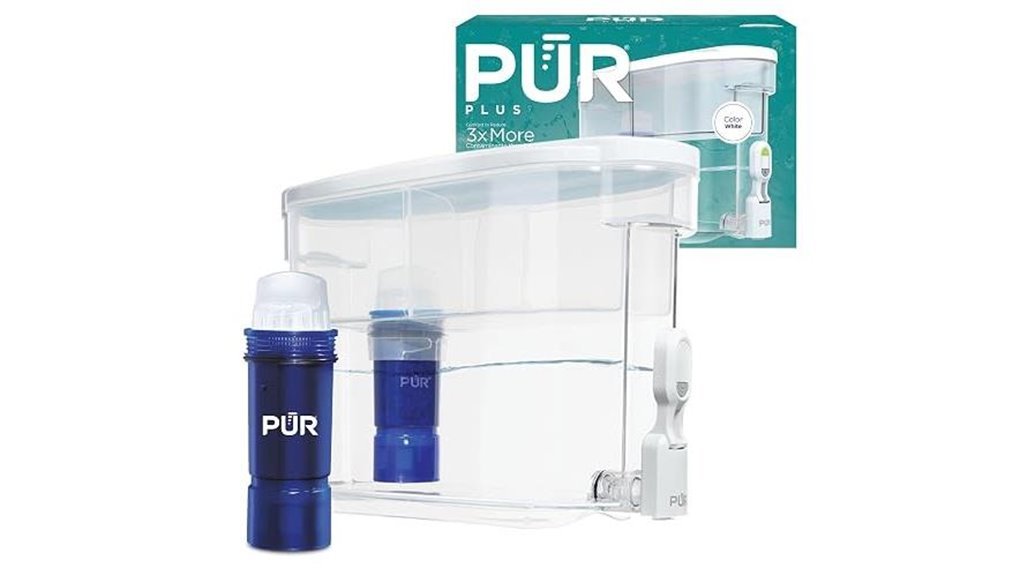
The PUR Plus 30-Cup Water Filter Dispenser is a strong fit for households that want a slim, refrigerator-friendly dispenser with credible PFAS reduction. Its 1.88-gallon capacity and compact profile suit tight kitchen spaces, while the pull-down spout and carry handle improve daily use. The genuine PUR PLUS filter, IAPMO certified, reduces lead, total PFAS, chlorine, microplastics, and more than 25 other substances. It removes 99% of lead and microplastics, lasts up to 40 gallons, and includes a change indicator. Dishwasher-safe construction and reduced bottle waste add practical appeal.
Best For: Households wanting a slim, fridge-friendly water dispenser with strong lead and PFAS reduction for everyday use.
Pros:
- Reduces lead, total PFAS, chlorine, microplastics, and 25+ other contaminants.
- Compact 30-cup design with pull-down spout and carry handle for easy daily use.
- Dishwasher-safe and includes a filter change indicator for convenience.
Cons:
- Filter lifespan is only about 2 months or 40 gallons, so replacements are frequent.
- Plastic construction may not appeal to users seeking glass or stainless steel.
- 30-cup capacity may still be too small for larger households with heavy water use.
Culligan 40-Cup Glass Water Filter Dispenser
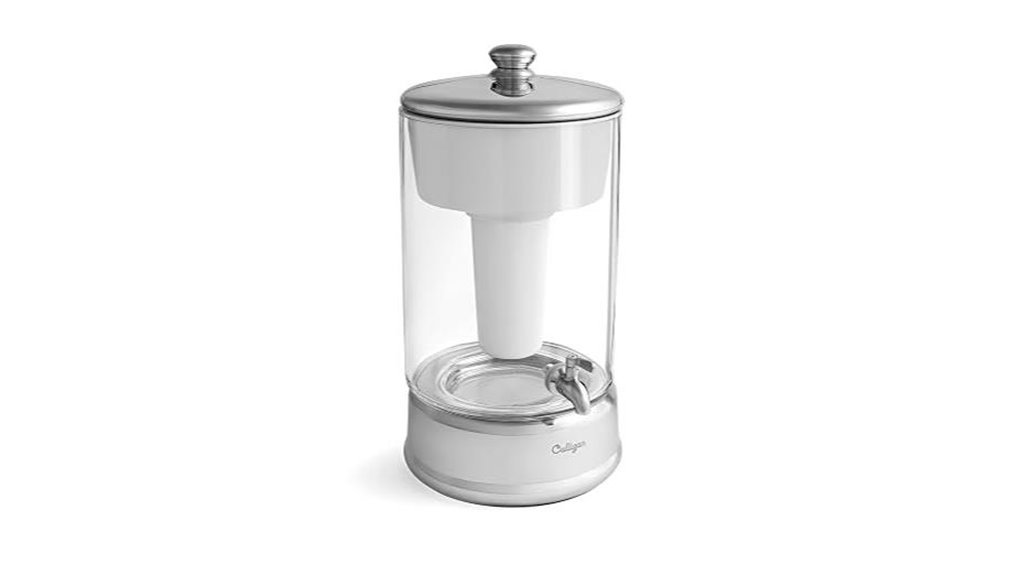
With its 40-cup glass design and strong PFAS reduction, this dispenser suits households hosting frequent gatherings. Its 5-stage filter removes 99.9% of dissolved solids and is IAPMO certified to reduce lead, Total PFAS, chlorine, mercury, and other contaminants. Culligan’s ZeroWater Technology filter is said to remove five times more contaminants than leading filters. A built-in TDS meter helps track performance, and a 0 reading signals effective filtration. The drop-in filter and spigot support easy use. It also helps cut plastic waste by replacing up to 150 bottles. Only new Culligan filters are compatible.
Best For: Households or event hosts who want a large, elegant glass water dispenser with strong filtration for reducing dissolved solids, PFAS, and other contaminants.
Pros:
- 5-stage filtration removes 99.9% of dissolved solids and is IAPMO certified to reduce lead, Total PFAS, chlorine, mercury, and more.
- 40-cup glass design looks attractive on a countertop and is useful for frequent gatherings.
- Built-in TDS meter and drop-in filter make it easy to monitor water quality and maintain.
Cons:
- Only compatible with new Culligan with ZeroWater Technology filters, not legacy ZeroWater filters.
- Glass construction may be heavier and more fragile than plastic dispensers.
- Replacement filters are an ongoing cost and the system requires regular monitoring.
ZeroWater 32-Cup Water Filter Dispenser Removes PFOA/PFAS

For households wanting certified PFAS reduction, the ZeroWater 32-Cup dispenser is a strong countertop pick. Its 32-cup, BPA-free body fits on a counter or in a refrigerator and weighs 5.5 pounds. The system uses five-stage ion exchange filtration, and the integrated TDS meter signals filter replacement when it reads 006. IAPMO certification covers PFOA, PFOS, lead, chromium, and mercury reduction. The dispenser includes one filter and meter, operates at 20–80 psi, and handles temperatures up to 32 °C. ZeroWater says one filter can replace up to 110 plastic bottles.
Best For: Households looking for a compact countertop or fridge water dispenser with certified PFAS reduction and simple TDS-based filter replacement.
Pros:
- 5-stage ion exchange filtration with integrated TDS meter for easy monitoring
- IAPMO certified to reduce PFOA/PFOS, lead, chromium, and mercury
- BPA-free design that can help replace up to 110 plastic bottles per filter
Cons:
- Requires regular filter changes once the TDS meter reads 006
- Filtered capacity may be lower than some larger whole-house or under-sink systems
- The dispenser weighs 5.5 pounds, which may be a bit heavy when full or moved often
ZeroWater 23-Cup Water Filter Dispenser Removes PFOA/PFAS
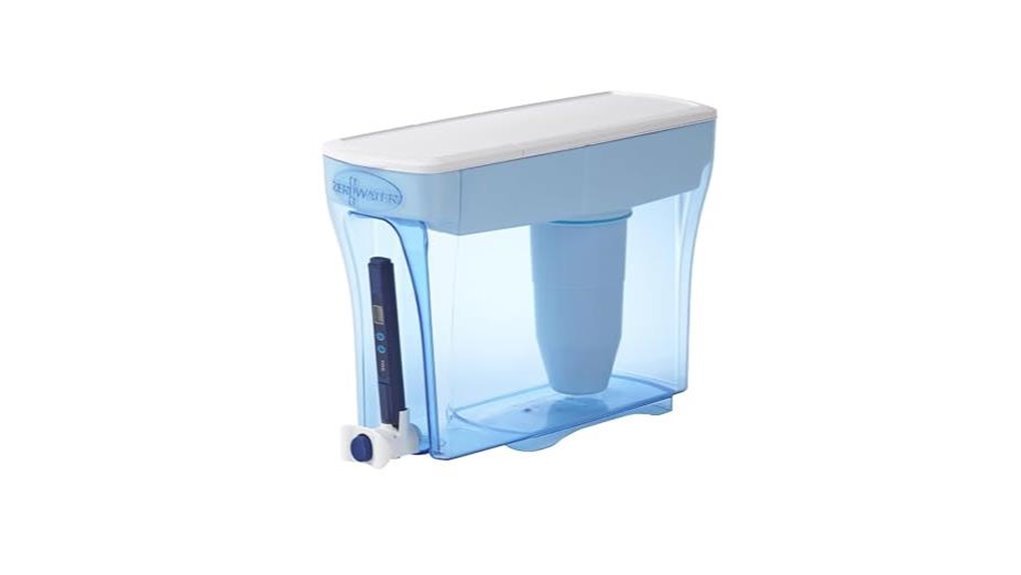
ZeroWater’s 23-cup dispenser suits households wanting near-complete TDS removal and PFAS reduction. The ZD-018 uses a five-stage ion exchange filter to remove virtually all total dissolved solids, and IAPMO certification confirms reduction of PFOA, PFOS, lead, chromium, and mercury. Its 5.4-liter BPA-free body includes an ergonomic handle, spigot, and Ready-Pour technology for dispensing during filtration. A built-in TDS meter and filter-change indicator support maintenance. Compatible only with ZeroWater filters, it works well in homes or small offices and can help avoid up to 660 single-use plastic bottles each year.
Best For: Households or small offices that want strong PFAS/TDS reduction, convenient on-demand dispensing, and a monitor for filter performance.
Pros:
- Removes virtually all TDS and is IAPMO certified for reducing PFOA/PFOS, lead, chromium, and mercury.
- Ready-Pour technology, spigot, ergonomic handle, and built-in TDS meter make it easy to use and maintain.
- Can reduce plastic waste by avoiding up to 660 single-use bottles per year.
Cons:
- Works only with ZeroWater replacement filters, limiting flexibility.
- Filter replacement costs can add up over time with regular use.
- Larger 23-cup dispenser may take up more fridge or counter space than smaller pitchers.
AquaTru Glass Carafe Countertop Reverse Osmosis Water Filter

The AquaTru Glass Carafe suits households wanting powerful PFAS reduction without plumbing installation. This countertop reverse osmosis system uses a 4-stage process to remove 84 contaminants, including PFOA, PFOS, lead, microplastics, fluoride, chromium-6, and arsenic. It plugs into a standard outlet, requires no tools, and fills a borosilicate glass carafe from tap water. Compact at 14 x 7.5 x 13 inches, it fits small kitchens well. Filters last up to 6 months to 1 year. A 1-year warranty and 30-day money-back guarantee support the purchase.
Best For: Households, apartment dwellers, and health-conscious users who want strong PFAS and contaminant reduction in a compact countertop RO system with no plumbing installation.
Pros:
- Removes 84 contaminants, including PFOA, PFOS, lead, fluoride, chromium-6, arsenic, and microplastics.
- No plumbing, drilling, or tools required; plugs into a standard outlet for easy setup.
- Compact design with a borosilicate glass carafe, making it a good fit for small kitchens.
Cons:
- Requires regular filter replacements, which adds ongoing maintenance and cost.
- Countertop unit still takes up some space and must be filled manually with tap water.
- Maximum supported water TDS is 300 PPM, so it may not be ideal for all water conditions.
AquaTru Water Purification Unit (NSF/ANSI Certified)
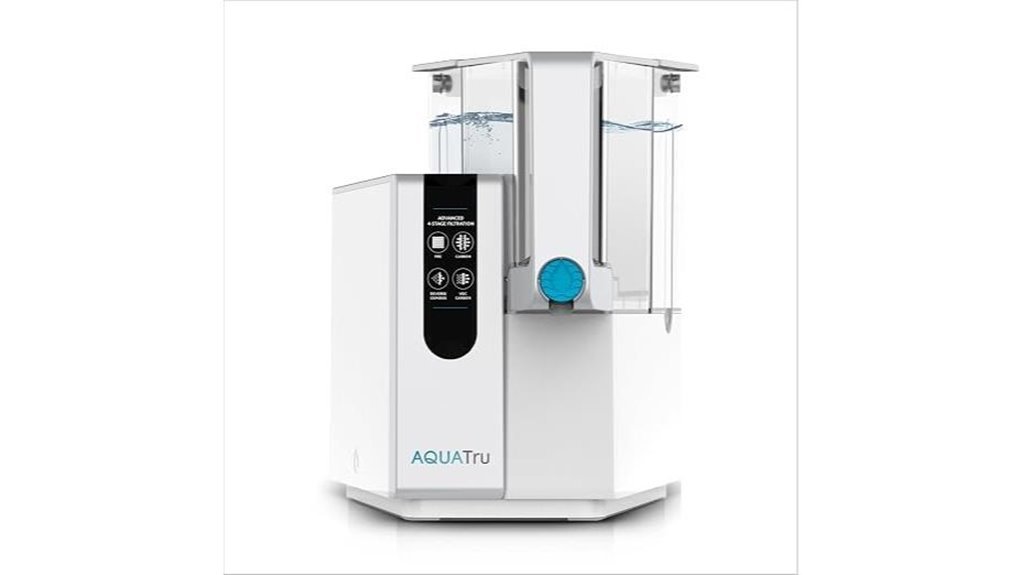
AquaTru suits households seeking certified PFAS reduction without plumbing installation. This countertop reverse osmosis unit sets up in minutes and uses Ultra Reverse Osmosis to treat water through NSF/ANSI standards 41, 53, 58, 401, and P473. It removes 84 contaminants, including microplastics, PFOA, PFOS, hormones, carcinogens, and other toxins. The BPA-free system holds 2.7 liters, supports up to 500 PPM TDS, and runs on corded electric power. Its filters last 600 to 1,200 gallons, helping replace up to 4,500 plastic bottles.
Best For: Households seeking a countertop, no-plumbing reverse osmosis purifier with certified PFAS reduction and broad contaminant removal.
Pros:
- Certified to NSF/ANSI standards 41, 53, 58, 401, and P473 for strong filtration credibility.
- Removes 84 contaminants, including microplastics, PFOA, PFOS, hormones, and carcinogens.
- Easy setup in minutes and can replace up to 4,500 plastic bottles over time.
Cons:
- Requires electricity to operate since it is corded.
- Filter replacements are needed periodically, which adds ongoing cost.
- Countertop unit may be bulky for very small kitchens or limited spaces.
Factors to Consider When Choosing Water Filter Dispensers for PFAS Reduction in 2026
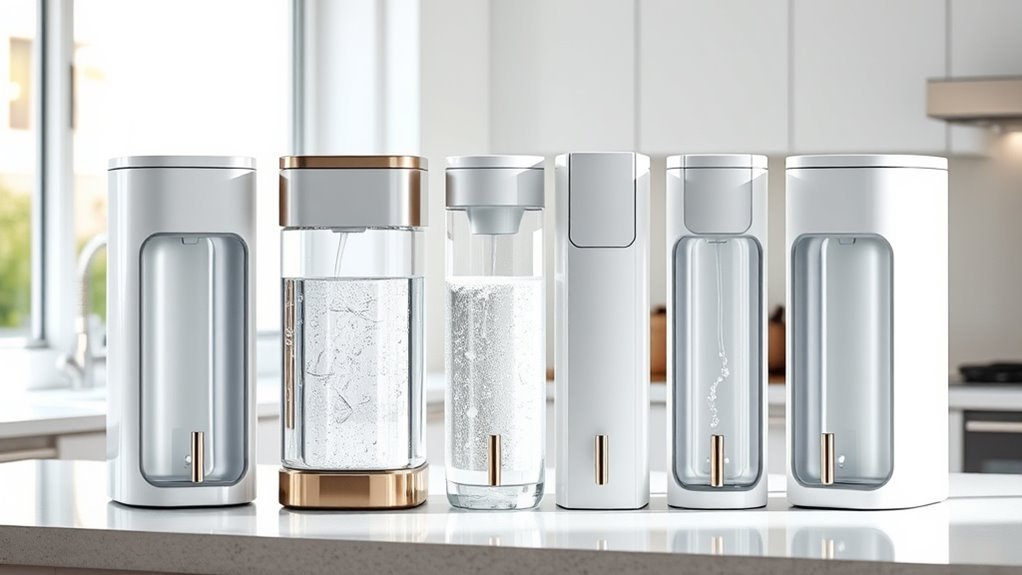
In 2026, selecting a water filter dispenser for PFAS reduction depends first on verified PFAS filtration certification and the broader range of contaminants it can remove. Filter lifespan and replacement costs also matter, along with dispenser capacity and size to match household needs. Maintenance features and clear indicator systems can further improve ease of use and consistent performance.
PFAS Filtration Certification
When evaluating a water filter dispenser for PFAS reduction, certification should be the first filter for comparison. IAPMO certification offers a practical benchmark because it indicates that the dispenser has been tested against rigorous contaminant-removal standards. Buyers should confirm that packaging lists PFAS-specific claims rather than general filtration language, since performance can vary widely. Some systems rely on multi-stage filtration to improve reduction, and top models may remove up to 99% of these persistent chemicals. Certification also helps interpret those claims more reliably. Filter lifespan matters too, because PFAS-focused cartridges may last only a few months or extend beyond a year, depending on water use and technology. Verified certification gives the clearest evidence that performance claims are grounded in standardized testing.
Contaminant Removal Scope
Contaminant removal scope should be judged by how broadly and effectively a dispenser reduces PFAS and related impurities, with top models targeting reductions of 99% or more. A strong unit should not focus on one pollutant alone; it should also limit other harmful substances that often accompany contaminated water. Reverse osmosis systems and advanced multi-stage designs usually provide the widest protection because they remove a broader range of chemicals and particulates. Independent certification from groups such as NSF or IAPMO helps confirm these claims and narrows the risk of overstated performance. Monitoring tools, including TDS meters, can support consistent results by signaling when filtration quality changes. The best dispensers combine high PFAS reduction, broad contaminant control, and verified performance in one reliable system.
Filter Lifespan Costs
Filter lifespan plays a major role in the true cost of a PFAS water filter dispenser, since replacement intervals can range from about 40 gallons or two months to 600 gallons or more. Shorter-lived filters usually raise annual maintenance expenses because replacements may be needed every few months, while longer-lasting systems can stretch service to a year or longer. Although advanced PFAS filtration often costs more upfront, it may lower overall spending by reducing bottled water purchases. Monitoring tools such as TDS meters can help indicate when a cartridge still performs adequately, avoiding premature replacement. Over time, one quality filter can displace hundreds or even thousands of plastic bottles, making lifespan a financial and environmental factor.
Dispenser Capacity Size
Capacity is a practical starting point when comparing PFAS-reduction water filter dispensers, since available sizes typically range from about 23 to 40 cups or more. That range allows selection based on household size, office traffic, and daily drinking habits. A 40-cup dispenser can serve families or shared spaces with fewer refills, while a 23-cup model may suit one person or a small household without occupying excess counter or refrigerator space. Size also affects access speed: larger reservoirs often require more time to filter a full load, whereas smaller units may deliver filtered water sooner. The best choice balances volume, available space, and expected use, ensuring the dispenser fits the location and supplies enough water without unnecessary bulk or delay.
Maintenance And Indicators
Maintenance matters because PFAS-reduction filters have limited service lives, often spanning about 40 to 600 gallons depending on the technology, and timely replacement is essential to preserve performance. Most systems also need filter changes every 2 to 6 months, so users should track water use and follow the manufacturer’s schedule closely. Many dispensers include replacement indicators that alert when service is due, often by monitoring total dissolved solids levels. Some models add TDS meters, giving real-time readings that help confirm whether filtration is still working effectively. These tools reduce guesswork and support consistent water quality. Regularly reviewing indicators and meter readings helps prevent declining efficiency, lowers the risk of overdue changes, and keeps PFAS reduction more reliable over time.
Design And Placement
When choosing a water filter dispenser for PFAS reduction, size and placement should come first, since the unit must fit comfortably on a countertop or in a refrigerator without crowding the space. Dimensions and weight matter, especially in smaller kitchens, where a slim profile can preserve usable room. A sturdy build helps the dispenser stay stable during refilling and pouring, while still remaining easy to handle. Practical features such as a pull-down spout or ergonomic handle can improve daily use. BPA-free materials are also important for health and safety, particularly with frequent contact. Beyond function, the dispenser’s appearance should not be ignored. A clean, attractive design can blend with kitchen decor and make regular water drinking more appealing, supporting consistent hydration habits.
Frequently Asked Questions
How Often Should PFAS Filter Cartridges Be Replaced?
PFAS filter cartridges should be replaced according to the manufacturer’s capacity rating, not on a fixed calendar alone. In many systems, replacement occurs every two to six months, though heavy use, poor source water, or high PFAS levels can shorten that interval. If flow slows, taste changes, or testing shows breakthrough, replacement should happen sooner. Regular water testing and adherence to certified performance data remain essential for reliable contaminant reduction.
Do Water Filter Dispensers Remove Microplastics Too?
Yes, many water filter dispensers can remove microplastics, though not all are equally effective. Critics may assume PFAS-focused filters only target chemicals, but that is not always true; filters with fine pores, activated carbon, or specialized membranes can also capture small plastic particles. Performance depends on the dispenser’s design, certification, and maintenance. Replacing cartridges on schedule matters, because clogged or exhausted media reduces removal efficiency for both PFAS and microplastics.
Can PFAS Filters Affect Water Taste or Odor?
Yes, PFAS filters can affect water taste or odor, usually by improving both rather than worsening them. Activated carbon and similar media may reduce chlorine, metallic notes, and some chemical smells. However, if a filter is old, improperly maintained, or built with low-quality materials, it can create a stale or off taste. Regular cartridge replacement and proper flushing generally help preserve clean-tasting water.
Are These Dispensers Compatible With Well Water?
Yes, many dispensers can work with well water, but compatibility depends on the water’s chemistry and sediment load. Well water often contains iron, manganese, hardness, or bacteria that standard PFAS filters may not fully address. A third-party test or prefilter may be needed before use. He or she should verify the dispenser’s specifications and replacement cartridge capabilities to guarantee it can handle the source water safely and effectively.
Do PFAS Filters Work for Hot Water Use?
Usually, no; most PFAS filters are not intended for hot water use. Heat can damage activated carbon, ion exchange media, or membrane components, and manufacturers often specify filtration only for cold or room-temperature water. Hot water may also reduce contact time and compromise performance. It is best to filter cold water first, then heat it afterward. Product instructions should be checked carefully for any temperature limits before use.
Conclusion
Ultimately, the best PFAS-reducing water filter dispenser depends on household size, filtration goals, and countertop space. ZeroWater and AquaTru models stand out for advanced contaminant removal, while PUR and Culligan offer simpler, more affordable everyday use. One striking statistic adds perspective: some of these dispensers can eliminate the need for hundreds of single-use plastic bottles each year, making them as practical as they are environmentally significant.
