In 2027, leak detection has become a key feature in modern water dispensers, especially for households that want convenience without the risk of hidden damage. Two Avalon models stand out for combining touchless operation, filtration, and safety-focused design. Their appeal goes beyond basic dispensing, though, because each offers different strengths that may matter more than expected when reliability and maintenance enter the picture.
Avalon Touchless Bottleless Water Cooler Dispenser with BioGuard
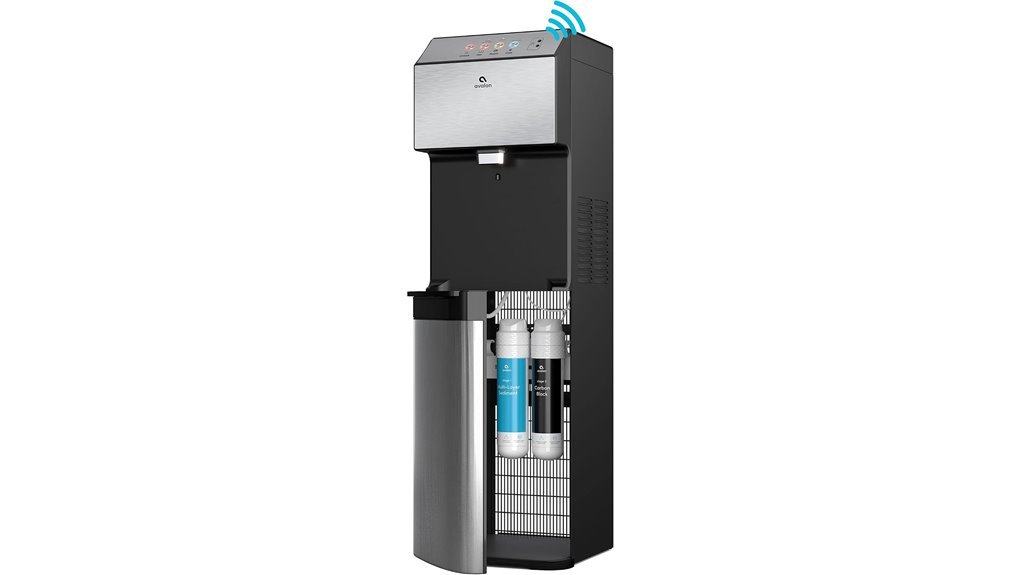
The Avalon Hand-Free Touchless Electric Bottleless Water Cooler Dispenser with BioGuard is a strong choice for households or offices that want a sanitary, low-maintenance dispenser with added protection against leaks. The A13-S model uses a touchless sensor for hands-free cold water, offers cold, cool, and hot settings up to 185°F, and includes a digital display, clock, and nightlight. Its under-sink design connects to existing water lines and includes a leak detector. Dual filters remove chlorine, lead, rust, and bacteria, while the ozone self-cleaning function helps reduce upkeep.
Best For: Households or offices looking for a touchless, bottleless water cooler with multiple temperature settings, built-in leak protection, and low-maintenance self-cleaning features.
Pros:
- Touchless sensor dispensing promotes more sanitary, hands-free use.
- Dual filtration and ozone self-cleaning help improve water quality and reduce maintenance.
- Includes cold, cool, and hot water options plus a digital display and nightlight.
Cons:
- Requires under-sink installation and access to an existing water line.
- Filters need periodic replacement every 6 months or 1500 gallons.
- Higher upfront setup complexity than a standard bottled water cooler.
Avalon Self-Cleaning Bottleless Water Cooler Dispenser (A7BOTTLELESSBLK)
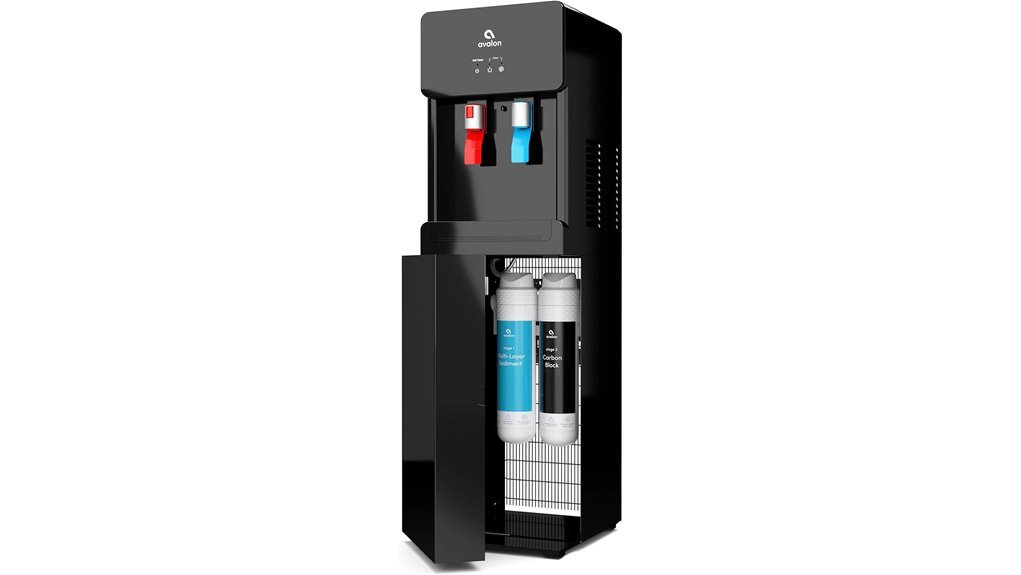
With touchless dispensing and a bottleless setup, Avalon suits busy households seeking cleaner, simpler hydration. The A7BOTTLELESSBLK arrives in black with a slim freestanding profile that fits tight spaces. It offers hot and cold spouts, a child safety lock, and a built-in night-light for after-dark use. Its self-cleaning function helps sanitize the system, while dual filtration uses sediment and carbon block filters. The kit includes tubing, adapters, and instructions for installation. Rated at 520 watts, it holds 3.6 liters, reaches 185°F, and stands 41 inches tall.
Best For: Busy households or small spaces that want a slim, bottleless water cooler with touchless dispensing, hot and cold water, and built-in self-cleaning.
Pros:
- Touchless dispensing with hot and cold spouts adds convenience and versatility.
- Self-cleaning function and dual filtration help support cleaner water.
- Slim freestanding design with included installation kit fits tight spaces and simplifies setup.
Cons:
- Requires installation, so it’s less convenient than a standard plug-in bottle cooler.
- Filters need replacement every 6 months or 1500 gallons, adding upkeep.
- At 520 watts, it may use more energy than simpler cooling units.
Factors to Consider When Choosing Water Dispensers With Leak Detection in 2026
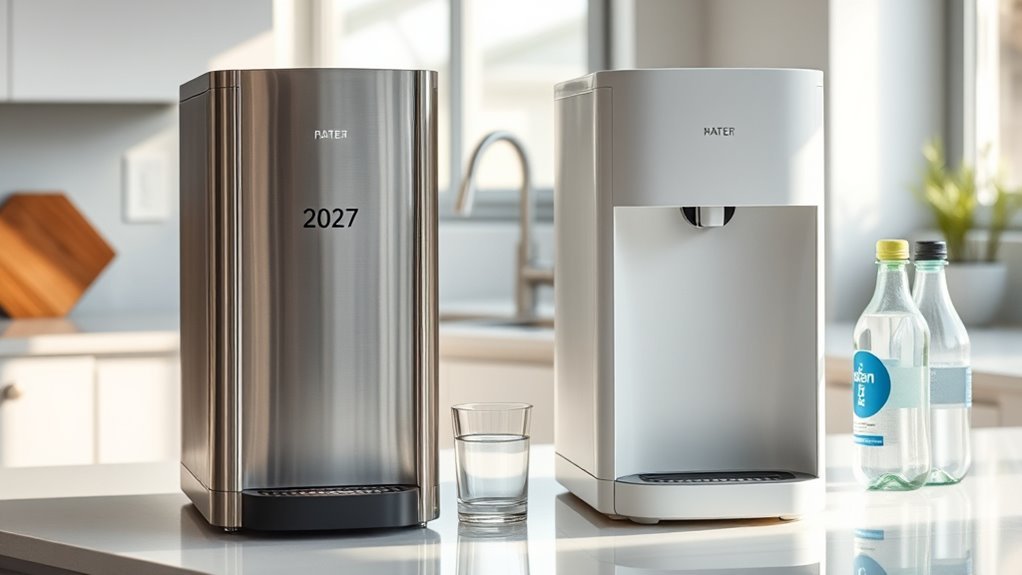
In 2026, choosing a water dispenser with leak detection depends on how accurately the sensor identifies moisture and triggers alerts before damage occurs. Filtration quality, temperature control options, installation requirements, and the practical advantages of a tankless design also influence overall performance and convenience. A well-balanced model should combine dependable leak protection with clean water delivery and an easy setup.
Leak Detection Technology
Leak detection technology in water dispensers relies on sensors that monitor water flow and flag unusual activity before minor leaks become major problems. These systems are designed to alert users quickly, reducing the risk of water damage and unnecessary waste. In more advanced models, integrated alarms or on-screen notifications provide immediate warnings when a leak is detected, improving response time. Some units also connect to mobile apps, giving real-time status updates and diagnostics for added convenience. Many dispensers include automated shut-off valves that stop water flow once a leak is confirmed, limiting further damage. Regular testing and maintenance help preserve accuracy and reliability, making the technology more dependable over time. Buyers should compare alert methods, shut-off response, and monitoring features when evaluating options.
Filtration System Quality
A quality filtration system should pair a sediment filter with a carbon block filter to remove common contaminants such as chlorine, lead, rust, and bacteria. This dual setup improves water purity and taste while also helping protect the dispenser from buildup that can shorten its service life. Filter models with an expected lifespan of about six months or 1,500 gallons are generally preferable because they support steady access to clean water without frequent changes. Regular replacement remains essential, since overdue filters can clog and reduce performance. Some advanced dispensers add UV or ozone purification for extra sanitization, offering another layer of treatment beyond standard filtration. In leak-detection models, dependable filtration complements overall reliability and supports consistent daily use.
Temperature Control Options
Temperature control is another major factor when selecting water dispensers with leak detection, since users often want more than simple room-temperature dispensing. Many dispensers provide customizable settings for hot, cool, and cold water, letting households match beverages to daily needs. Models with heating capability can reach 185°F, which suits tea, coffee, and instant soups. Cold settings may drop to 47°F, a useful range in warm climates or for anyone preferring crisp drinking water. Advanced units often include digital controls for precise adjustment and temperature monitoring. Stability also matters, and built-in insulation with efficient heating and cooling systems can help maintain consistent output over time. A dispenser with reliable temperature control offers greater flexibility without sacrificing performance or convenience.
Installation Requirements
Installation logistics can make or break a water dispenser choice, especially when leak detection is involved. Buyers should confirm that the installation kit includes tubing, adapters, and shut-off valves suited to the existing water line. Space planning matters too: the dispenser’s dimensions must match the intended area to avoid fit problems or awkward placement. The setup should be simple, with clear instructions that support a smooth, low-stress installation. It also helps to know whether the model needs under-sink mounting or can stand freely, since kitchen layouts differ. Built-in leak detection should be present from the start, because it can monitor water flow and help prevent damage during both installation and everyday operation. Better preparation reduces delays and costly adjustments.
Tankless Design Benefits
Beyond installation fit and setup, the tankless design offers practical advantages for buyers seeking leak-detecting water dispensers in 2026. By eliminating large bottles, it saves floor space and reduces visual clutter, making it easier to place in kitchens, offices, or shared areas. Its higher capacity can support as much as 1,500 gallons before filter replacement, helping limit service interruptions. Advanced filtration in many models removes chlorine, lead, and bacteria, improving water quality for everyday use. Self-cleaning functions further support hygiene by sanitizing internal components and discouraging bacterial growth. Integrated leak detection adds another layer of protection, monitoring flow and helping stop leaks before they cause damage. Together, these features make tankless dispensers efficient, safer, and well suited to busy environments.
Maintenance And Cleaning
Routine maintenance is a key factor when choosing a water dispenser with leak detection in 2026, since filters typically need replacement every six months or after about 1,500 gallons to preserve water quality and performance. Dispensers with dual filtration, often using sediment and carbon block stages, help reduce chlorine, lead, and bacteria, making upkeep more worthwhile. Some models include self-cleaning ozone cycles that sanitize internal components and lower manual cleaning demands. Leak detection adds another maintenance advantage by flagging problems early, limiting water waste and keeping the surrounding area dry. In addition, a built-in nightlight can support easier access in dim settings, helping users notice filter changes and perform routine checks more consistently. Together, these features streamline cleaning and care.
Safety Features
Safety features play a major role in selecting a water dispenser with leak detection in 2026, especially in households and offices where daily use is frequent. Child safety locks are important on hot water spouts because they help reduce the chance of accidental burns. Night lights can improve visibility after dark, making the dispenser easier to use safely in low-light areas. Leak detection remains essential because it monitors water flow and can help prevent damage before a problem spreads. Touchless dispensing adds another layer of protection by limiting hand contact and supporting cleaner use throughout the day. Self-cleaning functions also contribute to safety by sanitizing internal parts and lowering contamination risk. Together, these features create a more secure, hygienic dispensing experience.
Warranty Coverage
Warranty coverage is a practical checkpoint when choosing water dispensers with leak detection in 2026, since a standard warranty usually lasts about one year and should cover defects and repairs. Buyers should confirm that the policy includes both parts and labor, because that combination limits out-of-pocket costs if a leak sensor or other component fails. Some manufacturers also provide extended coverage, sometimes reaching three years or longer, which can better suit households planning long-term use. The claim process matters as well; clear instructions for filing, required documentation, and response times reduce frustration during a repair. A strong warranty often signals confidence in product quality, making it an important comparison point before purchase.
Frequently Asked Questions
How Does Leak Detection Shut off Water Automatically?
Leak detection shuts off water automatically by sensing moisture, abnormal flow, or pressure changes and then triggering a valve closure. A sensor sends a signal to the control unit, which stops the incoming supply or activates an internal solenoid valve. In some systems, this happens instantly; in others, a brief confirmation prevents false alarms. The result is reduced flooding, less waste, and faster protection of nearby surfaces and equipment.
Can Leak Detection Prevent Mold Growth Inside Dispensers?
Yes, leak detection can help prevent mold growth inside dispensers by limiting hidden moisture, though it cannot eliminate mold on its own. Like a vigilant sentry, it catches leaks early, reducing stagnant water that feeds mildew. Still, regular cleaning, drying, and filter replacement remain essential. When moisture is stopped before it lingers, the dispenser’s interior stays less hospitable to microbial growth and unpleasant odors, improving overall hygiene considerably.
Do Leak Sensors Work During Power Outages?
Leak sensors usually do not work during power outages unless they have battery backup or are part of a battery-powered alarm system. Hardwired sensors lose active monitoring when electricity fails, though some retain memory or send alerts once power returns. Passive moisture sensors can still detect water physically, but they cannot transmit warnings without power. Their usefulness thus depends on the dispenser’s design, backup power, and alert method.
Are Replacement Leak Sensors Easy to Install?
A homeowner replacing a failed sensor on a countertop dispenser may find the task simple: many models use plug-in or adhesive-mounted modules that snap into place with minimal tools. Installation is usually straightforward when the replacement matches the original connector and size. Some units, however, require panel removal or app re-pairing. Complexity rises with hardwired systems, but for most consumer dispensers, the process is designed to be quick and accessible.
How Often Should Leak Detection Systems Be Tested?
Leak detection systems should be tested monthly, or at least every few months, to verify proper operation. Routine checks help guarantee sensors, alarms, and shutoff features respond quickly when moisture is detected. In high-risk areas or commercial settings, testing may need to be more frequent, such as weekly. Any missed alarm, weak battery, or delayed response should prompt immediate maintenance and retesting to maintain reliable protection.
Conclusion
In 2027, the Avalon Touchless Bottleless Water Cooler and the Avalon Self-Cleaning Bottleless Water Cooler emerge as standout choices for leak detection and everyday convenience. Their touchless operation, smart leak alerts, and self-cleaning features create a safer, cleaner drinking experience. For families, the added child locks and night lights bring welcome reassurance. Considering filtration, maintenance, and warranty coverage, these dispensers seem to deliver a mountain of value in one sleek package.