
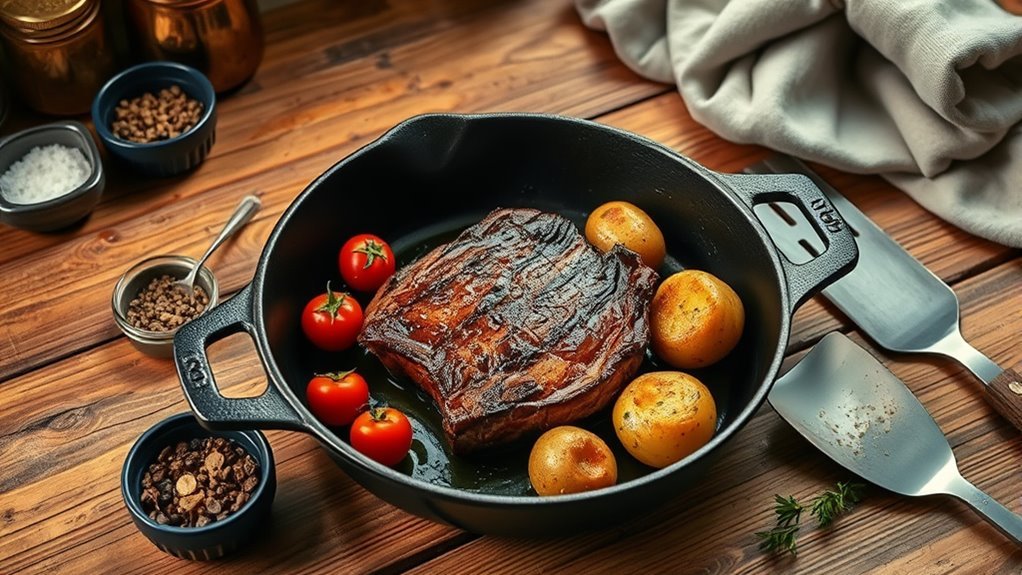
Cast iron skillets are good for searing, browning, baking and cooking that moves from stovetop to oven. They are also tough, long-lasting and affordable. They are less good for quick, light cooking, long acidic simmers and anyone who dislikes heavy pans.
This page looks at the strengths and weaknesses of cast iron skillets so you can decide if one suits you. For the list of cooking methods, see what cast iron skillets are used for, and for the basics, see what a cast iron skillet is.
Strengths and Weaknesses at a Glance
| Strengths | Weaknesses |
|---|---|
| Holds heat for strong browning and searing | Heavy to lift and move |
| Goes on the stove, in the oven, on the grill or over a fire | Slow to heat and slow to cool |
| Very durable and repairable | Bare iron needs drying, oiling and occasional re-seasoning |
| Seasoning gives a naturally low-stick surface that improves with use | Acidic, long-cooked foods can dull the seasoning |
| Usually inexpensive for the lifespan | Can scratch glass cooktops if dragged |
What Cast Iron Skillets Are Good For
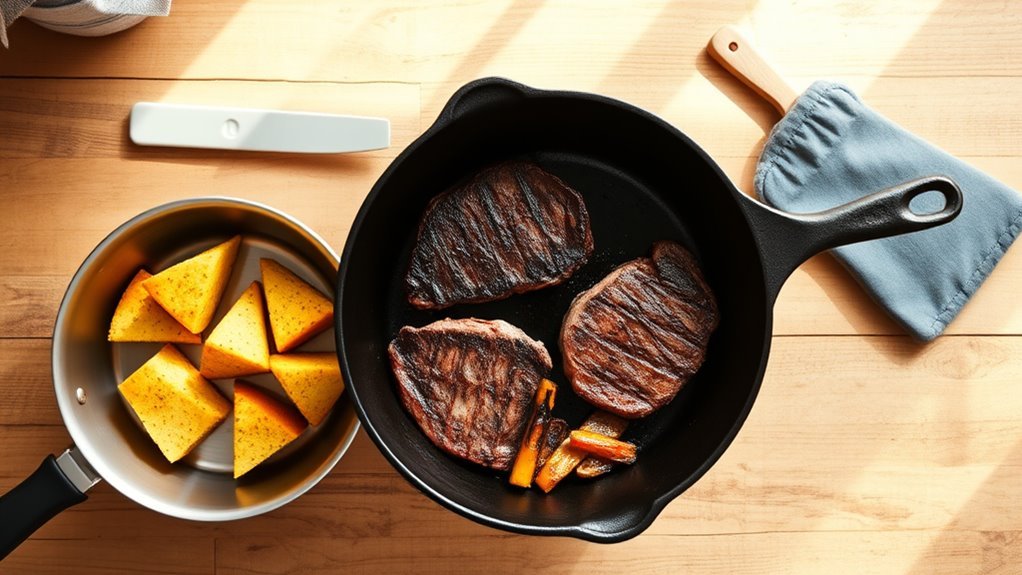
- Searing: Steaks, chops and burgers develop a deep crust because the pan stays hot when food is added.
- Baking: Cornbread, biscuits, cobblers and skillet pizza brown well on the bottom and edges.
- Frying: Chicken, bacon and potatoes cook with steady heat.
- One-pan meals: You can sear on the stove and finish in the oven.
- Serving: Thick iron keeps food hot at the table. Use a trivet.
- Outdoor cooking: The pan tolerates grills and campfires.
Benefits of Cooking With Cast Iron
Durability and value
Because the pan is one solid piece of iron, there is no coating to peel. If rust or sticking appears you can scrub the surface and re-season it. A single skillet can be used for decades.
No synthetic coating
Seasoned cast iron relies on baked-on oil rather than a synthetic nonstick finish. Some cooks prefer this, especially for cooking at high heat.
A little iron in your food
Cooking in cast iron can add a small amount of iron to food, particularly moist, acidic dishes cooked for a long time. The amount varies widely and should not be treated as a way to treat low iron. Learn more in does a cast iron skillet give you iron.
Drawbacks and Limits
Weight
Skillets are heavy, and larger sizes get heavier when full. If lifting is a problem, choose a smaller or lighter design. See what size cast iron skillet to choose.
Slow, uneven heating
Iron heats slowly and can be hotter right above the burner. Preheat the pan for several minutes and use medium heat for most cooking.
Care
Bare cast iron should be washed by hand, dried right away and lightly oiled. This takes a minute, but skipping it can lead to rust. See how to care for a cast iron pan.
Acidic and delicate foods
Simmering tomato sauce, wine or vinegar for a long time in bare iron can strip seasoning and give a metallic taste. Delicate fish can stick. Short cooking times in a well-seasoned pan are usually fine.
Is a Cast Iron Skillet Right for You?
| A cast iron skillet suits you if you… | Consider another pan if you… |
|---|---|
| Love searing, crispy edges and baking in a skillet | Mostly cook eggs or fish quickly |
| Want one pan that lasts | Cannot comfortably lift a heavy pan |
| Do not mind quick hand washing | Want dishwasher-safe cookware only |
Alternatives include stainless steel, nonstick and enameled cast iron. See what cast iron cookware is for the bare vs enameled comparison.
Frequently Asked Questions
What is the biggest advantage of a cast iron skillet?
The biggest advantage is heat retention combined with durability. A skillet browns food deeply, goes from stove to oven and can last for generations if it is kept dry and lightly oiled.
What are the downsides of cast iron pans?
They are heavy, slow to heat, and bare iron needs drying and occasional re-seasoning. Long acidic simmers can dull the seasoning, and rough bottoms can scratch glass cooktops if dragged.
Is cooking in cast iron healthy?
Cast iron has no synthetic coating and can add a small, variable amount of dietary iron, but it does not make food a health product. Fat, salt and ingredients matter more. People with hemochromatosis should ask their doctor.
Why did people stop using cast iron?
Lighter, easier pans such as nonstick and aluminum became popular because they heat fast and need little care. Cast iron remains popular with cooks who value searing, baking and long-lasting pans.
Conclusion
Cast iron skillets are good for searing, baking and durable everyday cooking, but they are heavy and ask for a little care. If those tradeoffs suit you, a skillet can be the most useful and longest-lasting pan you own.
