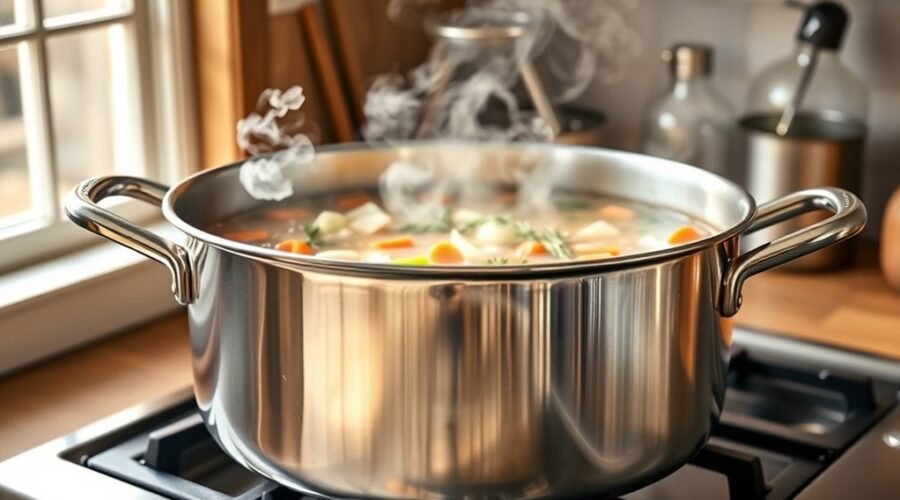
A stock pot is a large, deep cooking pot made for boiling and simmering. It is commonly used for stocks, soups, stews, chili, pasta, and rice. Most stock pots hold 6 to 12 quarts, with 8 quarts a practical home size. Their tall sides help limit spills, while stainless steel and aluminum are common materials. They often have two helper handles for lifting. More useful details follow next.
What Is a Stock Pot?
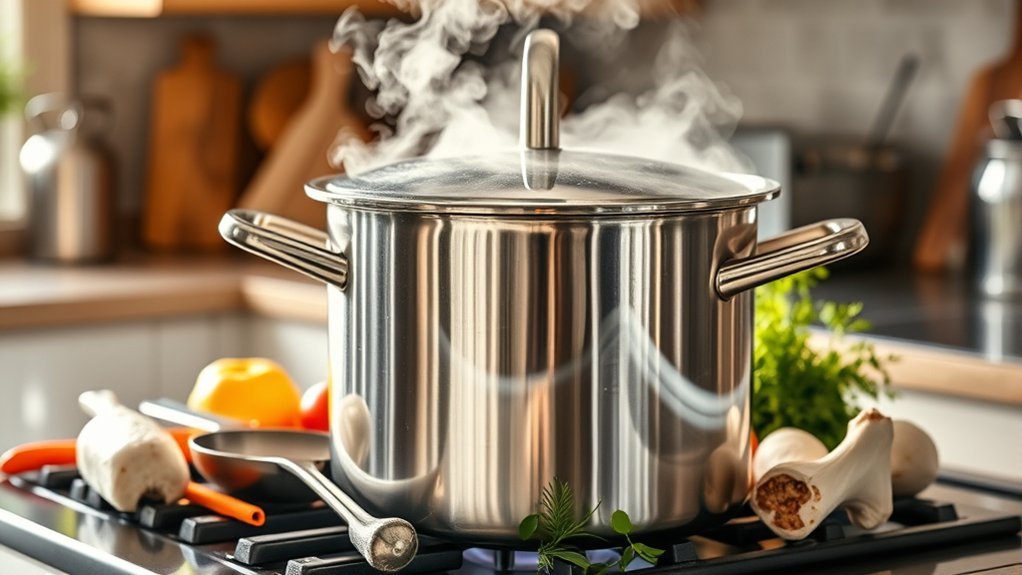
A stock pot is a large, deep cooking vessel with high sides, designed for boiling, simmering, and preparing large batches of soups, stocks, and stews.
In practical kitchens, stock pots large enough for family meals or community cooking support efficient preparation without constant refilling. Their tall, narrow shape reduces spills and splatters, helping keep the cooking space safer and cleaner.
This design suits boiling pasta, steaming vegetables, making broth, and canning. Usually holding 6 to 12 quarts, they serve households that cook for groups, gatherings, or meal prep.
Made to distribute heat evenly, they allow ingredients to cook steadily and thoroughly. For people building self-reliant routines, the stock pot offers a simple tool for feeding many with less effort, more control, and greater freedom in everyday cooking.
Stock Pot Sizes, Shapes, And Materials
Stock pots usually come in 6- to 12-quart sizes, with 8 quarts often considered the most practical choice for home kitchens.
Stock Pots are valued for large capacity, giving cooks room to work without crowding the pot. Their tall, straight sides help contain bubbling liquid and reduce splashes, while a wide base supports even heat distribution across the bottom.
Most designs include two helper handles, making lifting steadier when the pot is full. Common materials like stainless steel and aluminum offer durability and reliable heat conductivity, though stainless steel is often preferred for its strength and easy care.
The shape, size, and construction together make the pot adaptable for household demands and larger gatherings. For those seeking tools that support autonomy in the kitchen, this combination of capacity, control, and sturdiness offers practical freedom.
What Can You Cook In A Stock Pot?
With its generous capacity and tall sides, a stock pot is well suited for stocks and broths, where whole chickens, vegetables, and long simmering times from 1 to 6 hours can develop deep flavor.
It also handles soups and stews with ease, giving substantial ingredients room to move while keeping the simmer calm and controlled. For households cooking large batches, the pot is useful for chili, pasta, and rice, where its wide design supports even heat and helps reduce spills.
Steam baskets can turn it into a practical tool for vegetables, adding a simple path to lighter meals without extra equipment. This versatility makes it valuable in kitchens that need scale, comfort, and straightforward function.
High-heat frying or sautéing is less suitable, since the thin base may burn food and cook unevenly. In practice, the stock pot favors patience, volume, and flexible cooking over aggressive heat.
How To Make Stock In A Stock Pot
To make stock in a stock pot, the cook typically starts by placing a whole chicken, bones, vegetables, herbs, and cold water into an 8- to 12-quart pot, leaving enough room for the ingredients to move freely.
The stock pot is then brought slowly to a gentle simmer, not a hard boil, so the flavors can unfold without clouding the liquid. Anodized aluminum models heat quickly and evenly, supporting steady extraction over 1 to 6 hours, depending on the recipe.
Bring the stock pot to a gentle simmer, allowing flavors to develop without clouding the liquid.
During the first stage, foam and impurities rise to the surface and are skimmed away to keep the stock clear and clean-tasting. Cold water helps draw out more flavor as the mixture warms.
When the cooking is complete, the contents are strained through a fine-mesh sieve or cheesecloth. The result is a rich, versatile stock ready for soups, sauces, grains, and other simple meals.
Stock Pot Vs. Dutch Oven
Though both belong in a busy kitchen, a stock pot and a Dutch oven serve different roles. Stock pots are tall, wide, and often large, usually holding 6 to 12 quarts. Dutch ovens are shorter, round or oval, and range from 1 to more than 7 quarts. For freedom in cooking, the right vessel matters.
- Stock pots: stainless steel, quick heating, ideal for boiling, simmering, soups, and stocks.
- Dutch ovens: cast iron, strong heat retention, suited to braising and slow cooking.
- Handles and lids: stock pots use two helper handles; Dutch ovens often have a Cloud Cover Lid to hold in steam.
- Oven safety: stock pots may reach 800°F, while enameled Dutch ovens are rated near 580°F.
In practical use, stock pots support large batches and fast pace, while Dutch ovens favor steady, enclosed cooking.
What Should You Avoid Cooking In A Stock Pot?
A stock pot excels at boiling, simmering, and making large batches of soup or stock, but it is not the right tool for every recipe. Stock pots are best avoided for foods that need focused heat, frequent movement, or fine control. Curry can scorch at the bottom because its spices and moisture do not heat evenly in the deep vessel. Sautéed or fried foods miss the flat base needed for browning. Risotto also fares poorly, since constant stirring is harder in tall sides. Delicate foods need gentler handling.
| Avoid in stock pots | Why |
|---|---|
| Curry | Uneven heat, burning risk |
| Fried or sautéed foods | Weak browning, poor sear |
| Candy, fish, eggs, risotto | Limited control, sticking, overcooking |
For cooks seeking freedom from wasted effort, choosing the right pan keeps results cleaner, safer, and more consistent. Stock pots serve large, liquid-heavy recipes well, but precision dishes deserve different cookware.
How To Choose A Stock Pot
Choosing a stock pot starts with size and capacity, since an 8-quart pot suits most home kitchens while larger models work better for bigger batches.
Material and build matter as well, with stainless steel or anodized aluminum offering durability and even heat distribution.
Heat and handle design should also be checked, including straight sides, sturdy grips, and compatibility with the intended heat source.
Size and Capacity
Stock pots usually range from 6 to 12 quarts, a size span well suited to soups, stocks, stews, and other large-batch recipes. Their capacity should match household needs and the freedom to cook without constant resizing.
An 8-quart model is often recommended for most home cooks, offering practical room for versatile meals. Larger pots support gatherings, while smaller ones suit modest portions.
- 6 quarts: useful for smaller batches.
- 8 quarts: a balanced everyday choice.
- 12 quarts: ideal for crowds.
- Tall sides: help liquids boil and simmer efficiently.
Choosing the right size means matching capacity to servings, not guessing. A well-sized stock pot keeps meal preparation open, efficient, and ready for abundance.
Material and Build
Material matters as much as capacity when selecting a stock pot, since stainless steel and aluminum each bring useful strengths to the kitchen.
Stainless steel offers strong durability, resistance to rust and staining, and simple upkeep, making it a dependable material for frequent use.
Aluminum, by contrast, is lighter and heats quickly, which can support efficient cooking when speed is valued.
The build should also be considered: high sides and a wide base help manage large volumes of liquid with fewer spills.
A sturdy build with two helper handles improves safe lifting once the pot is full.
For most home cooks, an 8-quart size remains practical, but the best choice pairs the right material with a solid, easy-care build.
Heat and Handle Design
Heat and handles shape how well a stock pot performs in daily use. Tall, straight sides help hold warmth and support steady simmering, while strong heat conductivity keeps large batches cooking evenly. A thicker base resists warping under high heat and reduces scorching, giving more freedom from constant stirring.
- Choose stainless steel for durability and even heating.
- Consider aluminum for quick heating, but note possible warping.
- Prefer two sturdy helper handles for safer lifting and pouring.
- Confirm compatibility with induction, gas, or electric cooktops.
Well-made handles and a stable base let the pot move with control when full, making heavy soups, stock, and pasta water easier to manage.
Stock Pot Care And Cleaning
Proper stock pot care begins after cooking, when it should be washed by hand with warm, soapy water and a non-abrasive sponge to protect the surface.
Stubborn stains or burnt food can be eased by soaking the pot in warm water before gentle scrubbing, rather than using harsh cleaners.
After cleaning, the pot should be dried completely and stored carefully, with regular checks for warping or damage.
Cleaning After Cooking
After cooking, a stock pot is best cleaned promptly to prevent residue from hardening and to keep it safe for future use.
In cleaning after cooking, a practical routine protects both the vessel and the meal maker’s freedom from avoidable labor later.
- Soak the pot in hot, soapy water for a few minutes to loosen stuck-on food.
- Scrub with a non-abrasive sponge, especially on stainless steel, to preserve shine.
- Rinse thoroughly, then dry completely to reduce rust risk in metal pots.
- For light discoloration, apply a baking soda and water paste, let it rest, then scrub gently.
Regular cleaning after each use supports food safety and keeps the pot looking ready for the next task.
Removing Stubborn Stains
Stubborn stains on a stock pot are best addressed by soaking the pot in warm, soapy water for at least 30 minutes to loosen debris before scrubbing with a non-abrasive sponge. This simple method supports removing stubborn stains without forcing the surface or risking damage.
For burnt-on marks, a paste of baking soda and water can be spread over the affected area and left for 15 to 20 minutes before gentle scrubbing. Steel wool and harsh abrasive cleaners should be avoided, since they can scratch stainless steel and enameled cast iron.
Regular cleaning after each use helps prevent heavy buildup and keeps the pot ready for future meals. Careful, consistent treatment preserves the pot’s finish, extends its usefulness, and keeps kitchen work practical and unfettered.
Drying And Storage
Once the stock pot has been washed, it should be dried completely to help prevent rust, especially in stainless steel or aluminum models.
Careful drying keeps the vessel ready for honest, durable use and supports long life. For storage, a simple routine protects freedom from odors and damage.
- Place a paper towel inside to absorb leftover moisture.
- Keep the pot in a cool, dry place away from humidity.
- Avoid abrasive cleaners or steel wool on the interior, since scratches weaken the surface.
- Check handles and the base regularly for wear or damage before the next cooking task.
This practical approach preserves the pot’s integrity, reduces risk, and supports reliable performance in future kitchen work.
Best Stock Pot Features
A well-designed stock pot combines tall, straight sides with a thin, flat base to reduce evaporation, heat evenly, and support long simmering for stocks, soups, and broths. In practical terms, the best models favor stock making large in volume without wasteful boil-off. A capacity makes feeding many easier, usually 6 to 12 quarts, while still fitting ordinary kitchens.
| Feature | Benefit | Note |
|---|---|---|
| Tall sides | Limits evaporation | Better simmer control |
| Flat base | Heats evenly | Faster start-up |
| Stainless steel | Durable | Easy upkeep |
| Aluminum | Conducts heat well | Lightweight feel |
| Helper handles | Safer lifting | Useful when full |
These details support steadier cooking and freer movement around the stove. A solid stock pot does not impose; it serves. With balanced materials, generous size, and stable handling, it gives the cook room to work with confidence and calm.
Common Stock Pot Uses
Stock pots are commonly used for cooking and boiling large amounts of food, including stocks, soups, stews, pasta, grains, and blanched vegetables. Their tall sides and wide base support even heating, generous liquid capacity, and reduced spill risk during long cooking tasks.
Beyond the kitchen, they also serve in steaming, canning, and other preserving jobs that require size and steady temperature control.
Cooking and Boiling
When used for cooking and boiling, a stock pot is valued for its tall, straight sides, which help retain heat and reduce the risk of spills during long simmering sessions. Its 8- to 12-quart capacity supports practical freedom in the kitchen, especially when preparing food for groups.
Stainless steel or aluminum bodies conduct heat efficiently and spread it evenly, improving boiling performance.
- Cooking pasta in large batches.
- Boiling stocks and soups with steady heat.
- Simmering stews or broths for 1 to 6 hours.
- Steaming vegetables or blanching with ease.
For stock, the pot should hold a whole chicken and vegetables, allowing flavor to move freely through the liquid.
Beyond the Kitchen
Beyond the kitchen, a stock pot proves useful in several practical ways. Stock Pots can serve as ice baths for chilling beverages or food at parties and outdoor gatherings, giving hosts flexible control without extra gear.
Their large capacity and sturdy build also make them reliable storage containers for dry goods such as flour, rice, or pet food, helping keep supplies organized and accessible.
In workshops or craft spaces, they can hold tools and materials, supporting efficient, independent work. They are also useful for dyeing fabric or making natural dyes, where heat and volume matter.
For wellness, they can be filled with ice to soothe sore muscles after exercise.
These uses show why Stock Pots remain versatile cookware with value well beyond cooking.
Frequently Asked Questions
What Is the Difference Between a Stock Pot and a Regular Pot?
A stock pot is larger, deeper, and better for big batches, while a regular pot is smaller and more versatile for everyday cooking.
Stock pots usually have tall sides for boiling soups, stocks, and stews with less splatter.
Regular pots often have wider bases for easier stirring and quicker tasks.
Pot materials also differ, with stock pots often using stainless steel or aluminum for durability and even heat distribution.
What Can I Use Instead of a Stock Pot?
A large saucepan can stand in when the kettle is absent, carrying smaller soups or stocks like a modest cart bearing provisions.
For broader needs, a Dutch oven, pressure cooker, or slow cooker offers effective Alternative Cooking. A large frying pan may serve only shallow tasks, while depth remains limited.
Each substitute frees the cook from rigid dependence, letting flavor travel onward with practical independence and steady heat.
What Would You Use a Stock Pot For?
A stock pot is used for making large batches of soup, broth, and stew, especially when Broth Benefits are wanted for nourishment and flavor.
It also suits boiling pasta, steaming vegetables, simmering chili, and preparing stocks for later meals. Its tall shape and generous capacity support efficient cooking, canning, and even chilling drinks at gatherings.
It gives cooks practical freedom to prepare abundant food with ease.
Can You Cook Regular Food in a Stock Pot?
Yes, a stock pot can cook regular food with ease. Its large, deep shape supports soups, stews, pasta, and other everyday meals, giving ingredients plenty of room.
Tall sides reduce spills, while even heat helps prevent burning. That Cooking Versatility also extends to blanching, steaming, and deep-frying.
For high-heat dishes needing constant stirring, another pan serves better, but routine cooking remains simple, efficient, and free.
Conclusion
In the end, a stock pot proves itself as a kitchen workhorse, built for simmering broth, boiling pasta, and preparing large batches with ease. Its tall sides and generous capacity make it a practical choice for home cooks and batch cooking alike. From stainless steel to aluminum, the right pot depends on cooking needs and care. Like a dependable anchor in a busy kitchen, it supports everyday meals with steady, reliable performance.