
Pretreating your cast iron skillet is like giving it a well-deserved spa day. It’s a straightforward process that sets the stage for perfect cooking and long-lasting durability. By cleaning, oiling, and baking your skillet, you create a seasoned surface that enhances flavor and prevents rust. Understanding each step is key to achieving that coveted nonstick finish. Curious about the best techniques to guarantee your skillet is ready for action? Let’s explore the essentials together.
Why Is Pretreating Your Cast Iron Skillet Essential?
Pretreating your cast iron skillet is crucial because it sets the foundation for a lifetime of cooking enjoyment. This process creates a protective seasoning layer that not only prevents rust but also enhances the skillet’s longevity.
As you engage in pretreating, you’ll witness the magic of polymerization, where oil bonds to the metal, forming a natural non-stick surface. This initial seasoning dramatically improves heat retention and distribution, elevating your cooking performance across various recipes.
Whether you’re searing a steak or sautéing veggies, a well-prepared skillet guarantees food doesn’t stick, making your culinary adventures smoother. Regular pretreating and maintenance keep your skillet in peak condition, ready for high-heat cooking and diverse dishes.
A well-prepared skillet ensures food releases effortlessly, enhancing your culinary experiences and keeping your cooking adventures seamless.
Embrace this liberating ritual, and you’ll not only enjoy better meals but also foster a deeper connection with your kitchen tools. Your cast iron skillet deserves this care, and so do you.
Cleaning Your Skillet: Step-by-Step
Cleaning your cast iron skillet is essential for maintaining its performance and longevity. Start with these simple steps:
- Use warm soapy water to remove factory residue.
- Dry immediately to prevent moisture buildup.
- Tackle stubborn residue effectively.
Begin by washing your skillet with warm, soapy water, rinsing it thoroughly.
Once clean, dry it right away with a cloth or paper towel to avoid any moisture that could lead to rust.
If you encounter stubborn residue, simmer water in the skillet for about 3-5 minutes to loosen it, then gently scrape with a non-metal utensil.
For tough spots, rub kosher salt with a cloth as a gentle abrasive.
After cleaning, don’t forget to reapply a light layer of oil to maintain the seasoning and protect your skillet from moisture before storing.
This simple routine will keep your cast iron in prime condition for years to come!
How to Apply Oil for Effective Seasoning
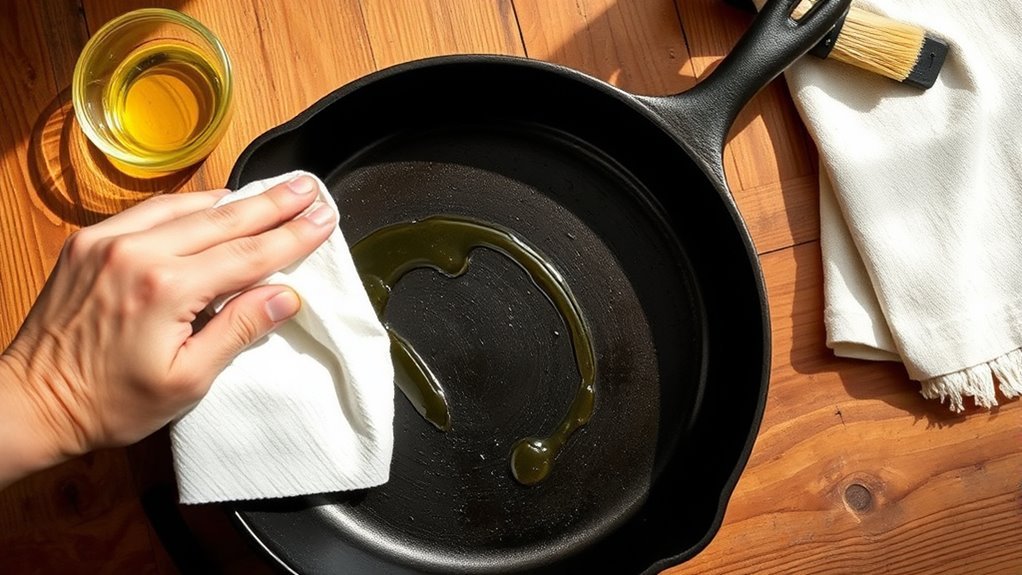
After confirming your cast iron skillet is clean and dry, it’s time to apply oil for effective seasoning. Choose a high-smoke-point oil like vegetable, canola, or grapeseed oil to create a durable nonstick coating.
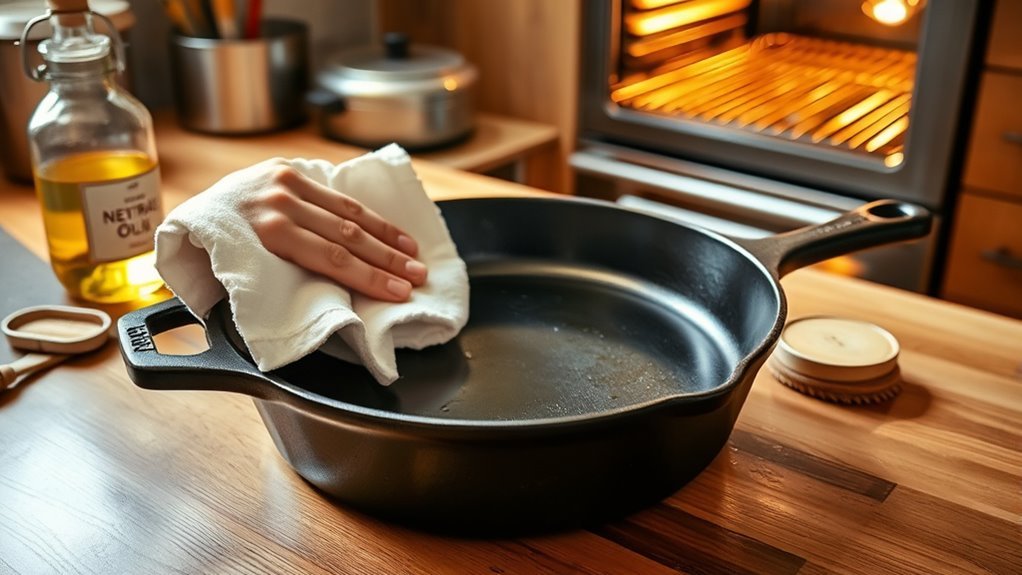
Pour about half a teaspoon onto the skillet’s surface, then use a paper towel or cloth to spread it evenly, covering both the interior and exterior. Buff the skillet until it looks non-greasy, avoiding puddles or excess oil that could lead to a sticky finish in the seasoning process.
Next, heat the skillet upside down in a preheated oven at 450°F (230°C) for 30 minutes. This step allows the oil to polymerize, forming a solid, protective seasoning layer.
To build up a strong coating, repeat the oiling and heating process three to four times. This will confirm your cast iron skillet is ready to serve you for years to come.
Baking Your Skillet: The Best Way to Season It
To guarantee your cast iron skillet reaches its full seasoning potential, baking it’s the key step that transforms the oil into a robust, nonstick surface. Here’s how to do it effectively:
To unlock your cast iron skillet’s seasoning potential, baking is essential for creating a strong, nonstick surface.
- Preheat your oven to 450°F (230°C) for the ideal seasoning environment.
- Apply a thin layer of vegetable oil to both the inside and outside of the skillet, buffing away any excess to prevent pooling.
- Place your oiled skillet upside down on the middle rack, with a baking sheet below to catch drips.
Bake the skillet for 30 minutes, allowing the cooking oil to polymerize, forming a durable nonstick layer.
For the best results, repeat this oiling and baking process 3 to 4 times. This builds a strong initial seasoning, enhancing your skillet’s performance and longevity, and liberating you to cook with confidence!
Tips for Maintaining Your Cast Iron Skillet After Pretreating
Maintaining your cast iron skillet is essential for preserving its nonstick surface and longevity, especially after the initial seasoning. Follow these simple tips to keep your skillet in top shape:
| Task | Tips |
|---|---|
| Clean Your Cast Iron | Use hot water and a stiff brush; avoid soap. |
| Dry the Skillet | Dry immediately to prevent rust; use a stovetop flame if needed. |
| Apply Oil | Reapply a thin layer of oil after cleaning to maintain the seasoning. |
| Store the Skillet | Keep it in a dry place, uncovered for air circulation. |
| Cook with Fatty Foods | Regularly cooking with fatty foods helps build and maintain the nonstick seasoning. |
Frequently Asked Questions
How to Pre Treat a Cast Iron Skillet?
To pre-treat a cast iron skillet, start with thorough surface preparation by washing it with warm, soapy water.
Dry it well to prevent rust. Use a high-smoke-point oil for seasoning techniques, applying a thin layer all over the skillet.
Bake it upside down at 450°F, allowing heat management to create a durable seasoning.
Repeat this process several times for ideal skillet maintenance, ensuring you store it properly to maintain its integrity and prevent moisture.
What Ruins a Cast Iron Skillet?
Excessive moisture, harsh cleaning methods, and acidic foods can ruin your cast iron skillet. To guarantee longevity, focus on rust prevention and proper seasoning techniques.
Avoid soap and abrasive tools; these strip the seasoning and damage the cooking surface. Maintain your skillet with gentle care and store it dry to prevent rust.
Do You Put Oil on Cast Iron After Seasoning?
Yes, you should put oil on your cast iron skillet after seasoning. Use a light layer of oil, like canola or flaxseed, to maintain that nonstick surface and prevent rust.
After cleaning, apply it to rehydrate the seasoning. Heating the skillet afterward bonds the oil, enhancing its benefits for various cooking techniques.
Regular oiling not only improves food pairings but also extends your skillet’s life, ensuring it remains a trusty kitchen companion.
What Is the Best Way to Clean a Very Old Cast Iron Skillet?
To clean a very old cast iron skillet, start with deep cleaning techniques like soaking it in hot, soapy water.
Use a stiff brush for rust removal, but be gentle. Rinse thoroughly and dry immediately using low heat to prevent rust.
Afterward, apply a thin layer of oil, choosing the right type for seasoning.
Conclusion
By following these steps, you’ll set your cast iron skillet up for success. Remember, “a stitch in time saves nine”—taking the time to properly pretreat guarantees a durable, non-stick surface that’ll last for generations. With your skillet seasoned and ready, you’re primed for delicious meals and culinary adventures. Stay vigilant with maintenance, and your trusty skillet will reward you with great cooking for years to come. Enjoy the journey of becoming a cast iron pro!
