
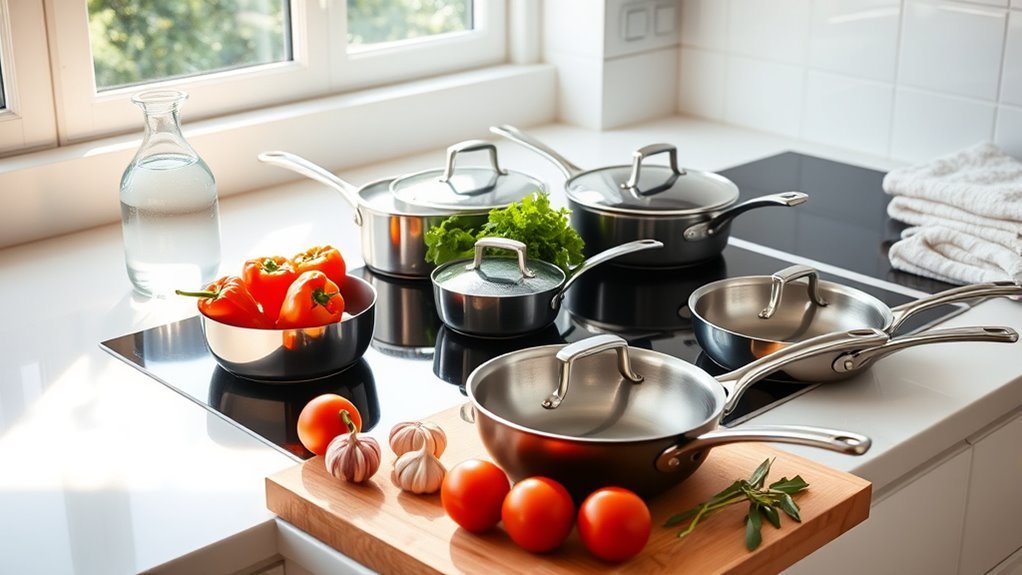
When considering cookware, safety is often a top priority, and Henckels pans stand out for their non-toxic features. Their ceramic coating is free from harmful substances like PFAS and PFOA, while the tri-ply stainless steel construction guarantees even heat distribution. However, understanding the specifics of their materials and coatings is essential to fully grasp their safety claims. What else should you know to confidently choose Henckels for your kitchen?
What Makes Henckels Pans Safe for Cooking?
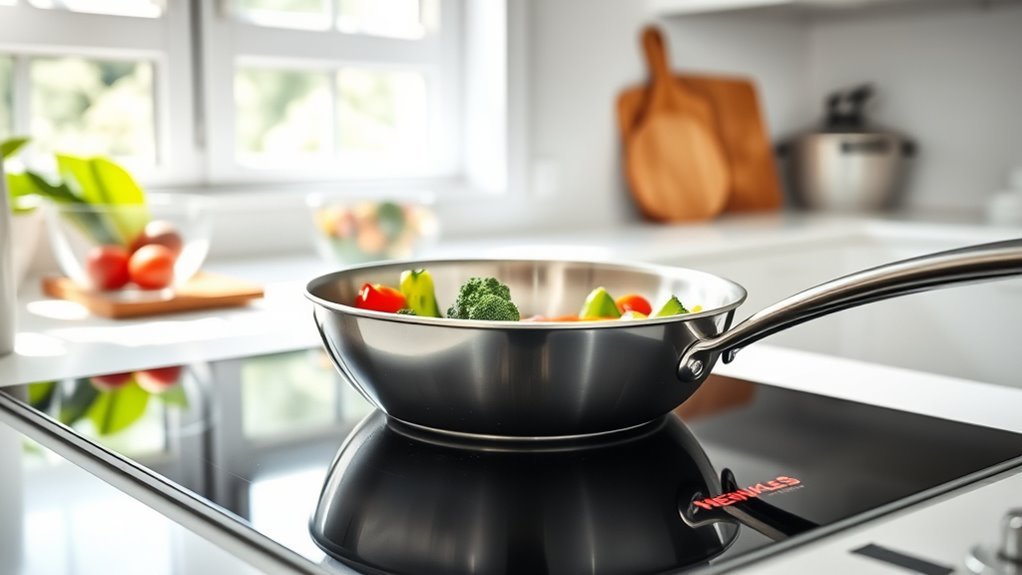
When you choose Henckels pans for your cooking, you’re opting for safety and quality. The non-toxic ceramic coating on these cookware pieces is free from harmful chemicals like PFAS, PFOA, and PTFE, ensuring a healthier cooking environment. This means you can sauté, simmer, or sear without worrying about toxic substances leaching into your food.
The ceramic surface not only promotes easy food release but also allows for healthier meals with minimal oil. Coupled with high-quality materials and tri-ply construction, Henckels pans guarantee even heat distribution, reducing the risk of hot spots that can burn your food.
Additionally, the lifetime warranty underscores the brand’s commitment to durability and safety. By investing in Henckels pans, you’re choosing not just cookware, but a pathway to safer, more liberated cooking experiences.
Materials Used in Henckels Cookware
Henckels cookware is crafted from high-quality materials that prioritize both safety and performance. The standout feature is its non-toxic ceramic coating, which is PFAS free and devoid of harmful substances like PFOA, PTFE, lead, and cadmium. This guarantees a safer cooking experience while allowing for easy food release and requiring minimal oil, promoting healthier meal preparation.
Additionally, the tri-ply stainless steel design enhances heat retention and cooking efficiency, maintaining a food-safe environment. This versatility makes Henckels compatible with all stovetops, including induction, catering to various cooking methods.
The materials not only focus on safety but are also designed for durability, assuring long-lasting performance and ease of maintenance. By choosing Henckels, you’re investing in cookware that aligns with your desire for liberation from toxic chemicals, while still delivering excellent culinary results.
Are Henckels Nonstick Coatings Free From Harmful Chemicals?
Are you concerned about the safety of nonstick coatings in cookware? Henckels nonstick frying pans feature a food-safe ceramic coating that prioritizes your health. Their nonstick coating is made without harmful chemicals, ensuring safer cooking options for you and your family.
- The coating is free from PFAS, PFOA, and PTFE.
- It’s also made without the use of lead and cadmium.
- Henckels cookware meets stringent health standards for food safety.
This non-toxic and food-safe ceramic surface allows for effortless food release and requires minimal oil, promoting healthier meal preparation.
Additionally, the durability of the coating means you can safely use metal utensils without worrying about scratches.
Regular testing and positive consumer feedback further confirm that Henckels cookware maintains its performance while addressing health concerns.
Enjoy cooking with peace of mind, knowing that Henckels prioritizes your well-being.
Henckels: Ceramic vs. Stainless Steel Cookware
While choosing between ceramic and stainless steel cookware, it’s essential to evaluate how each material aligns with your cooking style and health preferences.
Henckels’ ceramic nonstick cookware is a non-toxic option, free from PFAS, PFOA, PTFE, lead, and cadmium, making it a healthier choice for everyday meals. Its quick-release surface simplifies cooking and cleanup, ideal for those who prioritize convenience.
Henckels’ ceramic nonstick cookware offers a non-toxic, convenient cooking solution, ensuring healthier meals with effortless cleanup.
On the other hand, Henckels’ stainless steel cookware features a tri-ply construction that enhances heat retention and promotes even cooking without chemical coatings. This option excels in searing and browning, providing versatility for culinary enthusiasts.
Both cookware types are compatible with all stovetops, including induction, and oven-safe up to 400°F. Plus, they come with a lifetime warranty, ensuring durability and peace of mind regarding quality and performance.
Ultimately, your choice should reflect your cooking habits and health priorities.
Tips for Spotting Non-Toxic Cookware
How can you guarantee your cookware is truly non-toxic? Start by scrutinizing labels for assurances that the cookware is made without PFAS, PFOA, PTFE, lead, and cadmium. These substances pose health risks and are often absent from safer options like Henckels ceramic cookware.
When evaluating your choices, consider the following:
- Confirm it features a non-toxic ceramic coating to prevent harmful chemicals from leaching into your food.
- Look for materials like stainless steel and cast iron, which are inherently non-toxic and perform excellently without hazardous coatings.
- Verify that the cookware is constructed from food-safe materials, offering peace of mind when cooking for loved ones.
Prioritize brands that provide transparency regarding their materials and safety certifications. This diligence empowers you to make informed decisions, confirming your kitchen remains a healthy space.
Understanding PFAS and Their Risks
When choosing cookware, understanding the risks associated with PFAS is essential for ensuring a safe cooking environment. PFAS, or per- and polyfluoroalkyl substances, are synthetic chemicals often found in traditional nonstick coatings. These substances pose health risks, including immune system effects and elevated cholesterol levels, raising significant public concern.
Understanding the risks of PFAS in cookware is crucial for a safe and healthy cooking environment.
A survey revealed that 65% of U.S. adults worry about PFAS in cookware, underscoring the need for safer, non-toxic alternatives. Manufacturers are responding to this demand, as regulatory bodies increasingly scrutinize PFAS.
Some nonstick coatings, like PTFE (Teflon), can release harmful substances when overheated or scratched, further heightening the risks. As you consider your cookware options, prioritize non-toxic products free from these hazardous chemicals.
This awareness not only empowers you to make informed decisions but also promotes a healthier cooking experience for you and your loved ones.
Health Benefits of Non-Toxic Cookware
Choosing non-toxic cookware, like Henckels’ ceramic-coated options, greatly enhances your cooking experience by eliminating harmful chemicals from your kitchen.
By opting for non-toxic materials, you’re taking a vital step toward safe cooking, reducing the risk of chemical leaching into your meals.
Here are some key health benefits:
- Reduced exposure to harmful chemicals: Henckels’ ceramic nonstick coating is free from PFAS, PFOA, and PTFE, promoting a healthier cooking environment.
- Encourages healthy cooking methods: With easy food release, you can prepare dishes with minimal oils, supporting better dietary choices.
- Easier maintenance: Non-toxic cookware is generally simpler to clean, allowing you to focus on enjoyable cooking without the hassle of harmful residues.
Incorporating non-toxic cookware into your kitchen not only elevates your meals but also contributes to your overall well-being.
What Customers Are Saying About Henckels Cookware
When it comes to Henckels cookware, customers often emphasize its impressive performance alongside health safety features.
Users appreciate the non-toxic ceramic coating, which eliminates harmful chemicals, while also praising the cookware’s excellent heat distribution and easy cleanup.
With a lifetime warranty backing its durability, Henckels pans not only meet cooking needs but also provide peace of mind regarding safety.
Performance Insights
Many customers express satisfaction with Henckels cookware, particularly highlighting its non-toxic ceramic coating that’s free from harmful chemicals like PFAS, PFOA, and PTFE. This guarantees safer cooking options and appeals to health-conscious individuals.
Users appreciate the following performance aspects:
- Excellent heat distribution and retention from the tri-ply stainless-steel construction.
- Quick-release nonstick feature, allowing food to slide off easily with minimal oil.
- Lightweight design, making it easy to handle for various cooking tasks.
The dishwasher-safe feature also garners praise, aligning with busy lifestyles while maintaining quality performance.
Health Safety Concerns
As concerns about harmful substances in cookware grow, Henckels cookware has emerged as a popular choice among health-conscious consumers. Many appreciate the non-toxic ceramic coatings that are PFAS free, PFOA free, and free from lead and cadmium, effectively addressing health safety concerns tied to traditional nonstick surfaces.
With 65% of U.S. adults worried about harmful materials in cookware, Henckels offers a reassuring option. Customers laud the food-safe coating for its durability and performance, allowing for easy food release with minimal oil, promoting healthier cooking practices.
This commitment to non-toxic materials not only guarantees safety during meal preparation but also provides peace of mind, making Henckels a trustworthy choice for those prioritizing health in their kitchens.
Caring for Your Non-Toxic Cookware
Caring for your Henckels non-toxic cookware is vital to preserving its safety and longevity. The non-toxic coating is designed to be durable, but proper care is important for maintaining the integrity of the nonstick surface. Here are some key tips to follow:
- Use silicone, wooden, or plastic utensils to avoid scratching the ceramic coating.
- Clean your Henckels with a soft sponge and mild dish soap to prevent damage.
- Regularly inspect your cookware for signs of wear or damage to guarantee effective cooking.
Most Henckels non-toxic pans are dishwasher safe, offering convenient cleanup without compromising quality. However, hand washing can extend the life of your cookware.
Buying Henckels Cookware Safely
When you’re considering buying Henckels cookware, it’s essential to understand the safety certifications and material composition that guarantee your cooking experience is both healthy and effective.
The non-toxic features, including the absence of harmful substances like PFAS and PFOA, highlight the brand’s commitment to safe cooking.
Additionally, knowing the warranty and return policy can give you confidence in your purchase, reinforcing the long-term value and safety of Henckels products.
Safety Certifications Explained
Understanding safety certifications is essential for making informed choices when buying Henckels cookware. These certifications guarantee that the products meet stringent health and safety standards, particularly regarding their non-toxic ceramic coating, which is free from harmful substances like PFAS, PFOA, and lead.
You can cook with confidence, knowing the cookware features a food-safe coating designed for durability and everyday use.
- Rigorous testing guarantees quality and performance.
- Non-toxic coatings allow for healthier cooking options.
- A lifetime warranty reflects the brand’s commitment to safety and customer assurance.
Material Composition Insights
Choosing Henckels cookware means prioritizing safety and quality, which begins with its material composition.
The Ceramic Nonstick Frying Pan features a non-toxic coating free from harmful chemicals like PFAS, PFOA, PTFE, lead, and cadmium. This guarantees a healthier cooking environment.
The tri-ply stainless-steel body enhances heat retention while maintaining a non-toxic atmosphere for food preparation. All materials used in Henckels pans are food-safe, so you can cook with confidence, knowing there’s minimal risk of chemical leaching.
Additionally, the non-toxic ceramic coating allows for healthier meals, requiring less oil and reducing fat intake.
Designed for easy care, Henckels cookware preserves its non-toxic properties over time, making it a smart choice for conscious consumers.
Non-Toxic Features Highlighted
While selecting cookware, considering the non-toxic features of Henckels pans can greatly enhance your cooking experience. Their non-toxic ceramic coating is PFAS free, ensuring that harmful chemicals like PFOA, PTFE, lead, and cadmium aren’t part of your meals.
This ceramic nonstick surface allows for healthier cooking, requiring minimal oil and facilitating easy food release.
Key non-toxic features include:
- PFAS-free: No harmful chemicals leaching into your food.
- Food-safe materials: Designed to provide peace of mind during cooking.
- Durability with metal utensils: Safe for use without compromising coating integrity.
With a lifetime warranty, Henckels cookware not only prioritizes safety but also promises long-term quality and reliability.
Frequently Asked Questions
What Is the Least Toxic Cookware?
The least toxic cookware includes ceramic, stainless steel, cast iron, and carbon steel.
Ceramic cookware offers safety with no harmful coatings, while stainless steel provides durability and versatility without chemical leaching.
Cast iron boasts excellent heat retention and can create a natural non-stick surface when seasoned.
If you’re seeking non-stick alternatives, carbon steel pans deliver impressive heat distribution and durability, making them a popular choice among chefs and health-conscious cooks alike.
Are Henckels Pans Just as Good as Hexclad?
When you compare Henckels to Hexclad, you’ll find that Henckels offers impressive durability, while Hexclad shines with its versatility.
Both excel in cooking performance, ensuring even heat distribution for delicious results.
While Henckels focuses on a fully ceramic-coated experience, Hexclad’s hybrid design caters to diverse culinary needs.
Regarding price comparison, you’ll appreciate that both brands provide quality without breaking the bank.
You’ll be cooking in style, regardless of your choice!
Is Greenpan or Henckels Better?
When comparing GreenPan and Henckels, Henckels often outshines in durability and heat retention, providing excellent cooking performance for various methods.
You’ll find their stainless steel options great for high-heat cooking, while GreenPan’s lightweight design makes cleaning effortless.
Regarding price, Henckels can be more expensive, but many consider it a worthwhile investment due to its longevity.
Ultimately, your choice depends on whether you prioritize durability or ease of use.
Is Calphalon or Henckels Better?
When it comes to cookware, Henckels’ durability definitely shines.
If you value cooking performance, Henckels excels with its tri-ply construction, ensuring even heat distribution.
In a price comparison, Calphalon features more budget-friendly options, especially in nonstick.
However, for long-lasting quality and comfort, Henckels often wins.
Ultimately, your choice depends on whether you prioritize price or performance, but for serious cooks, Henckels might just be the better bet.
Conclusion
So, if you’re still cooking with pans that might as well be toxic waste dumps, it’s time for an upgrade. Henckels offers a safe haven for your culinary creations, free from the chemical nightmare lurking in other cookware. With their non-toxic ceramic coating and durable materials, you can sauté, sear, and simmer without the guilt. After all, who wouldn’t want to whip up a gourmet meal without worrying about what’s leaching into their food? Cook smart, live healthier!
