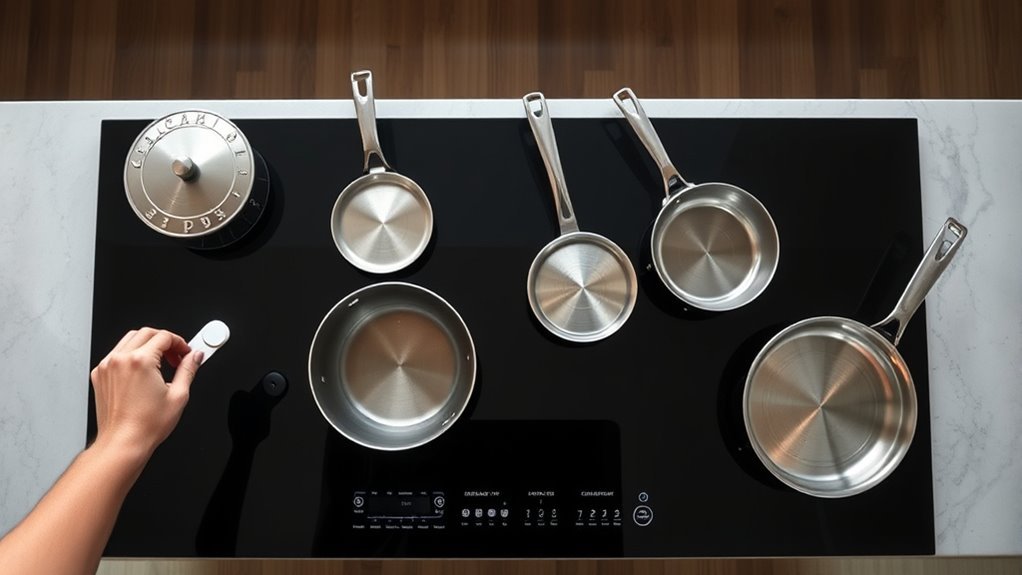
You can use many Calphalon pieces on an induction cooktop, but compatibility depends on the line and base material, so you’ll want to check each pan rather than assume. Use a magnet to confirm ferromagnetic contact, favor tri‑ply or Contemporary stainless constructions, and avoid Unison pieces that lack magnetic bases. I’ll outline which collections work, which often don’t, and what to verify before you buy — plus practical tips if a piece falls short.
Quick Answer: Will Calphalon Work on Induction?
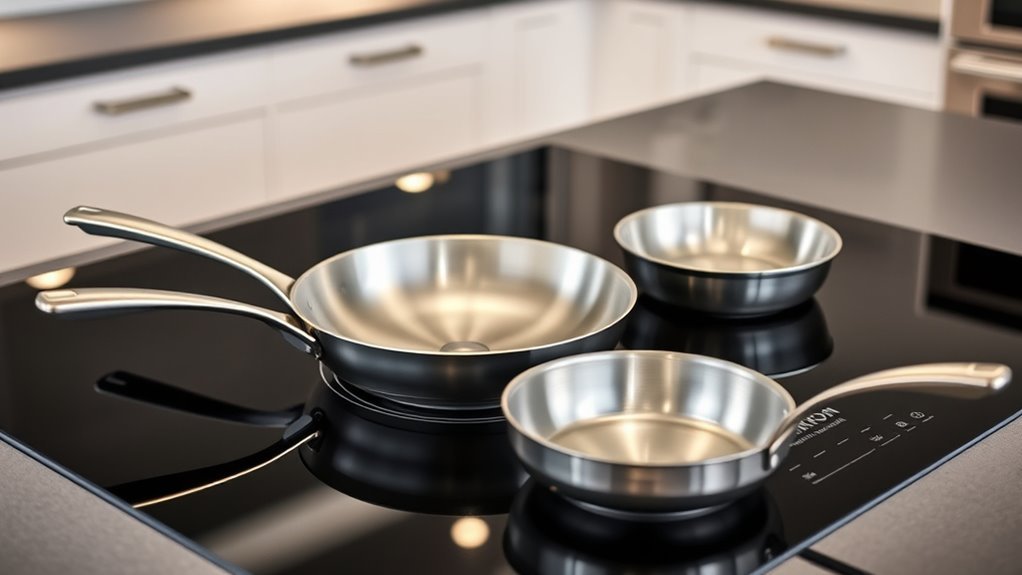
Curious whether your Calphalon will work on an induction cooktop? You need a clear, product-by-product answer: not all Calphalon is induction capable.
Contemporary and Tri-Ply Stainless lines are designed with ferromagnetic bases and will perform reliably on an induction cooktop, while lines like Unison lack the necessary magnetic construction and won’t engage the cooktop’s field.
Don’t assume stainless equals induction capable; some stainless pieces omit a magnetic layer. You’ll liberate your cooking only by verifying each item—check product specifications and manufacturer guidelines for explicit induction compatibility.
Reports vary among users, so prioritize objective specs over anecdotes. When you buy or retain cookware, prefer models advertised as induction capable or listing compatible base materials.
That discipline guarantees predictable heat transfer, maximum efficiency, and the operational control you want from induction technology.
How to Test Your Calphalon Piece With a Magnet
To check whether a Calphalon piece will work on your induction cooktop, hold a strong magnet—ideally a neodymium one—against the center of the pan’s bottom; if it sticks firmly, the cookware contains the ferromagnetic layer needed for induction and should engage the cooktop, while a weak or no attraction indicates incompatibility.
Hold a strong magnet to the pan’s center—if it sticks firmly, the Calphalon will work on induction.
You’ll test each Calphalon piece individually—some lines like Contemporary SS pan models are compatible, while Unison and others may not be. Use a firm, repeatable contact at the geometric center to avoid false negatives from layered construction. Record results and recheck if you buy used or notice manufacturing revisions.
- Use a neodymium magnet for a reliable pull test.
- Press magnet to center of flat base; note strength of attraction.
- Test multiple items; compatibility varies by line and batch.
- Label compatible pieces to reclaim cooking freedom.
- Verify manufacturer specs periodically for changes.
This procedure is definitive enough for liberated decision-making about induction readiness.
Why Calphalon Materials (Stainless, Tri‑Ply, Core) Matter for Induction
You need to focus on material because induction only works with ferromagnetic metals, so stainless grades determine basic performance.
Tri‑Ply construction adds an aluminum core for even heat while keeping magnetic stainless on the exterior, giving predictable induction response.
For Core and other Calphalon lines where stainless grades vary, you should use a magnet test to confirm compatibility before relying on an induction cooktop.
Material Determines Induction Performance
Although Calphalon makes a range of stainless and Tri‑Ply lines, only pieces with ferromagnetic bases will work reliably on induction, so you should confirm each model’s construction before buying.
You want cookware that couples magnetic responsiveness with precise heat control; material dictates whether a pan engages the induction field and how evenly it cooks. Use a magnet test and product specs to liberate your kitchen choices.
- Stainless steel tops with magnetic bases activate induction cooktops reliably.
- Non‑magnetic stainless fails to engage the induction field.
- Tri‑Ply designs with a magnetic outer layer deliver uniform heat on induction.
- Aluminum cores improve distribution but need magnetic cladding to work.
- User reports vary, so verify model-specific compatibility before committing.
Tri‑Ply Versus Core Construction
When choosing between Calphalon’s Tri‑Ply and core construction, focus on magnetic cladding and heat distribution because they determine induction performance; tri-ply’s aluminum core sandwiched by stainless provides even heat and rapid response on an induction stove. You’ll get durable, responsive cookware when the outer stainless is magnetic and sufficiently thick. Core construction can include non-magnetic layers, so compatibility varies — verify specifics before relying on induction. Choose tri-ply when you want predictable thermal control and liberation from uneven heating.
| Feature | Impact |
|---|---|
| Tri‑Ply core | Even distribution, fast response |
| Stainless cladding | Magnetic requirement for induction |
| Material grade | Affects efficiency and heat-up |
| Core variants | May reduce compatibility; check specs |
Magnet Test For Compatibility
Wondering whether a Calphalon pan will work on your induction cooktop? Do a simple magnet test: if a magnet sticks to the bottom, the pan is induction compatible. You’ll liberate yourself from guesswork by checking materials and model lines.
- Test each Calphalon piece; some 18/10 stainless lacks ferromagnetism and will fail the magnet test.
- Calphalon Tri‑Ply Stainless and Contemporary Stainless Steel usually pass and are induction compatible.
- Lines like Calphalon Unison may not respond to a magnet and won’t work on induction.
- Magnet behavior reflects the cookware’s magnetic core or base construction, essential for efficient heat transfer.
- Verify product specs alongside the magnet test to avoid frustration and guarantee ideal induction performance.
Calphalon Lines That Work (Contemporary, Tri‑Ply, Classic)
When choosing a Calphalon line for induction, you should prioritize materials that provide magnetic contact and consistent thermal conduction.
Contemporary and Tri‑Ply stainless designs deliver reliable induction compatibility and superior heat distribution, while Classic sets can work but require a magnet check on each piece.
Match the line to your cooking needs—Tri‑Ply for professional‑grade performance, Contemporary for broad induction reliability, and Classic for basic, cost‑effective use.
Material And Induction Compatibility
Because induction relies on magnetic cookware, you should choose Calphalon lines with ferromagnetic bases—Contemporary Stainless and Tri‑Ply Stainless are engineered for induction and deliver efficient, even heating, while the Classic 10‑piece set has been confirmed compatible (but a quick magnet test is still prudent).
Note that some lines like Unison aren’t induction‑friendly, so always verify the product specifications before purchase.
You’ll prioritize magnetic conductivity over aesthetics: stainless constructions with magnetic layers or full stainless tri‑ply cores engage an induction range reliably, unlike nonmagnetic aluminum-only pieces.
Think of cast iron as the baseline for induction viability; Calphalon’s compatible stainless lines replicate that magnetic coupling with lighter weight and faster response.
Verify specifications and test with a magnet before committing.
- Contemporary Stainless: magnetic base, induction-ready
- Tri‑Ply Stainless: layered magnetic core
- Classic 10‑piece: confirmed, magnet test recommended
- Unison: not compatible with induction
- Verify product specs for induction compatibility
Performance And Heat Distribution
Calphalon’s Contemporary Stainless, Tri‑Ply Stainless, and the Classic 10‑piece set deliver consistent performance on induction cooktops due to their flat bottoms and ferromagnetic constructions, which maximize surface contact and magnetic coupling for efficient energy transfer.
You’ll notice Tri‑Ply’s layered core provides superior heat distribution, minimizing hot spots and yielding predictable, controllable cooking.
Contemporary and Classic lines meet induction requirements and offer reliable thermal response, though overall performance can vary by specific model and thickness.
To guarantee each piece performs as expected, test magnetically and verify full flatness against the cooktop.
When you demand liberation from uneven results, choose cookware that translates magnetic energy into uniform heat; Calphalon’s compatible lines are engineered to do just that.
Choosing The Right Line
Having established how construction and flatness affect induction performance, you’ll next pick the Calphalon line that matches your cooking needs and stovetop.
Choose lines that give you control, responsiveness, and freedom from stovetop limits. Contemporary Stainless and Tri‑Ply Stainless are engineered for reliable magnetic contact and even heating on an induction cook.
The Classic 10‑piece can work too, but verify with a magnet test. Avoid Unison for induction. Always confirm product specs before you buy so your pans deliver the performance you expect.
- Contemporary Stainless: induction-ready, durable, precise temperature control
- Tri‑Ply Stainless: magnetic exterior, superior heat distribution
- Classic 10‑piece: potential pick after magnet test
- Unison: not induction compatible
- Buyer tip: test with magnet and check specs
Calphalon Lines That Often Fail (Unison and Others) and Why
Although some Calphalon lines perform well on induction, others—most importantly the Unison series—fail because their base materials lack the ferromagnetic properties induction cooktops require. You need to recognize that unison, induction compatibility is a binary technical attribute: if the cookware’s base won’t attract a magnet, it won’t couple to the cooktop’s electromagnetic field. Many users report other Calphalon variants likewise lack magnetic bases; these failures aren’t manufacturing myths but predictable material mismatches.
You should treat each piece individually. Contemporary Stainless and Tri‑Ply Stainless demonstrate viable induction performance because their construction includes ferromagnetic layers or cores engineered for electromagnetic coupling.
When freedom in the kitchen matters, don’t assume brand-wide compatibility—confirm. Perform a magnet test and inspect manufacturer specs: you’ll avoid wasted purchases and unreliable heating. This pragmatic, material-focused approach preserves your agency and guarantees your induction system receives cookware designed to respond efficiently and consistently.
When to Use a Diffuser, Replace Cookware, or Buy Test Pieces
When a magnet won’t stick to a pan’s base, decide quickly whether to adapt or replace: you’ll weigh performance, cost, and control.
A diffuser can rescue a non‑magnetic Calphalon piece for occasional use, but it reduces transfer efficiency and raises ambient heat; use it when you need temporary functionality without immediate expense.
More persistent failures to pass the magnet test call for you to replace cookware with true induction materials — cast iron or specified stainless steel.
Buying test pieces first lets you liberate your kitchen methodically, confirming compatibility before committing.
- Use a diffuser for low‑heat, short tasks or scentless transfers, not high‑precision searing.
- Replace cookware when you need full efficiency, rapid temperature response, or safety.
- Purchase single test pieces from suspected Calphalon lines to validate specs.
- Check manufacturer specs; product lines vary in induction compatibility.
- Balance convenience of a diffuser against long‑term energy and performance costs.
Buying Checklist: Best Calphalon Picks for Induction and What to Double‑Check
Before you buy, run a quick checklist so you don’t end up with non‑magnetic Calphalon on an induction range: confirm the model (Contemporary Stainless and Tri‑Ply Stainless are induction‑capable), perform a magnet test on the base, and validate the product specs for “induction” or magnetic stainless steel; avoid Unison and other lines that list aluminum or nonmagnetic stainless without a magnetic core.
You should prioritize Calphalon cookware built with magnetic stainless or explicit induction compatibility. Bring a small magnet when shopping or check seller photos that show the base.
Read manufacturer specifications and look for “induction” labeling; don’t assume similar styling equals identical construction. Scan user reviews for repeated reports of poor magnetic contact or uneven heating. If you’re uncertain, test a single piece before replacing a full set.
For liberation from uncertain purchases, demand clear material data and warranty coverage for induction performance. This disciplined approach minimizes wasted expense and guarantees predictable induction compatibility and heating efficiency.
Frequently Asked Questions
Which Calphalon Pans Are Compatible With Induction Cooktops?
Calphalon Contemporary Stainless Steel and Tri-Ply Stainless pans are compatible with induction cooktops.
You should exclude Calphalon Unison unless a product spec says otherwise.
Verify Calphalon materials on each item and perform induction testing with a magnet: if it sticks to the pan bottom, it’s induction-ready.
Inspect specifications for core construction and magnetic stainless layers.
You’ll gain freedom by testing rather than assuming brand-wide compatibility.
When Should I Throw Away My Calphalon Pans?
Like a compass pointing true, throw your Calphalon pans away when warping prevents flat contact, nonstick coating scratches, peels, or flakes, magnets won’t cling for induction, deep dents or scratches mar the cooking surface, or handles/rivets loosen.
For Calphalon care and cookware longevity, act decisively: replace compromised pieces to protect health, guarantee even heating, and reclaim your kitchen freedom with reliable, safe cookware.
What Cookware Is Not Compatible With Induction Cooktops?
Cookware not compatible with induction cooktops includes non-magnetic materials like aluminum, copper, and glass, plus many non-stick pans without magnetic bases.
Thin stainless steel with inadequate magnetism and warped or uneven bottoms also fail to engage induction sensors, reducing heat retention and efficiency.
You’ll want pieces with a ferromagnetic base and solid construction for reliable performance; choose cookware that liberates you from guesswork by clearly stating induction compatibility.
What Brand of Cookware Is Best for Induction Cooktops?
All-Clad is the best brand for induction cooktops; you’ll get superior induction cookware benefits and reliable performance.
You should also consider Tramontina for value, cast iron for heat retention, and Cuisinart or Emeril for budget stainless options.
Choose cookware material types with magnetic bases—stainless steel with ferromagnetic cores, cast iron, or induction-ready nonstick.
You’ll gain efficiency, precise temperature control, and cooking freedom with the right, liberated selections.
Conclusion
Yes — many Calphalon lines work on induction, but you’ve got to check each piece. Use a magnet on the base: if it sticks, it’ll heat on induction. Favor Contemporary, Tri‑Ply, and Classic sets with ferromagnetic bases; avoid Unison and other nonmagnetic lines. If a pan fails the test, use a diffuser or replace it. Think of your cookware like a key: only magnetic metals will enable efficient, responsive induction cooking. Verify specs before buying.