
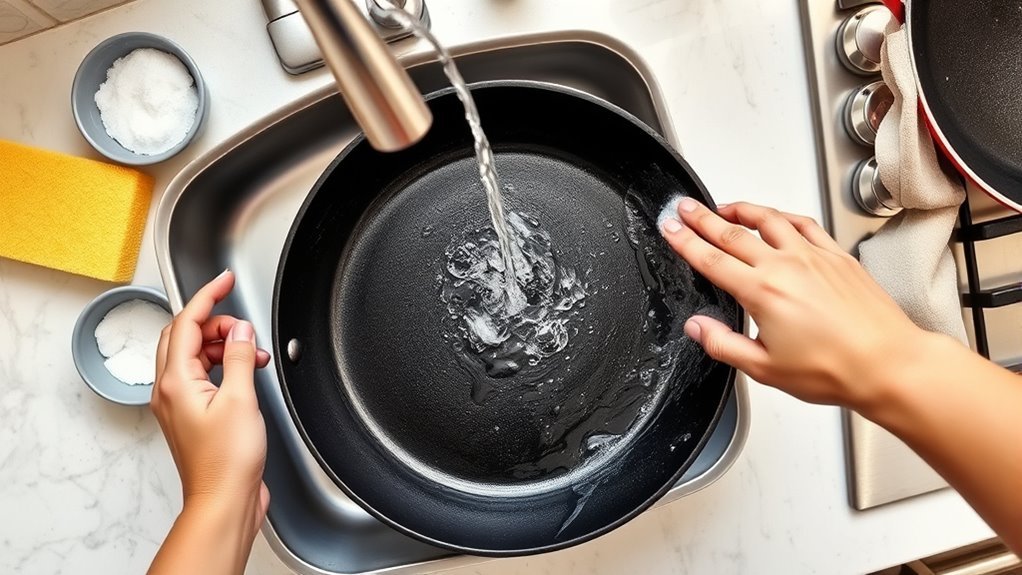
Cleaning your new cast iron skillet is essential for its performance and durability. You might think a simple rinse will suffice, but proper care goes beyond that. From tackling stubborn residue to applying a protective layer of oil, each step plays an important role in keeping your skillet in top shape. Ready to discover the best methods to maintain your cookware and guarantee it lasts for generations? Let’s get started.
The Importance of Proper Cast Iron Care
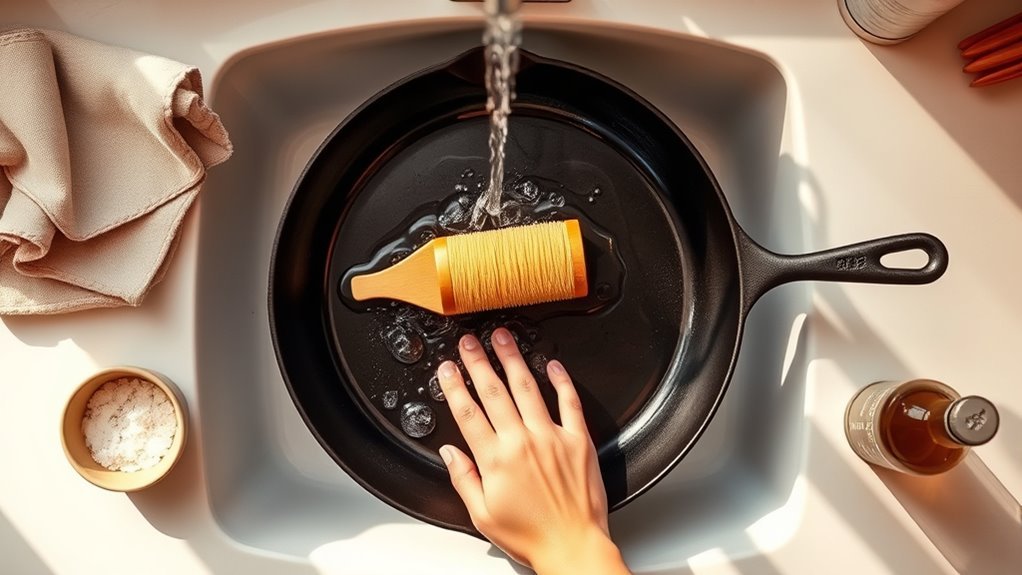
When you invest in a cast iron skillet, you’re not just adding a piece of cookware; you’re embracing a culinary tradition that can last for generations. Proper cast iron care is essential for maximizing your skillet’s lifespan and ensuring it remains a reliable kitchen companion.
Regularly cleaning and seasoning your cast iron cookware prevents rust and buildup, maintaining its ideal cooking performance and food safety. Remember, rust happens, but with the right care, you can easily avoid it.
Avoid dishwashers and prolonged exposure to water, as these can damage the seasoning that makes cast iron so special. Instead, focus on simple maintenance techniques that enhance its non-stick properties, making cooking and cleaning a breeze.
Engaging with community tips and experiences can enrich your understanding and techniques for effective care. By nurturing your cast iron, you’re not just cooking; you’re preserving a legacy.
Step 1: Cleaning Your Cast Iron Skillet With Soap and Water
Start by giving your new cast iron skillet a thorough wash with warm, soapy water. This initial cleaning helps eliminate any factory residues and dust that might linger.
Grab a non-abrasive sponge or a stiff-bristled brush, and gently scrub the surface—this protects the precious seasoning you’ll build over time. Rinse the skillet thoroughly, ensuring no soap residue remains, as leftover soap can compromise the seasoning and your future cooking adventures.
Use a non-abrasive sponge to gently scrub your skillet, preserving its seasoning for countless culinary creations. Rinse thoroughly to avoid soap residue.
Avoid soaking your skillet in water; prolonged exposure invites rust, which can be a real downer.
Once you’ve rinsed, dry the skillet completely with a towel. For good measure, heat it on low for a few minutes to evaporate any remaining moisture. This step is essential in maintaining your skillet’s integrity and longevity, allowing you to embrace the freedom of cooking with a well-cared-for cast iron piece.
How to Handle Stuck-On Food After Cooking
Tackling stuck-on food after cooking can be a breeze with the right approach. Start by following these simple steps:
- Simmer: Fill your skillet with warm water and bring it to a gentle simmer for 3-5 minutes. This loosens the residue, making it easier to remove.
- Scrub: For stubborn bits, sprinkle coarse sea salt into the wet skillet. Use a non-abrasive scrubber to gently scrub away those pesky particles without damaging the seasoning.
- Soak: If food still clings, let the skillet cool completely, then soak it in warm water for a short time before giving it a gentle scrub.
Step 2: Drying Your Skillet Thoroughly
After washing your skillet, drying it thoroughly is essential to prevent rust from forming.
Use a paper towel or lint-free cloth, and don’t forget to heat it on low for a few minutes to guarantee all moisture evaporates.
A dry environment for storage also plays a key role in maintaining your skillet’s longevity, so keep an eye out for any lingering water droplets.
Importance Of Thorough Drying
While it may seem simple, thoroughly drying your cast iron skillet is essential for its longevity. Moisture can easily lead to rust, compromising your beloved cookware.
To guarantee your skillet remains in top shape, follow these steps:
- Use a paper towel or a lint-free cloth to absorb every drop of moisture after washing.
- Heat the skillet on low for a few minutes to evaporate any stubborn moisture hiding in corners.
- Store your skillet in a dry environment, keeping rust at bay.
2. Methods For Effective Drying
Ensuring your cast iron skillet is completely dry not only protects it from rust but also prepares it for its next cooking adventure.
After washing, grab a paper towel or lint-free cloth and wipe down the skillet thoroughly to remove any moisture.
Next, to guarantee all moisture evaporates, place the skillet on low heat for a few minutes.
Avoid air drying; letting it sit can allow moisture to settle, increasing the risk of rust.
Always store your skillet in a dry environment, and make it a habit to check for any lingering moisture before putting it away.
Even tiny amounts can lead to big rust issues over time, so stay vigilant to keep your skillet in top shape!
3. Preventing Rust Formation
To keep your cast iron skillet in pristine condition, thorough drying is vital for preventing rust formation. Here’s how to do it right:
- Wipe it down: Use a paper towel or lint-free cloth to remove all moisture. This step is important; any leftover water can lead to rust.
- Heat it up: Place the skillet on low heat for a few minutes. This guarantees any residual moisture evaporates completely.
- Store wisely: Keep your skillet in a dry environment. Humidity can accelerate rust development, so a controlled space is key.
Regularly inspect your skillet for any signs of moisture or rust.
Addressing these issues immediately will help maintain its integrity and performance, keeping your cooking companion in top shape.
Step 3: Applying a Protective Layer of Oil
After you’ve thoroughly dried your cast iron skillet, it’s time to seal in its care with a protective layer of oil. Grab a neutral cooking oil, like canola or vegetable oil, and apply a thin coat to both the inside and outside surfaces.
Using a paper towel, evenly distribute the oil to guarantee every inch of the skillet is lightly coated—just avoid excess pooling. This protective layer not only guards against rust but also maintains your skillet’s seasoning and enhances its non-stick properties while cooking.
Think of it as a shield, safeguarding your pan for those future culinary adventures. Remember, regularly oiling your cast iron skillet after each cleaning is vital for its long-term maintenance and ideal cooking performance.
Store it in a dry place to keep moisture at bay, making certain the oil layer stays effective and your skillet remains a reliable kitchen companion.
Effective Techniques for Deep Cleaning Your Cast Iron Skillet
When your cast iron skillet needs a deep clean, tackling stubborn residues and rust is key to restoring its shine.
Use a scrubbing tool like a Scotch-Brite sponge paired with rubber gloves for gentle yet effective cleaning.
If rust’s taken hold, you can create a slurry or soak the skillet to bring it back to life, ensuring it’s ready for your next culinary adventure.
Rust Removal Methods
While rust can seem intimidating, there are effective methods to restore your cast iron skillet to its former glory. Here’s how you can tackle it:
- For light rust, use a Rust Eraser or a stainless steel scrubber to gently scour the affected areas, then wash and dry thoroughly.
- For stubborn rust, mix Bar Keepers Friend with water into a paste, apply it to the rusty spots, and scrub with a stainless steel scrubber while wearing gloves.
- If rust is severe, submerge your skillet in a vinegar and water solution for up to 24 hours, scrub off the rust, and rinse well.
After rust removal, dry your skillet completely and apply a thin layer of cooking oil.
Finally, re-season your skillet to protect it for future use.
Deep Cleaning Techniques
Restoring your cast iron skillet doesn’t stop at rust removal; deep cleaning techniques can elevate its performance and longevity.
Start by creating a slurry of Bar Keepers Friend and water, then scrub with a stainless steel scrubber to tackle stubborn residue.
If rust’s lurking, submerge the skillet in a vinegar and water solution for up to 24 hours before scrubbing away thick buildup.
For lighter rust, use the rough side of a dry Scotch-Brite sponge, rinsing thoroughly to avoid residue.
For baked-on food, simmer water in the skillet for 3-5 minutes, then gently scrape with a spatula.
After deep cleaning, dry your skillet completely and apply a thin layer of oil to keep it seasoned and ready for your next culinary adventure.
Removing Rust From Your Skillet
Rust can be a real nuisance for your cast iron skillet, but removing it isn’t as challenging as it sounds. Follow these steps to restore your skillet’s glory:
- Start with a cool, dry pan. Use a rust eraser or steel wool scrubber to scour the rusted areas until they’re smooth.
- Wash the skillet with warm, soapy water, rinsing thoroughly to remove all soap residue. This step is essential for a clean surface.
- Dry the skillet completely with a paper towel or lint-free cloth, and heat it on low for a few minutes to eliminate any leftover moisture.
If the rust is severe, soak the skillet in a vinegar and water solution for up to 24 hours before scrubbing, rinsing, and re-oiling.
Once you’ve removed the rust, protect your skillet from future damage by applying a thin layer of oil, setting the stage for re-seasoning later.
Reseasoning Your Skillet for Longevity
To keep your cast iron skillet in top shape, reseasoning it regularly is vital for maintaining its nonstick surface and preventing rust.
Start by thoroughly cleaning and drying the skillet to guarantee the oil adheres properly. Once it’s spotless, apply a thin layer of oil to the cookware. This step is important; it creates the foundation for a durable nonstick surface.
Thoroughly clean and dry your skillet before applying a thin layer of oil to ensure a durable nonstick surface.
Next, flip the skillet upside down and place it in a preheated oven at 450-500°F for one hour. This process of reseasoning helps to bond the oil to the skillet, enhancing its cooking performance.
Keep an eye out for signs of dullness or rust, which indicate it’s time to re-season again. After each use, remember to apply a light layer of oil to maintain the seasoning, making sure your skillet stays ready for all your culinary adventures.
Storing Your Cast Iron Cookware Safely
After ensuring your cast iron skillet is well-seasoned, proper storage plays a key role in maintaining its quality.
To keep your cookware in top shape, follow these easy steps:
- Ensure it’s completely dry: Before you store your cast iron cookware, heat it on low for a few minutes to evaporate any lingering moisture.
- Use protective layers: Place a paper towel or cloth between stacked pans to absorb moisture and shield the cooking surfaces from scratches.
- Avoid food storage: Never store food in cast iron pans, as this can harm the seasoning and open the door to rust.
Frequently Asked Questions
What Should I Do if I’m Using a Cast Iron Skillet for the First Time?
If you’re using a cast iron skillet for the first time, start with these tips: rinse it with warm water and mild soap to remove factory residue, then dry it thoroughly.
Apply a thin layer of cooking oil for maintenance. Preheat it on low to bond the oil.
Avoid acidic foods initially. Embrace these cooking basics to enhance your skillet’s seasoning and enjoy delicious meals without fear of rust or damage!
What Ruins a Cast Iron Skillet?
When it comes to cast iron maintenance, a few missteps can really throw a wrench in the works. Excessive soaking leads to rust, while harsh detergents strip away that precious seasoning.
Using acidic ingredients too soon can damage the surface, and abrasive tools scratch it up, making food stick. Don’t forget, if you leave moisture behind, you’re inviting rust in for a permanent stay.
Keep these cooking techniques in mind for rust prevention!
Do I Need to Season a Brand New Cast Iron?
You don’t need to season a brand new cast iron skillet right away, as it comes pre-seasoned.
Start by washing it with warm, soapy water to remove factory residues. Use cooking techniques that involve oil to gradually enhance its seasoning.
For ideal maintenance, apply light oil after each use and avoid acidic ingredients until the seasoning’s well-established.
These methods will keep your skillet in fantastic shape, ready for your culinary adventures!
Can I Use a New Cast Iron Skillet Right Away?
You can use your new cast iron skillet right away, but give it a quick wash first. This’ll enhance your cast iron care experience.
Preheating it before cooking improves heat distribution, making your meals delicious. Just remember to avoid acidic ingredients until the seasoning’s well established.
Regular use and proper maintenance tips will boost its non-stick properties, allowing you to explore exciting cooking techniques while enjoying your culinary freedom!
Conclusion
Taking care of your cast iron skillet isn’t just about cleaning; it’s a ritual that transforms your cooking experience. By treating it with love and respect, you guarantee it ages like fine wine, growing better with each meal. Remember, a well-maintained skillet can last generations, often becoming a treasured family heirloom. So, embrace the process, and enjoy the delicious meals your trusty skillet will help you create for years to come!
