

You can absolutely bake in a cast iron pan, and doing so can elevate your dishes with its superior heat retention and natural non-stick qualities. However, there are specific safety tips and best practices you should follow to guarantee success. From proper seasoning to the importance of preheating, each step plays a vital role. Ready to discover how to maximize your baking experience with cast iron? Let’s explore the essential techniques and common pitfalls.
Why You Should Bake in a Cast Iron Pan
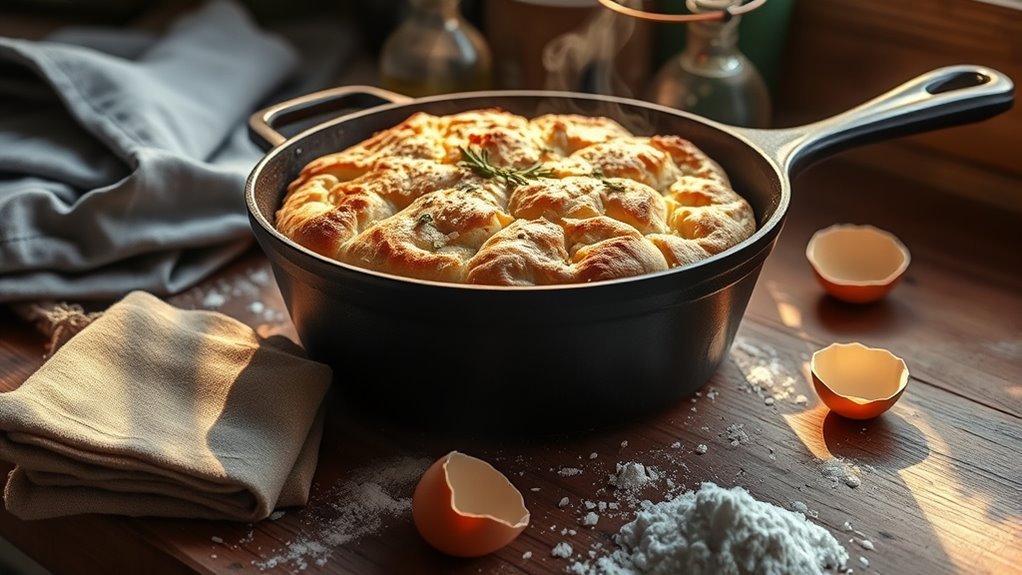
Baking in a cast iron pan offers numerous advantages that can elevate your culinary creations. One of the standout features of a cast iron skillet is its remarkable heat retention, ensuring even heat distribution. This means you get consistently baked goods with superior crusts and textures, whether you’re whipping up cornbread or a delectable pizza.
Baking in a cast iron skillet ensures even heat distribution for consistently delicious baked goods with irresistible crusts and textures.
Preheating your cast iron pan can further enhance the baking process, giving your treats a professional-quality finish. Plus, the natural non-stick properties of a well-seasoned skillet allow for easy release without the use of harmful chemicals.
Choosing cast iron isn’t just about performance; it’s a sustainable choice too. These pans are incredibly durable and can last for generations with proper care, making them a worthwhile investment for any kitchen.
Embrace the benefits of baking with cast iron and elevate your culinary experience!
Safety Tips for Baking in Your Cast Iron Pan
When using a cast iron pan for your baking adventures, safety should always be a priority. Start by preheating your seasoned cast iron to guarantee even heat distribution and minimize sticking.
Remember, those handles can get extremely hot, so always use oven mitts or thick kitchen towels when handling the pan.
To protect the integrity of your seasoned surface, avoid using metal utensils. This helps maintain the natural non-stick properties and prevents scratching.
As you bake, keep a close eye on your creations; cast iron retains heat exceptionally well, often cooking baked goods faster than traditional bakeware.
How to Properly Season Your Cast Iron Pan
To properly season your cast iron pan, you need to follow a few essential steps to guarantee it performs well.
Start by cleaning the pan thoroughly and applying a thin layer of oil before baking it at a high temperature.
Avoid common mistakes, like using too much oil or skipping the cooling phase, to achieve a durable, non-stick surface.
Essential Seasoning Steps
Properly seasoning your cast iron pan is essential for achieving a durable non-stick surface that enhances both cooking and baking. Follow these steps for effective seasoning:
| Step | Action | Tips |
|---|---|---|
| 1. Clean | Use warm water and a stiff brush to scrub | Dry completely to prevent rust |
| 2. Oil | Apply a thin layer of vegetable or flaxseed oil | Use a paper towel for even distribution |
| 3. Heat | Place the pan upside down in a 450°F (232°C) oven | Bake for about an hour |
| 4. Cool | Let it cool in the oven to room temperature | Repeat several times for best results |
Common Mistakes to Avoid
Seasoning your cast iron pan can be a straightforward process, but several common mistakes can undermine your efforts. Avoid these pitfalls to guarantee a successful seasoning:
- Neglecting to Clean: Always clean your cast iron pan thoroughly before seasoning. Residue can interfere with the oil’s bonding.
- Using the Wrong Oil: Stick to high-smoke point oils like flaxseed or grapeseed oil. These create a durable, non-stick layer ideal for baking.
- Applying Too Much Oil: Use a paper towel to apply a thin, even coat, including the handle. Excess buildup can lead to a sticky surface.
The Importance of Preheating Your Cast Iron
While many cooks might overlook the importance of preheating, doing so with your cast iron pan is vital for achieving ideal baking results. Preheating guarantees even heat distribution, essential for a crispy crust in items like cornbread and pizza. It also locks in steam, promoting better rise and texture in baked goods. Using a room-temperature pan can lead to uneven cooking, especially with delicate cakes or pies.
| Preheating Temperature | Recommended Use |
|---|---|
| 375°F | Ideal for most breads |
| 400°F | Perfect for pizzas and cornbread |
| 450°F | Best for high-temperature baking |
Failing to preheat your cast iron can lead to longer cooking times and sticking issues, undermining the pan’s natural non-stick qualities. So, always preheat your cast iron to embrace its full potential!
Best Techniques for Baking Bread in Cast Iron
Baking bread in a cast iron pan takes advantage of the pan’s heat retention and distribution properties, leading to a beautifully crusty loaf. To master this technique, follow these essential steps:
- Preheat the Pan: Guarantee even heat distribution by preheating your cast iron baking pan. This step is vital for achieving that perfect crust.
- Utilize Steam: Cover your dough with a lid during the initial baking phase. This traps steam, promoting an impressive oven spring and a lighter crumb, especially in sourdough.
- Enhance the Crust: Brush your dough with a mixture of plant milk or an egg wash. This adds a delightful shine and rich color to your crust.
After baking, allow your bread to cool briefly in the pan before transferring it. This prevents sticking and keeps your loaf’s shape intact, giving you that liberating, homemade bread experience.
Top Mistakes to Avoid When Baking in Cast Iron
When you immerse yourself in baking with cast iron, avoiding common pitfalls can greatly enhance your results. Here are some key mistakes to steer clear of:
| Mistake | Impact |
|---|---|
| Ignoring Preheating | Leads to uneven cooking and soggy bottoms |
| Forgetting to Adjust Times | Risks overcooking due to heat retention |
| Not Using Oil or Flour | Causes baked goods to stick to the pan |
Tips for Baking Pies and Desserts in Cast Iron
When baking pies and desserts in cast iron, preheating your pan is essential for achieving that perfect, crisp crust.
You can enhance flavor and texture by using techniques like brushing the crust with an egg wash and letting your creations cool in the pan for easy cleanup.
These simple tips will elevate your baking game and guarantee delicious results every time.
Preheating for Perfect Crusts
Preheating your cast iron pan is essential for achieving a perfectly crispy crust in pies and desserts. This process helps the pan retain and distribute heat evenly, ensuring delightful textures.
Here are three tips to optimize your preheating:
- Set the oven to 425°F (220°C): This high temperature encourages the crust to crisp up quickly, preventing soggy bottoms.
- Brush with plant milk or an egg wash: Enhance the shine and color of your crust for a golden finish.
- Let it preheat for at least 10 minutes: This consistent heat helps bubble the filling’s juices, resulting in beautifully caramelized desserts.
Embrace preheating; it’ll elevate your cast iron’s baking game and enhance flavor in every bite.
Enhancing Flavor and Texture
Baking in a cast iron pan not only enhances the flavor of your pies and desserts but also elevates their texture. Preheat your cast iron pan to guarantee even heat distribution, resulting in a crispy crust that delights.
For an appealing finish, brush your crust with plant milk or an egg wash; this creates a shiny look that’s hard to resist. When baking fruit pies, the consistent heat retention of cast iron prevents soggy bottoms, assuring a flaky, well-cooked crust.
If you’re making upside-down cakes, cast iron caramelizes sugar evenly, enhancing flavor and presentation. Finally, for skillet brownies, the pan’s excellent heat retention holds heat, yielding gooey centers and chewy edges that are simply irresistible.
Easy Cleanup Techniques
Enjoying the delightful flavors and textures that cast iron provides can be overshadowed by the cleanup that follows. To make your cast iron baking experience smoother, try these easy cleanup techniques:
- Parchment Paper: Line the bottom of your pan to prevent sticking and simplify removal.
- Cool Down: Let your pan cool before using a scraper or brush with warm water to gently remove residue without harming the seasoning.
- Silicone Spatula: Use it to lift edges of brownies or cobblers, minimizing scratches and ensuring easy removal.
Avoid soaking your cast iron; instead, wipe it clean and re-oil after each use.
For extra protection, place a baking sheet underneath to catch any drips. Enjoy your baking without the hassle!
Caring for Your Cast Iron After Baking
Once you’ve finished baking, it’s important to care for your cast iron pan properly to guarantee its longevity. Start by hand washing with warm water and a mild brush—avoid soap to preserve its seasoning.
For any baked-on food, use pan scrapers or scrub brushes to keep the surface smooth and ready for your next iron baking adventure.
Dry the pan immediately after washing to prevent rust, and apply a thin layer of cooking oil to maintain that coveted non-stick surface.
It’s vital not to store moist baked goods in your cast iron; moisture can lead to rust and damage the seasoning. Before putting it away, make sure both the pan and any silicone grips are completely dry to avoid moisture retention.
Troubleshooting: What to Do If Your Baked Goods Stick?
Have you ever pulled a delicious cake from the oven only to find it stubbornly clinging to your cast iron pan? Don’t worry; you can troubleshoot this common issue with a few simple steps.
- Cool Down: Let your baked goods cool slightly in the hot pan. This helps them loosen and aids in baked goods release.
- Gentle Scrape: Use a silicone spatula or pan scraper to gently pry the edges away. This method keeps your seasoning intact.
- Oil and Flour Barrier: For next time, apply a mixture of oil and flour before baking. This creates a protective layer to prevent sticking.
Frequently Asked Questions
Can I Use a Cast Iron Skillet as a Baking Pan?
Yes, you can absolutely use a cast iron skillet as a baking pan. This versatile tool enhances your baking techniques, offering even heat distribution and excellent temperature retention.
Just remember to preheat the skillet for a crispy crust, and consider recipe variations that suit its unique qualities.
For pan maintenance, season it well and use nonstick spray or oil. Keep an eye on baking times, as cast iron holds heat effectively, requiring adjustments.
What Should Never Be Cooked in a Cast Iron Pan?
You should never cook highly acidic foods, delicate pastries, or sugary items in a cast iron pan.
Curiously, acidic ingredients can strip your pan’s seasoning, affecting flavor. Delicate pastries may stick, ruining their texture. Sugary foods, like caramel, can easily burn and create a cleanup nightmare.
To enjoy your cast iron skillet fully, stick to non-acidic foods and hearty dishes that complement its unique qualities, ensuring every meal is a delight.
Will Eggs Stick to Cast Iron?
Yes, eggs can stick to cast iron if you’re not careful. For successful egg preparation, use non-stick tips like preheating your pan over medium heat and applying a bit of oil or butter. This creates a barrier that helps prevent sticking.
Cooking at a lower temperature enhances even cooking and minimizes adhesion. Regularly seasoning your cast iron will also improve its non-stick qualities, making your egg dishes a breeze to handle.
Can I Make a Box Cake in a Cast Iron Skillet?
Yes, you can make a box cake in a cast iron skillet! For the best results, preheat your skillet to create a crispy crust.
Grease it well, using oil or butter and a dusting of flour for easy release. Remember, cast iron cooks faster, so check for doneness a few minutes earlier than the box instructions suggest.
Let the cake cool in the skillet; this helps it set perfectly. Enjoy your delicious creation!
Conclusion
Baking in a cast iron pan opens a world of culinary possibilities, transforming your dishes with a delightful crust and rich flavor. By following safety tips and mastering the art of seasoning and preheating, you’ll guarantee your baked goods shine like stars. Embrace the quirks of cast iron, avoid common pitfalls, and treat your pan with care. With a little practice, you’ll find that baking in cast iron isn’t just a method; it’s a flavorful journey worth taking.
