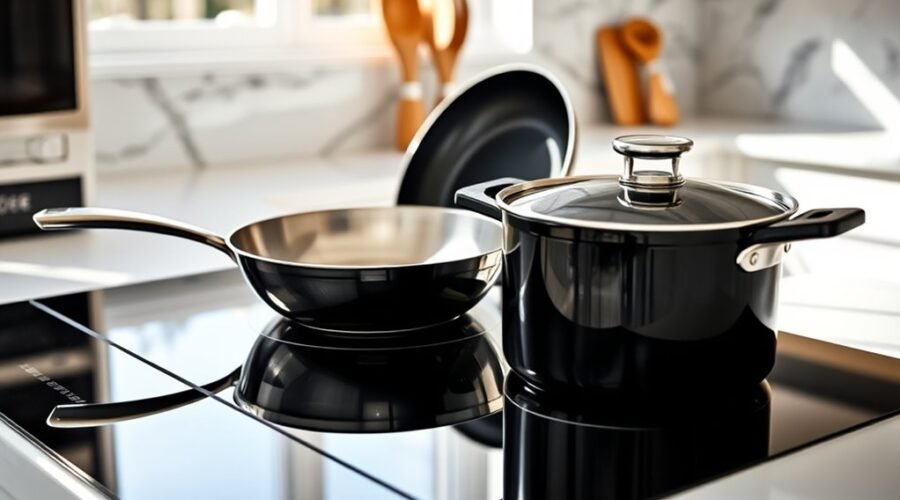
Did you know that over 30% of new kitchens now feature induction cooktops due to their energy efficiency? Induction compatible pans are essential for harnessing this technology, as they rely on a ferrous base to generate heat. Common materials like cast iron and magnetic stainless steel play important roles in this process. Understanding what makes these pans effective, along with identifying the best options available, can greatly enhance your cooking experience. What should you look for in these essential tools?
Understanding Induction Compatibility
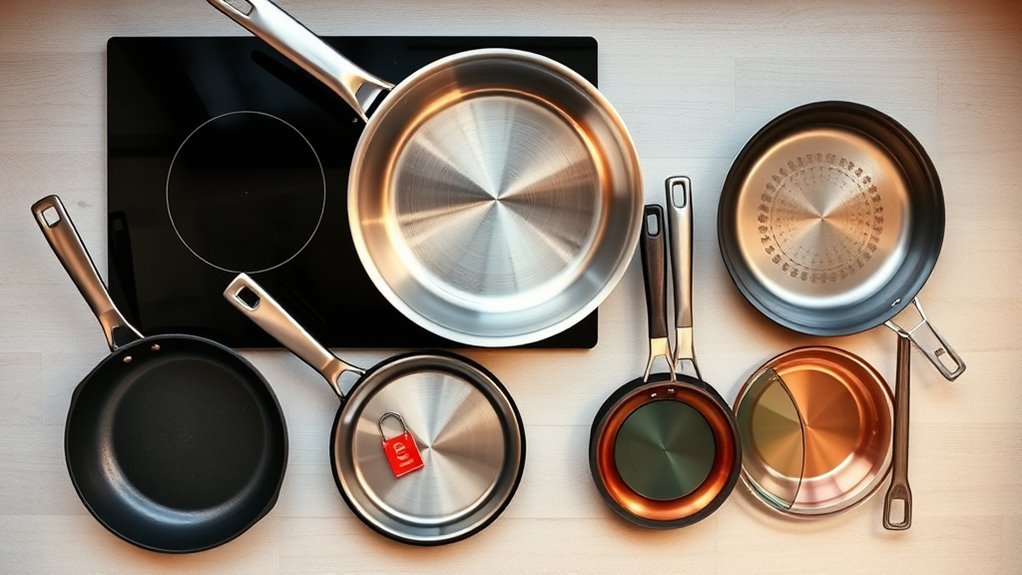
Induction compatibility is essential for efficient cooking on induction cooktops. To guarantee your cookware works effectively, it must have a ferrous base, enabling it to generate heat through magnetic fields. Common compatible materials include cast iron, carbon steel, and magnetic stainless steel.
If you’re unsure whether your pan is induction-ready, a simple magnet test can help; if the magnet sticks to the bottom, it’s suitable.
Additionally, the base of your cookware should be flat and heavy, ensuring good contact with the cooktop, which reduces noise and improves heating efficiency.
High-quality cookware often features multi-ply construction, enhancing heat distribution and minimizing warping during use.
Key Materials for Induction Cookware: Cast Iron, Stainless Steel, and More
When selecting cookware for your induction cooktop, you’ll find that the material considerably impacts performance. Induction-compatible cookware must be made from ferrous materials like cast iron, carbon steel, or magnetic stainless steel, which can generate heat via magnetic fields. Here’s a quick overview of key materials:
| Material | Key Features |
|---|---|
| Cast Iron | Excellent heat retention; heavy; slow to heat |
| Carbon Steel | Lighter; heats quickly; develops non-stick surface |
| Magnetic Stainless Steel | Durable; dishwasher-safe; non-reactive with acidic foods |
| Non-Stick Pan | Must have a magnetic base; less durable at high temperatures |
Choose cast iron for low and slow cooking, carbon steel for versatility, or magnetic stainless steel for easy maintenance. Each material supports your induction cooking journey, offering unique benefits tailored to your culinary needs.
Top Recommended Induction Cookware Brands
Choosing the right cookware can greatly enhance your induction cooking experience, as several brands stand out for their quality and performance. Here are three top recommendations:
1. All-Clad: Known for its tri-ply construction, this brand guarantees even heat distribution and durability.
Just remember to perform the magnet test, as not all models are induction compatible.
Always conduct the magnet test to ensure your cookware is compatible with induction cooking.
2. Tramontina: Offering high-quality tri-ply induction cookware at an affordable price, Tramontina is perfect for budget-conscious cooks seeking reliable performance.
3. Fissler: Renowned for superior build quality, particularly in the Pro and Intensa lines, Fissler cookware excels in heat distribution, making it a solid investment for serious chefs.
For those considering enameled cast iron, Le Creuset also performs well on induction, but be cautious with temperature changes to prevent cracking.
Choosing the Best Induction Pan for Your Cooking Needs
Which factors should you consider to guarantee you pick the best induction pan for your cooking needs?
First, verify it’s induction-compatible by checking for a magnetic base, typically made from materials like cast iron, carbon steel, or magnetic stainless cookware. Perform a magnet test; if the magnet sticks firmly, you’re good to go.
Next, consider the thickness of the pan’s material. Thicker bases retain heat better, while thinner options respond quickly, ideal for precision cooking.
A flat base is essential as it guarantees maximum contact with your induction hobs, minimizing buzzing noise and promoting even heat distribution.
For versatility, carbon steel sauté pans are a great choice due to their lightweight nature and ability to develop a natural nonstick surface over time.
Fixing Common Problems With Induction Cookware
While cooking with induction cookware can be efficient and convenient, you might encounter some common issues that can hinder performance.
Here are three tips to fix these problems:
- Magnet Test to Confirm Compatibility: If your induction range shuts off when lifting a pan, confirm your cookware’s magnetic steel content. A simple magnet test will reveal if your pans are suitable for induction cooktops.
- Flat, Heavy Base: Make sure your cookware has a flat and heavy base to minimize buzzing and promote ideal heat distribution. This contact with the hob is essential for efficient cooking.
- Upgrade to High-Quality Cookware: If you’re facing uneven heating, consider investing in tri-ply or multi-layer cookware.
Materials like cast iron and carbon steel enhance heat distribution, making certain even cooking and responsiveness on your induction surfaces. Regularly check your cookware’s compatibility for the best performance.
Frequently Asked Questions
How Can I Tell if a Pan Is Induction Compatible?
To tell if a pan is induction compatible, perform a simple cookware testing with a magnet. If it sticks, you’re good to go!
Look for magnetic materials like cast iron or stainless steel for ideal heat distribution and energy efficiency. Make sure the base is flat for surface compatibility, enhancing induction advantages.
Regular maintenance tips, like avoiding abrasive cleaners, can also extend pan longevity while you explore diverse cooking techniques with your induction cooktop.
What Pans Should You Not Use on Induction?
You shouldn’t use non-magnetic materials like glass, ceramic, and certain stainless steels on induction cooktops.
These won’t generate heat efficiently, impacting cooking efficiency and heat distribution.
Additionally, non-stick aluminum pans often lack the necessary magnetic base for induction cookware types.
For ideal cookware safety and durability, choose pans designed for induction.
Keep in mind that proper pan selection enhances energy savings and minimizes maintenance, ensuring a seamless cooking experience on your induction cooktop.
What Happens if You Use a Regular Pan on an Induction Stove?
Using a regular pan on an induction stove results in zero heat generation, leaving you frustrated.
Did you know 90% of energy used in induction cooking goes directly to the food? For ideal heat distribution efficiency, your cookware must be magnetic. Non-compatible pans won’t activate the stove, wasting time and energy.
Embracing induction cooking techniques guarantees safety and harnesses energy efficiency, debunking common induction cooking myths.
Always check stove compatibility factors for a seamless experience!
Can I Use Normal Cookware on Induction?
No, you can’t use normal cookware on induction. Induction cooking relies on magnetic materials for heating efficiency, unlike gas.
Using non-compatible pans leads to poor performance and wasted energy. To enjoy induction benefits, invest in cookware types like cast iron or magnetic stainless steel.
While the initial cost may be higher, maintenance is easier, and it’s eco-friendly cooking.
Don’t fall for induction myths; check your pans with a magnet for safety and effectiveness.
Conclusion
In summary, understanding induction-compatible pans can elevate your cooking experience, but the right choice is essential. Imagine the thrill of perfectly searing your steak or simmering a sauce to perfection—only if you have the right cookware. Don’t let subpar pans hold you back; invest in quality materials and trusted brands. Are you ready to release the full potential of your induction cooktop? The right pan awaits, and your culinary masterpieces are just a purchase away.