
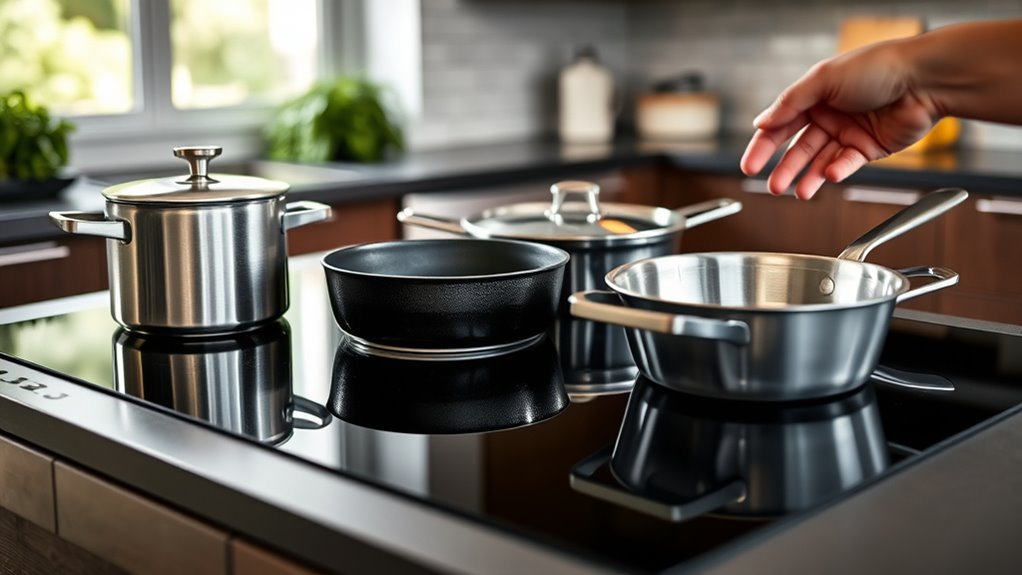
The best cookware for an induction cooker is anything with a magnetic base: cast iron, enameled cast iron, carbon steel, enameled steel and magnetic stainless steel all work. Pure aluminum, copper, glass and ceramic do not heat unless they have a magnetic layer built into the base. If a magnet sticks firmly to the bottom of a pan, it should work.
This is the main guide to induction-friendly cookware. It covers what works, what does not, how to check, and what to look for when you buy.
At a Glance: What Works on Induction
| Material | Works on induction? | Notes |
|---|---|---|
| Cast iron (bare) | Yes | Strongly magnetic; heavy, so lift it rather than slide it |
| Enameled cast iron | Yes | Same iron core under a glass-like enamel coating |
| Carbon steel | Yes | Popular for skillets and woks; light and responsive |
| Magnetic stainless steel | Yes | Check the base; not all stainless is magnetic |
| Multi-ply (stainless with aluminum or copper core) | Usually | Works when the outer base layer is magnetic stainless |
| Nonstick or ceramic-coated pans | Only with a magnetic base | The coating does not matter; the metal underneath does |
| Pure aluminum or copper | No | Not magnetic, unless a steel plate is added to the base |
| Glass, stoneware, porcelain | No | No metal to heat |
How Induction Cooking Decides Which Pans Work
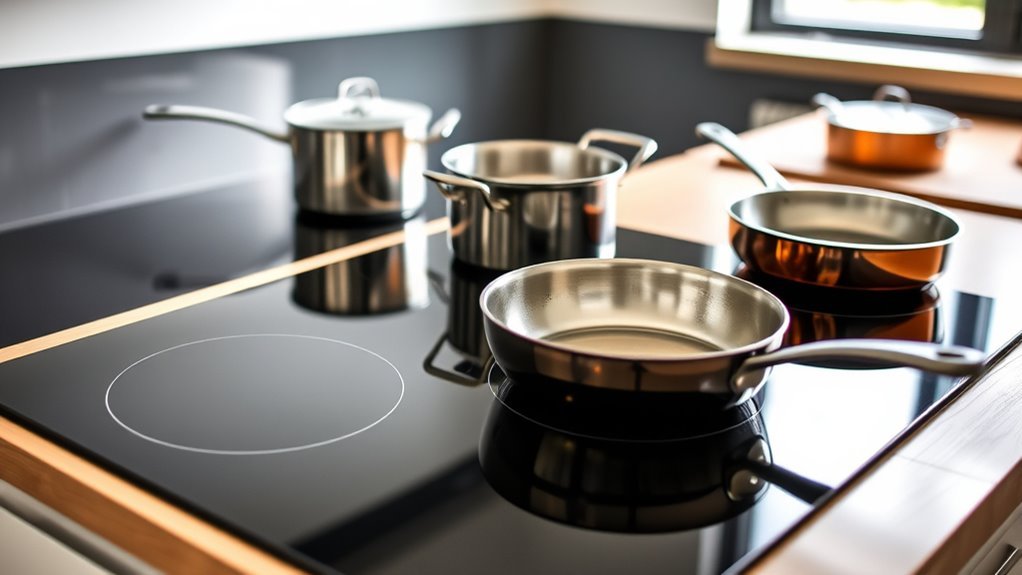
An induction cooktop has a coil under the glass that creates a fast-changing magnetic field. When a pan with a ferromagnetic base sits on top, that field makes the metal itself heat up. The glass stays much cooler than a gas flame or electric element, although it warms up from contact with the hot pan.
No magnetic metal means nothing to heat. That is why the same stove that boils water quickly in a cast iron pot does nothing with a copper pan or a glass dish. For a deeper explanation, see what induction capable cookware is.
Best Cookware Materials for Induction
Cast iron and enameled cast iron
Cast iron is a natural fit. It is strongly magnetic, holds heat well and suits searing, frying and baking. Enameled cast iron Dutch ovens and braisers work the same way and are easier to maintain. Heavy iron can scratch a glass cooktop if you drag it, so lift it into place. See what cast iron cookware is if you are new to it.
Carbon steel
Carbon steel skillets and woks are magnetic, lighter than cast iron and heat up fast. They need seasoning like cast iron. A flat-bottom carbon steel wok is one of the better ways to stir-fry on induction.
Stainless steel
Stainless steel is the most common induction cookware, but quality varies. Stainless pans usually contain a magnetic layer or disc in the base. Fully clad pans with a magnetic outer layer heat evenly, while some cheap pans with a thin disc can heat unevenly. Our guides on 5-ply stainless steel and which ply count is best explain the differences.
Nonstick and ceramic-coated pans
The nonstick or ceramic coating is irrelevant to induction. What matters is whether the pan body has a magnetic base, and many are labeled for induction. If the listing does not say so, treat it as unknown and test it. See using ceramic on induction.
What Does Not Work on Induction
- Pure aluminum and copper: good conductors, but not magnetic, so the cooktop will not heat them.
- Glass, porcelain and stoneware: no metal to respond to the magnetic field.
- Round-bottom woks: they do not touch the flat surface; use a flat-bottom wok instead.
- Warped or very thin pans: poor contact means weak, noisy or uneven heating.
- Non-magnetic stainless steel: some 18/10 stainless is not magnetic unless the manufacturer adds a magnetic layer.
Using the wrong pan normally will not damage the cooktop. Most cooktops simply do not start heating, and some show a pan-detection message.
How to Check That a Pan Is Induction Compatible
- Hold a fridge magnet against the outside of the base. It should stick firmly.
- Look on the base or packaging for the word “induction” or a coil-shaped symbol.
- Check that the base is flat and sits fully on the surface.
- Compare the base size to your cooking zone. Pans much smaller than the zone may not be detected.
The magnet test and symbol check are covered step by step in how to tell if a pot is induction ready and how to tell if cookware is induction ready.
What to Look For When Buying Induction Cookware
- Clear induction labeling. Look for “induction compatible” in the manufacturer’s product description, not only in a seller’s summary.
- A thick, flat base. This improves heat spread and reduces warping.
- The right base size. The magnetic base diameter matters more than the rim width. Check your cooktop manual for minimum and maximum pan sizes.
- Handles for how you cook. Check the maker’s oven-safe rating if you use the oven. Induction rating and oven rating are separate.
- Care needs. Dishwasher use varies by brand and line; see whether pots and pans can go in the dishwasher.
Prices and availability change, so check the current listing before you buy. For more on picking pans by shape and features, read what induction compatible pans are and how to choose them.
Tips for Cooking on Induction
- Start on medium. Induction heats faster than most people expect.
- Match the pan to the zone. A very small pan on a large zone may heat unevenly or not be detected.
- Lift pans instead of sliding them to protect the glass.
- Do not heat an empty pan on high, especially nonstick.
- Expect a light hum or buzz with some multi-layer pans; it is usually normal.
Related Induction Guides
- Which pots can be used on induction cookers (quick table)
- What “induction safe” means on a label
- Using an induction pot on a gas stove
Frequently Asked Questions
What cookware works on an induction cooker?
Cookware with a magnetic base works: cast iron, enameled cast iron, carbon steel, enameled steel, and magnetic stainless steel. Multi-ply pans with aluminum or copper cores also work if the outer base layer is magnetic. If a magnet sticks firmly to the bottom, the pan should heat on induction.
Can I use any pan on an induction cooktop?
No. Induction heats the pan itself by magnetic effect, so the base must contain magnetic metal. Pure aluminum, copper, glass, ceramic and stoneware will not heat unless they have a magnetic plate or layer built into the base. A non-magnetic pan is usually just ignored by the cooktop.
Is stainless steel cookware good for induction?
Often yes, but not always. Many stainless pans have a magnetic stainless layer or steel disc in the base and work well. Some stainless steel is only weakly magnetic or not magnetic at all. Test the base with a magnet or look for an induction symbol or listing statement.
Does cookware need a flat bottom for induction?
Yes. A flat, solid base gives full contact with the glass surface, which means better detection, even heating and less noise. Warped or round-bottom pans heat poorly. Round-bottom woks do not work on a flat induction cooktop, but flat-bottom woks do.
Do I need special pots for an induction cooker?
You need magnetic-base cookware, not necessarily expensive cookware. Plenty of budget cast iron, enameled steel and stainless pans are induction compatible. You may not need to replace everything: test your current pans with a magnet first and keep the ones that stick.
Conclusion
For an induction cooker, choose pans with a flat, magnetic base and skip pure aluminum, copper, glass and ceramic. Check each pan with a magnet, even if the set is labeled induction compatible.
