
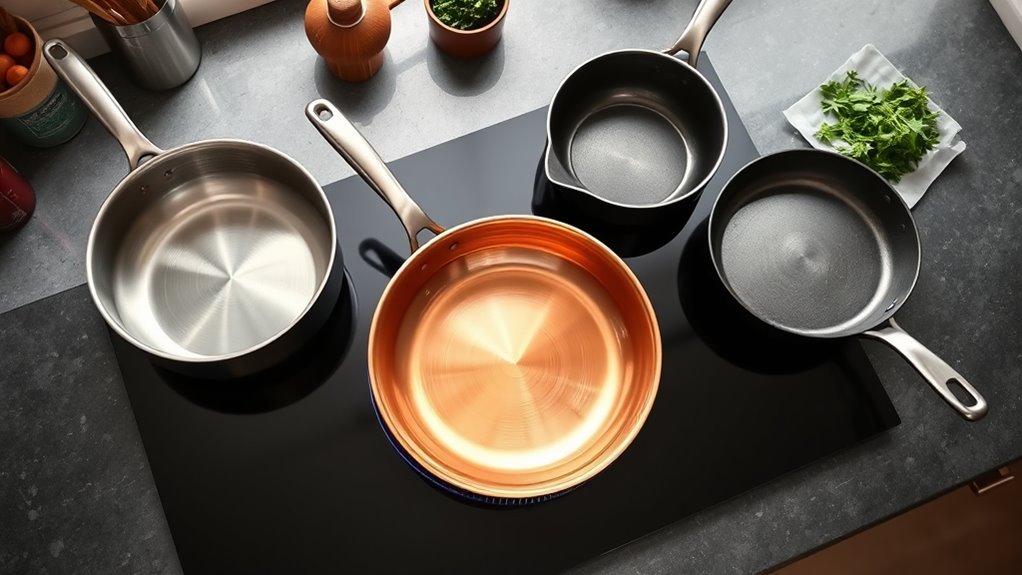
If you’re considering copper cookware for your induction cooktop, it’s crucial to understand its compatibility. While pure copper doesn’t work due to its lack of magnetic properties, many high-quality options feature a magnetic stainless steel base. This unique design allows for effective induction cooking. However, not all copper pans are created equal, so knowing what to look for can make a significant difference in your cooking experience. Let’s explore the key features and options available.
What Makes Copper Cookware Compatible With Induction?
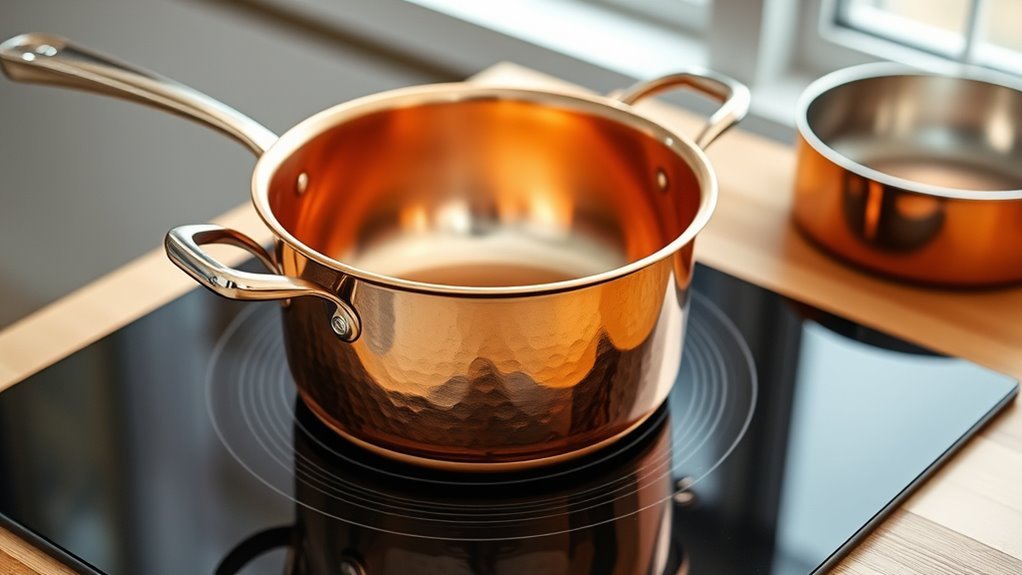
When considering the compatibility of copper cookware with induction cooktops, it’s essential to understand that copper alone won’t work unless it has a magnetically conductive base.
For effective induction cooking, your copper cookware must feature a layer of magnetic stainless steel or iron. This magnetic material interacts with the electromagnetic field generated by induction cooktops, allowing for efficient heating.
For optimal induction cooking, ensure your copper cookware has a magnetic stainless steel or iron layer for efficient heating.
High-quality copper pans, like those from de Buyer, often incorporate a stainless steel base that maintains excellent heat conductivity while guaranteeing induction compatibility.
The thickness of this magnetic layer is crucial; it must be substantial enough to provide proper contact with the induction surface.
Before purchasing copper cookware, always perform a magnets test to confirm its induction compatibility. This simple check helps you ascertain that your cookware will function effectively on induction cooktops, marrying the benefits of copper’s heat conductivity with modern cooking technology.
Essential Features of Induction-Compatible Copper Cookware
When choosing induction-compatible copper cookware, you need to focus on its magnetic properties and layering techniques.
A magnetic stainless steel layer is essential for enabling the cookware to interact with induction cooktops effectively.
Additionally, understanding how the layering affects heat conductivity and distribution can greatly enhance your cooking experience.
Magnetic Properties Required
To assure compatibility with induction cooktops, copper cookware must possess specific magnetic properties. Pure copper alone won’t work on induction hobs, as they rely on ferromagnetic materials to generate heat.
Consequently, look for cookware with a stainless steel base or a magnetic layer.
- Conduct a magnet test; if a magnet sticks to your cookware, it’s induction-friendly.
- High-quality options often feature tri-ply construction, combining copper for efficient heat conduction with a magnetic material for induction compatibility.
- Choose brands that advertise induction-ready features to guarantee peak performance.
Layering Techniques Explained
Understanding the layering techniques used in induction-compatible copper cookware is vital for achieving ideal cooking performance. The most effective designs feature a magnetic stainless steel layer, enabling the cookware to interact with induction cooktops. High-quality options often employ tri-ply construction, combining copper for superior heat conductivity with a magnetic layer for induction compatibility. It’s essential to guarantee the cookware has a flat base, enhancing contact with the cooktop and improving heat distribution. When shopping, look for labels that indicate the cookware is induction-ready.
| Feature | Importance |
|---|---|
| Magnetic Layer | Enables induction heating |
| Tri-Ply Construction | Combines heat conductivity & compatibility |
| Flat Base | Guarantees optimal heat distribution |
| Induction-Ready | Confirms suitability for induction |
Top Copper Cookware Choices for Induction Cooking
While many chefs appreciate the exceptional heat conductivity of copper cookware, not all copper options are suitable for induction cooking. To enjoy the benefits of copper on induction hobs, you need to choose wisely.
Look for copper pans that incorporate a magnetic layer, guaranteeing they’re induction compatible.
- de Buyer Prima Matera: This line features 90% copper and 10% stainless steel, making it induction ready while maintaining outstanding heat conductivity.
- Mauviel M’Heritage: Known for its robust construction, this cookware also includes a magnetic base, perfect for efficient induction cooking.
- All-Clad Copper Core: With its thick, flat base, this range offers excellent contact with induction surfaces, optimizing heating efficiency.
When you prioritize these copper cookware options, you guarantee not just functionality but also an enhanced cooking experience on induction cooktops.
Proper maintenance will further preserve their performance and appearance.
What You Need to Know About Using Copper on Induction Hobs?
Copper cookware can enhance your culinary experience, but using it on induction hobs requires careful consideration. Induction cooktops rely on a magnetic field to generate heat, meaning your copper cookware must be induction-compatible.
Look for copper pans with a magnetic base, usually made from stainless steel or iron, to guarantee effective heating. Conduct the magnet test: if a magnet sticks to the bottom, it’s likely suitable for induction cooking.
When selecting cooking equipment, prioritize pans with flat, heavy bases to maximize contact with the induction cooktop, assuring even heat distribution.
While copper offers superior heat conductivity, its effectiveness on induction depends on this combination with ferrous materials. Always check for stainless steel handles, as they often signify compatibility.
Tips for Maintaining Copper Cookware for Optimal Induction Performance
To maintain ideal induction performance, selecting the right copper cookware is just the beginning; proper care is essential. Confirm your cookware has a magnetic stainless steel layer to function effectively on your induction range. Regular maintenance will enhance both aesthetics and cooking efficiency.
Selecting the right copper cookware is just the start; proper care is vital for optimal induction performance and lasting beauty.
- Always hand wash your copper cookware with mild soap and a soft cloth to prevent oxidation.
- Use polishing paste periodically to remove tarnish and keep your cookware looking its best.
- Avoid abrasive cleaners and metal utensils that can scratch the surface, compromising the smooth contact needed for peak induction.
Additionally, always allow your copper cookware to cool before washing to prevent warping and preserve the integrity of the magnetic layer.
FAQs About Copper and Induction Cooking
How does the compatibility of copper cookware with induction cooking work? Copper itself isn’t inherently induction-compatible because induction relies on magnetic materials to generate heat.
For copper cookware to function on induction cooktops, it must have a magnetic layer, typically achieved by incorporating stainless steel in the base. Many premium brands, like de Buyer, design their copper pans with this magnetic layer, ensuring they retain copper’s exceptional heat conductivity while being suitable for induction cooking.
To determine if your copper pan is induction-compatible, simply use a magnet; if it sticks to the base, you’re good to go. Conversely, traditional copper cookware without this magnetic surface won’t effectively generate heat on induction hobs.
Opt for induction-ready copper cookware that combines the beauty of copper with stainless steel, providing both aesthetic appeal and reliable performance on induction cooktops.
Frequently Asked Questions
What Metals Do Not Work on Induction?
Metals that don’t work on induction include pure copper, aluminum, brass, glass, and ceramics.
These cookware materials lack the necessary magnetic properties required for induction effectiveness.
While some metal alloys may seem suitable, they often fail in heat conduction and cooking performance.
For ideal surface compatibility, focus on ferrous materials like cast iron or magnetic stainless steel.
Testing with a magnet can guarantee you’re making the right choice for effective induction cooking.
Why Avoid Copper Cookware?
You should avoid copper cookware due to its incompatibility with induction cooktops, limiting its thermal conductivity advantages.
While it offers excellent heat control for traditional cooking methods, the maintenance tips for keeping copper pristine can be cumbersome.
Additionally, health concerns arise from copper leaching into food.
Despite its aesthetic appeal and historical significance, these factors make it less practical for modern cooking, especially if you’re primarily using induction technology.
What Cookware Cannot Be Used on Induction?
What’s the point of elegant copper cookware if it won’t work on your induction cooktop?
Copper alternatives like stainless steel or cast iron are essential for induction efficiency, thanks to their magnetic properties.
Remember, cookware weight matters too; a heavier base guarantees better heat distribution.
While these materials boast excellent thermal conductivity and appealing design aesthetics, they also come with maintenance tips and cost considerations that you should weigh carefully before investing.
Why Did People Stop Using Copper Pots?
People stopped using copper pots mainly due to maintenance challenges and health implications.
While copper cookware history highlights its excellent heat conductivity and aesthetics, the upkeep can be tedious. Its tendency to react with acidic foods raised safety concerns, leading many to prefer stainless steel, which offers similar benefits without the drawbacks.
Additionally, the environmental impact of copper mining has prompted consumers to seek more sustainable, versatile options that align with modern cooking practices.
Conclusion
In summary, choosing the right copper cookware for your induction cooktop can elevate your culinary adventures to legendary heights! By ensuring your pans feature a magnetic stainless steel base, you access the ultimate cooking experience, blending copper’s superior heat conductivity with induction’s efficiency. Don’t just cook—create culinary masterpieces that could rival the finest chefs! So, immerse yourself in the world of induction-compatible copper and transform your kitchen into a gastronomic wonderland!

