
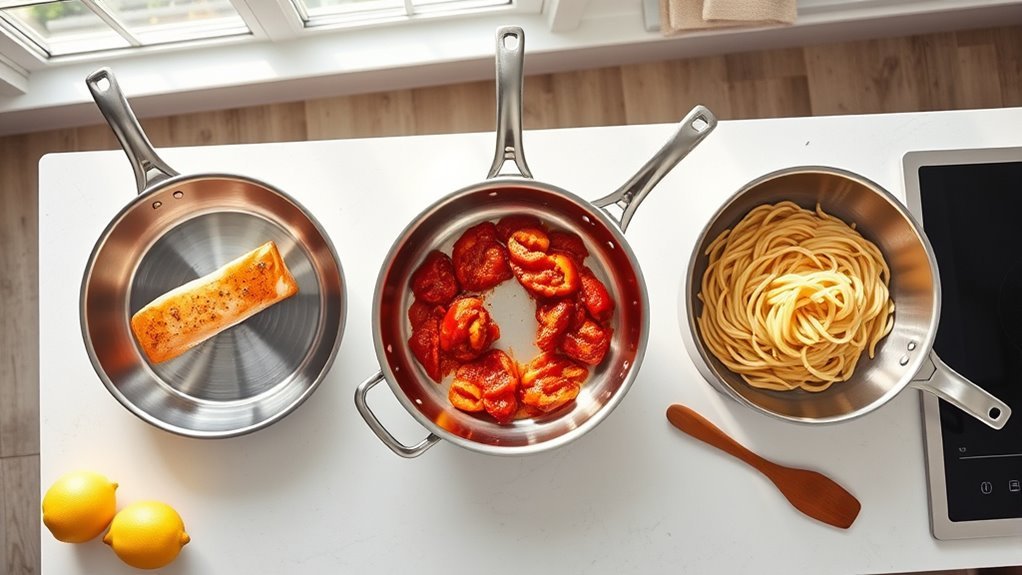
For most home cooks, 3-ply is the best ply for stainless steel cookware: it heats evenly, costs less and is lighter to handle. Choose 5-ply if you want even more stable heat and warp resistance and do not mind a heavier, pricier pan. The number of plies is only one factor, because total thickness, a fully clad build and the quality of the steel matter just as much.
If you are still learning what the numbers mean, start with what 5-ply stainless steel is.
What Does “Ply” Mean in Stainless Steel Cookware?
Ply means the number of bonded metal layers in the pan wall. Pure stainless steel does not spread heat well, so makers sandwich a better conductor, usually aluminum, between layers of stainless steel. The stainless gives you a durable, non-reactive cooking surface, and the aluminum spreads the heat.
- 3-ply (tri-ply): stainless steel, aluminum, stainless steel.
- 5-ply: five layers. Layouts vary by brand. All-Clad’s D5, for example, alternates stainless steel and aluminum, while its Copper Core line uses a copper center.
- 7-ply and more: offered by some brands, with diminishing returns for most cooks.
3-Ply vs 5-Ply: Which Is Better?
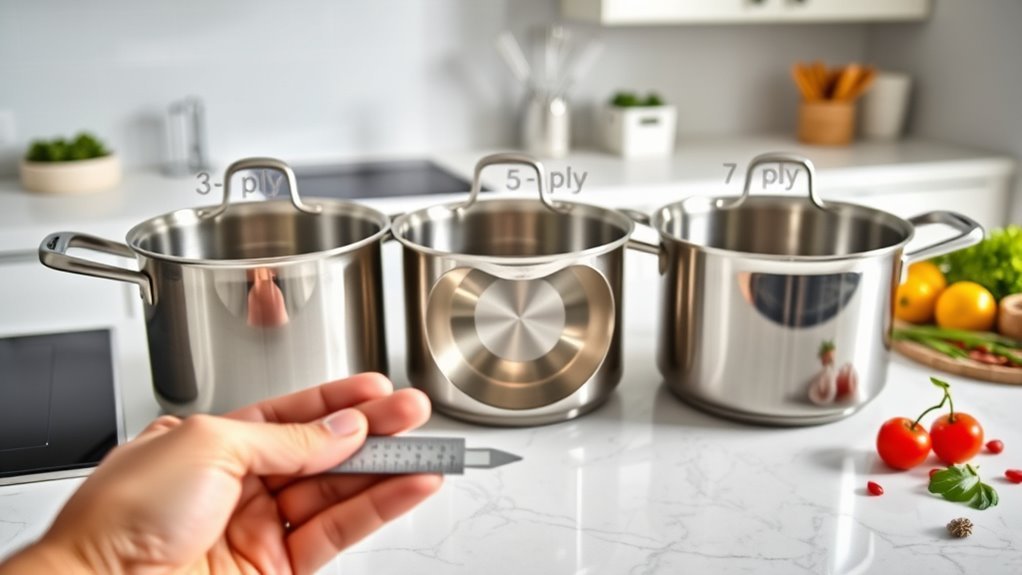
| Factor | 3-ply | 5-ply |
|---|---|---|
| Heat spreading | Very good | Often more even and stable |
| Weight | Lighter | Often a bit heavier |
| Warp resistance | Good | Often better |
| Price | Usually lower | Usually higher |
| Responsiveness to heat changes | Faster | Slower, holds heat longer |
| Best for | Everyday cooking, value | Searing, steady simmering, long-term use |
These are general trends. Individual pans vary by brand, thickness and design, so compare each pan’s weight and wall thickness where the maker lists them.
Which Ply Should You Choose?
| If you… | Pick | Why |
|---|---|---|
| Cook everyday meals and want good value | 3-ply | Even heat, lighter, lower price |
| Have limited wrist strength or move pans a lot | 3-ply | Lighter to lift and toss |
| Sear often on strong gas or induction burners | 5-ply | Steadier heat, less chance of hot spots |
| Simmer sauces for long periods | 5-ply | Holds a steady temperature |
| Want to buy one set for years | Either, if fully clad | Build quality counts more than ply count |
Some cooks mix them, using a 5-ply skillet for searing and 3-ply saucepans for everyday boiling and simmering.
What Matters More Than Ply Count
- Fully clad construction. Layers should run from the base up the sides. Pans with only a disc on the bottom heat the base well but leave the walls thin.
- Total thickness and weight. A well-made 3-ply can outperform a thin 5-ply.
- Steel grade. Cooking surfaces are commonly 18/10 stainless steel, which resists corrosion. Magnetic outer layers (often 18/0 or 430 type) allow induction.
- Handles. Riveted, stay-cool handles that feel balanced in your hand matter every day.
- Lid fit and oven rating. Check the maker’s stated oven limit for pans and lids.
- Warranty. Brands such as All-Clad offer limited lifetime warranties for manufacturing defects, but wear and discoloration are generally excluded.
How to Check a Pan Before You Buy
- Look for the words “fully clad” or “rim to rim” in the product description.
- Check the listing for weight and wall thickness. A very light pan may be thin.
- Press a magnet to the base if you cook on induction.
- Look at the rim: a clean, rolled edge that pours without dripping is a good sign.
- Read the care page. Some lines are hand-wash only even if they are made of stainless steel.
- Do not rely on labels alone. Product listings vary, so verify specs on the maker’s own page.
Does the Ply Affect Induction Cooking?
Not directly. What matters is a magnetic outer layer. Many clad pans are induction ready, but check the maker’s statement, or do a magnet test: if a magnet sticks firmly to the bottom, it should work. See what cookware to use for an induction cooker.
Common Myths About Ply
- “More plies always cook better.” Not necessarily. Thickness and design count.
- “5-ply never sticks.” Sticking comes from technique. Read is stainless steel hard to cook with.
- “Cheaper 3-ply is low quality.” A good 3-ply is a solid choice for most kitchens.
Care Tips for Any Ply
- Preheat gradually on low to medium heat. See when a stainless steel pan is ready.
- Never put a hot pan under cold water, which can warp it.
- Hand wash for the longest life, even if the maker says dishwasher safe. See can stainless steel go in the dishwasher.
- Remove heat tint or water spots with white vinegar or a non-abrasive stainless cleanser.
Frequently Asked Questions
What is the best ply for stainless steel cookware?
For most people, 3-ply is the best balance of even heating, weight and price. 5-ply can offer more evenness and warp resistance but is usually heavier and costs more. Fully clad construction and thickness matter as much as ply.
Is 5-ply better than 3-ply?
Often it heats more evenly and resists warping better, but it is heavier and usually more expensive. A well-made 3-ply pan can still be excellent. Compare thickness, weight and construction, not just the ply number.
Is 18/10 or 18/0 stainless steel better for cookware?
18/10 resists corrosion and is common on cooking surfaces. 18/0 is magnetic and is often used for outer layers for induction compatibility. Many clad pans combine them. People with nickel sensitivity may prefer low-nickel options and should ask their doctor.
Do I need 5-ply stainless steel for induction cooking?
No. Both 3-ply and 5-ply can work on induction if the outer layer is magnetic. Check the cookware maker’s induction statement or test the base with a magnet before you buy, since not every stainless pan is magnetic.
Conclusion
3-ply is the best choice for most kitchens, and 5-ply suits cooks who value maximum evenness and do not mind extra weight. Prioritize fully clad construction, good thickness and a comfortable handle over the ply number alone.
Related guides: what All-Clad cookware is and what cookware chefs use.
