
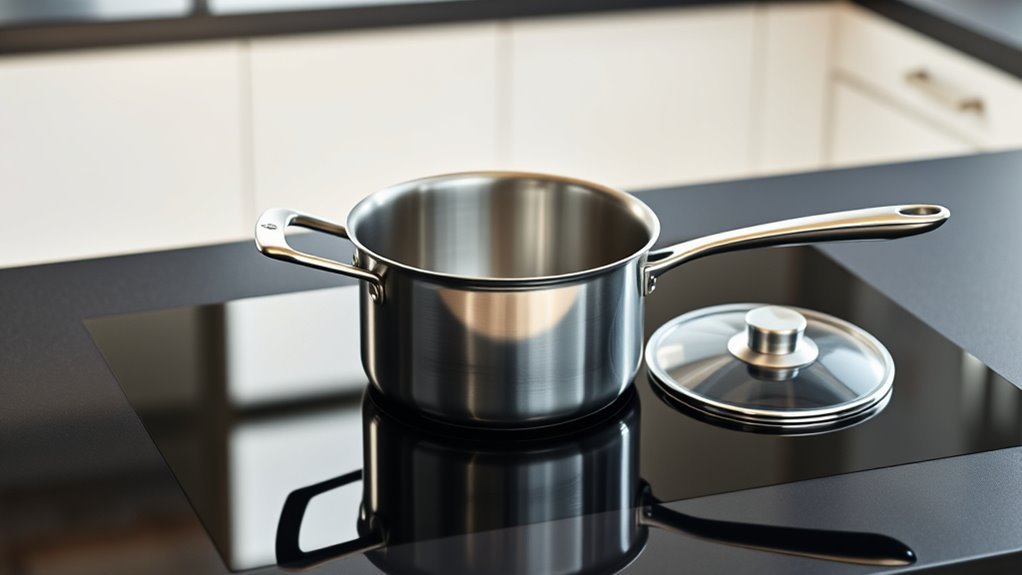
A saucepan is designed with a round, deep body and a flat bottom to guarantee even heat distribution. It typically features an ergonomic handle and a tight-fitting lid to control moisture. The diameter usually ranges between 14 cm and 18 cm, with a depth of at least 12 cm to minimize boil-overs. Understanding these characteristics is essential, but it’s also important to take into account how material and construction impact performance. Let’s explore what makes a saucepan truly effective.
What Is a Saucepan and Its Basic Components?
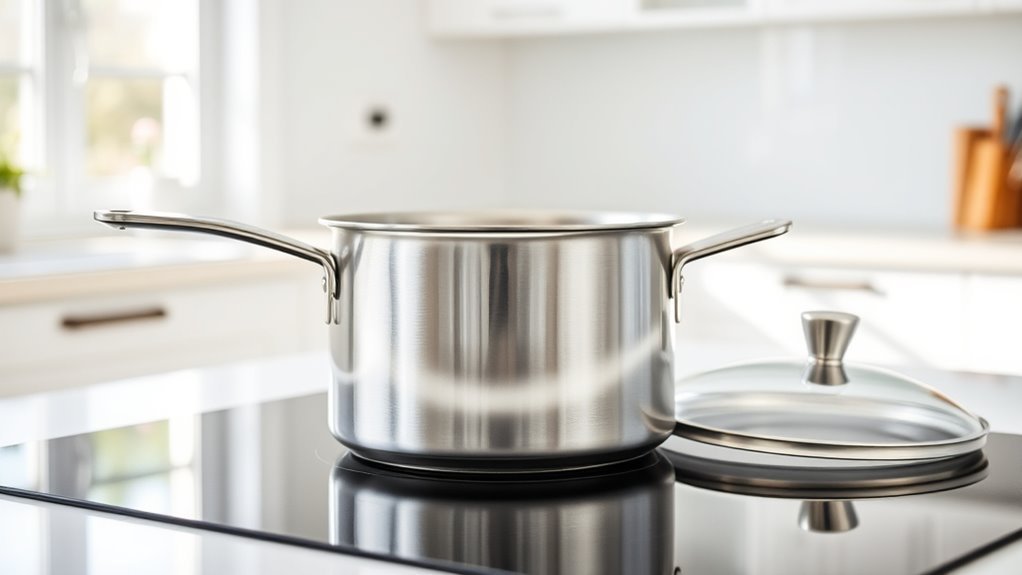
A saucepan is an indispensable kitchen tool designed primarily for cooking liquids and sauces. It features a round, deep body with a flat bottom that guarantees even heat distribution, making it ideal for tasks like simmering or boiling.
Most saucepans come equipped with a sturdy handle made from heat-resistant materials, allowing you to grip easily while cooking. A fitted lid is also a crucial component, as it retains moisture and heat, enhancing flavor and cooking efficiency.
A sturdy, heat-resistant handle and a fitted lid enhance moisture retention and cooking efficiency in every saucepan.
Commonly made from stainless steel, aluminum, or non-stick coatings, saucepans vary in heat conductivity and ease of cleaning based on their material. These kitchen staples typically range from 1 to 3 liters, accommodating both single servings and larger quantities.
Many models include a pouring spout, ensuring you can transfer sauces and liquids without spills, making the saucepan a versatile tool in your culinary arsenal.
Best Materials for Saucepans: What You Need to Know
Choosing the right material for your saucepan can greatly impact your cooking experience and the dishes you create.
Stainless steel is a durable option that resists rust and corrosion, often featuring multi-ply construction for superior heat distribution.
If you prefer easy food release, consider saucepans with non-stick coatings made from aluminum or hard-anodized aluminum; just handle them carefully to avoid scratching.
Copper, while excellent for heat conduction, requires regular polishing and can be pricier.
Cast iron retains heat exceptionally well, making it ideal for slow cooking, but it’s heavier and needs seasoning for optimal non-stick characteristics.
Aluminum is lightweight and heats up quickly, but can warp at high temperatures; choosing hard-anodized versions can enhance their durability and heat retention.
Each material offers unique benefits, so consider your cooking style when making your choice.
The Ideal Shape and Size for Effective Cooking
When selecting the ideal shape and size for a saucepan, it’s critical to take into account how these factors directly influence cooking efficiency and outcomes.
A well-designed saucepan with a non-stick surface enhances your cooking experience by promoting even heat distribution.
A quality saucepan with a non-stick finish ensures even heat distribution for a superior cooking experience.
Consider these key features:
- Diameter: Aim for a range of 16 to 18 cm for single to double portions; larger sizes (up to 3.5 liters) work well for family meals.
- Depth: A minimum depth of 12 cm (5 inches) prevents boil-overs, especially with sauces or liquids.
- Tapered Rim: This allows for easy pouring without spills, maintaining kitchen cleanliness.
- Well-Fitted Lid: Critical for moisture retention and cooking efficiency, it aids in simmering and steaming tasks.
Essential Features for Optimal Saucepan Performance
Optimal saucepan performance hinges on several essential features that enhance cooking efficiency and ease. A high-quality saucepan should be constructed from durable materials like stainless steel or hard-anodized aluminum, ensuring longevity and ideal heat distribution.
Look for a tightly fitted lid; this feature retains moisture and promotes even cooking, greatly boosting performance.
For safety and comfort, choose ergonomically designed, heat-resistant handles that provide a secure grip during cooking tasks. An ideal saucepan also includes a non-stick coating, facilitating easy food release and cleaning while ensuring it’s PFOA-free for health safety.
Finally, consider the size and capacity: a 16-18 cm diameter saucepan is typically ideal for 1-2 portions, while larger options suit family meals or bigger recipes.
Prioritizing these features will empower your culinary endeavors, allowing for a more liberated and enjoyable cooking experience.
Practical Steps to Choose the Right Saucepan for Your Cooking Style
When choosing the right saucepan, start by evaluating your key cooking needs to determine the appropriate size and capacity.
Opt for high-quality materials that guarantee durability and effective heat distribution, which is essential for even cooking.
Finally, consider compatibility with your stovetop and any additional features that enhance functionality, such as non-stick coatings or ergonomic handles.
Key Cooking Needs
Choosing the right saucepan is essential for maximizing your cooking efficiency and achieving the best results. To meet your key cooking needs, consider the following:
- Assess Your Cooking Style: Identify if you’re preparing sauces, soups, or boiling liquids to choose the appropriate size and shape.
- Material Matters: Opt for stainless steel for durability and excellent heat distribution, or non-stick for easy food release.
- Capacity Counts: Select a saucepan with a capacity that suits your needs—ranging from 0.95 liters for single servings to 2.8 liters for family meals.
- Ergonomic Handles: Look for handles that stay cool during cooking, enhancing comfort and safety, especially on induction stoves.
Make informed choices that align with your culinary goals.
Material Considerations
Material considerations play an essential role in selecting the right saucepan for your cooking style.
Stainless steel is durable and offers multi-ply construction, enhancing heat distribution for simmering sauces or delicate dishes. If you often cook foods that stick, a non-stick surface simplifies cleaning, but keep in mind their longevity and care requirements.
For induction hobs, prioritize saucepans with a magnetic base to guarantee compatibility and ideal heating efficiency. Additionally, consider the weight of the saucepan; heavier models retain heat better, while lighter ones are easier to maneuver.
Size and Capacity
Selecting the right size and capacity for your saucepan can greatly impact your cooking efficiency and the quality of your dishes. Here are some practical steps to guide you:
- Choose 0.95 liters for single servings; it’s perfect for quick meals.
- Opt for 2.8 liters for family meals, guaranteeing everyone’s satisfied.
- A diameter of 16-18 cm works best for sauces and smaller portions.
- Confirm the height is at least 12 cm to prevent boil-overs when cooking liquids.
Don’t forget to verify induction compatibility if you’re using an induction stovetop.
Evaluate your kitchen space and storage options to balance saucepan capacity with available storage, ensuring you maximize your cooking experience.
Top Mistakes to Avoid When Buying a Saucepan
When buying a saucepan, don’t overlook induction compatibility; not all pans work on induction cooktops, so check for a magnetic base.
Also, prioritize material quality; low-quality options can warp or scratch, affecting performance over time.
Induction Compatibility Issues
If you’re considering a saucepan for your induction cooktop, it’s crucial to verify it’s explicitly labeled as “induction compatible.” Many pans lack the necessary magnetic base, which can lead to inefficient cooking and frustration.
To avoid costly mistakes, keep these tips in mind:
- Check for a flat, ferrous bottom that attracts a magnet.
- Ascertain the saucepan is explicitly labeled for induction use; marketing terms can be misleading.
- Confirm the diameter of the base matches your induction hob’s cooking zone for peak performance.
- Avoid non-induction pans; they won’t work on induction cooking surfaces, causing heat loss and frustration.
Material Quality Concerns
Understanding material quality is vital for making an informed choice when purchasing a saucepan, as it directly impacts durability and cooking performance.
Opt for stainless steel saucepans or thick aluminum, as these materials provide superior heat distribution and longevity compared to cheaper alternatives.
If you’re using induction cooktops, confirm your saucepan has a magnetic base for proper induction compatibility.
Be cautious with non-stick coatings; choose PFOA-free options and adhere to care instructions to avoid early wear.
A thicker base, ideally around 2.5 mm or more, is essential for even cooking and heat retention.
Finally, consider products with solid warranties and positive reviews, as these often signal better material quality and longevity in performance.
Easy Tips to Keep Your Saucepan in Great Shape
To keep your saucepan in great shape, regular maintenance is essential. Follow these easy tips to guarantee longevity and peak performance:
- Regular Cleaning: Use non-abrasive sponges and warm, soapy water. This prevents scratches and maintains the integrity of your non-stick surfaces.
- Avoid High Heat: Gradually heat your pan and steer clear of high settings. This prevents warping and preserves the lifespan of coatings.
- Use Appropriate Utensils: Opt for wooden or silicone utensils. This minimizes the risk of scratching your non-stick surfaces, guaranteeing they last longer.
- Storage Practices: Store your saucepan with protective layers, like cloth, between stacked pans. This avoids scratches and keeps the finish intact.
What Should a Saucepan Look Like?
A saucepan should display a round, deep body with a flat base, guaranteeing even heat distribution during cooking. Typically, it features a diameter ranging from 14 cm to 18 cm, making it versatile for various tasks like preparing sauces or soups.
The material can vary—stainless steel offers durability, aluminum provides lightweight convenience, and non-stick coatings simplify cleanup.
You’ll also want a long, ergonomic handle that allows for a secure grip, promoting comfort while maneuvering. This handle is often designed to stay cool, preventing burns.
A tightly fitting glass lid should accompany your saucepan, helping to retain moisture and heat for ideal cooking results. When selecting your saucepan, pay attention to these aspects to enhance your cooking experience and guarantee that it meets your culinary needs.
Frequently Asked Questions
What Is the Difference Between a Pan and a Saucepan?
A frying pan and a saucepan differ mainly in design and cooking techniques.
You’ll find a frying pan has flared sides for easy flipping, while a saucepan features tall sides and a lid, vital for simmering.
Heat conduction varies too; frying pans often use materials like stainless steel or non-stick, enhancing quick cooking.
In contrast, saucepans excel at boiling and making sauces, where retaining moisture and even heat distribution is essential for best results.
How to Identify a Saucepan?
To identify a saucepan, look for a round, deep shape with a flat base.
It’s usually made from stainless steel, aluminum, or non-stick materials, each offering specific advantages.
Saucepan sizes range from 14 cm to 24 cm in diameter, catering to various cooking needs.
You’ll notice a long handle, often ergonomically designed, and a tightly fitting lid for moisture retention.
For best results, maintain your saucepan by following proper care instructions to guarantee longevity.
What Is Another Name for a Saucepan?
Another name for a saucepan is a “sauce pot.” These versatile cookware pieces come in various sizes, shapes, and materials, such as stainless steel, non-stick, or cast iron.
With a wide range of uses, from simmering sauces to boiling pasta, they’re essential in any kitchen.
Popular saucepan brands include T-fal and Cuisinart, catering to different cooking needs.
Understanding these alternatives can enhance your culinary experience and inspire your cooking creativity.
Why Do They Call It a Saucepan?
They call it a saucepan because its primary function is to cook sauces, a technique rooted in historical culinary practices.
Made from materials like stainless steel or non-stick coatings, the design promotes even heating. For best results, use it with a lid to retain moisture.
Popular brands like All-Clad and T-fal offer high-quality options. Understanding these aspects enhances your cooking experience, allowing you to master various sauces and liquids effortlessly.
Conclusion
In conclusion, a high-quality saucepan should feature a sturdy construction, an ergonomic handle, and a snug lid to guarantee effective cooking. Picture yourself simmering a rich tomato sauce in a gleaming stainless steel saucepan, the steam swirling as it bubbles gently. This visual encapsulates the essence of a well-designed saucepan, enhancing your culinary experience. By focusing on these key elements, you can elevate your cooking and enjoy a versatile kitchen tool that stands the test of time.
