
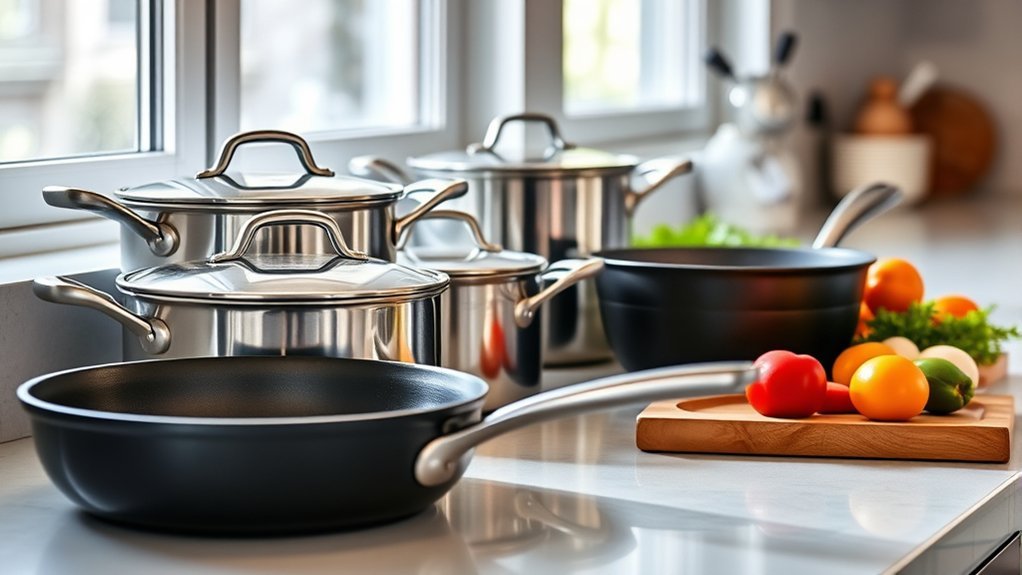
A good pots and pans brand is defined less by its name than by construction quality, heat performance, durability, comfortable handling, and clear care instructions. Fully clad stainless steel is a versatile choice for browning, sautéing, simmering, and oven use, while nonstick is useful for delicate foods and easy cleanup. Cast iron offers excellent heat retention, and enameled cast iron adds easier maintenance. The right brand depends on the material, cookware pieces, cooktop, budget, and cooking style you actually use.
Quick Answer
A good cookware brand uses durable materials, heats predictably, has secure handles and well-fitting lids, publishes clear oven and cooktop limits, and provides useful warranty and care information. All-Clad and Cuisinart have established clad-stainless lines, Lodge specializes in cast iron, and Le Creuset is known for enameled cast iron, but the best choice depends on the material and pieces you need.
Key Takeaways
- Judge the specific cookware line, not only the brand name; construction can vary within one brand.
- Fully clad stainless steel is one of the most versatile choices for everyday cooking and high-heat browning.
- Nonstick works well for eggs, fish, and easy cleanup but should not be overheated or used after the coating is badly damaged.
- Cast iron retains heat well and can last for many years when kept dry and properly seasoned.
- For induction, confirm that the base is magnetic; a simple refrigerator-magnet test is useful.
- Check the exact manufacturer’s oven, dishwasher, utensil, and warranty instructions before buying.
What Makes a Good Cookware Brand
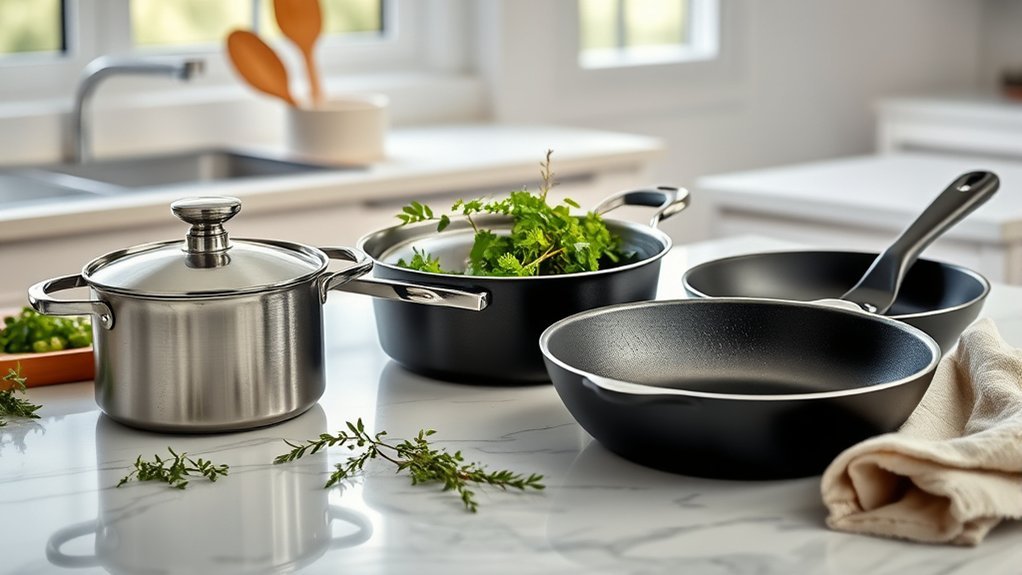
A good cookware brand combines sound materials, dependable construction, practical design, realistic warranties, and clear care instructions. Brand reputation can help narrow the field, but it should not replace inspection of the individual product line.
For stainless steel, fully clad construction is especially useful. A pan such as All-Clad D3 Stainless sandwiches an aluminum core between stainless steel layers so heat can spread more quickly and evenly than it would through stainless steel alone. Cuisinart uses a similar aluminum-core, triple-ply design in its MultiClad Pro line.
Useful design details include comfortable handles, secure rivets or welds, rims that pour cleanly, lids that sit properly, a flat base, and a balanced feel when the pan is empty and when it contains food.
Warranty length can be useful, but it is not proof of quality by itself. Read what is actually covered because warranties commonly exclude misuse, overheating, cosmetic changes, rust caused by poor care, or damage that occurs outside normal cooking.
The cookware line matters as much as the logo: compare its construction, heat limits, handle design, cooktop compatibility, care instructions, and warranty before judging the brand.
Why Stainless Steel Cookware Brands Stand Out
Stainless steel cookware stands out because it is durable, resistant to rust and staining, and suitable for many cooking techniques. Health Canada describes stainless steel cookware as strong, long-lasting, and resistant to rusting and staining.
However, stainless steel itself is not an especially fast heat conductor. Better-performing stainless cookware often combines it with an aluminum or copper core. Fully clad construction extends those layers through more of the pan instead of limiting the conductive layer to a disc on the bottom.
This construction makes clad stainless steel useful for searing meat, browning vegetables, simmering sauces, deglazing, braising, and moving between the stovetop and oven when the particular product is rated for it.
Do not assume that every stainless pan has the same oven or dishwasher rating. For example, current All-Clad D3 guidance lists its stainless fry pan as oven and broiler safe to 600°F and specifies hand washing, while Cuisinart lists the referenced MultiClad Pro sauté pan as dishwasher safe and oven safe to 500°F. Always follow the instructions for the exact product.
Note: More layers do not automatically mean a better pan. Cladding quality, thickness, weight, handle comfort, heat response, and overall design matter more than simply choosing the highest ply count.
Key Features That Separate Good Cookware
Beyond brand reputation, the details inside and around the pan determine how useful it will be in everyday cooking.
Well-made cookware combines suitable materials, predictable heating, strong handles, a stable base, and care requirements that fit the cook.
- Material quality: Choose the material according to the cooking task, not marketing language alone.
- Heat distribution: Clad stainless or well-designed aluminum-based cookware can reduce severe hot spots.
- Handle design: Handles should feel secure and controllable when the pan is loaded.
- Cooktop compatibility: Confirm gas, radiant electric, glass-top, or induction compatibility as needed.
- Oven rating: Check the lowest temperature limit of the pan, handles, lid, and knob.
- Cleaning requirements: Dishwasher-safe does not always mean dishwashing is best for appearance or coating life.
- Replacement parts: Available lids, knobs, or handles can improve long-term usefulness.
- Warranty terms: Read exclusions instead of relying on the words “lifetime warranty.”
Cookware Brand and Material Comparison
| Type / Examples | Best Suited To | Main Trade-Off |
| Clad stainless steel Examples: All-Clad D3, Cuisinart MultiClad Pro |
Searing, browning, sauces, braising, general cooking | Food can stick without proper preheating and technique |
| PTFE nonstick | Eggs, pancakes, fish, reheating, easy cleanup | Coating eventually wears and should not be overheated |
| Ceramic-coated nonstick | Cooks who want a PTFE-free coated surface | Easy-release performance can decline with wear |
| Seasoned cast iron Example: Lodge |
Searing, frying, baking, high heat, heat retention | Heavy and requires drying and seasoning care |
| Enameled cast iron Example: Le Creuset |
Braising, soups, stews, acidic dishes, oven cooking | Heavy; enamel can chip if abused |
| Carbon steel | High-heat searing and cooks wanting a lighter alternative to cast iron | Requires seasoning and rust prevention |
Which Cookware Material Is Right for You
Stainless steel offers durability and strong browning performance, although food-release technique and cleanup take more practice than with a coated pan.
Nonstick cookware is useful for delicate foods and low-effort cleanup. Cast iron provides excellent heat retention, while enameled cast iron gives similar thermal mass without the seasoning requirements of raw cast iron.
Many kitchens work best with a mixture rather than one matching material: for example, a clad stainless saucepan and skillet for general use, a smaller nonstick skillet for eggs, and a cast-iron or enameled Dutch oven for high-heat or slow cooking.
Stainless Steel Strengths
A well-made stainless steel set offers dependable durability and broad cooking versatility. Health Canada notes that stainless cookware is resistant to rusting and staining, although even stainless surfaces can develop discoloration or pitting under some conditions.
- Good durability and corrosion resistance
- Suitable for browning, searing, deglazing, and sauces
- Clad aluminum or copper cores can improve heat distribution
- No fragile nonstick coating to wear away
- Many designs are induction compatible
- Food may stick if the pan is too cold, too hot, or food is turned before it releases naturally
Pro Tip: For stainless steel, preheat over low-to-medium or medium heat, add oil after the pan warms, and let proteins brown before trying to move them. Proper temperature control usually matters more than adding large amounts of oil.
Nonstick Vs. Cast Iron
Nonstick cookware and cast iron solve different problems. Nonstick offers easy food release with minimal technique, making it especially useful for eggs, pancakes, delicate fish, and reheating.
Cast iron is heavier but retains heat extremely well and is useful for searing, frying, roasting, and baking. Seasoned raw cast iron develops an easy-release surface from layers of polymerized cooking oil. Lodge’s seasoning guidance recommends cleaning, drying thoroughly, and applying a very thin oil layer when seasoning is needed.
Raw cast iron and enameled cast iron should not be treated the same. Enameled cast iron does not require seasoning. Le Creuset’s care guidance also recommends allowing enameled cookware to cool before washing to reduce the risk of thermal shock.
Warning: Do not preheat an empty PTFE nonstick pan for a long period or expose it to uncontrolled high heat. Health Canada advises against using nonstick cookware above about 260°C/500°F and recommends following the cookware manufacturer’s temperature limits.
How to Judge Cookware Quality and Durability
Cookware quality is best judged from its materials, construction, heating behavior, handles, base stability, finish, published temperature limits, and warranty—not simply from weight or price.
Material And Construction
Material choice shapes cooking performance and maintenance. Stainless steel is durable and corrosion resistant. Aluminum conducts heat efficiently and is widely used as the core of clad cookware. Copper responds quickly to temperature changes but usually needs a nonreactive cooking surface or lining. Raw cast iron retains heat well but needs rust-prevention care.
- Look for flat bases that sit firmly on the cooktop.
- Inspect handles for secure rivets, welds, or fasteners.
- Make sure heavy pots have helper handles when practical.
- Check whether lids fit securely without being difficult to remove.
- Confirm that the stated oven limit includes the lid and knob.
- For coated cookware, inspect the finish for scratches, chips, or peeling.
Weight should feel substantial enough for stability but not so heavy that the cookware becomes unsafe or unpleasant to lift when full.
Heat Performance And Wear
Good cookware should heat predictably and remain reasonably flat during normal use. Fully clad designs can spread heat up the sides as well as across the base, while thick cast iron heats more slowly but holds heat effectively.
A single temperature such as 500°F cannot be used as a universal quality test. Oven-safe limits vary widely by model and can be restricted by coatings, handles, lids, or knobs. Use the manufacturer’s published limit rather than assuming a premium pan is safe at any temperature.
Normal stainless discoloration is not necessarily a sign of failure. More serious problems include a badly warped base, loose handles, cracked cast iron, chipped enamel that exposes underlying material, or a nonstick surface that is extensively peeling or damaged.
Check Induction Compatibility Before Buying
If you cook on induction, the cookware base needs magnetic material. ENERGY STAR recommends a simple test: place a refrigerator magnet against the bottom of the pan. If it sticks securely, the pan is generally induction compatible.
Cast iron and many stainless-steel pans work on induction, but not every stainless alloy or aluminum pan does. Check the induction symbol or manufacturer specification before buying.
What Cookware Pieces Should a Set Include
A well-rounded cookware set should cover normal cooking tasks without filling the cabinet with duplicate pieces. For many homes, useful basics include a skillet, one or two saucepans, and a stockpot or Dutch oven.
- 10- to 12-inch skillet for sautéing, browning, and everyday cooking
- 1.5- to 2-quart saucepan for sauces and small portions
- 3- to 4-quart saucepan or sauté pan for grains, vegetables, and larger portions
- 6- to 8-quart stockpot or Dutch oven for pasta, soup, stock, and batch cooking
- Well-fitting lids for the pieces that benefit from covered cooking
Cookware Set Vs. Open Stock
A large matching set is not automatically the best value. If it contains pans you rarely use, those extra pieces consume storage space and increase the purchase price without improving your cooking.
Buying individual pieces, often called open stock, can be smarter when you already own useful cookware or want to mix materials. A stainless skillet, nonstick egg pan, and cast-iron Dutch oven do not need to come from the same manufacturer.
A set makes more sense when you are replacing most of your cookware at once and will regularly use the included pieces.
Does More Expensive Cookware Last Longer?
Price can reflect heavier construction, more complex cladding, domestic manufacturing, finishing, warranty support, or brand positioning, but a higher price does not guarantee better cooking performance.
Spend more when a particular feature matters to you, such as fully clad construction, a specific handle design, lower weight, a higher manufacturer-rated oven limit, or strong replacement support. Otherwise, a well-built mid-priced pan may serve the same everyday purpose.
How to Care for Pots and Pans So They Last
Proper care helps cookware keep its finish and cooking performance, but cleaning instructions should match the material and manufacturer.
For stainless steel, let the cookware cool before washing. Warm water, mild dish soap, and a non-scratching sponge are suitable for routine cleaning. A stainless-steel cleaner such as Bar Keepers Friend can help with compatible uncoated stainless surfaces, but always check the manufacturer’s instructions first.
Nonstick cookware generally lasts longer when used with wood, silicone, or other coating-safe utensils and washed without aggressive abrasives. Replace a coated pan when the cooking surface is extensively peeling, flaking, or otherwise badly damaged.
For raw cast iron, wash according to the maker’s instructions, dry it promptly, and apply a thin film of oil when needed to maintain seasoning. Do not leave ordinary seasoned cast iron soaking in water.
Enameled cast iron does not need seasoning. Although some enameled cookware is technically dishwasher safe, manufacturers such as Le Creuset recommend hand washing to preserve the appearance of the finish.
Storage also matters. Pan protectors, towels, or dividers can prevent coated or enameled surfaces from being scratched or chipped when cookware is stacked.
Cookware Buying Checklist
- Choose the material for the food and techniques you cook most often.
- Check whether each included pan is a size you will actually use.
- Confirm induction compatibility if applicable.
- Read the exact oven-safe temperature for the cookware, lid, handles, and knobs.
- Check whether the manufacturer recommends hand washing or permits dishwasher use.
- Hold the pan if possible and judge handle comfort and loaded balance.
- Inspect lids, rims, rivets, welds, and the flatness of the base.
- Read the warranty exclusions as well as its advertised length.
- Compare individual-piece prices with the cost of a full set.
- Avoid choosing solely from marketing terms such as “professional,” “premium,” or “non-toxic.”
Frequently Asked Questions
Which brand of cookware is best?
There is no single best cookware brand for every kitchen. All-Clad has well-established fully clad stainless-steel lines, Cuisinart offers triple-ply stainless options such as MultiClad Pro, Lodge specializes in seasoned cast iron, and Le Creuset is known for enameled cast iron. Compare the specific product line, material, size, price, oven rating, care requirements, and warranty rather than choosing by brand alone.
What pans should you stay away from?
Avoid pans with loose handles, severely warped bases, badly peeling nonstick coatings, heavily chipped enamel, cracks, or construction that does not match the intended heat source. Do not assume every PFAS-containing nonstick pan is automatically unsafe; instead, follow current safety guidance, avoid overheating PTFE cookware, and replace badly damaged coated pans.
What brand of pots and pans lasts the longest?
Longevity depends more on material, construction, use, and care than on one brand name. Fully clad stainless steel and properly maintained cast iron can remain usable for many years because they do not rely on a conventional nonstick coating. Brands such as All-Clad, Lodge, and Le Creuset sell cookware designed for long-term use, but warranty coverage and durability still vary by product.
What is the healthiest brand of pots and pans?
There is no evidence-based “healthiest cookware brand.” Safety depends on the material, its condition, the food being cooked, temperature, and correct use. Stainless steel, cast iron, enameled cast iron, PTFE nonstick, and ceramic-coated cookware can all have appropriate uses when they are made for food contact and used according to manufacturer instructions. People who prefer to avoid PTFE can choose uncoated stainless steel, seasoned cast iron, carbon steel, enameled cast iron, or a PTFE-free coated product.
Is stainless steel or nonstick better for everyday cooking?
Stainless steel is more versatile for browning, searing, deglazing, and higher-temperature cooking, while nonstick is easier for eggs, pancakes, delicate fish, and quick cleanup. Many cooks get better results by keeping both rather than trying to make one material handle every task.
How can I tell whether a pan will work on induction?
Check the manufacturer’s induction symbol or place a refrigerator magnet on the bottom of the pan. If the magnet sticks securely, the cookware is generally suitable for induction. Cast iron works well, while stainless-steel compatibility depends on the alloy and base construction.
Conclusion
Choosing a good brand of pots and pans comes down to matching material, construction, heat performance, care needs, and cookware pieces to the way you cook. Fully clad stainless steel is a durable, versatile foundation for many kitchens, nonstick is useful for delicate foods and easy cleanup, and cast iron or enameled cast iron adds excellent heat retention.
Brand names can help narrow the options, but the final decision should come from the specific pan’s construction, handle comfort, induction compatibility, oven rating, cleaning instructions, warranty, and price. A smaller collection of cookware you use every week is usually more useful than a large matching set filled with unnecessary pieces.
Sources
- U.S. Food and Drug Administration — Questions and Answers on PFAS in Food — current FDA context on authorized PFAS uses in nonstick cookware and migration into food.
- Health Canada — The Safe Use of Cookware and Bakeware — stainless steel, cast iron, copper, aluminum, and nonstick safety and care guidance.
- ENERGY STAR — Electric Cooking Products — induction cookware compatibility and the magnet test.
- All-Clad — D3 Stainless Fry Pan — tri-ply construction, induction compatibility, oven limit, and current care guidance.
- Lodge Cast Iron — How to Season Cast Iron — cast-iron seasoning, cleaning, drying, and oiling guidance.
- Le Creuset — How to Care for and Clean Enameled Cast Iron — seasoning, hand washing, dishwasher use, and thermal-shock guidance for enameled cast iron.