
Costco has not broadly stopped selling HexClad. As of September 2026, Costco’s U.S. website still lists HexClad cookware, and HexClad identifies Costco warehouse special events and roadshows as an authorized U.S. sales channel. A set disappearing from one warehouse or a promotion ending does not necessarily mean Costco discontinued the brand. There is also no verified Costco statement saying poor reviews caused HexClad to be dropped.
Quick Answer
Costco still carries HexClad in the U.S., although availability can change by warehouse and special-event schedule. HexClad itself says Costco sells its cookware during warehouse roadshows. If a local Costco no longer has a HexClad display, the most likely explanation is changing inventory or an ended event—not a confirmed nationwide discontinuation.
Key Takeaways
- Costco’s U.S. website continued listing HexClad cookware in September 2026.
- HexClad says Costco warehouses sell its products during special events or roadshows, so local availability can come and go.
- There is no verified Costco statement showing that negative reviews caused the retailer to discontinue HexClad.
- Current independent testing is more positive than older criticism suggests; Consumer Reports rated the tested HexClad Hybrid highly for even heating, food release, and durability.
- HexClad cookware sold from 2022 to early 2024 used a PTFE-based coating, and a $2.5 million class action over its “PFAS-free” and “non-toxic” marketing received final court approval in March 2026.
- Current HexClad cookware uses a ceramic TerraBond nonstick coating that the company says is free from PTFE, PFAS, lead, and cadmium.
Is HexClad Cookware Worth It?
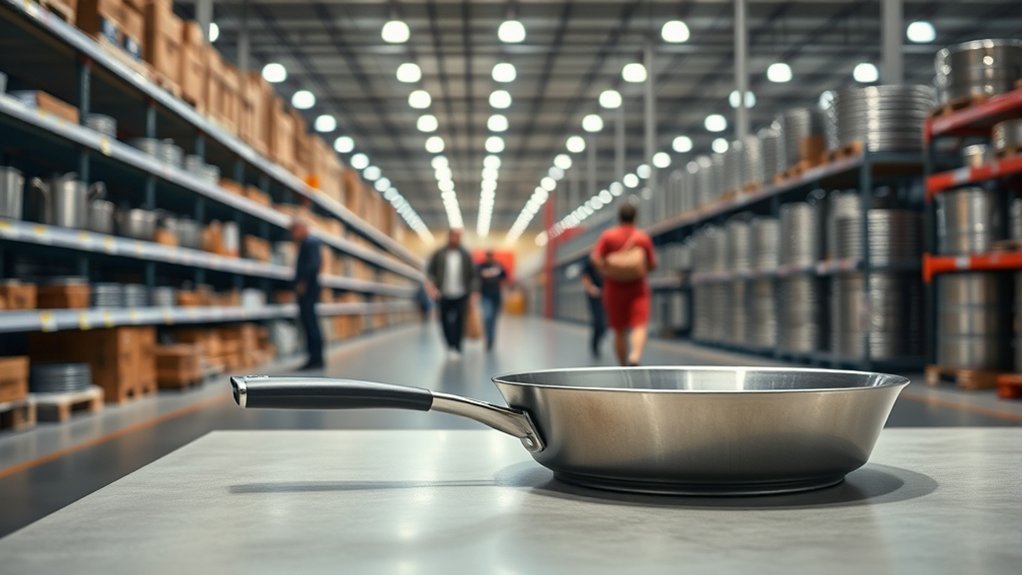
Whether HexClad is worth buying depends more on what you expect from the pan than on a simple good-or-bad verdict. HexClad combines a stainless-steel cooking surface with ceramic nonstick areas and an aluminum core, giving it characteristics of both stainless and coated cookware.
Price is the main tradeoff. As of September 2026, HexClad lists its 12-inch Hybrid Fry Pan at $179 without a lid and $199 with a lid. That puts it well above many conventional nonstick skillets. See the current HexClad pan lineup for current pricing.
For the higher price, buyers get induction compatibility, dishwasher-safe construction, oven safety up to 900°F on current models (lids up to 400°F), metal-utensil compatibility, and a lifetime warranty against manufacturing defects. The warranty is not an unconditional replacement guarantee: damage from misuse, excessive heat, improper cleaning, neglect, and similar causes is excluded.
Nonstick expectations also matter. HexClad does not behave exactly like a smooth traditional nonstick skillet because parts of the raised stainless-steel pattern contact the food. The manufacturer also instructs owners to season the cookware and recommends low heat for eggs and medium-low heat for general cooking.
Note: If your priority is the easiest possible egg release with minimal technique, a conventional nonstick skillet may suit you better. If you want a pan that can sear, tolerate metal utensils, work on induction, and still provide some nonstick assistance, HexClad offers a different set of compromises.
Why Is HexClad So Divisive?
HexClad is divisive because it sits between cookware categories. It is marketed as combining stainless-steel searing, nonstick convenience, and durability, but buyers sometimes expect it to perform exactly like a traditional smooth nonstick pan.
Its premium price raises expectations further. A buyer spending close to $200 on one skillet may judge occasional sticking more harshly than someone using an inexpensive conventional nonstick pan.
Polarizing Nonstick Claims
Some older reviews criticized HexClad for food sticking, particularly with eggs. Those reviews remain part of the brand’s reputation, but they should not automatically be treated as a complete description of current cookware.
The current generation uses HexClad’s TerraBond ceramic nonstick coating. According to HexClad’s coating documentation, TerraBond is free from PTFE, PFAS, lead, and cadmium.
Technique matters as well. HexClad’s current care instructions tell owners to season the pan before first use, use a small amount of fat for eggs, and generally avoid excessive heat. The company says unnecessarily high heat can contribute to residue buildup and reduced or inconsistent nonstick performance.
That does not mean every sticking complaint is caused by user error. It means comparisons should account for the cookware generation, coating, temperature, seasoning, food, and testing method instead of treating all results as directly interchangeable.
The PTFE Coating Lawsuit
The most serious controversy involved HexClad’s earlier coating rather than its cooking performance. Before the switch to TerraBond, HexClad’s nonstick valleys used a PTFE-based coating, while the company marketed its cookware as “PFAS-free,” “PFOA-free,” and “non-toxic.” PTFE is itself generally classified as a PFAS, and a California class action alleged that this marketing was misleading.
HexClad agreed to a $2.5 million settlement covering eligible purchases made between February 1, 2022, and March 31, 2024. The court granted final approval in March 2026. HexClad did not admit wrongdoing, but it agreed to stop advertising any product containing PTFE or other PFAS chemicals as “PFAS-free,” “PFOA-free,” or “non-toxic.”
Note: If you bought HexClad cookware before mid-2024, it likely uses the older PTFE-based coating rather than TerraBond. Check your purchase date and packaging, or contact HexClad with your product details, if the coating type matters to you.
Performance Versus Price
The clearest way to judge HexClad is to compare its strengths with the type of cookware that best performs each job.
| Priority | HexClad | Another option to consider |
|---|---|---|
| Easy egg release | Good technique matters | Traditional nonstick |
| High-heat searing | Strong fit | Stainless steel or carbon steel |
| Metal-utensil use | Designed for it | Stainless steel or cast iron |
| Lowest purchase price | Premium-priced | Conventional nonstick |
| No synthetic PTFE coating | Current TerraBond models qualify | Stainless, cast iron, carbon steel, or some ceramic pans |
HexClad therefore makes the most sense for someone who values versatility enough to pay for it. Buyers who already use separate stainless-steel, carbon-steel, cast-iron, and nonstick pans may see less benefit in a hybrid design.
How Does HexClad Perform in Testing?
Independent test results are more nuanced than the original wave of negative online discussion suggests. Current Consumer Reports testing of the HexClad Hybrid frying pan found excellent cooking evenness, very good food release in its egg testing, excellent nonstick durability, an excellent handle-temperature result, and good handle sturdiness.
Older cookware reviews have reported more sticking, including with eggs. That difference is worth noting rather than hiding. Tests can involve different generations of cookware, different coating formulations, different seasoning procedures, and different cooking methods.
For current buying decisions, check when a test was performed and which version of the cookware was evaluated. Consumer Reports’ public listing does not clearly state which coating generation it tested, and a review of an older HexClad coating may not perfectly describe a pan using the current TerraBond formulation.
Pro Tip: When comparing cookware reviews, look beyond the final rating. Check whether the tester used oil, seasoned the pan as instructed, measured heat, tested repeated food release, and evaluated durability. Those details often explain why two reputable tests reach different conclusions.
Why Do Some Shoppers Still Like HexClad?
HexClad continues to attract buyers because its strengths go beyond pure nonstick performance. The hybrid surface is designed for cooks who want one pan to handle several jobs without switching between delicate nonstick cookware and uncoated stainless steel.
| Shopper priority | Why HexClad may appeal |
|---|---|
| Versatility | Can handle eggs, sautéing, browning, and searing |
| Utensil flexibility | Designed for use with metal utensils |
| Induction cooking | Compatible with induction cooktops |
| Cleaning | Dishwasher-safe, although hand washing can preserve appearance |
| Current coating | Ceramic TerraBond coating marketed as PTFE- and PFAS-free |
| Warranty | Lifetime coverage for qualifying manufacturing defects |
The cookware is not automatically the right choice for everyone, but its combination of features explains why it continues to sell even after years of debate about price, nonstick performance, and coating claims.
What Are the Best HexClad Alternatives?
The best HexClad alternative depends on what you want the pan to do. There is no single cookware material that wins every category.
Traditional nonstick is worth considering if eggs, pancakes, fish, and easy cleanup are your priorities. It normally costs less than HexClad, although coated pans should still be treated as wear items rather than assumed to last forever.
Carbon steel is a strong choice for cooks who want high-heat searing and a surface that becomes increasingly slick as seasoning develops. It requires more maintenance and can react with acidic ingredients until well seasoned.
Cast iron offers excellent heat retention and can last for decades. It is inexpensive relative to many premium cookware lines, although its weight and seasoning requirements are drawbacks for some users.
Fully clad stainless steel is a good choice for browning, pan sauces, acidic foods, and long service life. It does not provide conventional nonstick release, so heat control and cooking fat are important.
Ceramic-coated cookware can appeal to buyers specifically seeking a PTFE-free coated cooking surface. As with other coatings, long-term food release depends on the product and how it is used.
At Costco, current cookware selections can include alternatives such as traditional nonstick sets, ceramic cookware, and fully clad stainless steel. Inventory changes frequently, so compare the products actually available when you shop rather than relying on an old warehouse list.
Did Costco Stop Selling HexClad Because of Reviews?
There is no solid evidence that Costco stopped selling HexClad because of reviews. More importantly, the premise that Costco broadly stopped carrying the brand is not accurate as of September 2026.
Costco’s U.S. website has recently listed both a HexClad 7-piece cookware set and a 6-piece saucepan set. Its cookware category pages also continue to surface HexClad products. See Costco’s cookware listings for current availability.
There is another important detail: HexClad’s own support page says U.S. customers can purchase its products at Costco warehouses during special events or roadshows.
Costco describes Special Events as limited-time offerings while supplies last. That sales model can make HexClad appear at a warehouse for a period and then disappear when the event ends.
Note: If you previously saw a HexClad roadshow at your Costco and it is gone now, that alone does not show the brand was discontinued. Warehouse schedules, promotional events, local inventory, and online availability can differ.
Negative reviews certainly exist, as do positive reviews and favorable test results. Without a statement from Costco, however, it would be speculation to claim those reviews caused a purchasing or merchandising decision.
Frequently Asked Questions
What Is the HexClad Controversy?
The biggest controversy involved HexClad’s earlier coating. Cookware sold between 2022 and early 2024 used a PTFE-based nonstick coating while being marketed as PFAS-free and non-toxic, which led to a class action. HexClad agreed to a $2.5 million settlement without admitting wrongdoing, and the court granted final approval in March 2026. Separate debate centers on price and nonstick performance: older reviews reported sticking, while current Consumer Reports testing found very good egg release and excellent durability on the model it tested.
Is HexClad Still at Costco?
Yes. As of September 2026, Costco’s U.S. website still lists HexClad cookware. HexClad also identifies Costco warehouse special events and roadshows as an authorized U.S. sales channel. Individual warehouses may not carry the products continuously, so local availability can vary.
What Are Good HexClad Alternatives at Costco?
Choose by cooking style rather than appearance. A conventional nonstick pan is usually better for effortless eggs, clad stainless steel is excellent for browning and pan sauces, carbon steel combines high-heat capability with a seasoned cooking surface, and cast iron offers excellent heat retention and long life. Costco’s exact brands and sets change over time.
Do HexClad Pans Have Harmful Chemicals?
Current HexClad cookware uses the company’s TerraBond ceramic nonstick coating, which HexClad states is free from PTFE, PFAS, lead, and cadmium. Older HexClad pans sold before the switch, roughly 2022 through early 2024, used a PTFE-based coating, so check your purchase date or packaging if you own an earlier pan. Follow the manufacturer’s care and heat instructions and replace any cookware that becomes severely damaged.
Conclusion
The evidence does not support the claim that Costco dropped HexClad because of bad reviews. As of September 2026, Costco still lists HexClad cookware, and HexClad confirms that Costco warehouse roadshows remain an authorized sales channel. What shoppers may be seeing instead is the normal end of a limited-time event or changing local inventory.
HexClad itself remains a more complicated buying decision. It is expensive, it does not behave exactly like a smooth traditional nonstick pan, and its earlier PTFE-based pans were the subject of a settled class action over coating claims. Current independent testing, however, shows stronger results than some older criticism suggests. Compare its hybrid design, current ceramic coating, care requirements, warranty, and price with the cookware type that best matches how you actually cook.
Sources
- Costco — Kitchen Essentials Cookware Sets — confirms current HexClad listings on Costco’s U.S. website.
- HexClad Support — Where Can I Purchase HexClad Products? — identifies Costco warehouse special events and roadshows as an authorized U.S. sales channel.
- HexClad Support — TerraBond Nonstick Coating — documents the current ceramic coating and its PTFE-, PFAS-, lead-, and cadmium-free formulation.
- HexClad Support — Care & Use — provides current seasoning, temperature, cleaning, and maintenance instructions.
- Consumer Reports — HexClad Hybrid Cookware Testing — provides independent results for cooking evenness, food release, durability, and other performance measures.
- ClassAction.org — $2.5M HexClad Settlement — summarizes the class action over HexClad’s “non-toxic” and “PFAS-free” marketing of PTFE-coated cookware and the settlement terms.

1 thought on “Why Did Costco Stop Selling HexClad? Reasons Explained & What to Do”