
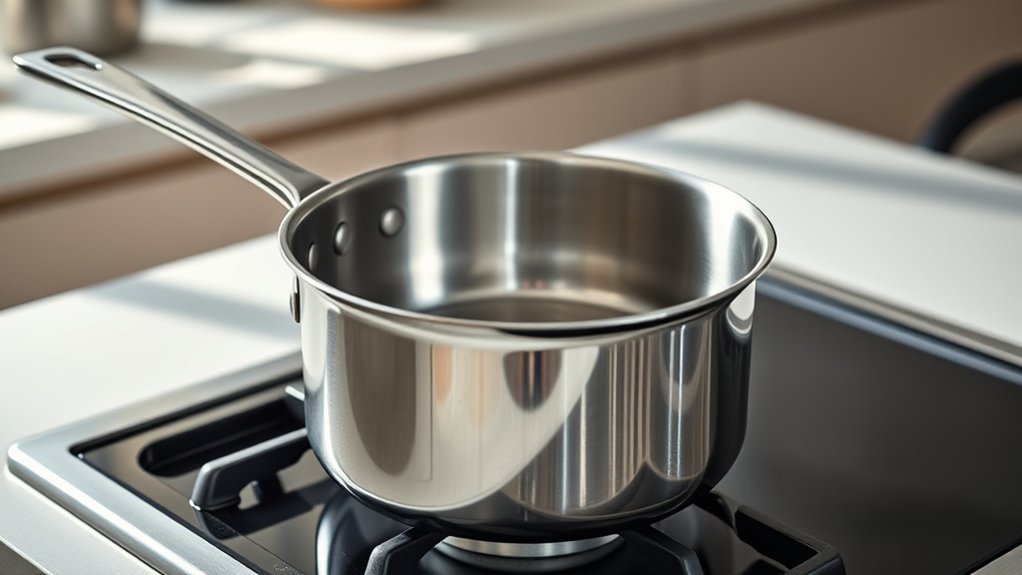
A saucepan is a small, deep stovetop pan with a flat base, tall sides, one long handle, and usually a lid. It is especially useful for cooking liquids and small portions: simmering sauces, boiling water, cooking rice or oatmeal, warming soup or milk, making custards, and reducing liquids. Common household sizes are roughly 1 to 4 quarts, although brands vary.
Quick Answer
A saucepan is a compact pan with tall sides, a flat bottom, a long handle, and usually a lid. Its shape makes it well suited to sauces, grains, soup, custard, reheating, and other liquid-heavy foods. Choose the size, construction, coating, and stovetop compatibility to match how you cook.
Key Takeaways
- A saucepan is deeper and narrower than a frying pan and normally has one long handle.
- A 2- to 3-quart saucepan is a versatile everyday size; smaller and larger options suit different portions.
- Construction matters as much as the surface material: clad stainless steel, aluminum, copper, and nonstick designs behave differently.
- Do not assume every stainless steel saucepan works on induction; the base must be magnetic.
- Follow the maker’s heat, utensil, dishwasher, and oven guidance, especially for nonstick cookware.
What Is a Saucepan?
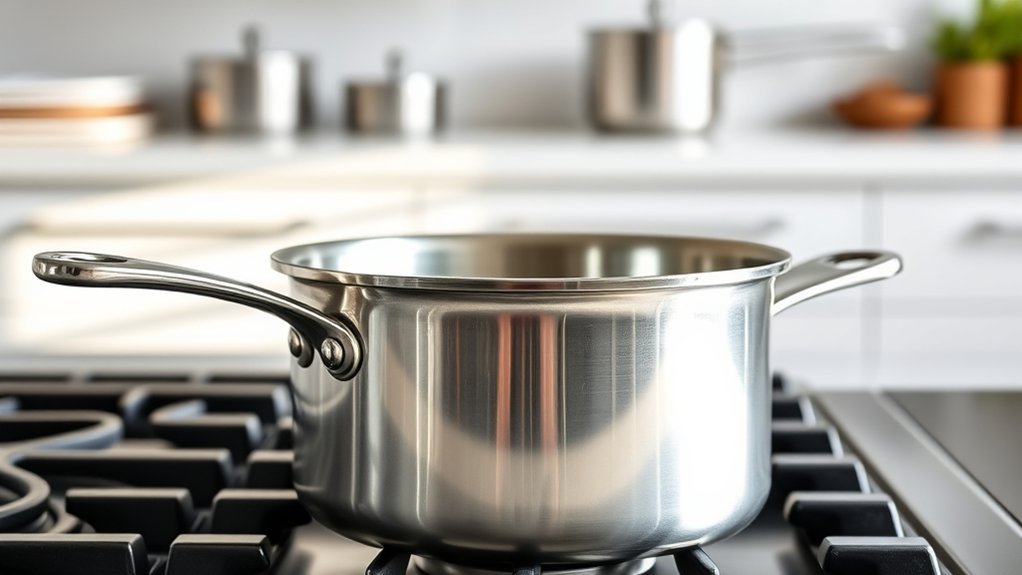
A saucepan is a compact but highly versatile cooking vessel with a flat base and relatively tall sides. Most models have a single long handle and a lid, while larger saucepans may also include a small helper handle.
The shape is useful when food needs controlled heating and regular stirring. Tall sides contain splashes and provide enough depth for simmering, boiling, and reheating. Compared with a wide skillet, a saucepan usually exposes less liquid surface to the air, which can slow evaporation.
Saucepans are sold in stainless steel, aluminum, hard-anodized aluminum, copper-based constructions, enamel, and nonstick-coated designs. The way those materials are layered or bonded affects heat response, weight, durability, and stovetop compatibility.
A lid can reduce evaporation and help retain heat during simmering. The long handle makes it easier to move or pour from a smaller pan, but the handle can become hot depending on the design and cooking method.
Saucepan Sizes, Shape, and Parts
Saucepan capacity varies by manufacturer, but many household lines include sizes from about 1 to 4 quarts. A small saucepan works well for butter, sauces, or a single portion, while a 2- to 3-quart pan covers many everyday jobs. A 4-quart model gives more room for soup, grains, pasta portions, or batch cooking.
The classic shape has straight or nearly straight sides, a round flat base, and more depth than a frying pan. The shape does not guarantee even heating by itself; heat distribution depends heavily on the pan’s material and construction.
Common parts and useful features include:
- Long handle: helps with lifting, stirring, and pouring.
- Helper handle: useful on larger or heavier saucepans.
- Fitted lid: slows evaporation and helps retain heat.
- Pouring rim or spout: can make transferring sauces and liquids cleaner.
- Interior measurement marks: useful for water, broth, and other liquids.
- Magnetic base: required for induction cooking.
When choosing a saucepan, check the actual dimensions as well as the quart capacity. Two pans with the same capacity can differ in base diameter, height, weight, and balance.
What Is a Saucepan Used For?
With its tall sides, moderate capacity, and usually fitted lid, a saucepan is especially practical for foods that contain liquid or need steady stirring. Typical uses include sauces, soup, oatmeal, rice, grains, custards, gravies, and reheating leftovers.
A saucepan can also boil eggs, blanch small portions of vegetables, warm milk, melt butter or chocolate gently, cook a small amount of pasta, and reduce broth or cooking liquid. For reductions, remove the lid so steam can escape.
Thick foods such as porridge, custard, cheese sauce, and rice can stick or scorch if heat is too high. Stir as needed and reduce the heat once the mixture reaches the desired simmer.
Pro Tip: Match the saucepan to the quantity of food. Leaving some headroom makes stirring easier and reduces the chance of foam or liquid reaching the rim during boiling.
Saucepan vs Pot: Which Do You Need?
The word pot is a broad kitchen term, so saucepan-versus-pot comparisons are not governed by one universal size rule. In common cookware lines, a saucepan is relatively small and usually has one long handle, while larger cooking pots often have two short loop handles.
Choose a saucepan when you want a manageable vessel for sauces, grains, custard, reheating, or other small to medium liquid-based tasks. Its long handle is convenient when the pan is light enough to lift safely.
Choose a larger pot when capacity is the priority, such as boiling a large amount of pasta, cooking a family-size soup, or preparing a large batch of stew. Two side handles can be easier to control when the vessel is heavy.
In short, use the saucepan for smaller, more focused stovetop work and a larger pot when you need more volume.
Saucepan vs Stock Pot: When to Use Each
A saucepan and a stock pot overlap in what they can cook, but they differ mainly in scale and handling.
A saucepan commonly falls in the small-to-medium capacity range and normally uses a long handle. It is convenient for sauces, grains, soup, custard, reheating, and other jobs where frequent stirring or pouring may be needed.
A stock pot is built for much greater volume and normally has two side handles. It is better suited to stock, large batches of soup or stew, and boiling a larger quantity of water.
- Use a saucepan for smaller batches and frequent stirring.
- Choose a stock pot when volume and secure two-handed lifting matter.
- Leave enough empty space at the top for safe stirring and boiling.
Many kitchens benefit from both because the two vessels solve different capacity problems rather than replacing each other.
Saucepan vs Saucier and Frying Pan
A saucier is closely related to a saucepan but has a curved transition between the base and sidewalls. That rounded interior makes it easier for a whisk or spoon to reach the entire cooking surface, which is useful for custards, risotto, gravy, and sauces that need frequent stirring.
A frying pan or skillet is shallower and wider, usually with sloped sides. Its broad exposed surface encourages evaporation and gives food more room for browning, searing, and frying. A saucepan can handle some of those tasks in small quantities, but its taller, narrower shape is usually better for liquid-focused cooking.
| Cookware | Typical Shape | Best For |
| Saucepan | Tall sides, flat base, long handle | Sauces, grains, soup, boiling, reheating |
| Saucier | Curved interior, wider opening | Whisked sauces, custard, risotto, reductions |
| Frying pan | Wide, shallow, often sloped sides | Searing, browning, frying, sautéing |
Common Saucepan Materials and Finishes
Saucepan performance depends on both the cooking surface and the layers underneath it. For example, a stainless steel cooking surface may be bonded to an aluminum core so the pan combines a durable interior with faster heat transfer.
| Material or Construction | Main Strength | Main Tradeoff |
| Clad stainless steel | Durable cooking surface with conductive core layers | Usually heavier and may cost more |
| Aluminum or hard-anodized aluminum | Lightweight and responsive to heat changes | Induction compatibility depends on the base |
| Nonstick-coated cookware | Easy release and cleanup | Coating needs gentler heat, utensils, and cleaning |
| Copper-based cookware | Very responsive heat control | Often expensive; induction use depends on construction |
Note: “Stainless steel” does not automatically mean “induction compatible.” An induction cooktop needs cookware with a magnetic base. If you are unsure, check the manufacturer’s specification or see whether a magnet sticks firmly to the bottom.
How to Choose the Right Saucepan
Choosing the right saucepan starts with capacity, but size alone is not enough. Consider the pan’s construction, weight, handle comfort, lid fit, stovetop compatibility, oven rating, pouring design, and cleaning requirements.
A saucepan that matches your most common recipes will be more useful than one chosen only by price or appearance.
Size and Capacity
Most home cooks can cover a wide range of jobs with a saucepan between 2 and 3 quarts, but there is no single best size for everyone.
- 1 to 1.5 quarts: useful for butter, small sauces, oatmeal, or warming a small portion.
- 2 quarts: a practical size for sauces, grains, vegetables, and smaller servings of soup.
- 3 quarts: a versatile everyday choice for soup, rice, custard, reheating, and modest pasta portions.
- 4 quarts or larger: useful when you regularly cook larger batches but still prefer a long-handled pan.
Capacity labels do not tell the whole story. A wider 3-quart saucepan may evaporate faster than a taller, narrower 3-quart model, so shape matters too.
Material and Heat Performance
For everyday durability, clad stainless steel is a strong all-purpose choice. Aluminum-based cookware is lighter and responds quickly to changes in burner heat. Nonstick is convenient for sticky foods and cleanup but should be used according to the coating maker’s heat and utensil limits. Copper-based cookware offers very fast response but is usually more expensive.
If you cook on induction, verify compatibility before buying. If you move a saucepan from stovetop to oven, also check the temperature rating for the pan, lid, and handle because those limits can differ.
Handle, Lid, and Pouring Features
Pick up the saucepan before buying if possible. A handle should feel secure and balanced when the pan is empty, and a helper handle is useful on heavier models. A fitted lid helps with simmering and steaming, while a flared rim or pouring spout can reduce drips. Measurement marks are convenient but not essential.
How to Clean and Care for a Saucepan
A saucepan lasts longer when its care routine matches its material and coating. Let a hot pan cool before washing; sudden contact with cold water can cause thermal shock and may warp some cookware.
For routine cleaning, warm water, dish soap, and a nonabrasive sponge are a safe starting point for many pans. Manufacturer instructions should take priority because dishwasher, cleaner, and utensil recommendations vary by product line.
Warning: Do not pour cold water into a very hot saucepan, and do not assume every handle stays cool. Use dry oven mitts when needed, turn long handles away from the edge of the stovetop, and open lids so steam escapes away from your face and hands.
- Stainless steel: let the pan cool, wash with warm soapy water, and use a nonabrasive cleaner for stubborn discoloration if the manufacturer allows it.
- Nonstick: use soft sponges and utensils that will not scratch the coating; avoid overheating an empty pan and follow the maker’s heat limits.
- Hard-anodized aluminum: avoid harsh abrasives unless the manufacturer specifically permits them.
- Storage: if pans must be stacked, place a soft protector between surfaces to reduce scratches.
Matching the burner to the saucepan base also improves stability and reduces wasted heat around the sides of the pan.
The best saucepan is not defined by one material or one size; it is the pan whose capacity, construction, handle, and heat-source compatibility match the way you actually cook.
Frequently Asked Questions
What’s the Difference Between a Pan and a Saucepan?
“Pan” is a broad term, but in everyday use it often means a shallower skillet or frying pan. A saucepan is deeper, usually has straighter sides, one long handle, and often a lid. Saucepans suit simmering, boiling, grains, and sauces; frying pans are better for browning, searing, and frying.
What Does a Saucepan Look Like?
A saucepan is usually a deep, round stovetop vessel with a flat base, tall straight or nearly straight sides, and one long handle. Many include a fitted lid, and larger models may add a helper handle opposite the main handle.
Why Is It Called a Saucepan?
The name combines “sauce” and “pan.” The term has been used since the late 17th century for a small long-handled cooking vessel associated with preparing sauces, although modern saucepans are used for many other foods.
Do Americans Say Saucepan?
Yes. “Saucepan” is standard American English in recipes, cookware stores, and product descriptions. In casual conversation, some people may use the broader word “pot,” but saucepan is the clearer term for the smaller long-handled vessel.
What Size Saucepan Is Most Useful?
A 2- to 3-quart saucepan is a flexible everyday range for many households. Choose smaller if you mostly warm single portions or make sauces, and choose 4 quarts or more if you frequently cook larger batches.
Can a Saucepan Go on an Induction Cooktop?
Only if the saucepan has an induction-compatible magnetic base. Cast iron and many magnetic stainless steel constructions work, while plain aluminum, copper, glass, and some stainless steel cookware will not work unless the base is designed for induction.
Is a Saucepan Good for Searing?
It can sear a small amount of food if the material allows it, but a wide frying or sauté pan is usually better. A saucepan’s tall sides and smaller cooking surface hold more steam around the food, which can slow browning.
Conclusion
A saucepan is one of the most useful small cookware pieces because it handles both everyday and precision tasks without taking up much space. Its tall sides, flat base, long handle, and usual lid make it well suited to sauces, grains, soup, custard, boiling, and reheating. Choose the capacity and construction that fit your stove and cooking habits, then follow the manufacturer’s care guidance so the pan performs well for years.
Sources
- U.S. Food and Drug Administration — food-contact and nonstick-coating safety context.
- GE Appliances — induction cookware requirements and the magnet test.
- All-Clad — saucepan construction, common sizes, stovetop compatibility, and cookware care guidance.
- Made In — saucepan uses and saucepan-versus-saucier shape differences.
- Calphalon — material-specific cookware care and cleaning guidance.