
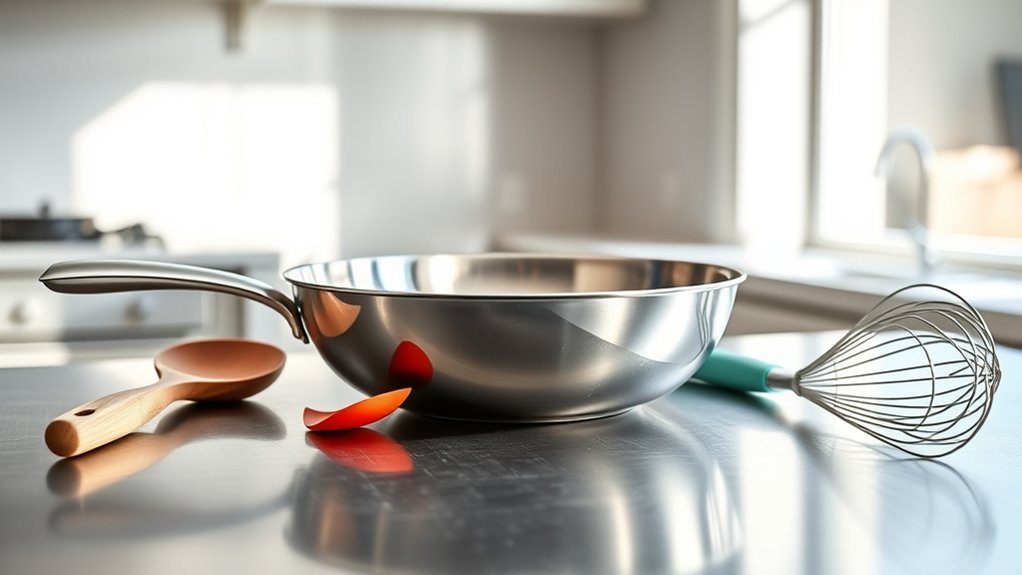
For stainless steel pans, silicone, wood, bamboo, and stainless steel utensils can all work well. Silicone is a versatile choice when you want a flexible, surface-friendly tool, while wood and bamboo are gentle for everyday stirring. Stainless steel tools are excellent for searing, flipping, whisking, and lifting food in uncoated stainless cookware. The best choice depends on the cooking task and whether the pan has any nonstick or other scratch-sensitive coating.
Quick Answer
Silicone, wood, bamboo, and stainless steel are all suitable for uncoated stainless steel pans. Choose silicone or wood when you want to minimize cosmetic scratches and stainless steel when you need a thin, rigid turner, whisk, or strong tongs. For silicone, nylon, or plastic tools, always follow the manufacturer’s stated heat limit.
Key Takeaways
- Silicone is flexible, gentle on cookware, and useful for stirring, scraping, sauces, and delicate foods.
- Wood and bamboo are surface-friendly choices for stirring and sautéing but should be washed and dried promptly.
- Stainless steel utensils are generally safe on uncoated stainless steel cookware, although they can leave cosmetic scratches.
- If a stainless steel pan has a nonstick or other coated cooking surface, follow that coating’s utensil restrictions instead.
- Silicone, nylon, and plastic heat limits vary by product, so check the manufacturer’s rating rather than relying on one universal temperature.
What Utensils Work Best on Stainless Steel?
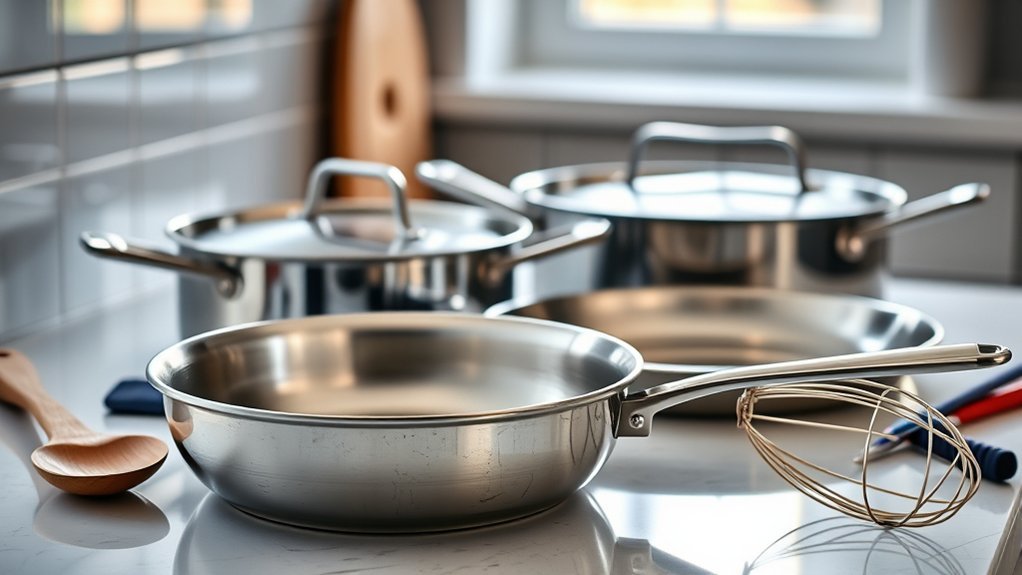
The best utensils for stainless steel pans are silicone, wood, bamboo, and stainless steel. Unlike a nonstick coating, the cooking surface of an uncoated stainless steel pan is durable enough to handle metal tools during normal cooking.
Tramontina’s stainless steel guidance says metal utensils are suitable for its tri-ply stainless cookware and notes that normal surface scratches are cosmetic rather than a cooking-performance problem. All-Clad similarly states that all utensil materials can be used on its bonded stainless steel collections.
| Material | Best For | Main Advantage | Main Caution |
|---|---|---|---|
| Silicone | Stirring, scraping, sauces, eggs | Flexible and surface-friendly | Heat rating varies by product |
| Wood | Stirring, sautéing, mixing | Gentle and comfortable | Do not soak; replace if cracked |
| Bamboo | Stirring and serving | Lightweight and surface-friendly | Can split or become rough with wear |
| Stainless steel | Searing, flipping, whisking, lifting | Rigid, precise, and highly heat-resistant | Can leave cosmetic scratches |
| Nylon or plastic | Moderate-temperature cooking | Lightweight and usually gentle | Use only within the labeled heat rating |
Warning: These recommendations apply to uncoated stainless steel cooking surfaces. If your stainless steel pan has a nonstick, ceramic, enamel, or other coating, follow the cookware manufacturer’s utensil instructions. Metal utensils can damage many coated surfaces.
When to Use Stainless Steel Utensils
Stainless steel utensils are especially useful when a thin, rigid, strong tool makes cooking easier. Examples include sliding a fish turner under browned food, whisking a pan sauce, turning meat with tongs, or scraping up fond while deglazing.
They tolerate normal stovetop heat well and provide precise control. Because uncoated stainless steel cookware has no fragile nonstick layer to peel away, normal use of metal utensils is generally acceptable. All-Clad’s guidance for its bonded stainless collections says metal, nylon, wood, and other utensil materials are safe to use.
Metal-on-metal contact can still create fine scratches. Those marks are usually cosmetic, but cooks who want to preserve a mirror-like finish may prefer silicone or wood for routine stirring.
Pro Tip: When using a stainless steel spatula or turner, slide it under the food instead of repeatedly grinding its edge across the pan. You keep the precision of a metal tool while reducing unnecessary cosmetic marks.
Why Silicone Is a Good All-Purpose Choice
Silicone utensils are popular with stainless steel cookware because they combine flexibility with a surface-friendly edge. They work well for sauces, eggs, stirring, folding, and scraping food from curved pan walls.
However, silicone does not have one universal maximum temperature. The heat rating depends on the specific product and its construction, so check the manufacturer’s instructions before using a utensil around very high heat.
Heat Resistance And Durability
Quality silicone cooking tools can tolerate substantial heat, but manufacturer specifications vary. For example, Le Creuset rates its silicone utensils to 482°F (250°C), while an OXO silicone spatula is rated to 600°F.
Silicone utensil heat ratings are product-specific: current manufacturer examples range from 482°F for Le Creuset silicone utensils to 600°F for an OXO silicone spatula.
That difference is why a generic claim such as “all silicone is safe to 650°F” is unreliable. Use the temperature limit printed on the utensil, packaging, or manufacturer’s product page.
Construction also matters. A sturdy core can improve control, while seamless or one-piece designs can reduce joints where food residue may collect. Replace a silicone tool if it develops deep cuts, separates from its core, becomes sticky, or shows obvious heat damage.
Gentle On Cookware
Silicone is useful when preserving a polished stainless steel finish matters. Its flexible edge does not normally leave the fine cosmetic marks that a rigid metal turner can create.
| Benefit | Why It Matters |
|---|---|
| Surface-friendly | Helps minimize cosmetic scratching |
| Flexible edge | Scrapes sauces and curved pan walls efficiently |
| Heat-resistant designs available | Suitable for many stovetop tasks when used within the labeled limit |
| Nonmetal contact surface | Useful when appearance is a priority |
Silicone is therefore a strong all-purpose option, but it is not automatically better than stainless steel for every job. A flexible spatula excels at scraping sauce, while a thin stainless steel turner may be better for releasing a well-seared piece of meat.
Easy Cleaning And Care
Many silicone utensils are dishwasher-safe, although care instructions vary. Le Creuset, for example, says its all-silicone accessories can be placed in the dishwasher, while wooden components should be washed separately by hand.
After cooking, remove visible food, wash according to the manufacturer’s directions, and dry the utensil before storage. Do not leave a silicone utensil resting against a hot burner, flame, or pan edge simply because its cooking end is heat-resistant; handles and internal components may have different limits.
When purchasing silicone utensils, choose products sold for food preparation and use them under their intended conditions. The FDA regulates substances intended to contact food, but an individual utensil’s heat rating and care requirements still come from its manufacturer.
Best Wood and Bamboo Utensils for Stainless Steel
Wooden and bamboo utensils are reliable choices for stainless steel pans because their edges are gentle on the cooking surface. They work particularly well for stirring soups, sautéing vegetables, mixing sauces, and moving food around a pan.
Wood offers a solid, comfortable feel, while bamboo is usually lighter and relatively stiff. Neither material needs to be chosen because stainless steel requires “non-scratch” tools; instead, choose them when you prefer their feel or want to minimize cosmetic marks.
Wash wood and bamboo promptly after use with mild soap and water unless the manufacturer directs otherwise. Avoid prolonged soaking because repeated water exposure can encourage swelling, roughness, splitting, or cracking. Dry the utensil thoroughly before putting it away.
If the manufacturer recommends conditioning the wood, use an appropriate food-contact-safe oil according to those instructions. Do not assume every wooden utensil needs the same oiling schedule.
Replace a wooden or bamboo tool when it develops deep cracks, splinters, badly roughened edges, or areas that can no longer be cleaned effectively.
What to Avoid on Stainless Steel Cookware
Uncoated stainless steel cookware is durable, but a few habits can damage its appearance or shorten its useful life.
- Do not overheat an empty pan for an extended period. Excessive heat can discolor cookware and, in severe cases, contribute to warping.
- Avoid steel wool and harsh metal scouring pads when appearance matters. All-Clad warns that these can permanently scratch the finish.
- Avoid chlorine bleach and aggressive oven cleaners unless the cookware manufacturer specifically approves them.
- Do not shock a very hot pan with cold water. Let it cool before washing to reduce thermal stress.
- Do not leave undissolved salt sitting on the stainless surface. Salt can cause small pits in stainless steel.
All-Clad recommends adding salt after liquid begins boiling and stirring it so the salt dissolves instead of settling on the cooking surface. The company notes that salt pitting is generally cosmetic rather than a performance problem.
Acidic foods require more nuance. Stainless steel is commonly used to cook tomatoes, wine, vinegar, citrus, and other acidic ingredients. Some cookware manufacturers, including ZWILLING, advise against using stainless cookware for long-term storage of acidic food. Cooking the food and storing it in the pan for hours or days are different situations.
Uncoated Stainless Steel vs. Coated Stainless Cookware
Before choosing a utensil, identify the actual cooking surface. A pan may have a stainless steel exterior yet use a nonstick coating on the inside.
With uncoated stainless steel, metal spatulas, tongs, spoons, and whisks are generally acceptable. Fine scratches may develop, but reputable manufacturers describe normal scratches as cosmetic.
With a nonstick-coated stainless pan, metal utensils can scratch or damage the coating. In that case, silicone, wood, or another utensil specifically approved by the cookware manufacturer is the better choice.
Note: “Stainless steel pan” describes the cookware material, but it does not always tell you what the food-contact surface is made from. Check the inside of the pan and the manufacturer’s care instructions before choosing metal tools.
Why Nylon and Plastic Can Melt
Nylon and plastic utensils can work for many cooking tasks, but their heat tolerance depends on the particular resin, formulation, and product design. They should not be assigned one universal maximum temperature.
Use nylon or plastic only within the temperature range specified by the manufacturer. Keep the utensil away from open flames, exposed electric elements, and other direct heat sources.
Heat Limits And Risks
A nylon or plastic tool that is suitable for moderate cooking temperatures may deform if it is exposed to hotter cookware than its design allows. Thin edges are often the first parts to soften or warp.
Rather than assuming every nylon utensil is safe to a particular temperature, check its packaging or product specifications. A clearly stated heat rating is more useful than the material name alone.
Melting On Hot Surfaces
A utensil can be damaged when it rests against an overheated pan, burner, heating element, or flame. If a nylon or plastic tool visibly melts, blisters, chars, or permanently deforms, stop using it and replace it.
Do not leave these utensils sitting in a pan while cooking unless the manufacturer specifically says the product is designed for that use. A utensil holder or spoon rest keeps the tool away from concentrated heat between stirring.
Best Heat-Safe Alternatives
When cooking at higher temperatures, stainless steel and properly rated silicone are practical choices. Stainless steel itself is not vulnerable to normal stovetop utensil temperatures, while silicone performance depends on the manufacturer’s stated specification.
| Utensil | Heat Guidance | Best Practice |
|---|---|---|
| Silicone | Varies by manufacturer | Check the labeled maximum temperature |
| Nylon | Varies by formulation and product | Keep within the manufacturer’s stated limit |
| Plastic | Varies widely | Avoid direct burner or flame contact |
| Stainless steel | Suitable for normal high-heat cooking tasks | Use normally on uncoated stainless cookware |
Best Utensils by Cooking Task
The most useful approach is to choose the utensil by what you are cooking rather than relying on one material for everything.
- Flexible silicone spatula: sauces, scrambled eggs, folding, scraping bowls, and reaching curved pan edges.
- Wooden spoon: soups, stews, sautéed vegetables, risotto, and everyday stirring.
- Stainless steel fish turner: sliding under fish, burgers, cutlets, and foods that need a thin rigid edge.
- Stainless steel tongs: steaks, chicken pieces, vegetables, and other foods that need a secure grip.
- Stainless steel whisk: pan sauces, gravies, roux, and deglazing.
- Silicone-tipped tongs: useful when you want tong control with less metal contact against the pan.
- Bamboo spoon or spatula: light stirring, serving, and general cooking.
A small mixed set is usually more practical than buying every utensil in the same material.
Must-Have Utensils for Stainless Steel Cooking
For most kitchens, a few well-chosen tools cover nearly every stainless steel cooking task. Start with a silicone spatula, a wooden spoon, a stainless steel turner, a pair of tongs, and a whisk.
- Silicone spatula: stirring, scraping, sauces, and delicate foods
- Wooden spoon: everyday sautéing and mixing
- Stainless steel turner: browning, searing, and cleanly lifting food
- Tongs: turning meat and vegetables
- Whisk: sauces, gravies, and deglazing
Bamboo is another practical option for cooks who prefer a lightweight wooden-style tool. Nylon can also work when used within its rated temperature. There is no need to avoid metal simply because the pan itself is stainless steel.
How to Clean and Store Utensils
Keeping utensils clean and dry improves hygiene and helps them last longer. The correct method depends on the material.
| Material | Cleaning | Storage/Care |
|---|---|---|
| Silicone | Hand wash or dishwasher if approved | Dry before storing; inspect for cuts or separation |
| Wood | Wash promptly; avoid long soaking | Dry thoroughly; condition if the maker recommends it |
| Bamboo | Wash promptly and avoid long soaking | Replace if split, splintered, or badly roughened |
| Stainless steel | Warm soapy water or dishwasher when approved | Dry to reduce water spots |
| Nylon/plastic | Follow manufacturer directions | Discard melted, cracked, or badly deformed pieces |
Store utensils in a clean drawer with dividers, a utensil crock, or another dry location where blades and sharp edges will not damage softer tools. Keeping heavily used utensils easy to reach also reduces the temptation to grab an unsuitable tool during cooking.
Frequently Asked Questions
What Kind of Utensils Are Best for Stainless Steel Pans?
Silicone, wood, bamboo, and stainless steel are all good choices for uncoated stainless steel pans. Silicone and wood help minimize cosmetic marks, while stainless steel provides the rigidity and control needed for searing, flipping, whisking, and lifting heavier food.
What Are the Best Metal Cooking Utensils for Stainless Steel Cookware?
Useful metal tools include a thin stainless steel turner or fish spatula, sturdy tongs, a whisk, and stainless steel serving spoons. These tools tolerate normal cooking heat and work well on uncoated stainless cookware. Use them with reasonable care if you want to minimize cosmetic scratching.
Is It Bad to Use a Stainless Steel Spatula on a Stainless Steel Pan?
No. A stainless steel spatula is generally suitable for an uncoated stainless steel pan. It may leave fine cosmetic scratches over time, but normal scratching does not usually affect cooking performance. The exception is cookware with a nonstick or other scratch-sensitive coating, where the manufacturer’s utensil instructions should be followed.
What Should You Avoid With Stainless Steel Pans?
Avoid prolonged overheating of an empty pan, sudden temperature shock, chlorine bleach or other cleaners the manufacturer prohibits, and steel wool if you want to preserve the finish. To reduce salt pitting, add salt after liquid boils and stir until it dissolves. Metal cooking utensils do not need to be avoided on ordinary uncoated stainless steel.
Can Silicone Utensils Melt on a Stainless Steel Pan?
They can be damaged if exposed above their rated temperature or placed against direct burner heat. Silicone ratings vary by manufacturer, so check the specific product. Current examples include 482°F for Le Creuset silicone utensils and 600°F for an OXO silicone spatula.
Conclusion
The best utensils for stainless steel pans depend on the cooking job. Silicone, wood, and bamboo are excellent when you want a gentle contact surface, while stainless steel utensils provide the rigidity and precision needed for searing, flipping, whisking, and lifting food.
Metal tools do not need to be avoided on ordinary uncoated stainless steel cookware, although they can leave cosmetic scratches. If the pan has a nonstick or other coating, follow that coating’s instructions instead. For silicone, nylon, and plastic utensils, check the manufacturer’s heat rating rather than relying on a generic temperature limit.
A small mixed set—a silicone spatula, wooden spoon, stainless steel turner, tongs, and whisk—gives most cooks the right tool for nearly every stainless steel cooking task.
Sources
- Tramontina — How to Cook With Stainless Steel — metal utensil use, cosmetic scratching, and stainless steel cooking guidance.
- All-Clad — Bonded Stainless Utensil and Care Guidance — utensil compatibility for bonded stainless steel cookware.
- All-Clad — Product Support and FAQ — salt pitting, cleaning, overheating, and stainless steel care.
- Le Creuset — Silicone Care and Use — silicone utensil heat rating and cleaning guidance.
- OXO — Silicone Spatula Specifications — current manufacturer example of a 600°F silicone heat rating.
- U.S. Food and Drug Administration — Food Contact Substances — regulatory context for substances intended to contact food.